
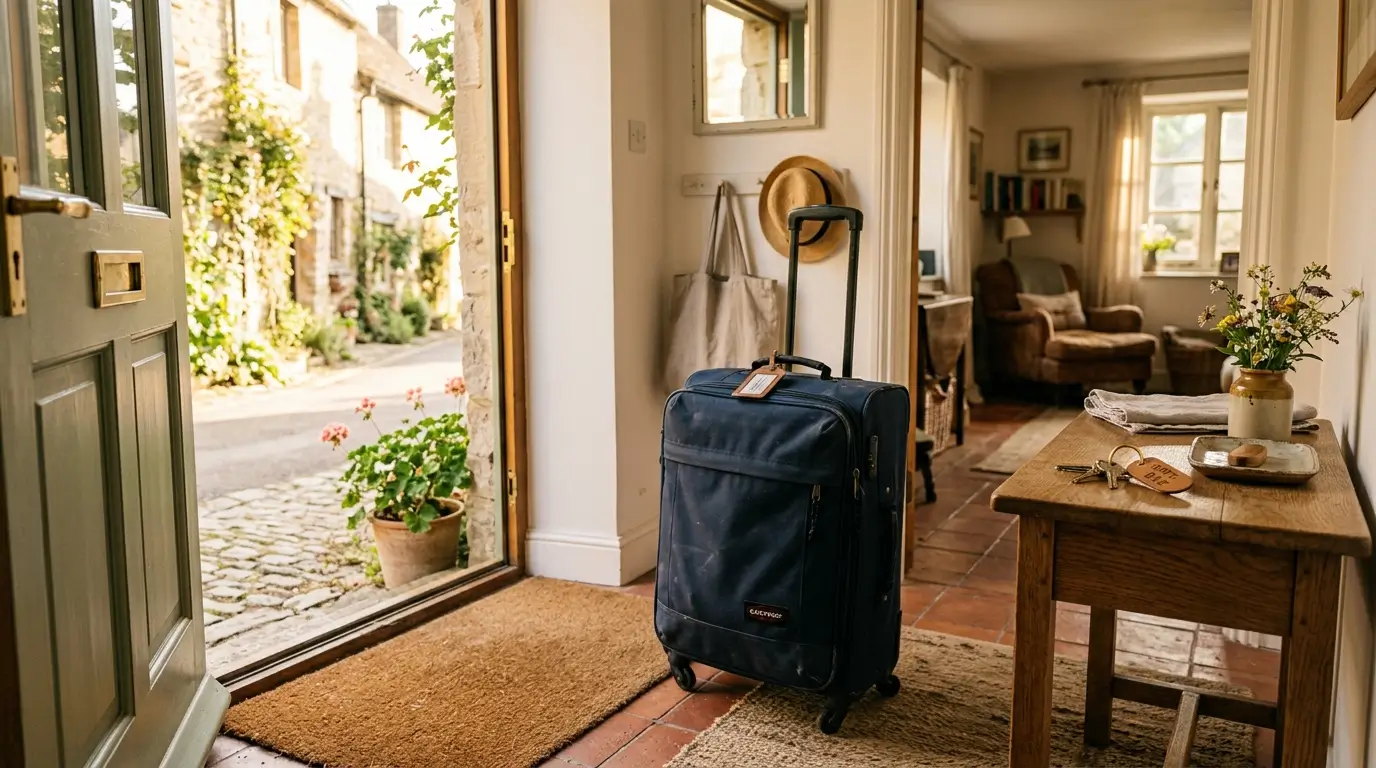
Guests arrive with their own short list, and it rarely starts with the welcome basket. Across our five properties we keep seeing the same tasks in the first ten minutes: through the door, bags down, bathroom, wifi, lights and temperature, water, then the bed. We walk that sequence, show what goes wrong at each step, and argue that two cheap fixes beat everything else: reorder what guests open first, and stick a QR code on the object itself.
We design arrivals around what we want a guest to notice: the lamp we picked, the basket on the counter, the note in decent handwriting. Guests arrive with a different set of priorities, and across our five properties we now order the information around their sequence rather than around the tour we would give in person.
What do guests do first when they arrive?
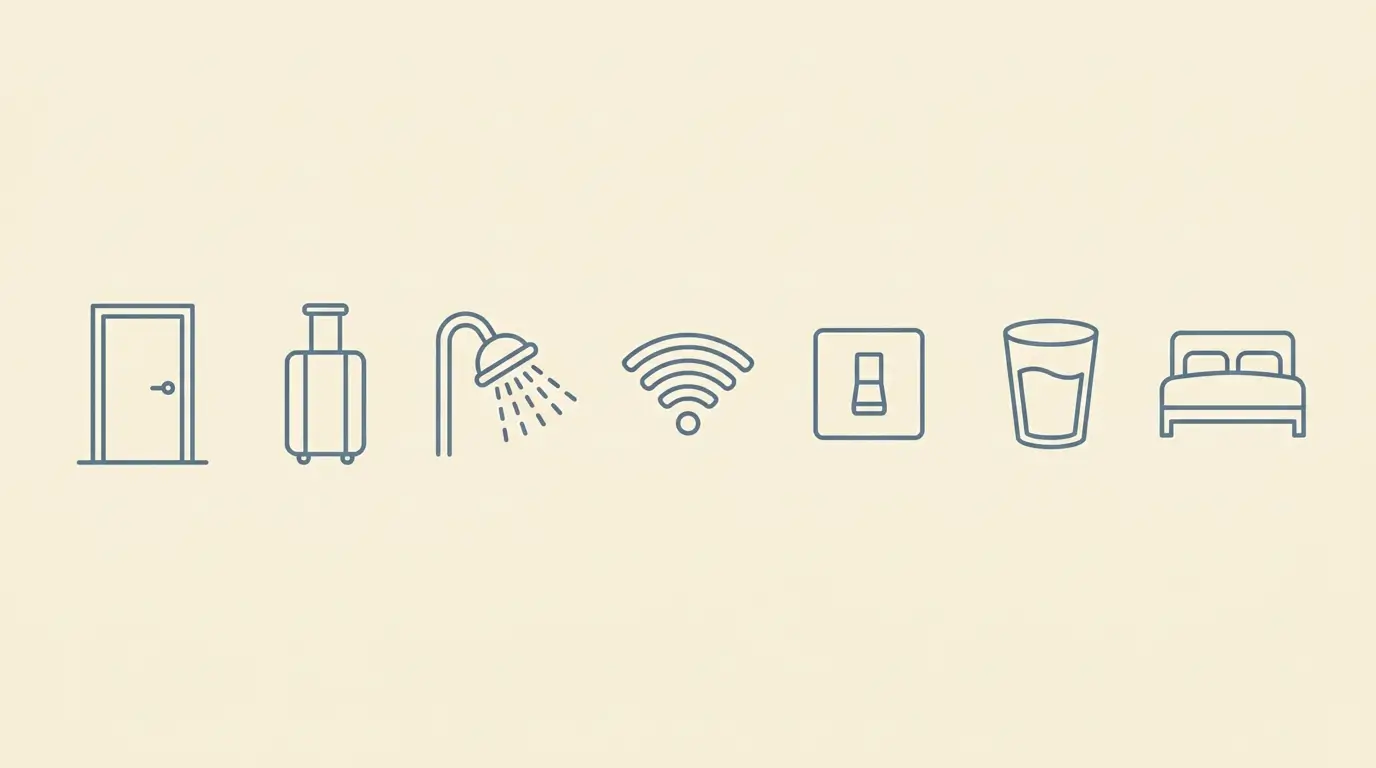
Across our properties we repeatedly see guests work through the same handful of tasks in the first ten minutes: get through the door, drop the bags, find the bathroom, find the wifi, work out the lights and the temperature, look for water or coffee, and look at the bed. Very little of that involves the welcome basket. It is a pattern rather than a rule, and a family with tired kids or a guest landing at 2am reorders it, but we see it often enough to design for.
A common first-ten-minute sequence
Getting in. The arrival starts outside, and that is where most of the friction sits. Our Washington, DC row house has street parking plus a tandem garage off the alley, obvious to us and not at all obvious to someone circling the block in a rental car. Instructions written by a person who already knows the street tend to skip the landmark that makes them usable. At our Tulum studio a few guests take the HOA office at the entrance for a front desk and stop there first, and since the office answers some of what they ask when it is open, it keeps happening. More in Airbnb self check-in.
The first thirty seconds inside. Bags go down near the entrance and the guest walks the place once before touching anything. In our experience this is the moment the photos get judged, and little of what you write reaches a guest here. It belongs to the cleaner and to how accurate the listing was.
The bathroom. For most arrivals this is the first functional stop, especially after a flight. In our Tulum studio it is found instantly. In our Playa del Carmen house, four bedrooms and four and a half bathrooms, a large group has to work out who is using what, and doing that in a hallway with the luggage still by the door is a slow way to start. We are not trying to assign bathrooms in advance. We simply include the floor plan in the guidebook, so a group that looks before they travel can settle it between themselves.
The wifi. Then the phone comes out. Across our four Riviera Maya properties over ninety days, the wifi article was opened 147 times and collected zero upvotes, which sounds about right to us. Almost nobody is delighted by a password, and on those counts guests want it before they read anything else you wrote. The mechanics are in how to share wifi with guests.
Lights and climate. Guests find light switches by trial and error, then go hunting for the temperature control. Our Playa house runs mini-splits with a remote per room, and the ceiling fans have their own remotes on top of that; the DC house has two aging central zones and a Carrier Infinity panel with its own menu logic. Neither is guessable right away by a stranger in the dark, so both need a sentence written for them.
Water and the kitchen. Someone wants a glass of water, and in Mexico that is a real question rather than a courtesy. Our tap water article was opened 17 times in ninety days, a small number, and we take those opens to be messages we never had to answer. Coffee comes next, and a machine with no obvious method is the classic first-morning question.
The bed. Last in the sequence, and in our own reviews it is the step of the seven that comes up most. Whether the room goes dark, whether the pillows suit them, and whether a phone can charge within reach of the mattress.
What the sequence tells you about ordering
Here is the decision we think most properties have never revisited. If entry, wifi and checkout are what guests hunt for, those answers belong where a guest meets them first: near the top of a card on the counter, on the sign by the door, near the front of the article order in a digital guidebook. Reordering takes an afternoon, and where the information already exists it is the cheapest fix on this list.
Our own guidebook numbers show the same shape. Over ninety days across the four Riviera Maya properties, and our DC house is not in that sample, four articles sat between 112 and 164 opens: the welcome article, the wifi code, directions, and the one about us. The fifth-most-opened got 18, with nothing in between.
Traffic concentrates heavily around those articles, which to us settles the ordering question and not much else. A low count usually means the question does not come up often, or that guests found the answer without needing to message us, as with the tap water article above.
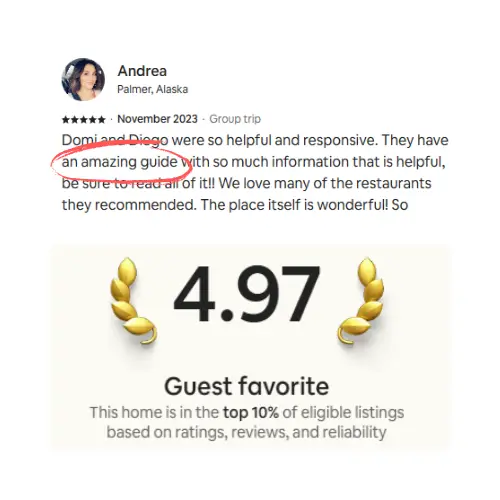
One caution from the same data. "About your hosts" came fourth on opens and first on upvotes, 22 against zero for the wifi code. Opens record what a guest needed, an upvote is closer to what they liked. So lead with the practical set, and do not delete the human article to make room. Full figures are in what our guidebook analytics show.
One more change needs no rewriting at all: name articles the way a guest would search for them, so "Wifi code" beats "Connectivity."
Put the answer where the question happens
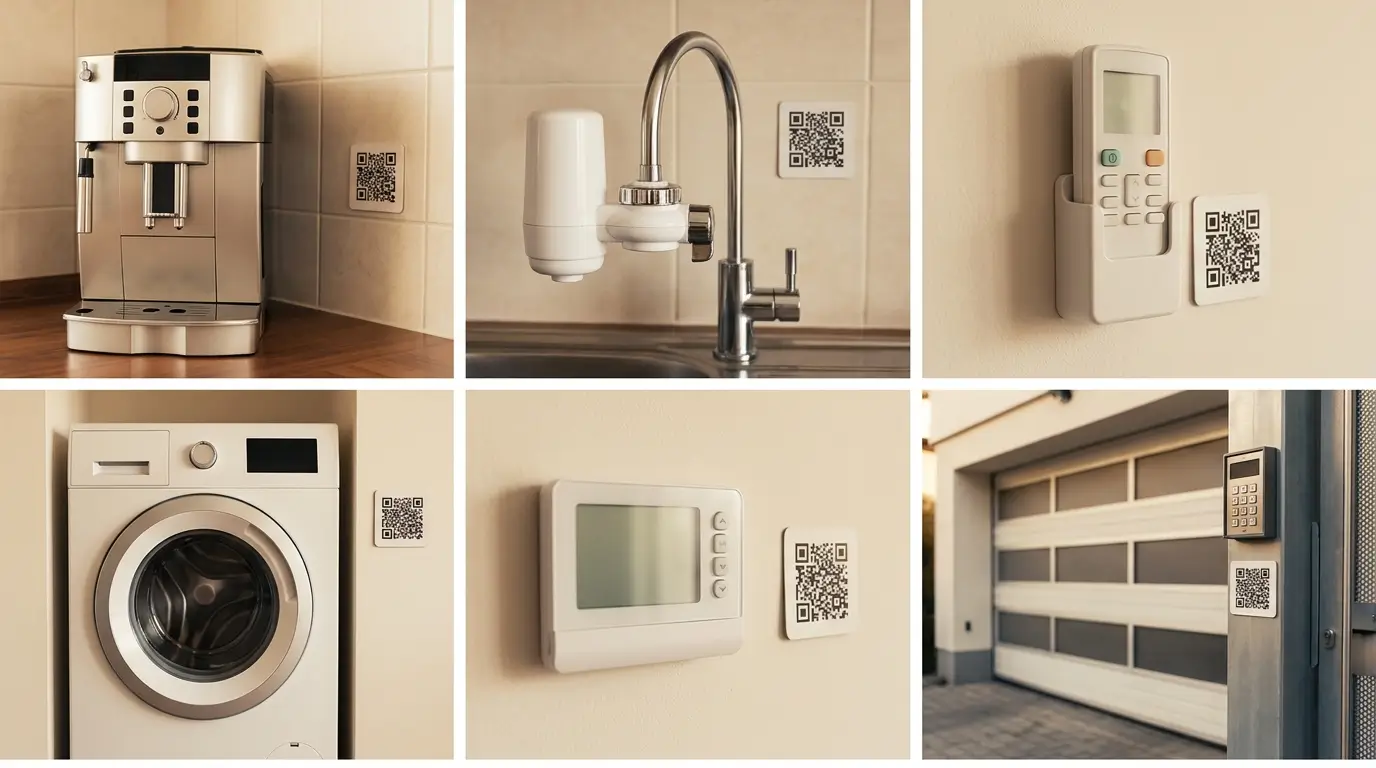
This is the change that has done the most for us, and it is not about writing at all. An article can be well named and sitting near the front of the guidebook, and a guest standing in front of an unfamiliar object still will not go looking for it. The article existing is not the same as the guest finding it when they need it.
What works is a small QR code stuck at the object, deep-linked to the article for that one thing rather than to the guidebook front page. At one of our Mexico properties there is one beside the water filter, because guests kept asking whether the water was safe to drink. At another there is one by the outdoor fan, where a wall switch and a separate remote have no obvious relationship to each other. Both ended questions that an accurate article already covered.
It is a cheap habit and it scales. Walk the property the way a guest would, note every object you have ever explained over a message, and put a code on each one: the coffee machine, the thermostat, the mini-split remote on its hook, the washing machine, the parking gate. Keep them small and keep them to a handful per property, because past five or six people stop seeing them. And put a photograph of the actual object inside the article, since words only work if the reader can map them onto the thing in front of them.
The gap between what you spend and what gets noticed at the door
Nothing in that ten minutes is expensive. A findable light switch, a socket by the bed, somewhere to stand a suitcase, water pressure. We went through that list properly in what guests want in an Airbnb, and our guest welcome checklist covers the inventory side, so we will not repeat either here.
None of which makes the expensive items a mistake. We put a good share of the Playa bookings down to the small pool, and it does nothing at all for the first ten minutes. Expensive amenities do their work before the guest has walked in.
What arrival actually does to your reviews
Airbnb scores arrival directly. Check-in is one of its rated categories and the question is simply "Was it easy?" (Airbnb, Ratings for homes). Guests then pick what stood out, and at the time of writing Airbnb's examples include "Easy to find" and "Personal welcome" on the positive side, "Hard to locate" and "Unclear instructions" on the negative. Airbnb changes this wording periodically, so check the page rather than our copy of it.
On the same page, accuracy asks whether everything was in good working condition, so an appliance a guest could not work out may land there instead of under check-in. Our read is that a smooth arrival also buys patience later: a guest who got in without phoning anyone tends to message you about a slow drain rather than save it for the review. That is a tendency we see, not a number we can show you.
Vrbo and direct guests are not filling in those boxes, but the information they need is identical, so keep one copy of it somewhere not tied to a single booking site. That is also the practical half of direct bookings: not moving Airbnb guests off the platform, which their policy prohibits, but owning a channel the same information already serves.
FAQ
What should be at the top of a guidebook or welcome card?
Entry, wifi and checkout. Those are the three things guests go looking for unprompted, and across our properties the practical articles account for a disproportionate share of the traffic. Local recommendations are worth having, but they get read later in the stay, so they do not need to come first.
Do guests read anything before they arrive?
A good number do. One of our reservations opened ten articles in seven minutes about a week out, every event resolving to a European city rather than Mexico. That pre-arrival skim is why directions, parking and the floor plan need to read well to someone who has never seen the place.
Does a rough arrival really show up in the review?
On Airbnb, check-in is one of the rated categories and guests can attach reasons like "Hard to locate" or "Unclear instructions" to a low score (Airbnb, Ratings for homes). Beyond the score, what we see is that an arrival that went badly makes a guest less forgiving about small things later, though we cannot prove that half with data.
Is a welcome basket worth it if guests do not notice it at arrival?
We think it is, as a gesture rather than a fix. It gets noticed once the bags are down and the practical questions are answered, which argues for spending less time on the basket than on the entry instructions. What actually gets used is in our welcome basket notes.
If you would rather not format all this yourself
You can run the information layer on paper or on a screen, and plenty of properties do it well with a laminated card. If you would rather not build one yourself, SmoothStay gives you a guidebook with deep links, so the code you stick beside the coffee machine opens that article and nothing else, plus an AI Concierge that answers follow-ups from what you have published. The free tier covers one property, no card needed. Our guidebook build guide has the mechanics if you would rather do it by hand.
Latest articles
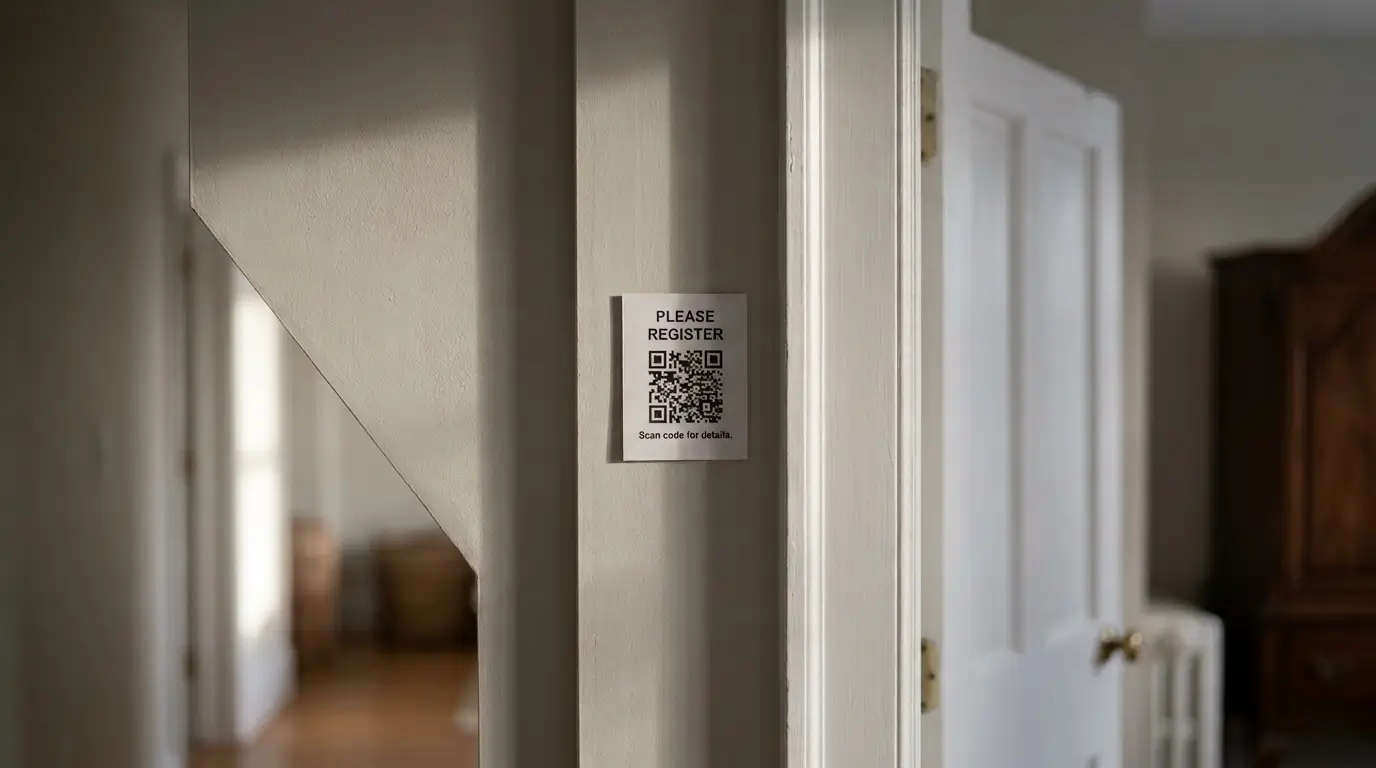
Hotel Guest Data Privacy: The Process We Made for Our Own Properties
Hotel guest data privacy from the operator's side: the list we made for our own properties, what travelers say about consent, and a statement you can copy.
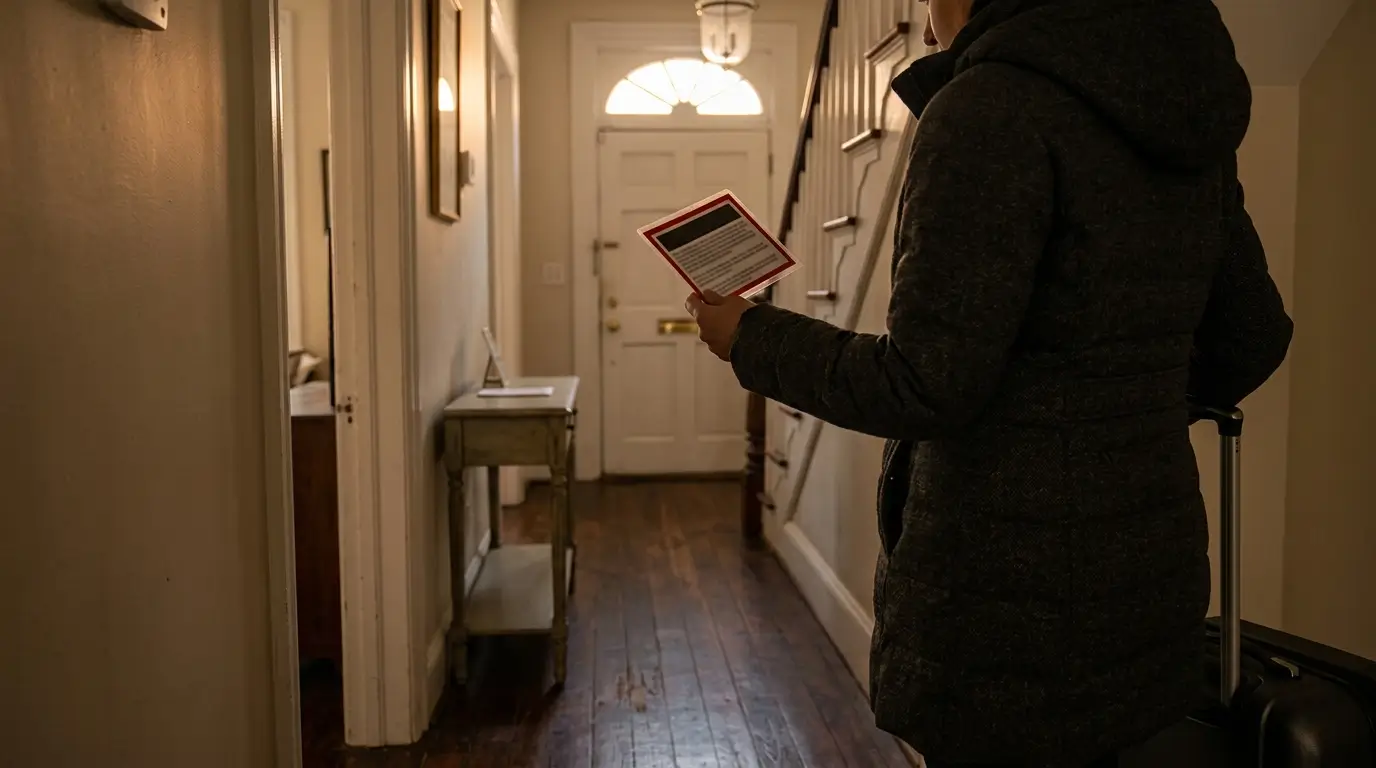
How to Word Airbnb Fees and Fines for Guests
How to word Airbnb fees and fines for guests so they inform instead of accuse: what Airbnb counts as a fee, where each number goes, and 7 examples to copy.
Airbnb Hotels and Hosts: What the First Numbers Show, and What They Don't
Airbnb says a third of first-time hotel guests come back to book a home. What that data shows for hosts, what it doesn't, and why it is too early to act on it.
Airbnb Trash Instructions: What to Write (With a Copy-Paste Template)
Airbnb trash instructions that stop the messages: what to cover, how to handle garbage day, and a copy-paste template you can fill in for your property.