The Bed and Breakfast Check-In Process: A Warm Welcome That Still Works at 11 PM

Published
Last updated
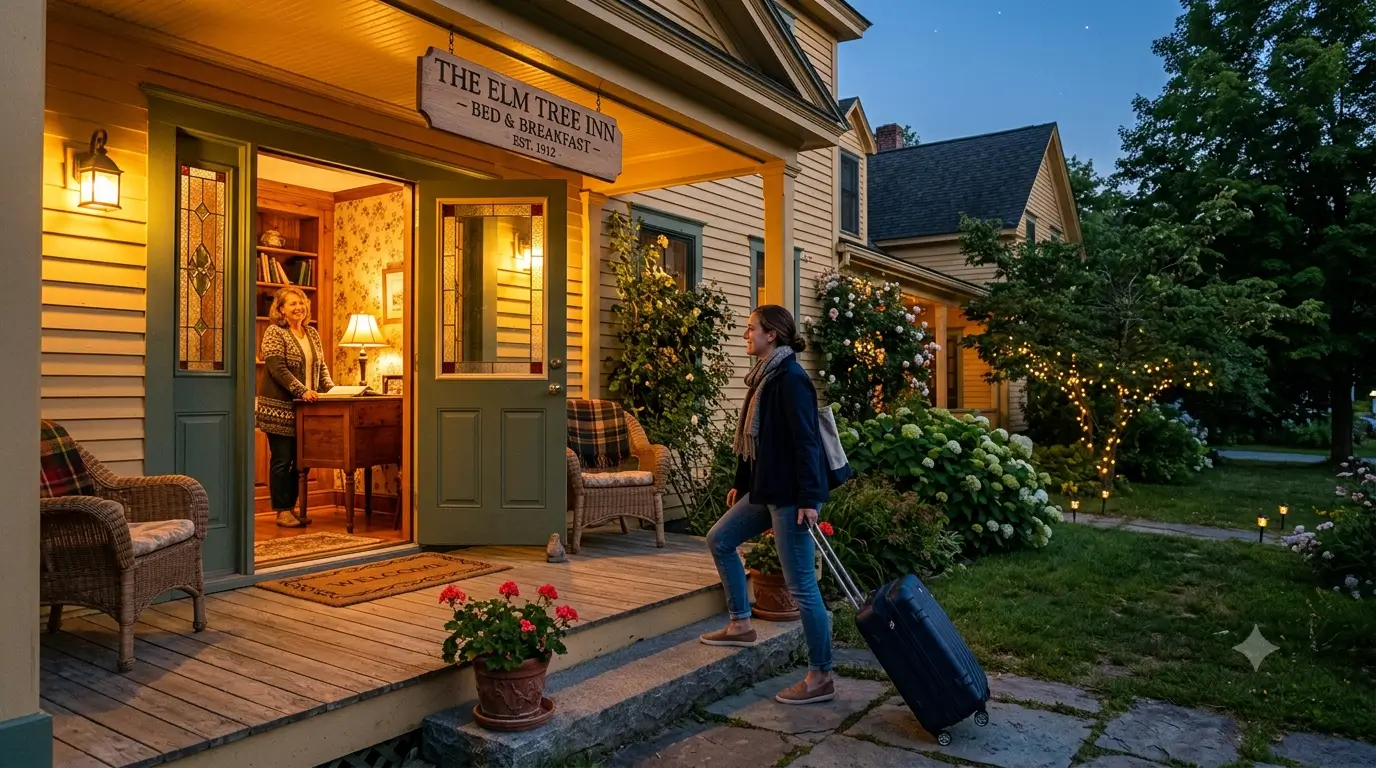
A great B&B check‑in blends the personal greeting owners are known for with flexible, self‑service options for late arrivals, using a digital guidebook, reservation‑timed access, AI concierge and QR‑code links. This hybrid approach lets staff focus on genuine hospitality while handling logistics automatically.
What does a good bed and breakfast check-in process look like?
A good B&B check-in does two things at once: it gives guests the personal greeting your place is known for, and it gives them a clear way to arrive on their own when you can't be at the door. The fix is to send everything they need before arrival day, directions, parking, which room is theirs, how to get in after hours, and what time breakfast runs, and then keep a real person reachable for the rest. Get that split right and you protect both the hospitality and your evenings.
That sounds simple. In practice it's the part of running a B&B that quietly eats the most time and causes the most friction, because a bed and breakfast is built around being there. Someone meets you, shows you the room, points out the good coffee. That's the whole appeal. But you can't be at the front door from 2 PM to midnight every day, and guests don't all land between 3 and 5. They land at 9 PM after a long drive, or at lunch while you're plating breakfast for the other six rooms.
We run short-term rentals in Washington, DC and the Riviera Maya, all on self check-in, so we've spent years on the exact tension a B&B feels: how do you make arrival feel personal when you can't always be there in person? The answer isn't to pick one or the other. It's to build a process that carries the logistics for you, so your in-person time goes to actual hospitality instead of repeating the Wi-Fi password.
Why B&B check-in is its own problem
Hotels solved this with a front desk and a night clerk. Airbnb hosts mostly solved it by going fully self-service. A B&B sits in the awkward middle. You're high-touch by design, often owner-occupied, and your guests booked you partly for the human warmth. Going cold and keypad-only loses the thing that makes you a B&B. But staying fully manual means every late arrival is a phone call, and every early one interrupts breakfast service.
The other wrinkle is that a B&B owner wears every hat. You're the host, the cook, the housekeeper, and the front desk. A 9 PM arrival isn't just inconvenient, it's the hour you're finally done. So the goal is a check-in process that handles itself when you're unavailable and lets you show up warm when you are, instead of arriving frazzled because you've been on call all day.
The B&B check-in process, step by step
Here's the sequence that keeps arrivals smooth without making them feel like a self-storage unit. Order matters, so this is a list to follow top to bottom.
At booking, set expectations. Confirm the reservation and state your standard check-in window and your latest arrival time in plain language. If you offer flexible or self check-in for late arrivals, say so now. Surprises at 10 PM are the enemy.
A few days before, send arrival details. Directions that actually work (not just an address, the "turn at the blue gate" version), where to park, and what to do when they get there. This is the single highest-leverage message you send.
On arrival day, send the access path. Which room is theirs, how to get in if you're not at the door, and a number to reach a real person. Keep it short and skimmable, because they're reading it one-handed in a car.
Greet in person when you can. If you're home and free, meet them, walk them up, point out breakfast time and the quiet hours. This is the moment that earns the five-star review. Spend your energy here, not on logistics you already sent.
Cover the off-hours arrival. For the late lander, the info they need should already be in their hands, and any question they think of at 11 PM should have an answer without waking you.
Follow up the next morning. A quick "sleep okay? breakfast is on at 8" closes the loop and signals the human is still very much present.
A B&B check-in checklist at a glance
Use this as a quick audit. If a guest can answer all of these without texting you, your arrival process is doing its job.
Arrival need | What the guest must know | Best handled by |
|---|---|---|
Getting there | Exact directions, landmarks, parking spot | Pre-arrival message + guidebook |
Getting in | Door/room access, after-hours entry | Arrival-day message + timed access info |
The welcome | Who greets them, breakfast time, house rules | You in person, backed by the guidebook |
The 11 PM question | Wi-Fi, heating, where the spare towels are | Guidebook + AI concierge |
The reassurance | A real person they can reach | You, on call but not on duty all day |
How do B&Bs handle late or self check-in without losing the personal touch?
The personal touch and self check-in aren't opposites. The trick is deciding which parts of the welcome are genuinely human and which only feel human because you've always done them by hand.
Pointing out the good bakery down the street, remembering it's their anniversary, the warm hello at the door, that's hospitality, and no system replaces it. Reciting the Wi-Fi password and explaining the shower's hot-water quirk for the four-hundredth time is logistics dressed up as hospitality. Hand the logistics to something that's available 24/7 and you free yourself to do the part that actually matters.
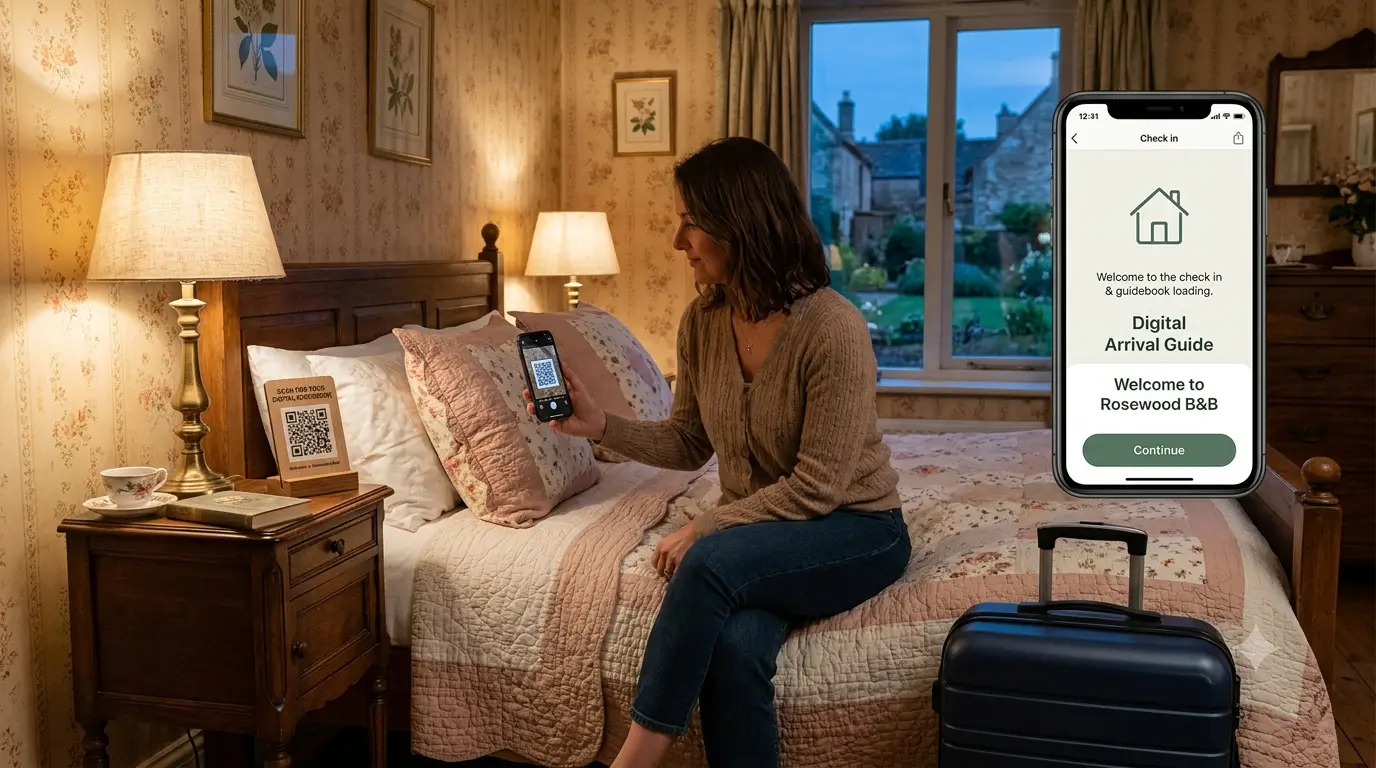
That's where a digital guidebook earns its place. Instead of a printed binder that goes stale the week you change the gate code, you give guests a link (and a QR code by the door) that opens directions, parking, room details, breakfast times, house rules, and local tips on their phone. The 9 PM arrival reads it in the car and lets themselves into the routine without a single text to you. We lean on exactly this for our own late arrivals.
For the questions a guidebook didn't anticipate, an AI concierge that answers from your guidebook covers the off-hours gap. Guest asks "is there a hairdryer?" at midnight, they get an answer from your own content instead of a silent phone. You wake up to a guest who's already settled, not a string of missed messages.
A guest landed near midnight after a delayed flight, let themselves in using the guidebook directions and access info, and messaged the next day to say it was the smoothest late arrival they'd had.
Timing access to the reservation
A small but real upgrade for after-hours arrivals: tie the arrival info to the booking dates so it becomes available shortly before check-in and closes after checkout. Reservation-timed access means the current guest sees their arrival details right when they need them, and last week's guest isn't still holding a live link to your place. For an owner-occupied property, that boundary matters more than it does for a remote rental.
If a chunk of your guests arrive from abroad, serving the same guidebook in their language removes the most common cause of an arrival-day phone call: someone who simply couldn't read the parking instructions.
A quick note on your PMS
Plenty of B&Bs run a property management system; plenty run on a spreadsheet and a paper calendar. If you do use a PMS, a guidebook works as a layer on top of it, the guest-facing arrival experience your PMS doesn't really handle. If you don't, none of this requires one. The check-in process above stands on its own either way, which is the point: it should fit how you already work, not force a new stack on you.
What to put in your arrival information
Keep it to what a guest needs in the first hour. Everything else can live deeper in the guidebook.
Step-by-step directions with real landmarks, plus the parking situation
Which room is theirs and how to get in, including the after-hours path
Your check-in window and latest arrival time
Breakfast time and where it's served
Wi-Fi name and password
Quiet hours and any house rules that affect the first evening
One real phone number that reaches a human
If you want a fuller template for the document this arrival info lives inside, our house manual guide covers the structure, and it adapts cleanly from a rental to a B&B.
FAQ
Do B&Bs have 24-hour check-in?
Most don't, and they shouldn't pretend to. A B&B usually has a check-in window built around the owner's day. What the good ones offer is a clear path for late or self check-in outside that window, so a guest arriving at 10 PM still knows exactly what to do, even if no one's at the door.
How do guests check into a bed and breakfast when the owner isn't there?
They use the arrival details you sent ahead of time: directions, parking, which room is theirs, and how to get in after hours. A digital guidebook makes this self-serve, and an AI concierge can answer the follow-up questions. The owner stays reachable by phone for anything genuinely unexpected.
What's the difference between B&B check-in and hotel check-in?
A hotel has a staffed front desk and a formal process. A B&B is more personal and usually owner-run, so check-in is warmer but can't be staffed around the clock. The B&B's edge is the human greeting; its constraint is that one person can't be on duty all day. The process exists to protect both.
Should a B&B use self check-in or always greet guests in person?
Both, depending on the hour. Greet in person when you can, because it's the moment guests remember. Have a reliable self check-in path for the times you can't, like late arrivals or when you're mid-breakfast service. Forcing one mode on every guest is what creates friction.
How early should I send check-in instructions?
Send the core arrival details a few days before, then the specific access path on arrival day. Early enough that guests can plan their drive, recent enough that the access info is fresh. Sending everything at booking and nothing after is the most common mistake.
Can I keep check-in personal at a small B&B without being glued to the door?
Yes, and that's the whole goal. Automate the logistics (directions, access info, the repeat questions) and reserve your time and attention for the actual welcome. Guests read warmth in how you greet them and how easy you made arriving, not in whether you personally recited the Wi-Fi password.
If you'd rather not rebuild your arrival flow by hand every season, you can have a digital guidebook running in under an hour, one that carries directions, room details, breakfast times, and after-hours answers so your in-person time goes to the welcome, not the logistics. It's the same approach we use for our own late arrivals. For the bigger picture on getting every stage right, see our guide to the bed and breakfast guest experience, and for the in-room touch, what to put in a B&B guest book.
Latest articles

How to Automate Check-In Instructions for Short-Term Rental Guests
Automate check-in instructions for short-term rental guests: the four-send sequence, what goes in a message versus a guidebook, and a copy-ready sample.

Vrbo Premier Host in 2026: Every Listing Now Stands on Its Own Record
Vrbo Premier Host requirements changed in 2026: per-listing scoring, tighter thresholds, quarterly checks. What each one means, and how it compares to Superhost.
Booking.com Guest Messaging Rules: What Hosts Can Send, When, and Why Links Get Removed
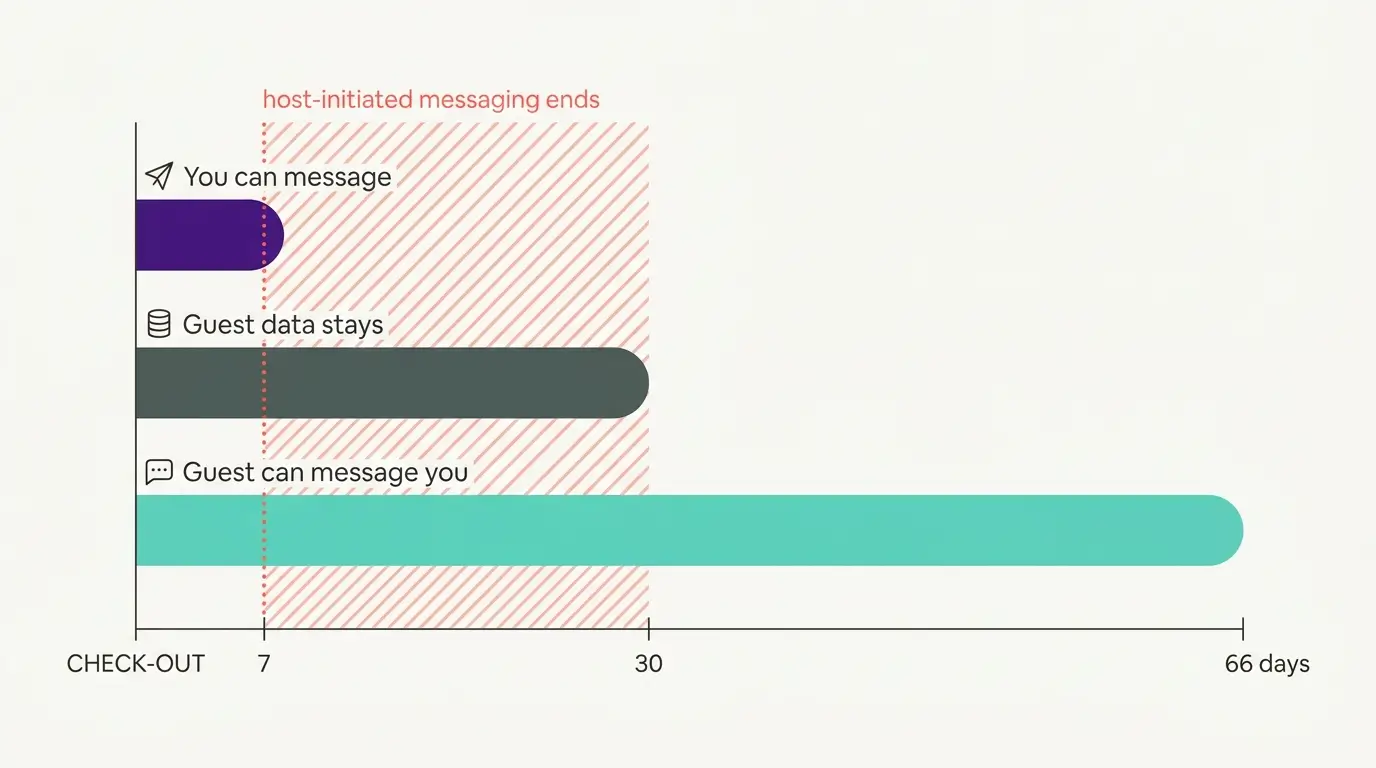
Booking.com guest messaging rules, verified at source: how long you can message a guest, why your links get removed, and what the partner terms say.
Vrbo's New Features for Fall 2026: What's Live, What's Gated, and What's US-Only
We sorted Vrbo's new features for fall 2026: what is live globally, what is gated behind eligibility, and what is US-only. Verified against Vrbo's own pages.