
A B&B "guest book" actually means two things — the memory book guests sign and the practical information guide that runs the property — and most search results conflate them. This post separates the two, then walks through what belongs in the information guide section by section (arrival, the room, breakfast, common areas, local picks, departure), how a B&B information guide differs from a short-term rental one, the honest trade-offs between printed binders, PDFs, and live digital guides, and the language and update habits independent B&B owners get wrong most often. Written from the perspective of hosts who have stayed in many small European B&Bs and built SmoothStay to handle the operational side themselves.
The first small B&B we stayed at in Paris had a guest book on the breakfast table that went back more than ten years. Every page was a different hand. Italian, German, English, Japanese, Brazilian Portuguese. Somebody had drawn a tiny map of the Marais. The host opened it to a page from two summers earlier and said, "you're going to love them, they sat where you're sitting." That single moment did more for the room rate than any photograph on the property's website.
The other thing she handed us, separately, was a slim leather folder with the WiFi password, breakfast times, the metro tip, and the number for a taxi after 11 pm. That was the guest book that ran the property. Two different documents. Both called "the guest book." Both doing real work.
What should a bed and breakfast guest book include?
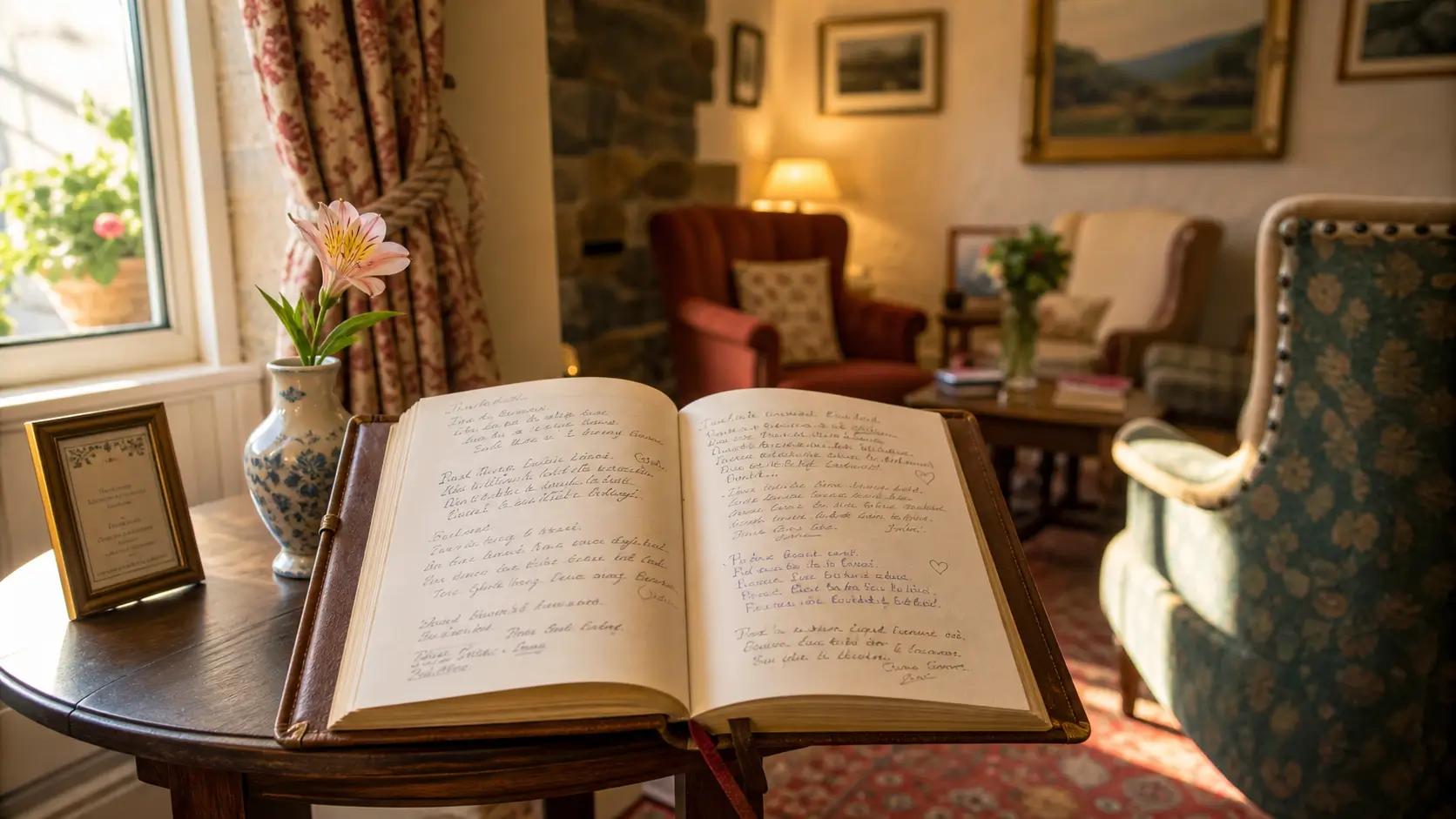
A B&B guest book usually means two things, and most search results mix them up. The first is the memory book guests sign before leaving. The second is the practical information guide that explains breakfast times, the WiFi, and how the house works. The memory book belongs on a side table or at the breakfast nook. The practical guide belongs in the room and on the guest's phone. The second one is the document that protects your reviews, your sleep, and the rhythm of the house.
At minimum, the practical guide should cover arrival, the room's quirks, breakfast (timing, location, dietary accommodation), common-area etiquette and quiet hours, local recommendations, and departure. The memory book needs only a good pen, a thoughtful first entry, and a place guests can find it.
The two meanings, and why you probably want both
The memory book tradition started in small European B&Bs that were tiny, relationship businesses with a high return rate. A signed book is a thank-you note, a credential, and a marketing asset all in one. A guest reading entries from 2003 is reading proof the place is loved.
The practical guide is a newer companion that has become non-negotiable in the last decade. Guests now arrive with one bag, one phone, and a thousand other things to think about. They will not call the front desk; you do not have a front desk. They will look for a printed sheet in the room or pull up a link on their phone. If neither exists, they will message you at 10 pm asking where breakfast is.
Most independent B&B owners we talk to keep the memory book because the tradition is part of the experience. They quietly move the practical content to a digital format because guests stopped reading the binder years ago. Both decisions are right.
What belongs in a B&B information guide
The structure below is what we have seen work across small properties of three to eight rooms. Adapt the order, not the list.
Arrival and check-in
The check-in window, the door procedure, what to do if a guest arrives earlier or later, where to leave bags before the room is ready, and the host's mobile number in a clearly visible place. If the front door is shared with a neighbor or another tenant, name that. Guests get nervous when they ring a bell and a stranger answers.
The room
A short paragraph per room type, or one shared page for the house. AC and heating instructions, the bathroom quirks (which side of the tap is hot, where the second towel set is), how the blinds work, where to put valuables, what the safe reset routine is. Photos do most of the work here. A short paragraph fills the rest.
Breakfast

This is the section that separates a B&B information guide from a vacation rental one. Serving times, where breakfast is laid out, whether guests sit at a common table, the order pattern for hot items, the dietary accommodation policy (gluten-free, vegetarian, dairy, allergens), and what coffee setup is available outside service hours. We see this one play out regularly: a guest assumes croissants will be ready at 6:30 am, service starts at 8, and the review picks up a small but real complaint.
Common areas and house rhythm
Quiet hours, whether the sitting room has a fireplace they can use, the library or honesty bar policy if there is one, smoking rules, footwear inside, the pet living on the property if there is one. B&Bs have a personality. Putting that personality in writing helps guests match it instead of stumbling into it.
Local recommendations
Five to eight places, picked tightly. One walking breakfast spot, one neighborhood dinner, one bar that stays open late, one walk worth taking, and one museum or attraction that is not the first result on a search. Each one gets a sentence about why you send guests there. Curation is the value. A list of twenty restaurants tells guests nothing.
Departure
A short checklist. Time, where to leave the key, how to handle the room (we tell guests "leave it, our team has it"), where to find the memory book if they want to sign it, and the email address used for review follow-ups. Keep it to six lines or fewer.
How a B&B information guide differs from a short-term rental one
The structural questions are similar. The texture is different.
What changes | Short-term rental | Bed and breakfast |
|---|---|---|
Breakfast section | Usually skipped | Often the most-read section |
Common areas | Whole-property privacy | Shared, with etiquette rules |
Host presence | Remote, contact only as needed | Often on-site, host culture matters |
Room awareness | One unit | Multiple rooms with different layouts and amenities |
Memory book | Rarely present | Strong cultural tradition |
The multi-room piece matters more than people realize. If you have five rooms and one shared guide, guests in the smallest room read instructions about the largest one and end up confused. Write the room-specific content per room. Keep the building-wide content (breakfast, common areas, local picks, house rhythm) in a base document everyone sees.
If you want a longer read on the operational side of running this kind of property, our overview of running a B&B as a small business covers what most guides skip.
Printed binder, in-room PDF, or digital guide: which holds up
We have seen all three in the B&Bs we have stayed at. The honest read:
Format | Always current | Works on phone | Fits a B&B's personality |
|---|---|---|---|
Printed binder in the room | No | No | High. Feels boutique. |
PDF emailed before arrival | Only if you re-send | Yes | Practical, but plain |
Live digital guide with a QR code in the room | Yes, instantly | Yes | Modern. Can still feel warm if branded right. |
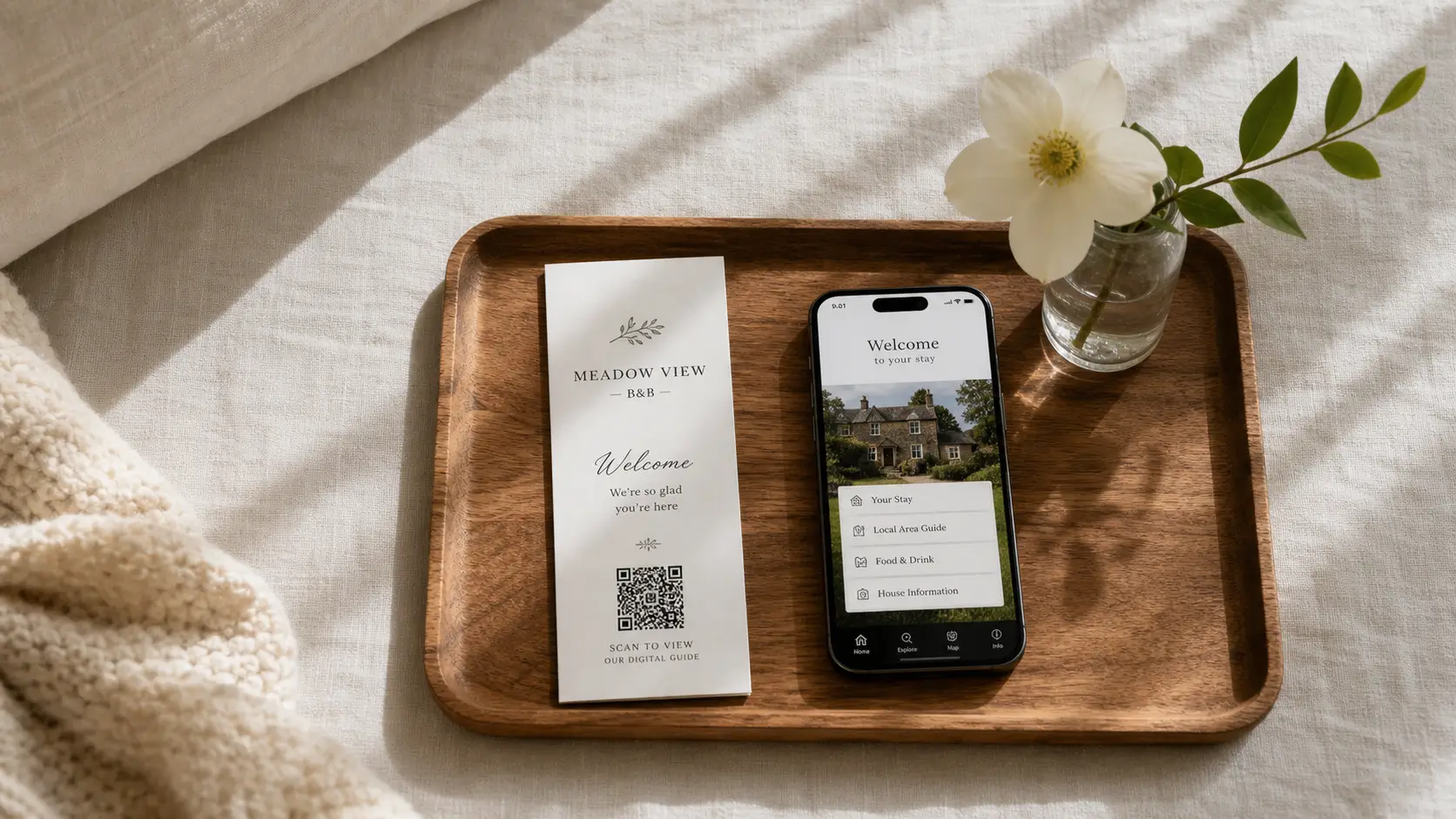
A binder in the room is a beautiful object. It is also two years out of date if you have not opened it since the last printer cartridge. The compromise we see working in well-run B&Bs is a slim printed welcome card branded to the property, sitting next to a small fresh flower, with a QR code that points to the live digital guide. The memory book stays where it has always been, on the side table by the entrance. If you want the longer parallel from boutique hospitality, our piece on the welcome book in a hotel context walks through the same trade-offs from a slightly more formal angle.
Languages: the silent loss most B&B owners ignore
More than half of European B&B guests do not have English as their first language. If your information guide is English-only, the guests who most need the breakfast section will read past it. The fix is not writing the guide three times. It is using a digital format that translates on the fly, or pasting each article through DeepL and adding a duplicate in the second and third languages your guests speak.
The breakfast section is the section where this matters most. A guest who cannot read the breakfast policy will not ask. They will come down at 7, find an empty room, and wait.
Three things B&B owners get wrong
The first is treating the information guide like a press release. Long block paragraphs about the building's history at the top, the practical content buried below. Move the building's story to your website. The guide is for the WiFi and the breakfast time.
The second is forgetting languages. (See above. It really is that common.)
The third is letting the guide drift. Codes change, breakfast supplier swaps, a coffee shop closes. Once a month, open your own guide on your own phone and walk through it like a first-time guest. You will find at least one thing to fix every time. Save that habit for a coffee, not a stressed Sunday night.
Where a tool like SmoothStay fits
We run our own properties in Washington DC and the Riviera Maya, and we built SmoothStay to handle what we needed for our own. The fit for an independent B&B is the unglamorous part: self-serve setup with no sales call, multi-room handled out of the box so each room has its own content without you re-typing the building basics six times, automatic translation so the breakfast section reads in three languages, and the same simple price per property whether you run three rooms or thirty. The platform was built by hosts who still host, which is the only reason it knows what a breakfast section should look like.
FAQ
What is the difference between a guest book and a guidebook for a B&B?
The guest book is traditionally the memory book guests sign with notes and well-wishes. The guidebook (or information guide) explains how the property works: arrival, breakfast, the room, departure. Most B&Bs end up with both, in different physical or digital locations.
Do guests still sign physical guest books at B&Bs?
Yes, especially at properties with a personal-hospitality identity. The act of signing is part of the experience. We rarely see physical books in short-term rentals, but at independent B&Bs they remain common and worth keeping.
Should I include house rules in the guest book?
Yes, inside the information guide, framed as house rhythm rather than legal language. "Quiet after 10 pm out of respect for the other rooms" reads better than "Guests are required to observe quiet hours." Tone is part of the brand.
How do I handle breakfast information for guests with dietary needs?
State the dietary accommodation policy in the breakfast section and ask guests to flag preferences the night before. A short sentence ("let us know any allergies or preferences before 9 pm and we will adjust") is enough. Saving the conversation for the day-of breakfast service is what causes scrambling.
Can I use the same guidebook content for multiple rooms?
Use one base document for the building (breakfast, common areas, local picks, house rhythm) and a short room-specific page per room. Photos and the bathroom-and-bed paragraph belong on the room page. Guests appreciate when the room page matches the room they are actually in.
Is a digital guest book worth it for a small B&B?
For the practical information guide, yes. It updates instantly, works on the guest's phone, and translates without redoing the whole document. For the memory-book tradition, keep the physical one. They serve different purposes and both still earn their place.
Latest articles

How to Automate Check-In Instructions for Short-Term Rental Guests
Automate check-in instructions for short-term rental guests: the four-send sequence, what goes in a message versus a guidebook, and a copy-ready sample.

Vrbo Premier Host in 2026: Every Listing Now Stands on Its Own Record
Vrbo Premier Host requirements changed in 2026: per-listing scoring, tighter thresholds, quarterly checks. What each one means, and how it compares to Superhost.
Booking.com Guest Messaging Rules: What Hosts Can Send, When, and Why Links Get Removed
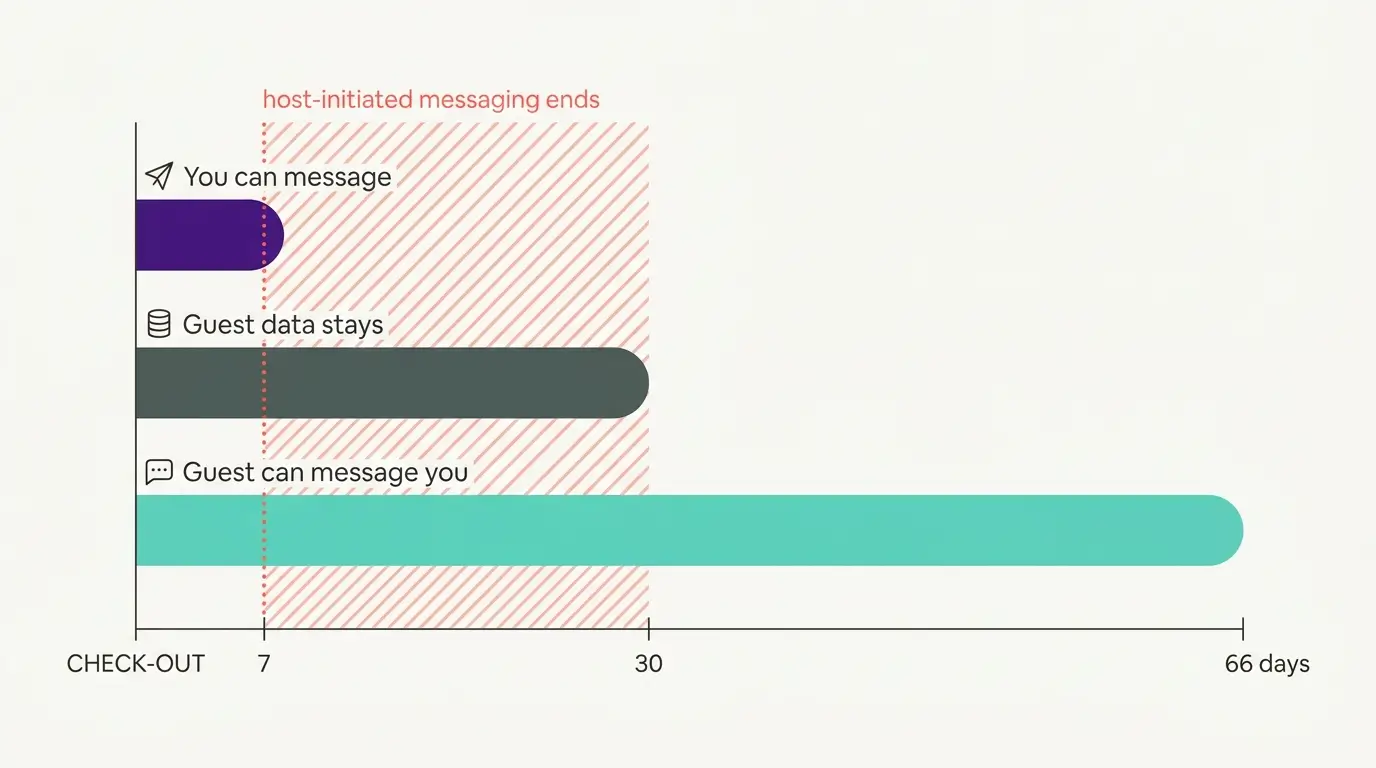
Booking.com guest messaging rules, verified at source: how long you can message a guest, why your links get removed, and what the partner terms say.
Vrbo's New Features for Fall 2026: What's Live, What's Gated, and What's US-Only
We sorted Vrbo's new features for fall 2026: what is live globally, what is gated behind eligibility, and what is US-only. Verified against Vrbo's own pages.