

A great bed and breakfast guest experience combines personal, owner‑present hospitality with smart, scalable tools like a digital guidebook and AI concierge to handle routine questions, allowing owners to focus on genuine, high‑touch moments. By structuring each stage—from pre‑arrival to post‑stay—and using clear communication, small B&Bs can deliver consistent warmth without burning out.
What makes a great bed and breakfast guest experience?
A great bed and breakfast guest experience feels personal at every step without making the guest work for it. Booking is easy, arrival is warm and clear, the room and the house make sense without a guided tour, breakfast is the moment people remember, and checkout is simple. What separates a B&B from a hotel is that a real person stands behind all of it. What separates a good B&B from a forgettable one is that the personal touch shows up consistently, not just when the owner happens to be in the room.
That consistency is the hard part. When you run four to fifteen rooms and you're also the breakfast cook, the housekeeper's backup, and the front desk, the same small questions eat your day: what's the wifi, when's breakfast, where do I park, what's good for dinner nearby. Answer them well and guests feel looked after. Answer them late, or differently each time, and the warmth quietly leaks out.
We run short-term rentals in Washington, DC and the Riviera Maya, which means we live on the guest-experience side of hospitality every day, the exact part a B&B is judged on. Breakfast service is its own craft and we won't pretend to teach it. But the job underneath the whole stay is the same one we work at constantly: the guest experience is the product, and the small repeated moments are where it's won or lost. This guide walks the B&B guest journey one stage at a time, with the moves that keep a property feeling personal even on a full weekend.
Before they arrive: the cheapest hospitality you'll ever do
The stay starts when someone books, not when they walk through the door. The days between booking and arrival are the cheapest hospitality you'll ever do, and most properties waste them on a single confirmation email.
A good pre-arrival message does three jobs. It reassures the guest they made a good choice. It answers the questions they're about to ask. And it sets expectations so nobody's surprised on the day. That means directions and parking, the check-in time and what to do if they arrive early, whether breakfast is included and when it's served, and any house quirk that matters before they get there: the staircase is steep, the village has one ATM, the nearest real grocery is fifteen minutes out.
Send it a few days out and you've headed off the texts that would otherwise land while you're plating eggs. You've also done something subtler. You've shown the guest, before they've met you, that this is a place where someone is paying attention. That impression is hard to earn back later if the first thing they feel is confusion.
Arrival and check-in: be there when you can, covered when you can't
Arrival is where the personal touch is supposed to shine, and also where it's most fragile. If you can greet someone at the door with a real welcome, do it. Nothing digital beats a host who remembers a guest's name and why they're in town. The problem is the arrivals that don't line up with you being free: the 11pm train, the flight that lands during breakfast service, the couple who turn up while you're mid-checkout with someone else.
Have an answer for those moments that doesn't feel like a cold hotel kiosk. Clear self-check-in instructions for when you can't be at the door: where to park, how to get in, which room is theirs, where to find you in the morning. Write it in a few sentences that sound like you, not like a form. Guests forgive a host who can't be in two places at once. They don't forgive being stranded on the porch at midnight with no idea what to do.
The room and the house: orientation without the lecture
Some guests want the full tour. Plenty don't. They want to drop their bags and figure it out themselves. The trick is making the house legible enough that both kinds of guest are happy.
The questions are predictable because they barely change from property to property: wifi, heat and AC, the hot-water quirk, where the extra blankets live, how the coffee works before breakfast, what time the front door locks, whether shoes come off at the entrance. Write the answers down once, somewhere a guest can reach at 10pm without knocking on your door, and you've turned a dozen small interruptions into a calm evening for everyone.
This is also where it's worth separating two things a few people lump together. The book guests sign, the keepsake with the messages and the recommendations scrawled in the margins, is its own lovely tradition, and we cover what to put in one in our guide to the bed and breakfast guest book. That's a different job from orienting a guest who just walked in needing the wifi password. One is about memory; the other is about the next ten minutes. A good B&B handles both, and doesn't ask the keepsake book to do the orientation work.
Breakfast: the signature moment, and the logistics that protect it
Breakfast is the one thing a B&B has that a hotel and a vacation rental don't, and it deserves to be treated as the centerpiece it is. This is where the personal touch pays off loudest. Remembering that one guest is gluten-free. That another asked about the Saturday market. That the couple in the front room are quietly celebrating an anniversary and would love a small gesture.
The logistics are where it gets tricky, and the logistics are what protect the magic. Dietary needs you didn't know about until the plate's in front of someone. Guests who want to eat at seven and guests who surface at ten. The group that has to leave early for a hike. A little structure goes a long way: collect dietary restrictions before arrival, make the serving window clear, and let people tell you their morning plans so you're not cooking for a room that's already left.
None of that makes breakfast less personal. It's the opposite. Knowing the gluten-free guest is coming means you greet them with something good instead of an apology. The structure is what frees you to be warm, because you're not improvising under pressure with a full dining room.
Checkout: end on easy
A clumsy checkout can undo a great stay. Guests standing in the hall at 11am, unsure whether to strip the bed, where to leave the key, whether they can stash their bags and grab one more morning in town. Every one of those is a small dose of friction at the exact moment you want them feeling good.
Spell it out plainly and ahead of time: the checkout hour, what to do with the key, whether luggage storage is on offer, how to settle anything still outstanding. The goal is a guest who walks out feeling the whole thing was effortless, because effortless is what shows up in the review.
After they leave: the part that compounds
The stay isn't over at checkout. A short, genuine thank-you, an easy nudge toward a review, and a reason to come back directly next time turn a single stay into a relationship. For an owner-run B&B, repeat guests and word of mouth are close to the whole game, and they're built in the day or two after someone leaves, while the memory is still warm.
You don't need a marketing funnel for this. You need to not drop the thread. A guest who felt genuinely looked after wants to say so; make it easy and many of them will.
The tension at the center: personal attention doesn't scale
Here's the bind every B&B owner knows. Your superpower is that you're present and personal. Your constraint is that you are one or two people, and presence doesn't multiply. On a quiet Tuesday you can give every guest your full attention. On a full weekend, with rooms turning over and breakfast for fourteen, the same questions you happily fielded on Tuesday all arrive at once, and the warmth you're known for becomes the thing you can't keep up with.
Most owners answer this by working harder, which holds right up until it doesn't. The better move is to take the repetitive load off yourself so your real attention lands where it counts: the conversation over breakfast, the local tip only you can give, the guest who's actually stuck. The repeated questions don't need you. They need a good answer, available the second the guest wants it.
It helps to be honest about which touchpoints genuinely need the owner and which just need a reliable answer.
Guest touchpoint | Needs your personal touch | Can be handled before it's asked |
|---|---|---|
The welcome and the conversation | Yes | No |
Special occasions and dietary needs | Yes | Collected ahead of time |
Local recommendations you know by heart | Yes, and worth writing down too | Partly |
Wifi, parking, breakfast hours, house rules | No | Yes |
"How does the shower work?" at 11pm | No | Yes |
The early-departure or late-arrival edge case | Sometimes | Mostly |
The pattern is clear once it's laid out. The top of the list is where your hospitality lives. The bottom is repetitive load that's stealing time from the top.
How a digital guidebook keeps the touch personal
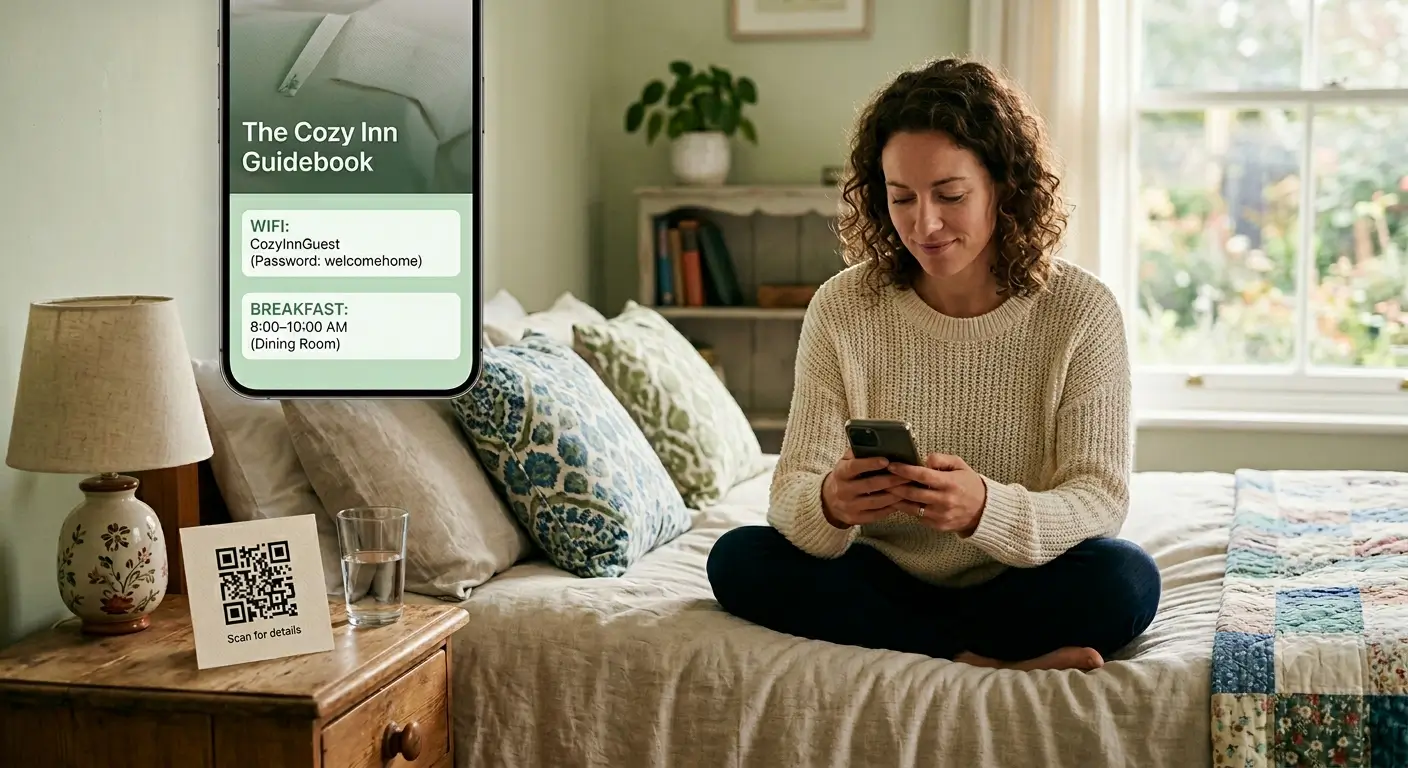
This is where a digital guidebook earns its place in a B&B, and it's worth being clear about what it does and doesn't do. It doesn't replace you. It replaces the binder, the laminated card on the dresser, and the same five answers you give out loud every single day.
Put the predictable things where guests can reach them on their own phones: wifi, breakfast hours, parking, the house quirks, and your real local recommendations, the coffee place that's actually good rather than the chain on the corner. Share it as a link in your pre-arrival message and as a QR code in each room. When a guest wonders how the coffee maker works before you're even up, they look instead of waiting on you.
For the questions the guidebook didn't quite cover, an AI Concierge answers from your own content, in the guest's language. The couple visiting from Germany and the family from Mexico City both get a clear reply without you keeping translations in your head or reaching for a phone app at the table. It only ever says what you put in the guidebook, so it sounds like your house, not a generic bot.
The guidebook is also the thing guests actually open, which is the whole point of building it well. A wall of text nobody reads helps no one. Clean sections, a photo of the right light switch, the answer where the guest is already looking. If you happen to run a property-management system, the guidebook sits on top of it as the guest-facing layer rather than replacing anything; plenty of small B&Bs run no PMS at all, and that's fine too. Either way, the questions guests ask are remarkably consistent, which is exactly why they're so fixable, and we've written up the ones that come up over and over if you want a head start on what to include.
FAQ
What makes a bed and breakfast different from a hotel?
A B&B is owner-present and personal by design. The host usually lives on site, cooks breakfast, and knows the area firsthand, so the experience is more like staying in someone's home than checking into a property run by shifts of staff. The trade-off is scale: a hotel has a front desk around the clock, while a B&B owner has to deliver that personal attention without being available every minute.
How can a small B&B give a personal touch without burning out?
Separate the touchpoints that need you from the ones that just need a reliable answer. Conversation, special occasions, and the recommendations only you can give are worth your time. Wifi, parking, breakfast hours, and house quirks are not; put those somewhere guests can reach on their own. Taking the repetitive questions off your plate is what frees you to be genuinely present for the rest.
What should a B&B tell guests before they arrive?
Directions and parking, the check-in time and what to do if they're early, whether breakfast is included and when it's served, and any quirk that matters before arrival, like a steep staircase or a remote location. A clear pre-arrival message prevents the most common day-of texts and signals that someone is paying attention before the guest has even met you.
Do bed and breakfasts need a website or app for guests?
You don't need guests to download a native app for a two-night stay; most won't. A web-based digital guidebook they open from a link or QR code does the job without the friction. It gives guests instant access to house information, breakfast details, and local tips, and it's far easier to keep current than a printed binder.
How do you handle breakfast for guests with different schedules and diets?
Collect dietary needs before arrival so nothing surprises you at the plate, set a clear serving window, and ask guests about their morning plans so you can cook for the room that's actually showing up. A little structure makes it possible to be warm and personal instead of improvising under pressure with a full dining room.
How do bed and breakfasts get repeat guests?
Repeat business is built in the day or two after checkout, while the memory is warm. A genuine thank-you, an easy path to leave a review, and a simple reason to book directly next time go a long way. For an owner-run property, word of mouth and returning guests are most of the business, and they come from guests who felt genuinely looked after, not from discounts.
If you'd rather not format all this by hand
You can absolutely build your guest experience out of a binder, a laminated card, and a lot of repeated answers, and plenty of B&B owners have for years. If you'd rather not, you can have a digital guidebook for your property in minutes, point guests to it with a QR code in each room, and let an AI concierge field the late-night questions in your guests' languages while you sleep. It's built by people who run properties for a living, for the part of hospitality that should feel personal but shouldn't run you into the ground.
Latest articles

How to Automate Check-In Instructions for Short-Term Rental Guests
Automate check-in instructions for short-term rental guests: the four-send sequence, what goes in a message versus a guidebook, and a copy-ready sample.

Vrbo Premier Host in 2026: Every Listing Now Stands on Its Own Record
Vrbo Premier Host requirements changed in 2026: per-listing scoring, tighter thresholds, quarterly checks. What each one means, and how it compares to Superhost.
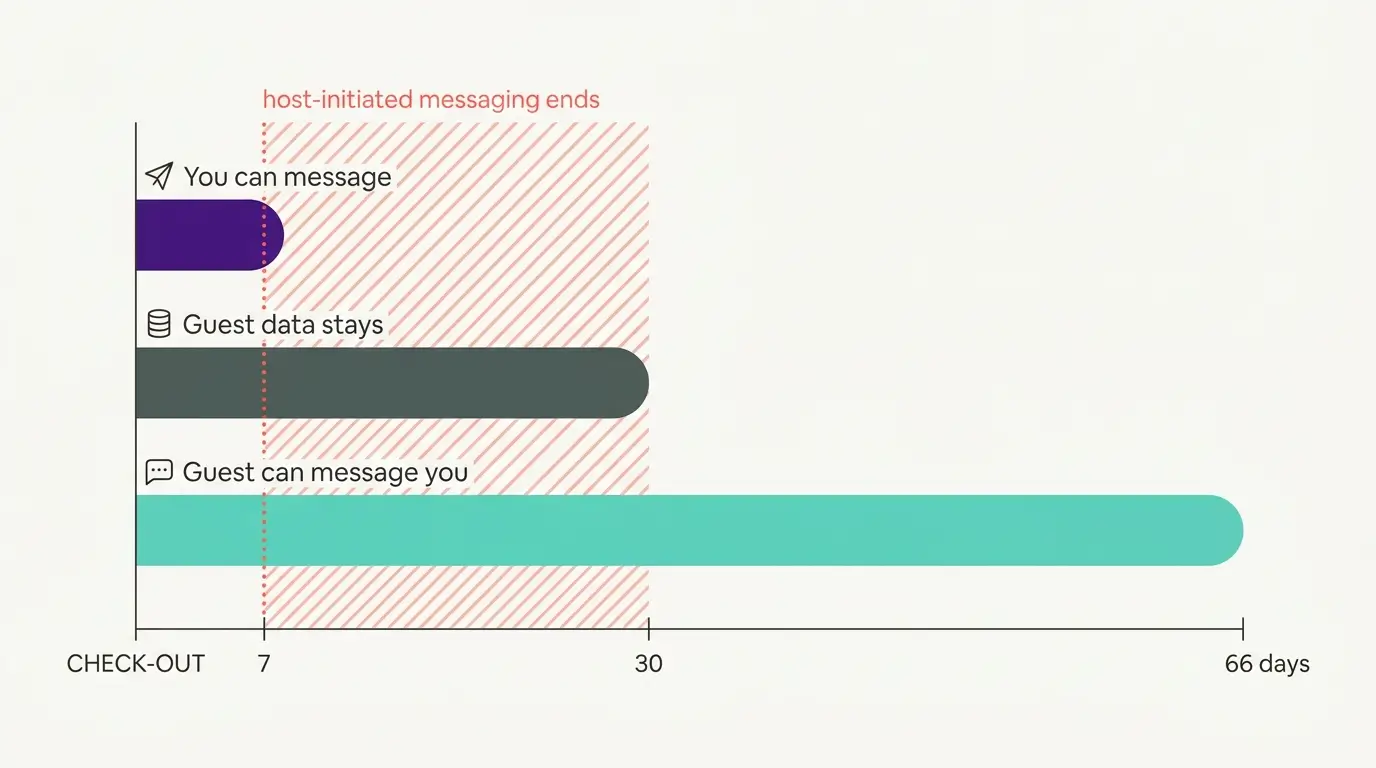
Booking.com Guest Messaging Rules: What Hosts Can Send, When, and Why Links Get Removed
Booking.com guest messaging rules, verified at source: how long you can message a guest, why your links get removed, and what the partner terms say.
Vrbo's New Features for Fall 2026: What's Live, What's Gated, and What's US-Only
We sorted Vrbo's new features for fall 2026: what is live globally, what is gated behind eligibility, and what is US-only. Verified against Vrbo's own pages.