
A comprehensive campsite guide book should cover essential details such as site location, arrival instructions, facility maps, fire rules, quiet hours, waste management, local trails, emergency information, and checkout procedures, while also offering practical access solutions like QR codes or WhatsApp links that work even with spotty signal. The post illustrates these elements with a real‑world example of a glamping property, emphasizing clear, specific guidance for hosts and guests alike.
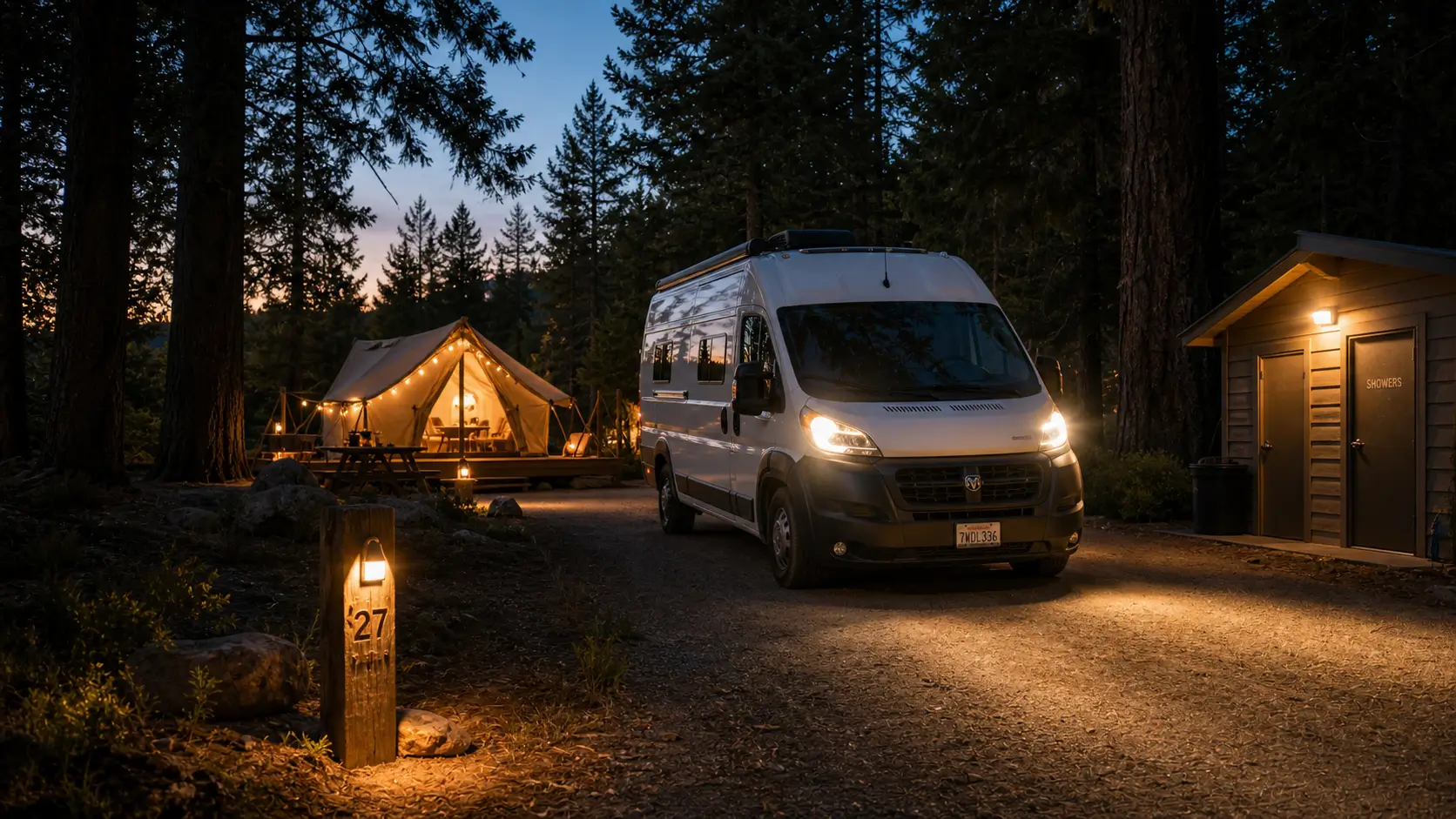
A glamping operator we know in California still winces about one Friday arrival. A couple booked a furnished tent, rolled in after dark, and spent close to an hour creeping along the loop with only a site number and a map that wouldn't load on one bar of signal. None of it was really the property's fault. The information existed. It just wasn't anywhere a tired guest could reach it in the dark.
That arrival is the whole reason a campsite guide book exists. Not to look tidy on the check-in shed counter, but to get a worn-out guest onto the right pitch, set up, and quiet before they wake the rest of the field.
What should a campsite guide book include?
A campsite guide book should cover eight things, roughly in the order guests need them: finding and pulling into the assigned site, a facilities map, fire rules, quiet hours, waste and recycling, local trails and supplies, emergency contacts, and checkout. Arrival and facilities come first because those are the two sections a guest reads with a head-torch on and the engine still ticking. The rest can wait for coffee.
Keep every section short and answer the question the camper is actually asking at that moment. The sections below run in the order people reach for them.
Finding the site and arriving after dark
This is the only part of the guide a guest reads before they have stopped moving, so it has to be exact. Give the site's location against a landmark they will actually see in headlights, not a grid reference. "Pitch 12 is the third clearing on the left after the shower block" beats a coordinate every time.
Say which way the loop runs and flag the awkward bits: the low branch by the dump point, the soft ground after rain, the turn that is tight with a trailer. For after-hours arrivals, spell out where the late-check-in board is, whether the gate code changes overnight, and what to do if someone is already parked on the assigned pitch. That last one happens more than anyone likes to admit. If you also run RV or campervan sites, the hookup detail gets its own treatment in our RV park guide book breakdown.
The facilities map
A simple labelled map does more than three paragraphs of description. Mark the toilets and showers, drinking-water taps, the washing-up area, the dump or chemical-disposal point, the laundry, the bin store, the camp shop and its hours, and where the Wi-Fi or phone signal is strongest. If coverage only reaches the reception clearing, say so in the guide instead of letting a guest find out at their pitch at 11pm.
Glamping setups have their own version of this. A safari tent with a wood-burner, a shepherd's hut with a compost loo, a yurt with a kitchen pod. Each comes with quirks a guest only learns by accident, so write them down once.
Fire rules
This section protects your site and your license, so be specific and a little firm. State whether campfires are allowed and, if so, where: a fire bowl, a raised pit, the communal ring only. Say where firewood comes from, whether outside wood is banned, where cold ash goes, and what happens during a burn ban. A rule with a reason next to it gets followed. A wall of "campers must not" gets skipped.
Quiet hours and the camp's rhythm
Put the actual times in, not a vague request to be considerate. Quiet hours, generator hours if you allow them, when the gate locks, and when reception is staffed. Add the few things that cause real friction between neighbors: music after dark, dogs left barking, headlights swung across tents at midnight, kids cycling the loop at speed. Writing the camp's pace down helps guests match it instead of stumbling into it.
Waste and recycling
Waste is fiddlier than guests expect, and it is the section they get wrong most. Spell out the sorting your site uses, where the bins live, the emptying days, and what does not belong in them. For chemical toilets or grey-water tanks, give the disposal point and the etiquette plainly. One blocked disposal point can sour a Sunday changeover for the whole field.
Local trails and where to buy what you forgot
Keep this to your real shortlist, the places you would point a neighbor toward. One walk from the gate worth the morning, one harder trail for the keen ones, the nearest shop for milk and a forgotten gas canister, and one pub that will not mind muddy boots. Five good picks beat a directory. Flag trail conditions when they matter, like the path that floods after rain.
Emergency and after-hours contacts
Keep this to four or five lines so it does not read like a place where things go wrong. The after-hours number that reaches a human, what to do in a power or water issue, the nearest hospital, and where the first-aid kit and fire points are. For rural sites, add the what3words or grid reference for the entrance, because an ambulance will ask for it and a panicking guest will not know it.
Checkout
Short and clear. Departure time, what to do with the key or gate fob, whether to strip the bed in a glamping unit, how to leave the fire bowl, and where the rubbish goes on the way out. Four or five lines, not a paragraph. The easier you make leaving, the less a late checkout holds up your turnaround.
Getting the guide book onto a phone when the signal is thin
A guide nobody can open is just a document. Signal at campsites is famously patchy, so plan for it. A digital guide book needs a connection to load, so the job is to get it onto the guest's phone while they still have bars.
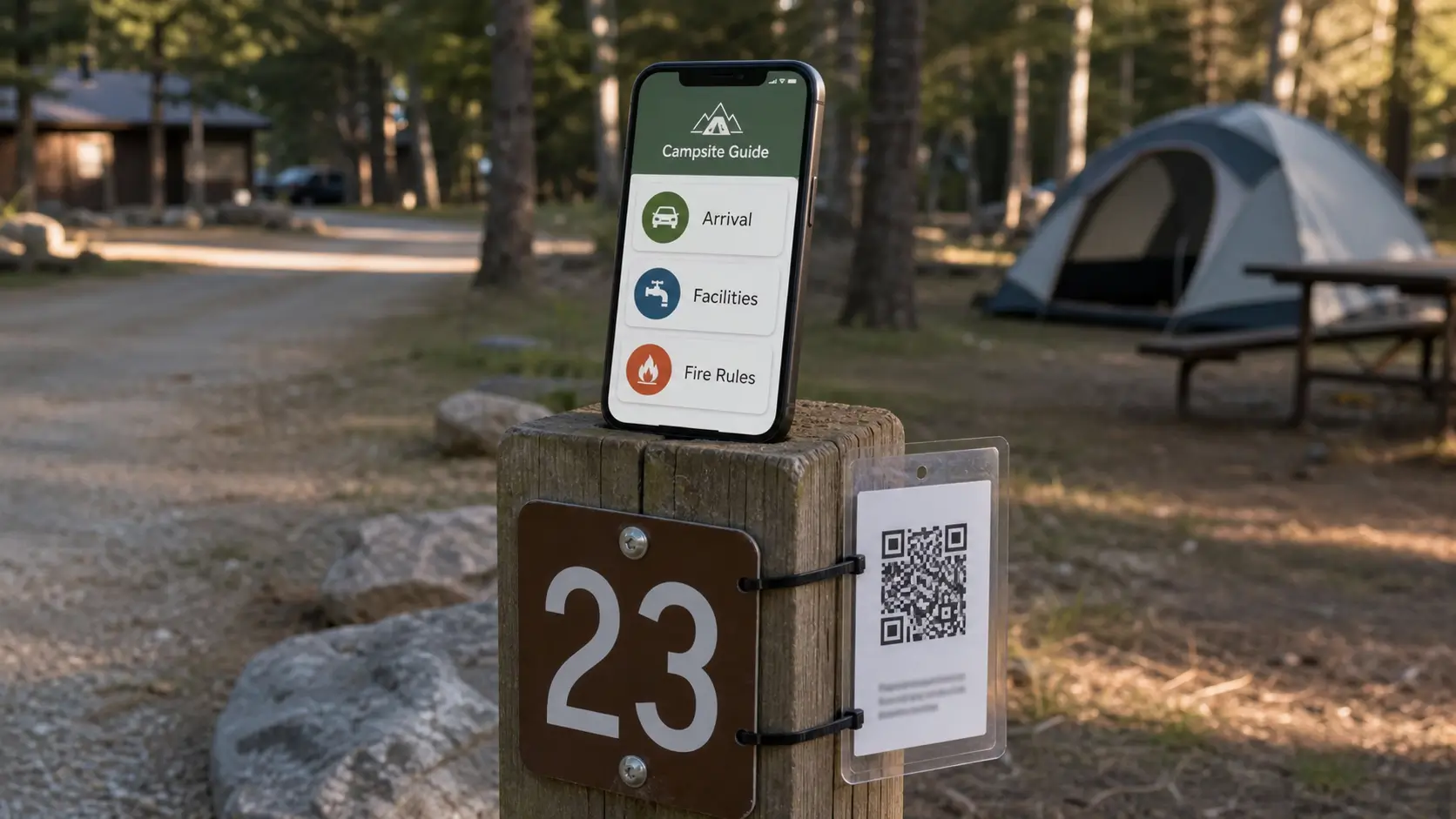
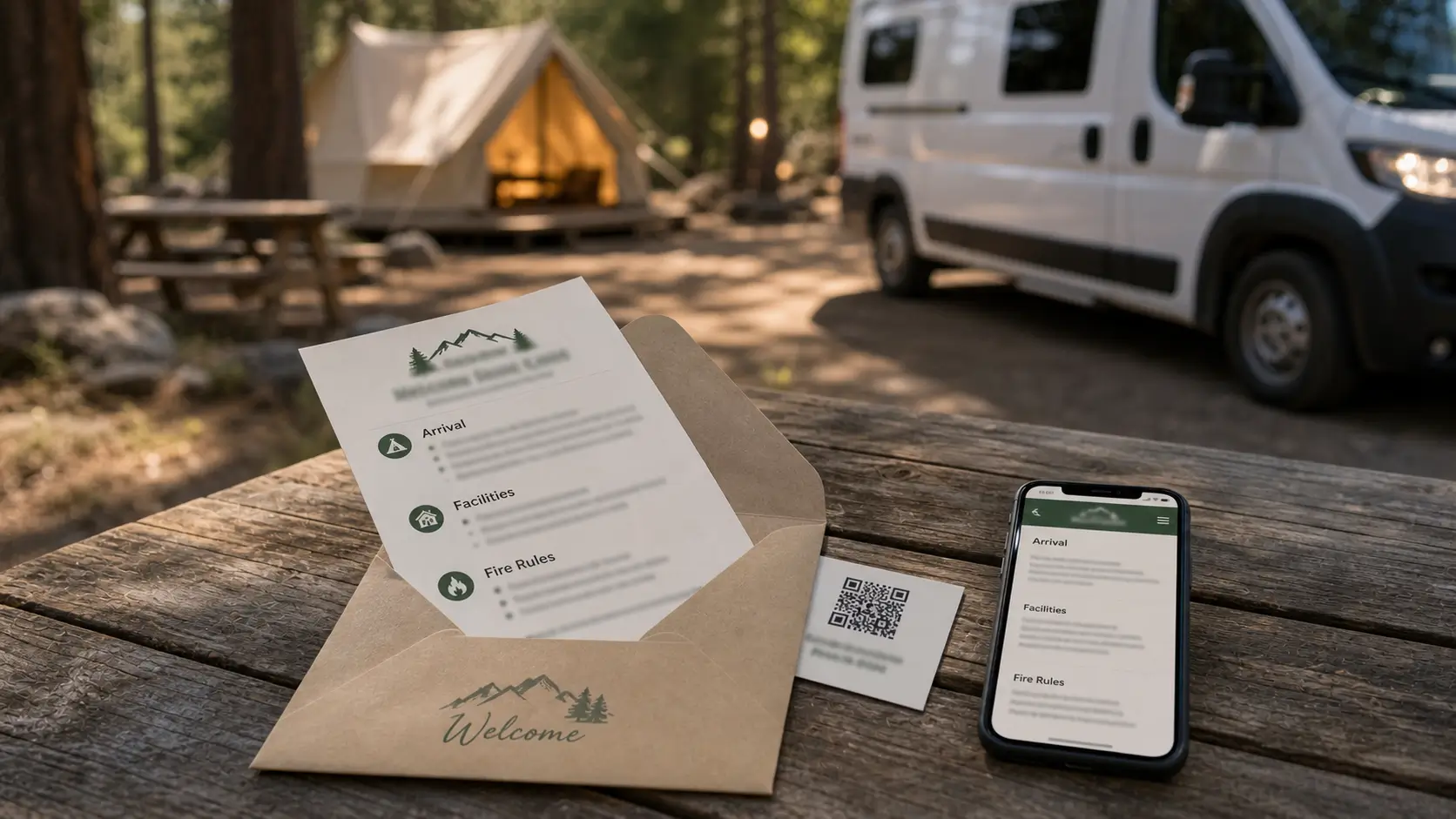
Put a weatherproof card with a QR code at the check-in shed and on the site post where signal is best, and drop the same link in the booking confirmation and a WhatsApp message so guests read it on the drive in. For back-field pitches with no coverage, keep a printed one-pager in the welcome envelope with the basics: a site map, the gate code, fire rules, and your number. That printed backup always works, and we made the wider case for keeping both formats in paper versus digital guest guides.
Way in | Holds up when signal is weak | Best for |
|---|---|---|
QR code on the site post or shed | Only where there is some signal to load it | Pointing guests to the guide right at the spot |
Link in the booking confirmation | Yes, if they open it on the way in | Getting guests to read before they arrive |
WhatsApp message with the link | Yes, if opened while still in signal | A channel campers already check |
Printed one-pager in the envelope | Always | No-coverage pitches and dead zones |
Where a tool like SmoothStay fits
We built SmoothStay running our own rentals in Washington DC and the Riviera Maya, not a campground. A digital guide book works for non-traditional properties just as well as for a house, though. Each pitch or unit type gets its own arrival and facilities detail, and you update the disposal-point hours once instead of reprinting a board.
If you would rather not format all of this into a PDF yourself, you can have a free digital guide book for your site running in about an hour, then edit it once whenever a rule changes. No card needed.
FAQ
How do guests open the guide if there is no signal at the pitch?
Most digital guides need a connection to load, so have guests open them where signal is best. Send the link in the confirmation so they read it on the way in, and put a QR code at the entrance or shed where bars are strongest. For pitches with no coverage, a printed one-pager in the welcome envelope is the reliable fallback.
What should actually go on the site post itself?
The site number, a QR code to the guide, and the pitch type or hookup if there is one. That is it. The post is a pointer, not the manual. Everything else lives one scan away.
Do I need a guide book if my site is small?
If guests have ever knocked on reception asking where the showers are, yes. A six-pitch site gets the same questions a sixty-pitch one does, just from fewer people. Writing the answers down once is cheaper than repeating them all season.
How is a glamping guide book different from a standard campsite one?
Glamping units come with kit a tent camper does not have: wood-burners, gas hobs, compost or chemical loos, hot tubs. Each needs a short how-it-works note with a photo, because a guest who cannot work the stove will message you at dusk. The arrival, fire, and quiet-hours sections stay much the same.
How often should I update a campsite guide book?
Whenever something changes, and a quick read-through at the start of each season. Burn bans, new disposal rules, a changed gate code, updated trail conditions. Open it on your own phone, walk through it like a first-night guest, and fix the one thing you spot.
Latest articles

How to Automate Check-In Instructions for Short-Term Rental Guests
Automate check-in instructions for short-term rental guests: the four-send sequence, what goes in a message versus a guidebook, and a copy-ready sample.

Vrbo Premier Host in 2026: Every Listing Now Stands on Its Own Record
Vrbo Premier Host requirements changed in 2026: per-listing scoring, tighter thresholds, quarterly checks. What each one means, and how it compares to Superhost.
Booking.com Guest Messaging Rules: What Hosts Can Send, When, and Why Links Get Removed
Booking.com guest messaging rules, verified at source: how long you can message a guest, why your links get removed, and what the partner terms say.
Vrbo's New Features for Fall 2026: What's Live, What's Gated, and What's US-Only
We sorted Vrbo's new features for fall 2026: what is live globally, what is gated behind eligibility, and what is US-only. Verified against Vrbo's own pages.