
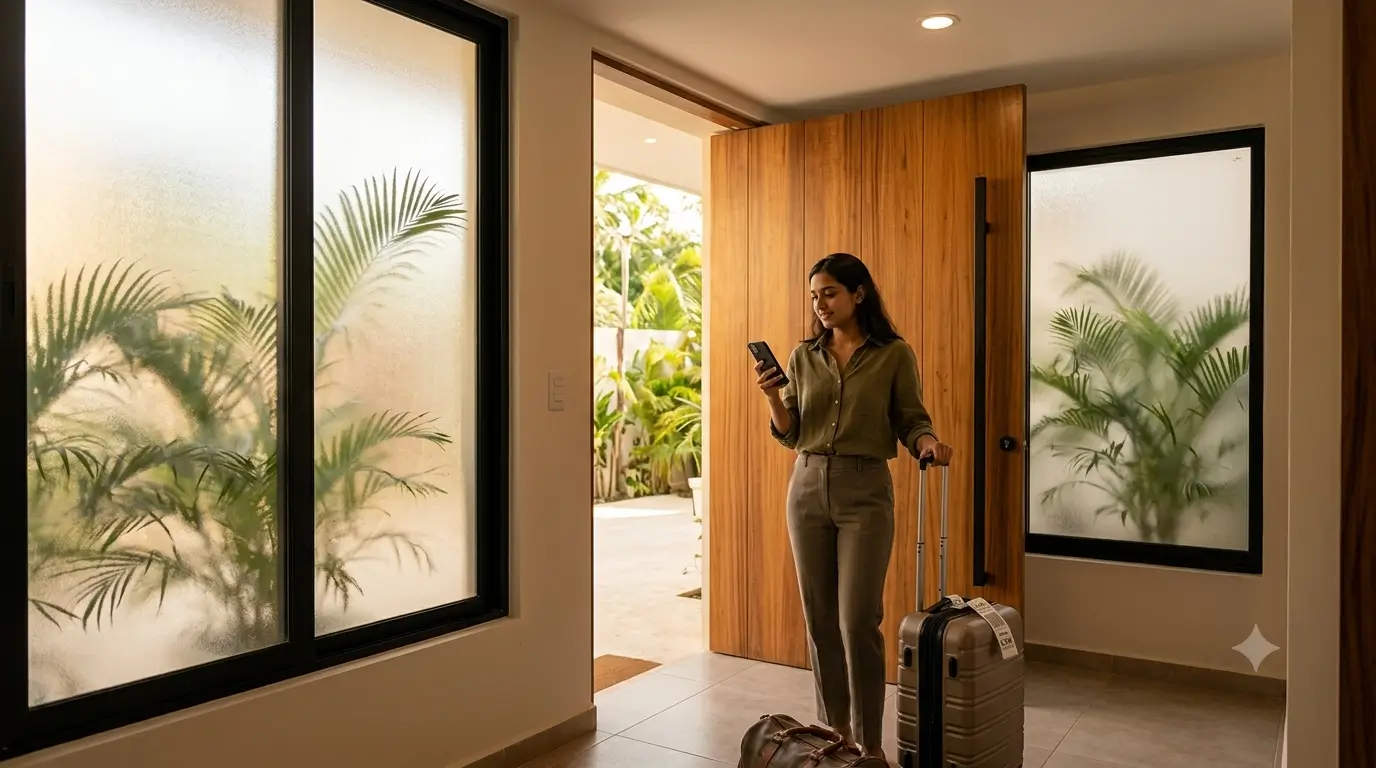
Effective communication with non‑English‑speaking guests relies on pre‑translated, simple written instructions and visual cues that eliminate language barriers for check‑in, house rules, and emergencies. Using an auto‑translating guidebook and an AI Concierge lets guests access accurate information in their own language, reducing confusion and support workload.
We host in Washington, DC and across the Riviera Maya, so on any given week half our guests arrive speaking Spanish and half speaking English, and a good number speak neither as a first language. After ten-plus years of this, the pattern is clear: the language gap rarely causes the problem people expect. It's not the small talk that breaks down. It's the check-in code at 11pm, the house rule nobody parsed, the "how do I turn on the AC" message at 2am from a guest typing into their phone translator and getting a wrong answer back.
How do you communicate with guests who don't speak English?
Communicate with non-English-speaking guests by writing everything down in plain, simple language and translating it into their language before they arrive, rather than trying to translate live over chat during a problem. Put check-in, wifi, house rules, and emergency contacts in one place the guest can read in their own language, keep sentences short and literal, and lean on visuals like photos, numbers, and icons that need no translation at all. Then, when a question does come up, an assistant that answers from your guidebook in the guest's language handles it without a live back-and-forth.
Set the language expectation before they book
Most of the friction is decided before check-in. If your listing, your automated messages, and your welcome note are English-only, a guest who books anyway has already told you they'll manage, but they're also bracing for it. You can defuse that early.
A short line in your first message goes a long way. We send something like: "We speak English and Spanish, and everything in your guide is available in your language." For us the Spanish is real, so we say it plainly. If you don't speak the guest's language, don't fake it. Say instead that all your instructions are written to translate cleanly and that you're reachable any time. The promise you can keep is more reassuring than the one you can't.
The other pre-arrival move: send the important stuff early, not at the door. A guest reading check-in steps the night before, with time to run them through a translator and ask a follow-up, arrives calm. The same steps dropped at 4pm on arrival day get read in a rush, in a second language, standing on a sidewalk with luggage. Same words, very different outcome.
Write for translation, not for style
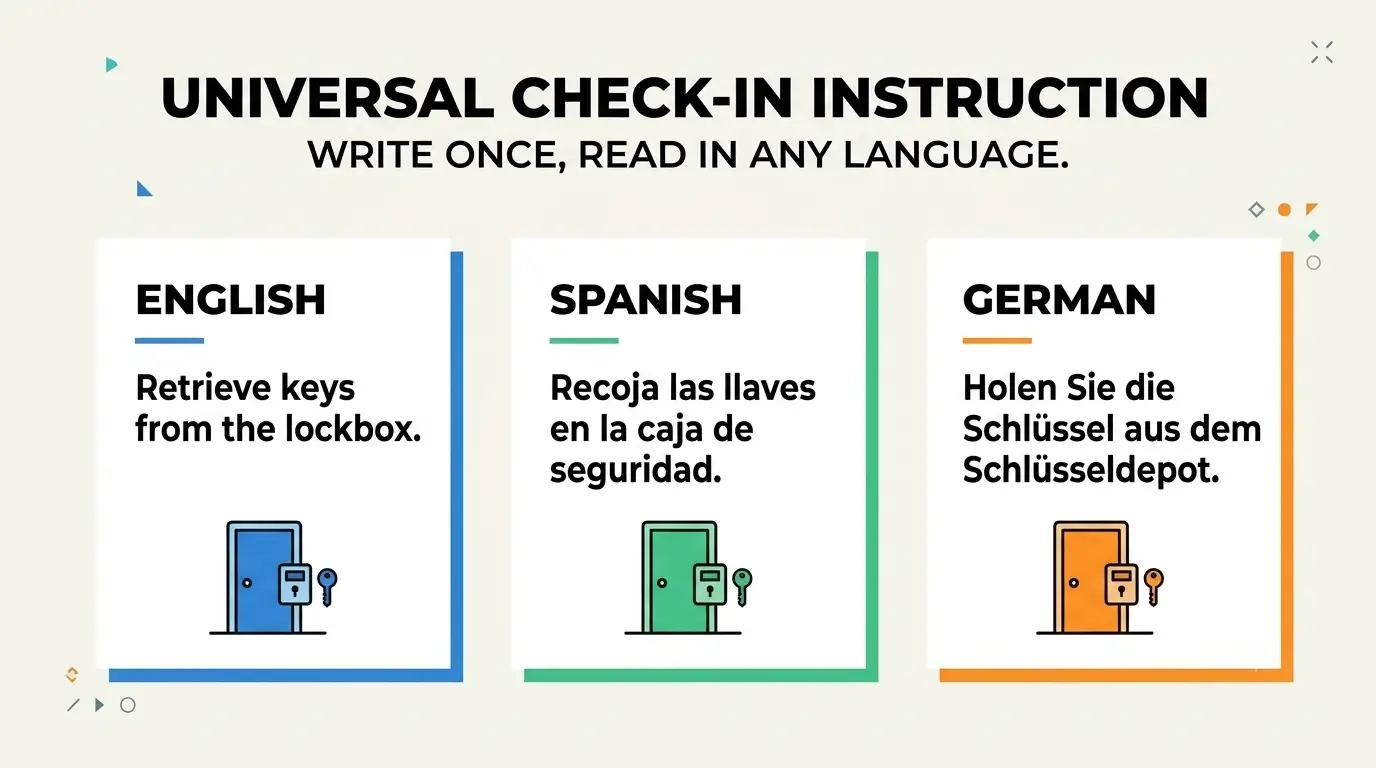
Here's the shift that fixed more of our problems than any app: we stopped writing cleverly and started writing to be translated. Machine translation and a guest's own mental translation both choke on the same things: idioms, humor, long sentences, and words that carry a local assumption.
What that looks like in practice:
One instruction per sentence. "Take the elevator to the third floor and the unit is on your left as you exit" becomes two lines: "Take the elevator to floor 3. Turn left when you exit."
Cut idioms and slang. "The AC can be a bit finicky" means nothing after translation. "The AC is slow. Wait 10 minutes for the room to cool" survives.
Use numbers and specifics over vague words. "A little down the road" is untranslatable in any useful way. "200 meters, about a 3-minute walk" is not.
Skip humor in instructions. Be warm in the greeting, literal in the directions. A joke that lands in English becomes a confusing sentence in Portuguese.
None of this makes your guide cold. The warmth lives in the welcome and the recommendations. The instructions just need to be right in every language, and short, literal sentences translate right far more often than pretty ones do.
Where miscommunication actually costs you
Not all information carries the same risk. A missed restaurant tip is nothing; a missed lockbox code is a guest locked out in the dark. We put the most effort into the moments where getting it wrong actually hurts.
Moment | Why it's high-risk | What to do |
|---|---|---|
Check-in / access | A wrong code or turn means a stranded guest with no easy way to reach you | Numbered steps, a photo of the door and lockbox, the code as digits not words |
House rules | A rule misunderstood becomes a rule "broken," and neither side meant it | Short, literal rules; explain the why in one line so it isn't just a command |
Emergencies | The one place a translation lag is genuinely dangerous | Local emergency number, your number, and the property's full address written out in the guest's language |
That last row matters more than any convenience. A guest who can't quickly say where they are, or read what number to call, is a real safety gap. We keep the property's exact address, the local emergency number, and the nearest clinic written plainly in the guide, in the guest's language and not just ours, so nobody has to translate under stress.
Message translation helps, but it only covers the conversation
Worth being clear about a distinction here, because it decides what you actually need to solve. Airbnb auto-translates the messages in its inbox, and most PMS inboxes now do the same. That handles the live thread: a guest writes in Portuguese, you read it in English, you reply, and they read it back. Lean on it. It works.
What message translation doesn't touch is everything the guest reads when they aren't messaging you: the check-in steps, the house rules, the wifi, the parking. That reference material is where most arrival confusion lives, and no inbox translates it. The translation itself isn't flawless either, rendering a bad guess as confidently as a good one. So for anything that has to be exact, a code or an address, pre-translated instructions the guest reads on their own beat a live exchange. When you do chat off-platform, keep your side short and confirm the outcome: "Did the code work? Yes or no?"
We compared the apps and options in our guide to multi-language tools for rental hosts if you want to weigh what's out there. This post is about the communication itself; that one is about the toolbox.
Let visuals carry what words can't
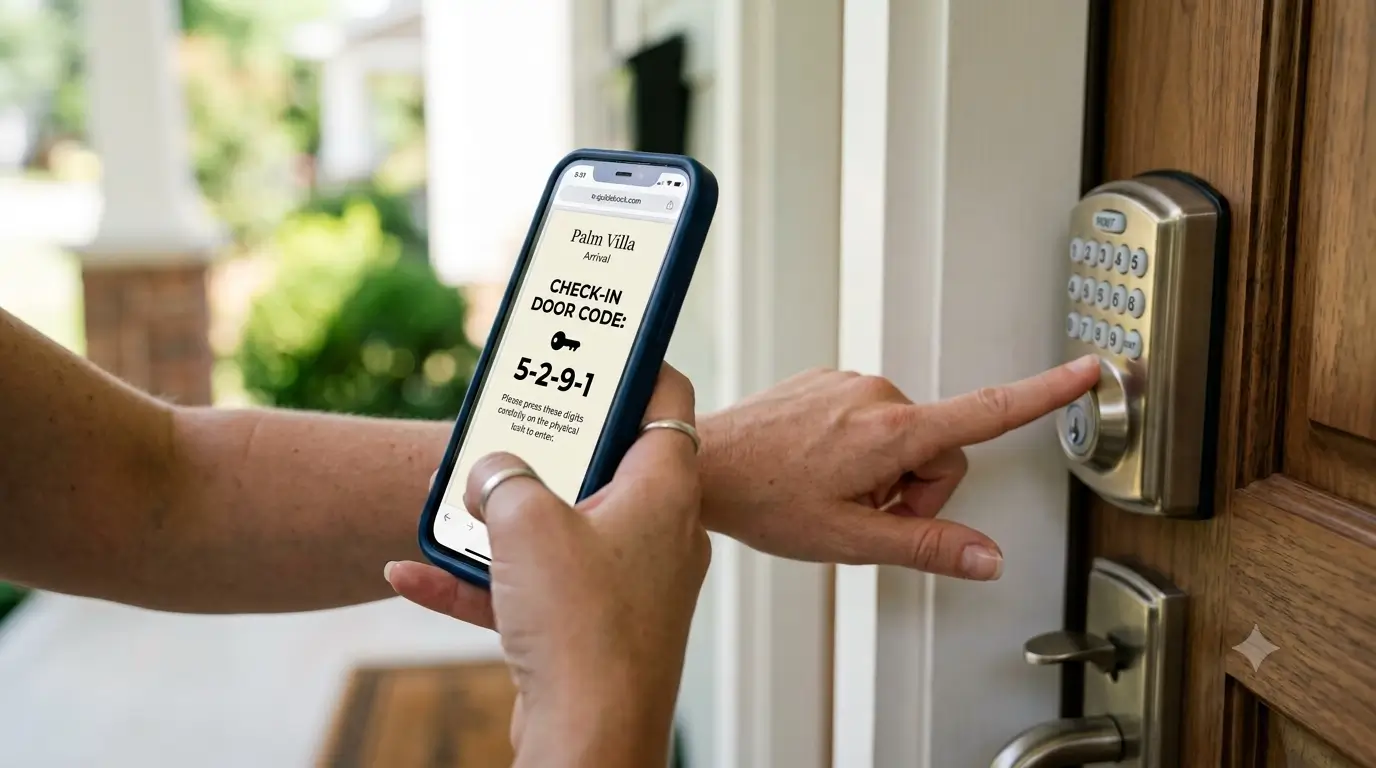
The most reliable "translation" is the one that needs none. A photo of the actual front door, with the lockbox circled, works in every language on earth. So does a numbered diagram, a screenshot of the exact button on the thermostat, or a simple icon next to each section.
We lean on this hard in Playa del Carmen and Tulum, where guests come from all over. A short clip of how the dishwasher controls work, or a photo of the specific gate where they enter the residential complex, has cut our arrival-day questions more than any amount of translated text. When you're deciding what to write versus what to show, ask which a stranger could follow with the sound off. If a photo or video does the job, use those first instead of text.
Where SmoothStay fits
This is the part we built for, because we lived the problem. Our digital guidebook auto-translates into more than 100 languages, so every guest reads the exact same check-in steps, wifi details, house rules, and emergency info in their own language, without you keeping separate versions in sync. You write it once; each guest sees it in theirs.
For the questions that still come up, the AI Concierge answers in the guest's language, working only from what you've actually put in your guidebook and reservation details — so it's not inventing anything, just surfacing your information in the language the guest asked in. That's the piece that removes the late-night translation scramble: the guest gets a right answer at 2am, in their language, and you stay asleep. It's the same instinct behind reducing guest questions in general. Give people a way to self-serve the answer before they have to ask.
If you're hosting more international travelers than you used to, it's not just you. The map of where guests come from keeps shifting, something we dug into in how to host international guests in 2026.
FAQ
What's the best way to give check-in instructions to a guest who doesn't speak English?
Write them as short numbered steps, include a photo of the door and lockbox, and show the code as digits. Then make sure the guest can read those steps in their own language before arrival, not for the first time at the door. Numbers and images survive translation; long paragraphs not as good.
Are translation apps reliable enough for hosting?
Airbnb's inbox and most PMS inboxes auto-translate messages, which handles the live conversation. Third-party apps help for off-platform chats, but they translate wrong as confidently as right, so rely on pre-written, pre-translated material for anything that must be exact: codes, addresses, and emergency info.
How do I handle an emergency with a guest who doesn't share my language?
Prepare for it before it happens. Keep the local emergency number, your number, and the property's full address written out in the guest's language, somewhere they can find it in seconds. In the moment, keep messages to one short instruction at a time and confirm with a yes/no.
Should I mention the languages I speak in my listing?
Yes, if it's true. A guest who sees you speak their language books with more confidence. If you don't speak it, say instead that all your instructions are translated and you're reachable any time. A promise you can keep beats one you can't.
Do I need to write a separate guidebook for each language?
No, and you shouldn't try. Keeping multiple versions in sync by hand is where errors creep in. Write your information once and use a guidebook that translates automatically, so every guest reads the same, current content in their own language.
Try it on your own property
If you'd rather not manage a stack of translated documents by hand, you can have a digital guidebook running in minutes: one you write once, that each guest reads in their own language, with an assistant that answers their questions in it too. That's the whole idea behind SmoothStay: built by hosts who got tired of translating check-in instructions at midnight.
Latest articles

How to Automate Check-In Instructions for Short-Term Rental Guests
Automate check-in instructions for short-term rental guests: the four-send sequence, what goes in a message versus a guidebook, and a copy-ready sample.

Vrbo Premier Host in 2026: Every Listing Now Stands on Its Own Record
Vrbo Premier Host requirements changed in 2026: per-listing scoring, tighter thresholds, quarterly checks. What each one means, and how it compares to Superhost.
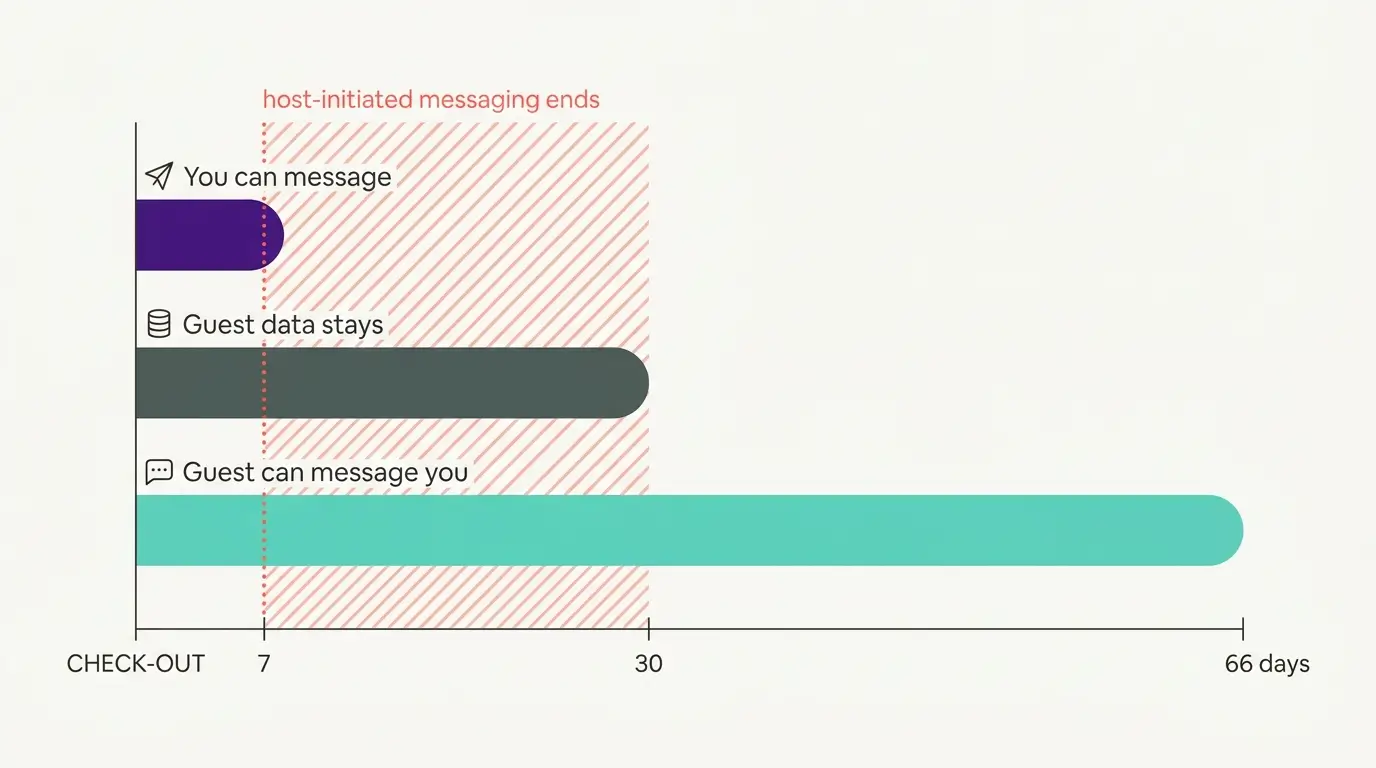
Booking.com Guest Messaging Rules: What Hosts Can Send, When, and Why Links Get Removed
Booking.com guest messaging rules, verified at source: how long you can message a guest, why your links get removed, and what the partner terms say.
Vrbo's New Features for Fall 2026: What's Live, What's Gated, and What's US-Only
We sorted Vrbo's new features for fall 2026: what is live globally, what is gated behind eligibility, and what is US-only. Verified against Vrbo's own pages.