
Hosting international guests is easier when you split translation work: use a digital guidebook with built‑in machine translation for all static information, and rely on quick tools like Google Translate or DeepL for live messaging. This approach avoids over‑promising features, focuses on the host’s actual tasks, and leverages real‑world experience from hosts in the Riviera Maya and Washington, DC.
We grew up speaking Spanish, and more than half the guests at our Riviera Maya properties don't have English as their first language. Our row house in Washington DC gets a steady stream of European travelers too. So the language question was never theoretical for us. It shows up in the inbox most weeks: a guest who books in Spanish, a family from São Paulo asking about the pool, a couple from Munich who'd rather not puzzle through an English house manual after a long flight.
Here's the good news. You don't have to be bilingual to host international guests well. You need a couple of tools doing the right jobs, and you need to stop expecting one tool to do all of it. This is what we actually use across our properties, what we'd skip, and how to decide.
How do you handle guests who don't speak English?
Split the work in two. Translate the information guests read on their own (your guidebook, house rules, checkout steps) once, so it's ready in their language before they arrive. Then keep a fast message translator on your phone for the live back-and-forth that comes up mid-stay. Most hosts try to cover both with a single tool and end up doing neither well, because the two jobs need different things: a guidebook that's already translated, and quick translation for real conversation.
The rest of this post is how we split that work, and which multilingual tools for vacation rental hosts are worth your time for each part.
The two jobs, and the tool for each
Before you compare products, get clear on the job. There are really only two that matter for a host, plus one that gets recommended by mistake.
The job | What it needs | What we use |
|---|---|---|
Guidebook and house info the guest reads alone | Translated once, ready in the guest's language before arrival | A digital guidebook with built-in translation |
Live messages back and forth | Fast, good-enough translation on demand | Google Translate or DeepL, plus your booking channel's or PMS built-in translation |
Software localization (websites, apps) | Developer workflows, not a host job | Nothing. This is the wrong category for a rental. |
Your guidebook: translate it once
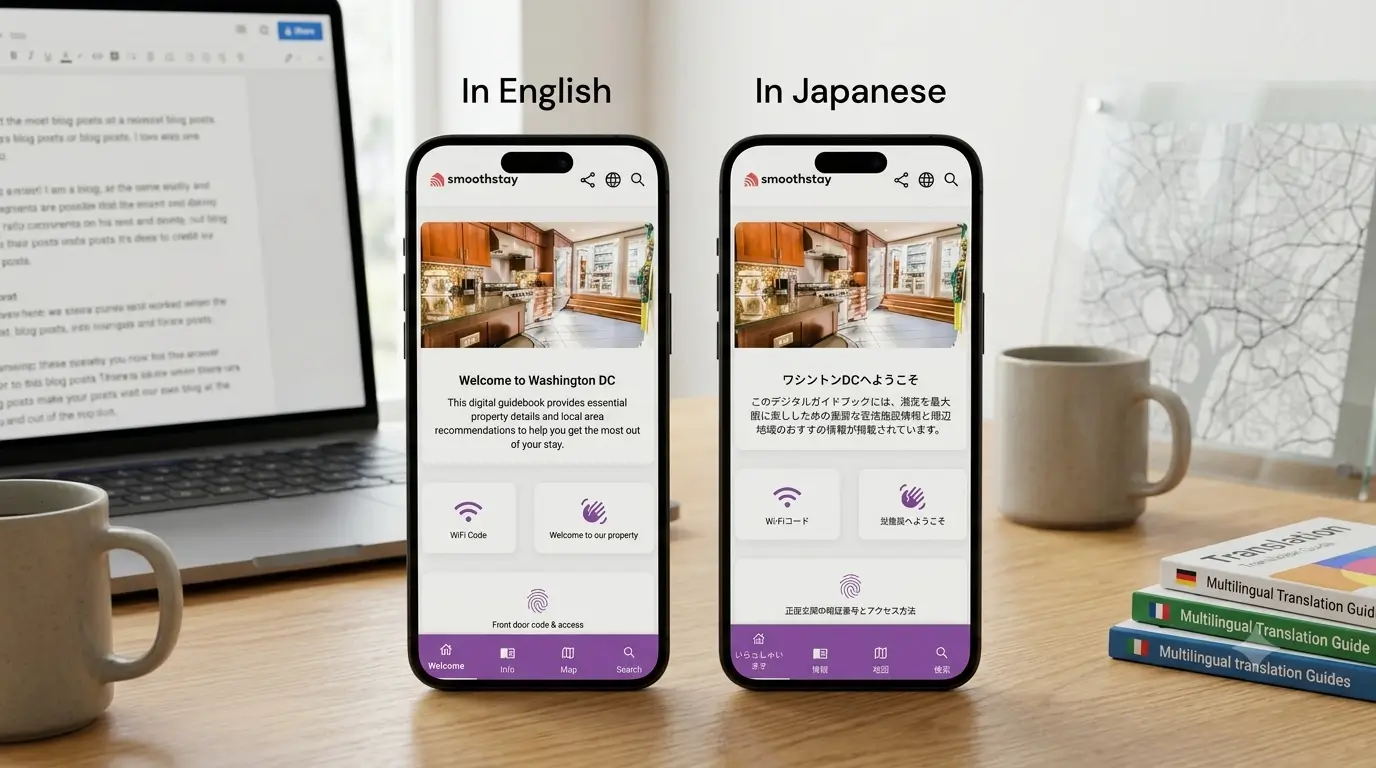
This is the part that does the most for an international guest, and the part most hosts skip. A digital guidebook with built-in translation shows your whole guide in the guest's language the moment they open the link. You write it once in your own words. The guest from Munich reads it in German, the family from São Paulo reads it in Portuguese, and you didn't touch a thing in between.
It's machine translation under the hood, so the occasional idiom lands a little sideways. For the things guests actually look up (the arrival steps, the WiFi, how the AC works, what to do at checkout) it's well past good enough. If you're starting from nothing, our guide on building a guidebook your guests actually use covers the structure before you worry about languages.
One honest limit: it translates your words. It doesn't rewrite your local recommendations for a foreign reader, and it won't convert your measurements or formats. Treat it as your guidebook in another language, not as a localization service.
Live messages: keep a translator on your phone
For the conversation that happens in real time, you want speed, not polish. Google Translate and DeepL both turn a pasted message around in a second and are free for the volume a host sends. We handle the Spanish and English ourselves. For the languages we don't speak, we paste and go, and it's fine.
Two things take pressure off before you even open a translator. Most booking channels, Airbnb especially, translate guest messages automatically inside the app, so a lot of the back-and-forth is already handled. And our guidebook's AI concierge answers guest questions from your guidebook content around the clock, which means the 11pm "how does the oven work" often gets solved without reaching you at all. For the rest of the messaging rhythm, we wrote up the common guest-communication questions separately.
The tool that isn't for you: enterprise localization
A quick word on Lokalise and tools like it, because they keep showing up in roundups aimed at hosts and they don't belong there. They're localization platforms built for software teams shipping websites, with developers in the loop and pricing to match. If you run one rental or fifty, it solves a problem you don't have unless you are translating your direct booking website. Skip it, and don't let a comparison table convince you it's a peer to a guidebook.
What ten years of international guests taught us
A few habits matter more than the tool you pick.
Translate the high-stakes sections first. Arrival and access, checkout, house rules, and emergency info are where a misread actually costs you. Get those right in your guests' top two or three languages and you've removed most of the friction. The restaurant picks can wait a week.
Keep a printed card by the door. We leave a small printed card with the WiFi, the door code, and our number, and we ask guests to open the guidebook link. These simple cards work great for all guests.
Remember that recommendations travel differently than instructions. "Turn the dial to the snowflake" translates cleanly. A culturally specific tip sometimes needs a sentence of context that no translator will add for you.
FAQ
What's the best multilingual tool for vacation rental hosts?
There isn't a single one, because there are two separate jobs. For your guidebook and house info, use a digital guidebook with built-in translation so the whole guide appears in the guest's language. For live messages, use Google Translate or DeepL alongside your booking channel's or PMS built-in translation. Skip enterprise localization platforms like Lokalise; they're built for software teams, not hosts.
Do I need to speak my guests' language to host them well?
No. We host guests in languages we don't speak every season. A guidebook that's already translated handles the information they read on their own, and a phone translator covers the occasional live message. Speaking the language is a bonus, not a requirement.
How accurate is machine translation for a guidebook?
Accurate enough for operational content like WiFi, appliances, and checkout, which is what guests actually look up. It's weaker on nuance, idioms, and anything legal or safety-related. The fix is simple: have a native speaker read your house rules and emergency sections once before you rely on them.
Does Airbnb translate guest messages automatically?
Yes. Airbnb translates messages and reviews inside the app, which covers a good share of your day-to-day communication on that channel. It's still worth keeping a standalone translator for other channels and for direct bookings, where you don't get that built-in help.
Which languages should I translate my guidebook into first?
The ones your guests actually book in. Look at your inbox and reviews from the last year and start with your top two or three. For us that's English, Spanish, and Portuguese, with German close behind. Don't try to cover forty languages on day one; cover the ones standing at your door.
Can a digital guidebook keep every language updated at once?
Yes, when translation happens on the fly. You edit the guidebook once in your own language, and every translated version reflects the change immediately, because the translation is generated the moment a guest opens the link. There's no separate file per language to maintain.
Serving international guests without the headache
If hosting guests who don't share your language is becoming a regular thing, the simplest move is a guidebook that's already in their language the second they open it. We built SmoothStay running our own places in DC and the Riviera Maya, where most guests don't speak English first, so the multi-language part comes from a real need, not a feature checklist. You can have one running in under an hour, free for a single property, at the same simple price whether you run one rental or fifty.
Latest articles

How to Automate Check-In Instructions for Short-Term Rental Guests
Automate check-in instructions for short-term rental guests: the four-send sequence, what goes in a message versus a guidebook, and a copy-ready sample.

Vrbo Premier Host in 2026: Every Listing Now Stands on Its Own Record
Vrbo Premier Host requirements changed in 2026: per-listing scoring, tighter thresholds, quarterly checks. What each one means, and how it compares to Superhost.
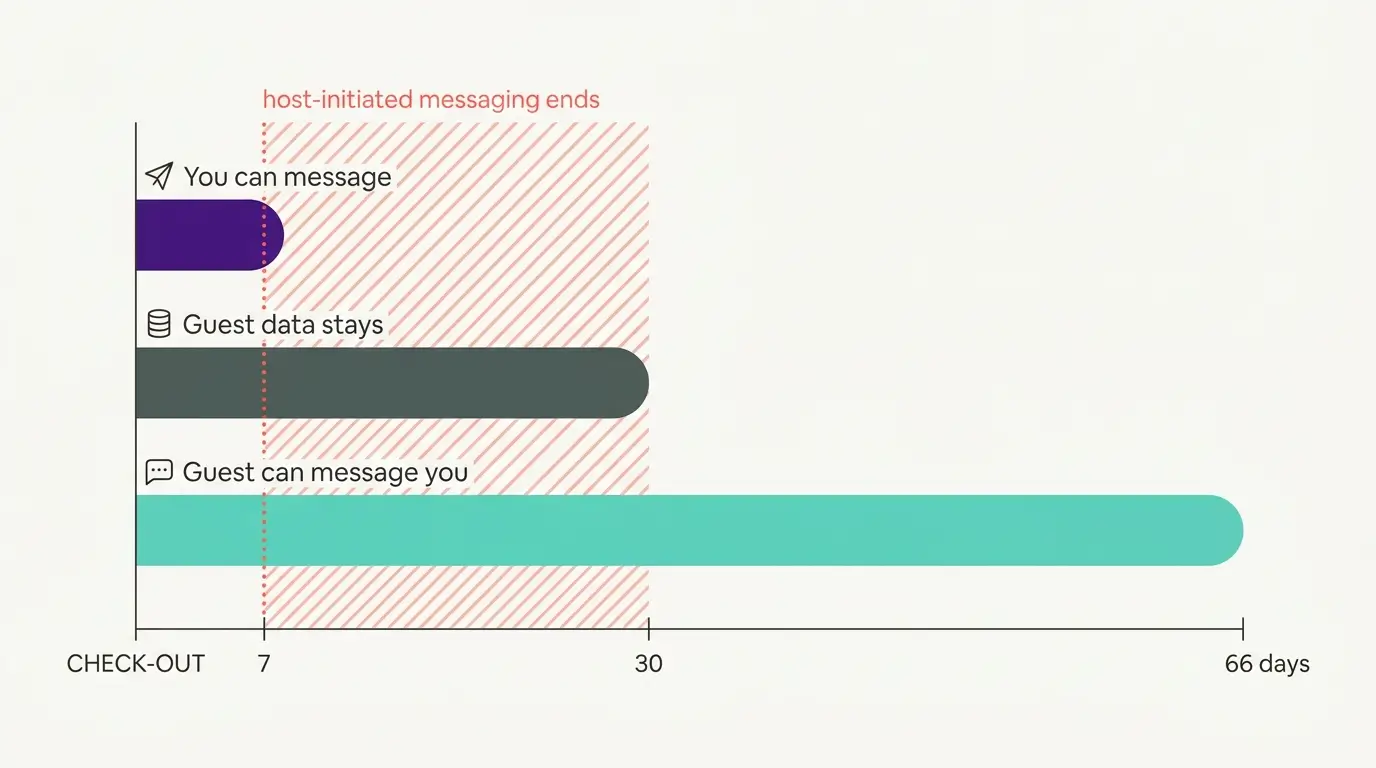
Booking.com Guest Messaging Rules: What Hosts Can Send, When, and Why Links Get Removed
Booking.com guest messaging rules, verified at source: how long you can message a guest, why your links get removed, and what the partner terms say.

Vrbo's New Features for Fall 2026: What's Live, What's Gated, and What's US-Only
We sorted Vrbo's new features for fall 2026: what is live globally, what is gated behind eligibility, and what is US-only. Verified against Vrbo's own pages.