Airbnb House Rules Examples: What to Include, and How to Word Them So Guests Follow

Published
Last updated

Effective Airbnb house rules are short, clear, and paired with brief explanations that help guests understand the why behind each rule, increasing compliance without feeling policed. The post provides categorized, copy‑ready examples, guidance on where to display rules (listing, guidebook, signs, QR codes), and tips for ensuring they’re enforceable under Airbnb’s policies.
There's a version of house rules that reads like a rental-car contract. Fourteen bullet points, every one starting with "no," half of them in bold caps. Guests skim it, feel a little policed before they've set down their bags, and walk in already on the defensive. Then there's the version a good host writes: six or seven rules, each one short, each one with a reason, sitting somewhere the guest will actually see it. Same information. A completely different start to the stay.
We've hosted for over ten years, first a four-bedroom row house in Washington, DC and later added a handful of properties in the Riviera Maya. The rules we run today look nothing like the wall of text we started with. Here's what we've learned about which rules earn their place, how to phrase them, and where to put them so they do the job instead of souring the welcome.
What should Airbnb house rules include?
Good Airbnb house rules cover the short list of things that protect your property, your neighbors, and the next guest: quiet hours, no parties, occupancy limits, a smoking and pet policy, parking, pool or hot tub safety, trash and checkout basics, and disclosure of any security devices. Keep each rule to a sentence, add the reason where it isn't obvious, and put the two or three that matter most where a guest can't miss them. A rule nobody reads isn't a rule. It's a paragraph.
The rest of this post is example rules by category, a copy-ready block you can adapt, and the part most guides skip: where your rules should live and what Airbnb will actually back you on.
The one habit that makes rules work: explain the why
Most rules feel arbitrary until you attach a reason, and an arbitrary rule is one a guest feels fine breaking. "No wipes down the toilet, even the flushable ones" reads like nagging on its own. Add "the house is on a septic system and they clog it," and suddenly it's you looking out for their weekend, not you laying down the law.
The same rule can land two ways. "QUIET HOURS 10PM" reads as a warning. "Our neighbors are close and they've been good to us, so we keep noise down after 10pm" reads as a small favor between reasonable people. Guests follow the second one more often, and they like you more for it. You're not writing a legal document. You're setting the tone for someone's vacation.
So the format for almost every rule is the same: the rule, then the reason, in plain language. Short. Human. No capital-letter shouting.
Airbnb house rules examples by category
Here's how the core rules look when you write them this way. Adapt the specifics to your property.
Noise and quiet hours
"Quiet hours are from 10pm to 7am. Sound carries more than you'd think here, and we want to keep the neighbors on our side." This is the rule that keeps you off your city's nuisance list, so it's worth stating clearly. If you run a noise monitor, this is where you mention it, and that it only reads volume, not audio (more on disclosure below).
Parties, events, and extra visitors
"No parties or events, please. The booking is for the guests on the reservation, and overnight visitors who aren't on it aren't allowed." This one does real work: it's your backstop if a "family trip" turns into forty people. Airbnb's own party ban gives you support here, but only if you've stated the rule.
Smoking, vaping, and cannabis
"No smoking, vaping, or cannabis anywhere on the property, indoors or out, including the deck and front entrance." Spell out "indoors or out," because "no smoking" alone gets read as "no smoking inside" and you'll find butts on the patio. Smoke damage is one of the few things that genuinely costs you a turnover, so this rule pays for itself.
Pets
"We love animals, but this isn't a pet-friendly home." Or, if you do allow them, "Two dogs max, please keep them off the beds, and let us know in advance." Say which it is plainly. The gray area is where you end up with a surprise Great Dane and no cleaning buffer.
Parking
"Park in the garage only, not in the alley behind it. Street parking is permit-only on our block and the city tickets fast." We’ve had a number of guests in DC who got a ticket their first morning before we made the permit rule impossible to miss. Parking rules feel minor until a guest starts their trip with a $75 ticket and blames the listing for it.
Pool and hot tub
"Shower before the hot tub, no glass anywhere near the pool, and kids near the water are on you, not us." Water rules are safety rules. Keep them short and unmissable, and put the glass one on a sign by the door.
Occupancy
"Total guests can't exceed the number on the reservation." This protects your insurance, your neighbors, and your furniture. It's also the rule that gives you clean footing if you ever need Airbnb to step in.
Trash, recycling, and dishes
"Trash goes in the bin by the side gate; recycling is the blue one. Pickup is Tuesday, so if you're here on a Monday night, please roll them to the curb." Guests don't know your trash day, and a missed one means a week of overflow for your cleaner. Two sentences saves everyone the mess.
Security devices (the disclosure you can't skip)
If you have an outdoor camera or a noise monitor, you have to disclose it, and there's a right and wrong way. Airbnb bans indoor cameras entirely, anywhere inside the listing, regardless of whether you disclose them. Outdoor cameras are allowed but you must state their presence and general location before the guest books, and they can't point at private areas. Noise decibel monitors are allowed in common spaces and also have to be disclosed; the key thing to tell guests is that these measure noise levels only, they don't record audio or listen in on conversations. Put the disclosure in your listing where Airbnb requires it, then repeat it warmly in your rules: "There's a doorbell camera at the front entrance, plus a noise monitor that reads decibel levels only, never audio." Said plainly, it reads as trustworthy, not creepy. Airbnb spells out the current device rules in its Ground rules for guests and its restrictions on devices.
Checkout
"Checkout is by 11am. Start the dishwasher, bag the trash, and leave the used towels in the tub. Everything else, leave it to us." Checkout rules protect your turnaround and your cleaner's sanity. Keep the list to what actually matters; a checkout with fourteen chores reads as ungracious and gets ignored anyway.
A copy-ready set of house rules
Here's the block we currently run in one of our own listings and guidebooks. Same rules as above, just written the way we'd actually say them. Adapt the specifics to your property.
We treat this place like our home, because it is, and guests tend to do the same when we just ask them kindly. A few things to keep it great for you and for whoever stays next:
No parties or events, please. We love a full house, but the neighbors are close and it's a quiet street.
Quiet hours run 10pm to 7am, so everyone nearby (you included) gets a real night's sleep.
This isn't a pet-friendly home, so please leave the furry ones at home this time.
Towels and linens are for you, not for cleaning or makeup, so we don't have to retire them early.
No smoking, vaping, or marijuana anywhere on the property, deck and front door included. Smoke lingers for the next guest.
Please keep the group to the number on your booking; it keeps our insurance and our neighbors happy.
On your way out, bag the trash, clear the perishables, and start the dishwasher. That's the whole checkout list.
Use the appliances for what they're made for, and just message us if something's acting up instead of forcing it.
Keep anything flammable, toxic, or illegal out of the house, please, for everyone's safety.
Guests must be the ones on the reservation. If plans change, ask us first and we'll probably say yes.
Park in your own spot and lock the car; we can't be responsible for anything left inside it.
That's the full version for the listing and the guidebook. On a sign by the door, you'd cut it down to the two or three that matter in the moment.
Where your house rules should actually live
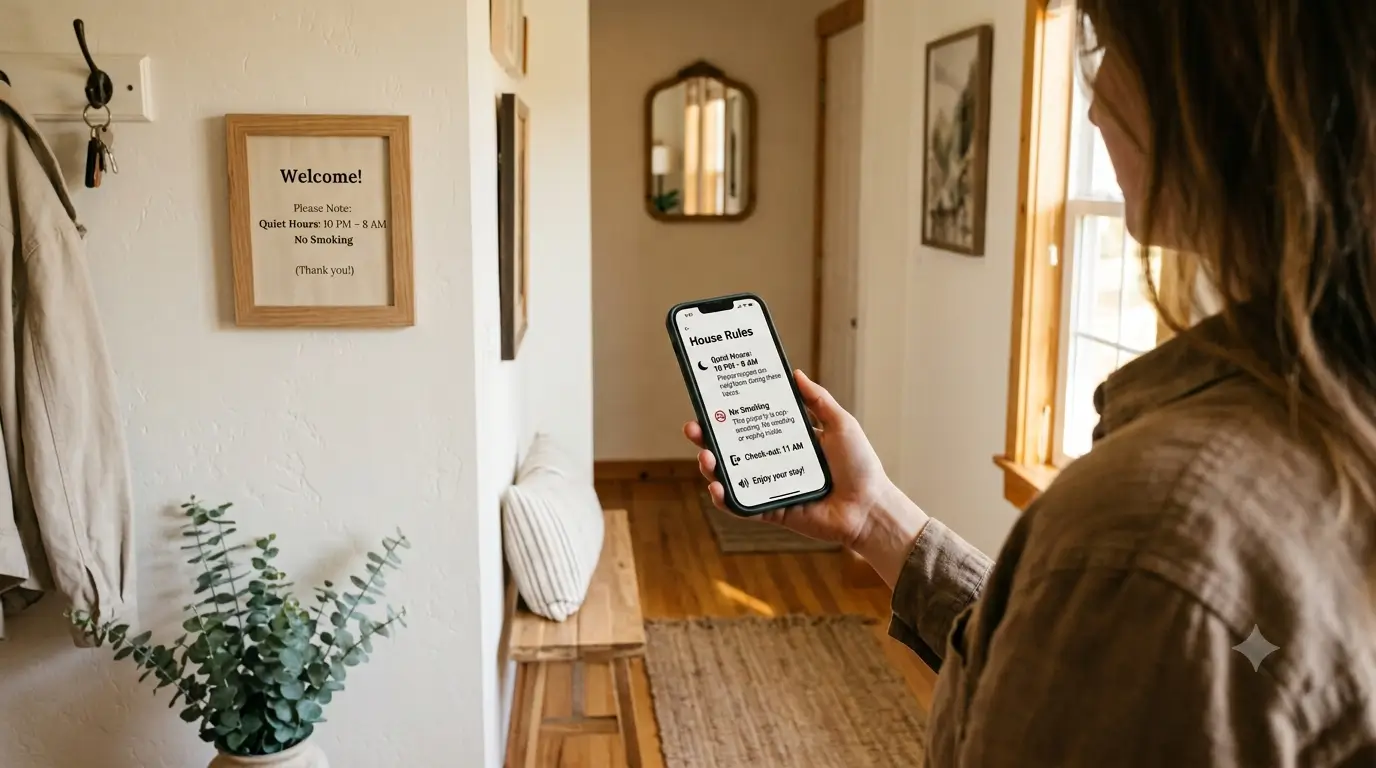
Writing good rules is half the job. The other half is putting them where a guest meets them at the right time.
The listing. This is the one that matters for enforcement (more below). Put your rules in Airbnb's house rules and additional rules fields, not in the property's marketing description. Airbnb already shows guests the house-rules section before they confirm a booking, so everyone sees and agrees to them anyway. Stuffing rules into the description just adds friction to the copy that's supposed to sell the stay.
The pre-arrival message. We usually leave rules out of this one to keep the welcome friction-free. The exception is a repeat problem: if the same thing keeps going wrong (parking, quiet hours), a short, friendly reminder before arrival beats chasing a complaint after. If your guests generally behave, skip it.
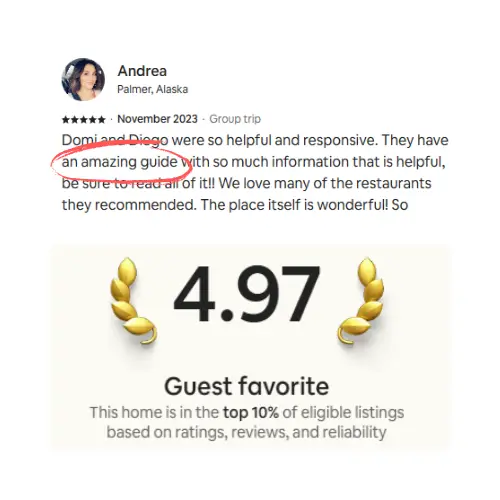
The guidebook. This is where the full set lives alongside everything else the guest is already reading, the Wi-Fi, the appliance how-tos, the local picks. Rules read very differently sitting next to helpful content than they do in a standalone contract. Your digital guidebook is the natural home for them, and if you run properties in more than one language, the rules land in the guest's own language automatically.
A physical sign. Quiet hours by the patio door. No glass by the pool. A small, well-designed sign carries the rule at the exact second it's relevant. Add a QR code to the sign that deep-links to the full rules in your guidebook, and the guest who wants the detail can get it in one tap.
Rules aren't the same thing as your house manual, which covers how everything works. If you haven't built that yet, our guide to your Airbnb house manual walks through it. Rules are the "what's allowed" layer; the manual is the "how it works" layer, and they cross-reference cleanly.
What Airbnb actually enforces
This is where a lot of hosts get it wrong. Airbnb only backs you on rules you disclosed before the guest booked. Its standard house rules (quiet hours, no parties, smoking, pets, check-in and checkout times, maximum guests, commercial photography) are enforceable under Airbnb's Ground Rules, which means if a guest breaks one and you can't resolve it directly, Airbnb can step in and, in serious cases, cancel the reservation.
Anything beyond the standard set goes in the "additional rules" field on your listing. Those are enforceable too, as long as they're written down before booking. A rule you only mention in a message after check-in, or one that lives only on a sign inside the house, is much weaker ground if you ever need Airbnb's support. So the sequence is: disclose everything important in the listing first, then reinforce it in the pre-arrival message (only if necessary), the guidebook, and on signs. The listing is your legal footing. The rest is how you get guests to actually follow along.
The rules that prevent damage vs the ones that just pile up
Not every rule deserves a spot. The test is simple: has this ever actually gone wrong, or am I writing it because I saw it on another listing? "No wearing shoes upstairs" sounds tidy but mostly reads as fussy. "No candles or open flames" is worth keeping if a fire would be catastrophic in your space. Every rule you add costs a little goodwill, so spend that budget on the handful that protect against real, expensive problems, and cut the ones that just make you look uptight. A tight list of seven rules a guest respects beats a list of eighteen they tune out.
Free templates to start from
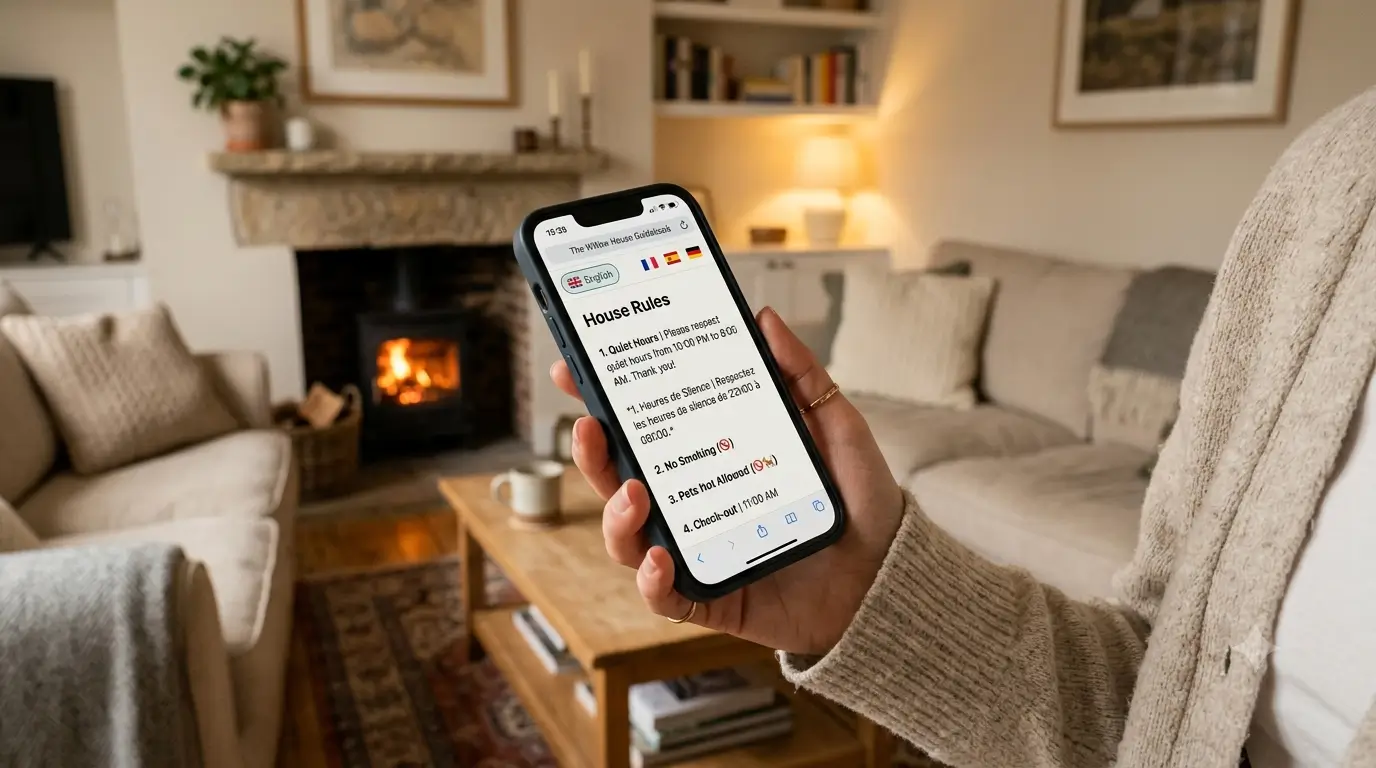
If you'd rather not build all this from a blank page, we made two free resources you can use today. Our printable signs template covers the in-the-moment rules (quiet hours, pool safety, checkout) in a clean format you can print and frame. And our welcome book template gives you a structure to drop your full rules into alongside the rest of your guest info. Start with those, swap in your specifics, and you're most of the way there.
FAQ
How many house rules should an Airbnb have?
Aim for six to eight. Enough to cover parties, noise, smoking, pets, occupancy, and checkout, without turning into a contract. If a rule has never actually prevented a problem at your property, it's probably padding. A short list guests respect beats a long one they ignore.
Where should I put house rules so guests actually read them?
In four places, working together: the Airbnb listing (for agreement and enforcement), the pre-arrival message (a friendly reminder of the big ones only if it’s really needed and you experience repeat “offenders”), the guidebook (the full set, next to the rest of your info), and a physical sign for the two or three rules that matter in the moment. The listing is the one that counts if you ever need Airbnb to step in.
Can I enforce a house rule that isn't in my Airbnb listing?
Not really. Airbnb supports you on rules you disclosed before booking, either in the standard house rules or the additional rules field. A rule you only mention after check-in, or one that lives only on a sign in the house, is much harder to enforce. Put anything important in the listing first.
Should house rules go in the listing or the guidebook?
Both, and they do different jobs. The listing is where guests formally agree, which is what makes rules enforceable. Just don’t put it in the marketing description, only on the House Rule section. The guidebook is where guests actually read them during the stay, sitting next to the Wi-Fi and the checkout steps. Keep the two consistent so a guest never sees one version at booking and a different one on arrival.
Can I have security cameras in my Airbnb?
Indoor cameras are banned entirely, anywhere inside the listing, whether or not you disclose them. Outdoor cameras and doorbell cameras are allowed, but you have to disclose their presence and general location before the guest books, and they can't monitor private areas. Noise decibel monitors are allowed in common spaces and also have to be disclosed; they read sound levels only and don't record audio or conversations.
How do I write house rules that don't sound harsh?
Attach a reason and drop the capital letters. "Quiet hours after 10pm, our neighbors are close" lands better than "QUIET HOURS ENFORCED." Frame rules as keeping the place good for everyone rather than as a list of things guests can't do. Same rules, a warmer stay.
One last thing
House rules are one of the few parts of hosting where a small edit changes how a guest feels about you before they've even unpacked. Write the short list, explain the why, and put them where they'll actually be seen.
If you'd rather not format all of it yourself, you can have a digital guidebook running in under an hour, with your rules, your Wi-Fi, and your local picks all in one link that guests can pull up in their own language.
Latest articles

How to Automate Check-In Instructions for Short-Term Rental Guests
Automate check-in instructions for short-term rental guests: the four-send sequence, what goes in a message versus a guidebook, and a copy-ready sample.

Vrbo Premier Host in 2026: Every Listing Now Stands on Its Own Record
Vrbo Premier Host requirements changed in 2026: per-listing scoring, tighter thresholds, quarterly checks. What each one means, and how it compares to Superhost.
Booking.com Guest Messaging Rules: What Hosts Can Send, When, and Why Links Get Removed
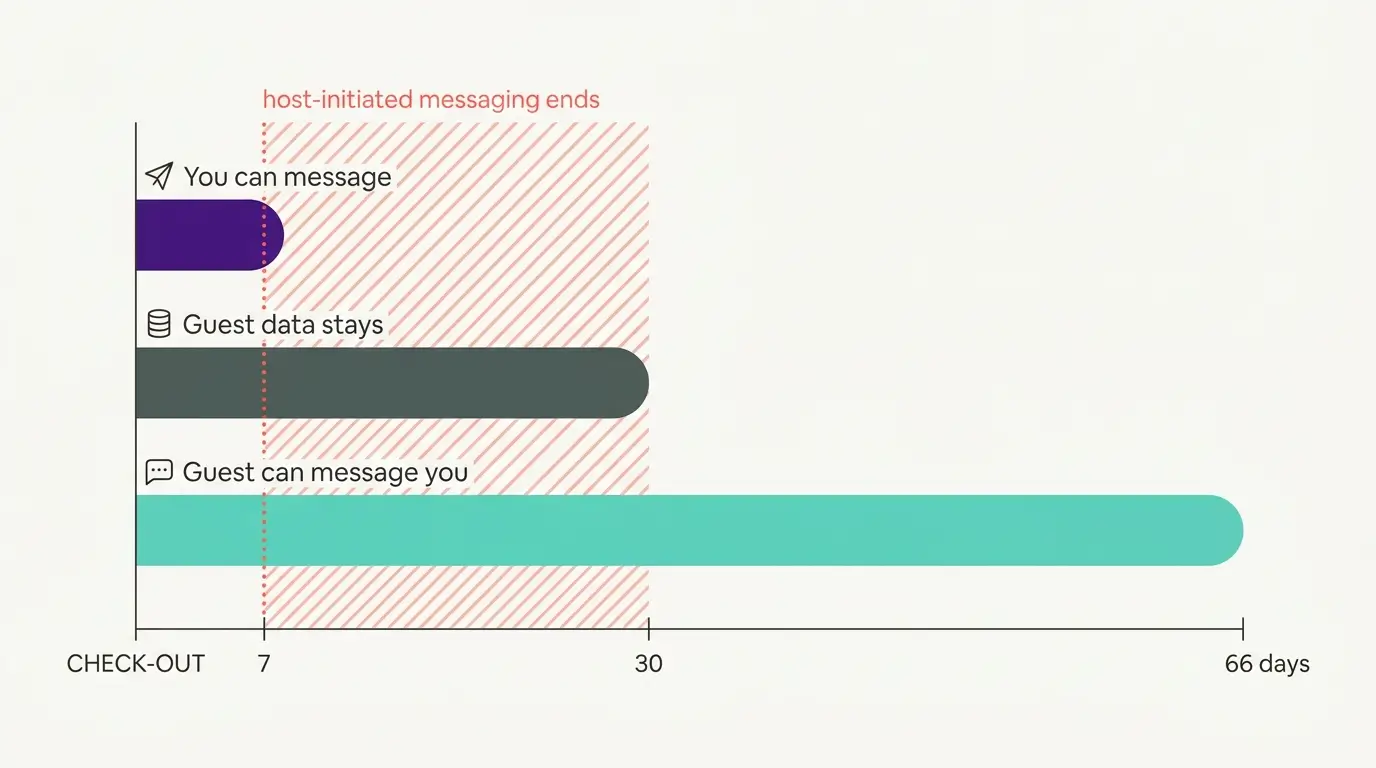
Booking.com guest messaging rules, verified at source: how long you can message a guest, why your links get removed, and what the partner terms say.
Vrbo's New Features for Fall 2026: What's Live, What's Gated, and What's US-Only
We sorted Vrbo's new features for fall 2026: what is live globally, what is gated behind eligibility, and what is US-only. Verified against Vrbo's own pages.