
The guide shares practical, experience‑based tips from seasoned hosts Diego and Dominique to help Airbnb and vacation‑rental owners improve reviews, reduce guest messages, and attract more direct and repeat bookings. It covers everything from location and property condition to pricing, communication, guest experience, and continuous improvement, offering specific, non‑obvious details that turn a generic list into a field‑tested playbook.
Disclosure: Some links in this article are affiliate links. If you make a purchase, we may earn a commission at no extra cost to you. This helps support our content.
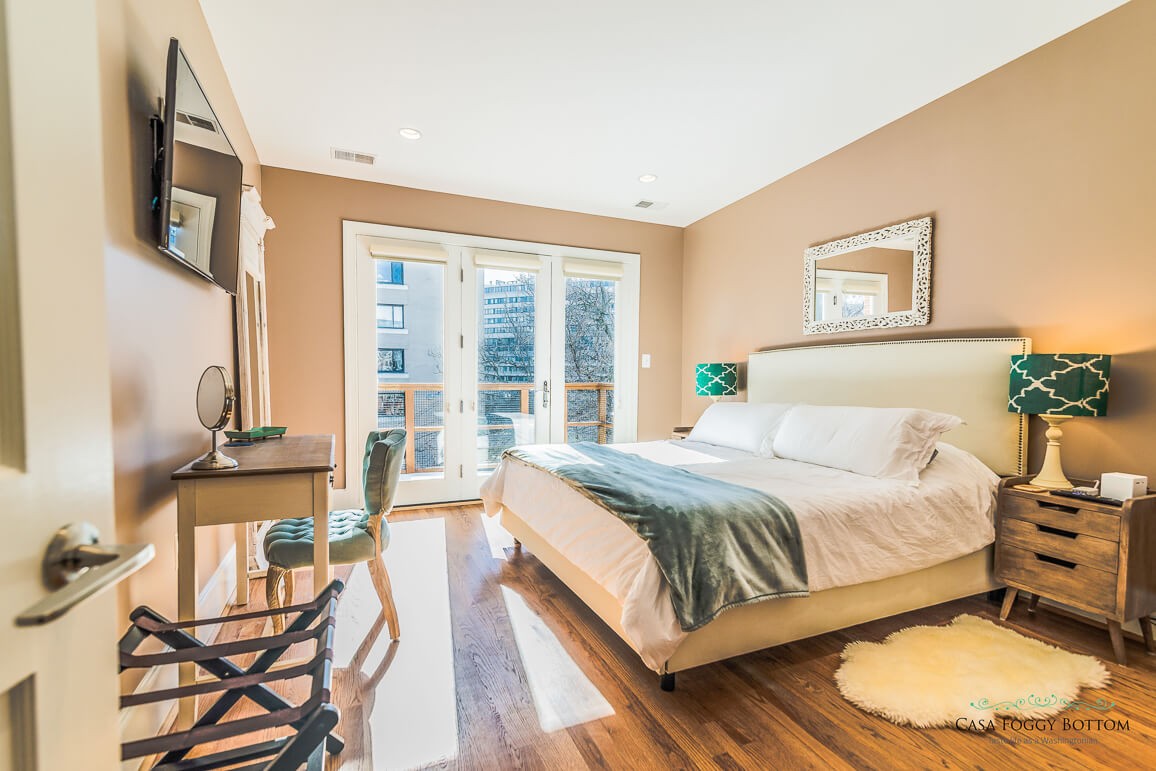
We've been hosting on Airbnb since 2015, first from a row house in Foggy Bottom in Washington DC, then on properties we built and co-manage in the Riviera Maya. Across a decade we've watched the platform change the rules five times, the algorithm a dozen, and the guest a hundred. What hasn't changed is what makes a property work: a few habits, done consistently, that compound over years.
This is the post we wish someone had handed us in year one.
What does it take to run a successful Airbnb?
A successful Airbnb gets booked, earns five-star reviews, and pulls repeat or direct bookings without eating your weekends. The job comes down to ten things: a buyable location (or something that makes up for it), a property in real working order, the right amenities, prices that follow reviews, photos that earn the click, communication that's fast and useful, a guest experience that runs without you in the room, spotless turnovers, legal compliance, and a small habit of fixing one thing every month. The rest is noise.
Below is what each one looks like in practice.
1. Location, and what to do when yours isn't great
Location sets your ceiling. Our DC place is a mile from the White House and outbooks larger, newer homes in the suburbs at higher rates because of where it sits. Our Playa del Carmen house is a ten-minute drive from the beach, so we can't ask beachfront prices and don't.
If you can't change the location, change what your listing offers around it:
Build for a niche the location actually serves. Outdoor people for a property near trails. Families for a property near schools and pediatric clinics. Remote workers for somewhere quiet with real internet.
Add one unique thing your competitors don't have. A private hot tub. A serious kitchen. A small pool you keep meticulous. One thing is enough.
Use price as a wedge while you build review count. Charge 10–15% under comparable listings until you have a steady run of five-star reviews. Reviews unlock pricing power; nothing else does it as cleanly.
Research the comp set inside a two-mile radius. Beyond that, you're not really comparing.
2. Keep the property in real working order, not just clean
Guests forgive a lot. They don't forgive an oven that won't ignite, a shower that drains slow, or a lock that takes three tries. Here is what we actually do, not theory:
Run every sink and shower on the turnover walk. Catch a slow drain before a guest does. Same for toilets that flush twice.
Put wifi-connected flood detectors under kitchen and bathroom sinks and beside the toilets that have a history of leaking. Ours have caught one slow undersink leak that would have cost us a cabinet floor.
Track appliance and HVAC age in a simple spreadsheet, with a planned replace date instead of waiting for failure.
Restock the things that break or vanish (cookware, kettle, fan, towels, batteries, lightbulbs) on a schedule, not at 8pm on a Saturday.
Pay your cleaners to report damage immediately with photos, not at the end of the month.
A property that holds up is the cheapest marketing you'll do.
3. The amenities guests actually care about
Guests skim listings looking for a small set of must-haves. Get these right and you punch above your weight:
Real internet a remote worker can rely on. We run 100+ Mbps minimum and list the actual speed. "Fast wifi" means nothing.
A working kitchen: fridge, oven, stove, and pans that aren't ruined.
Climate control that handles the worst day of your local year, not the average one.
A smart TV with streaming apps where guests log in with their own accounts. You don't need cable.
Parking, named and unambiguous, with photos of the spot.
Washer and dryer for any stay over three nights.
Outdoor space, even small, when you can offer it.
Towels and linens you'd want to sleep in.
A bit of flexibility on check-in or checkout for trusted guests.
Skip the welcome basket if you can't keep it consistent across every stay. Guests notice when the previous reviewer got one and they didn't.
4. Pricing follows reviews, not the other way around
Pricing is a function of perceived value, and perceived value moves with your review count. For a new listing, expect to price 10–20% below comparable properties until you have a steady run of five-star reviews. In our experience, once a property crosses about 30 reviews with a clean 5.0 overall, you can carry a 20–30% premium over similar listings without occupancy collapsing.
A few practical notes:
Use a dynamic-pricing tool. Hand-tuning prices weekly is a job, and a tool will out-earn you most months. We've used Beyond Pricing on our own properties and recommend it for hosts who want sane defaults and serious customer support. (Disclosure: Beyond is a partner of ours.) If you want to think through the factors that should drive whatever tool you pick, our pricing strategy post walks through them.
Watch the cleaning fee. Guests bounce when they see a high cleaning line. In DC we now fold a portion into the nightly rate so the total feels honest. In the Riviera Maya, where cleaning costs are lower, we've trimmed the fee to break-even and are testing dropping it.
Discount long stays only enough to cover the savings on the turnover you don't have. A 30% monthly discount on a property that already books three-week stays at full price is just lost revenue.
5. Marketing: photos earn the click, copy earns the booking
Most guests decide whether to read your listing in the time it takes to thumb past three photos, so the photos do the heavy lifting.
Hire a real photographer if you can't shoot well yourself. Bright, level, mid-morning light. No fisheye.
Lead with the room that sells the property: the kitchen, the view, the bed. Not the entryway.
Show the practical stuff too. The bathroom, the parking, the laundry. Guests who don't see these in photos message you to ask.
Then write a description that sounds like a person, not a brochure. Lead with the one thing the property is best at, then the practical details (bedrooms, sleeping configuration, internet, parking), then the neighborhood. Our guide to writing an Airbnb description breaks down the parts that matter.
One more piece belongs in this section: collect your guests' contact info, with consent, on the channels that allow it. Airbnb does not allow direct contact capture in-platform, and they're right to protect that. Direct-booking guests, repeat guests, and guests who came through a channel that permits direct communication can give you their email and become a small list you own. That list is the seed of every direct booking you ever earn. SmoothStay's Guest Registration widget is built for this with consent capture, and our OTA compliance mode gates direct-booking content by booking source, so an Airbnb guest never sees a direct-booking ask the channel doesn't allow.
6. Communication: fast first, useful second
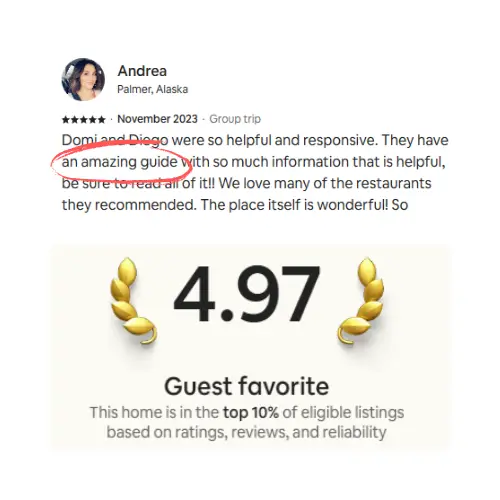
The single best thing you can do for your review average is reply quickly. Guests have told us in surveys and in DMs that responsiveness was the reason they picked us. We aim for under 30 minutes during the day and under three hours overnight.
Fast alone isn't the win, though. Useful is. Most pre-stay and in-stay questions are predictable: how do I get in, where do I park, what's the wifi, how does the AC work, where do I put the trash. Answer these once, in a place a guest can reach without messaging you, and you cut your inbound volume by something close to 80%.
That's the case for a real digital guidebook a guest opens on their phone. Photos of every appliance, a paragraph on each, gate codes and lock notes, the checkout in order, and the local picks you'd actually send a friend to. We built SmoothStay to do this, and our AI chatbot sits on top of the guidebook so a guest who asks "what's the wifi" at 11pm gets the password without waking us. For how to structure the guidebook itself, our guide to building one your guests use walks through the parts that matter.
Two things this section is not. It's not a substitute for being reachable in an actual emergency. Keep a number guests can call after hours and a local person who can be at the property within an hour. And it's not a place for fully scheduled message sequences from us; that's on our roadmap, not live today.
7. The guest experience the guidebook holds
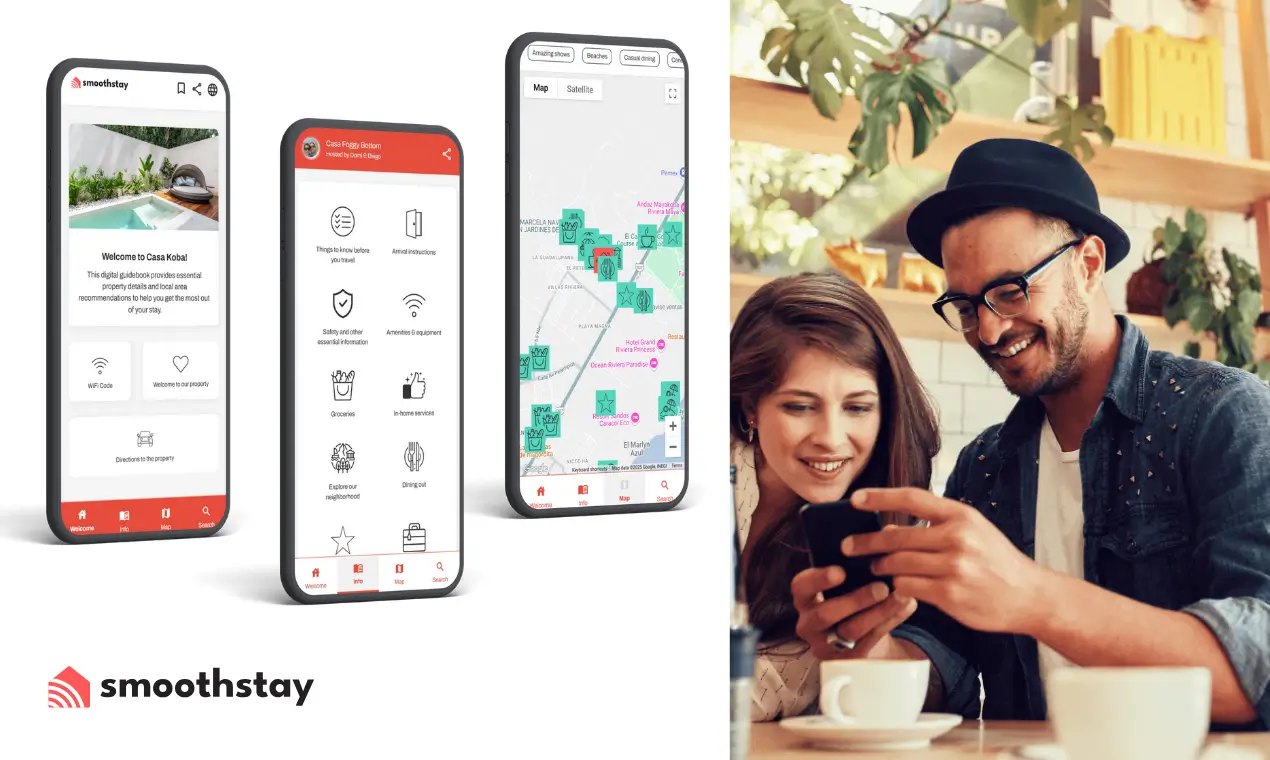
The welcome guide is where a great property feels great. The bar is not "complete." The bar is "the guest walks in, opens the guidebook, and stops messaging you." Include:
Arrival and check-in: parking, door, code, what to do if the code fails.
The wifi name and password, big enough to read.
How each appliance actually works, with a photo and three sentences. The oven, the coffee maker, the AC, the smart TV, the dishwasher.
House rules in plain language, framed around why ("we don't allow smoking because the building's HVAC pulls smoke into the next unit").
Local picks: three restaurants, one bar, one coffee shop, one walk. Curated beats comprehensive.
Emergency info and your number.
Checkout in numbered steps.
For the format and what fits where, our welcome-book guide walks through it. One honest constraint: a digital guidebook needs an internet connection to load, so don't promise guests it works offline. For rural or weak-signal properties, get guests to open it on the drive in (the booking confirmation link is the easiest place) and keep a printed one-pager with the absolute basics in the welcome envelope as a fallback.
International guests are a quiet win. A guidebook that flips to a guest's language with one tap (SmoothStay's multi-language translation is built in) shows up in reviews more often than you'd think.
8. Cleanliness, and the people you trust to do it
We've tried both models: third-party cleaning company and trusted independent cleaners. Independents have been the right answer for us. We trained them, we pay them well, and they treat the properties like they own them. The cost is a longer onboarding; the payoff is consistency, fewer five-star reviews lost to a single bad turnover, and a person who will text you a photo of a stain before a guest finds it.
What we ask of our cleaners on every turnover:
A printed checklist worked top-to-bottom, not from memory.
Photos of any damage on the spot, before they clean over it.
A run of every sink and shower to catch a slow drain.
Stocked basics: paper, soap, coffee, salt, sponge. No "we'll get more next week."
A look at battery levels in the smoke and CO alarms and the smart lock.
One quick check that the AC or heat is at the right setpoint for arrival.
Hire one person you trust before you hire three you don't.
9. Legal compliance, the boring thing that ends businesses
We've watched hosts in DC and in Tulum get shut down or fined for things that would have taken a Saturday morning to fix in advance. The short list:
Zoning. Confirm short-term rental is allowed at your address. Some buildings, HOAs, and neighborhoods ban it outright.
Licenses and permits. Many cities now require an STR license. Renewals are a calendar event, not a memory game.
Insurance. Your homeowner's policy almost certainly doesn't cover commercial use. Get an STR rider or a dedicated policy.
Taxes. Occupancy and tourism taxes vary by city, and platforms collect some but not all. Confirm what's collected for you and remit the rest.
Health and safety. Smoke and CO alarms tested, fire extinguishers in date, exits unblocked, pool fencing if local code requires it.
Fair housing. Apply your screening criteria the same way for every guest. Document it.
None of this is exciting and all of it is cheap insurance.
10. Fix one thing every month
The last habit is the smallest and the most underrated. At the end of each month we read our reviews, pull the most recent negative messages (not just public reviews), and pick one thing to fix. One. Sometimes it's a paragraph in the listing. Sometimes it's a new appliance. Sometimes it's a sentence in the guidebook we should have written two years ago.
A year of that is twelve compounding improvements. It's the thing that separates the hosts who quietly clear strong numbers from the ones who burn out at break-even and quit.
FAQ
How long does it take to make money on Airbnb?
Most hosts we know break even on setup costs in 6–12 months and clear meaningful profit in year two. The variable is reviews. A property with 30+ five-star reviews can charge what a similar property with five reviews cannot, and review count compounds with time and consistency. Plan for year one to fund year two.
What's the biggest mistake first-time hosts make?
Pricing too high before they have reviews, then panic-editing the listing every two weeks because bookings haven't come. Set a competitive opening price, get the first ten reviews fast, then start raising rates. Almost everything else is downstream of this.
Do I need a property management system to host successfully?
Not at first. With one or two properties, a digital guidebook, a smart lock, a dynamic-pricing tool, and a noise sensor cover most of what a PMS does at a fraction of the cost. A PMS earns its keep around the third or fourth property, when message and calendar volume across channels starts to break a spreadsheet.
How do I get repeat and direct bookings without breaking Airbnb's rules?
Collect contact info with consent, on the channels that allow it, and keep a small email list. Don't pitch direct bookings to an Airbnb guest in-stay; that violates Airbnb's terms. After checkout, or to guests who came through channels that permit direct communication, a small useful email two or three times a year (a seasonal local guide, an upgrade you made) keeps you top of mind and builds the direct-booking flywheel honestly.
What does Airbnb actually look at when ranking my listing?
Conversion (search-to-booking), guest reviews, response speed, cancellation rate, completeness of your listing, and how often guests click into your photos. None of these are tricks. Doing the ten things above is, in effect, doing what the algorithm rewards.
If you'd rather not format the welcome guide and house manual into a PDF yourself, you can have a free SmoothStay guidebook running on your property in about an hour. No card needed.
Latest articles

How to Automate Check-In Instructions for Short-Term Rental Guests
Automate check-in instructions for short-term rental guests: the four-send sequence, what goes in a message versus a guidebook, and a copy-ready sample.

Vrbo Premier Host in 2026: Every Listing Now Stands on Its Own Record
Vrbo Premier Host requirements changed in 2026: per-listing scoring, tighter thresholds, quarterly checks. What each one means, and how it compares to Superhost.
Booking.com Guest Messaging Rules: What Hosts Can Send, When, and Why Links Get Removed
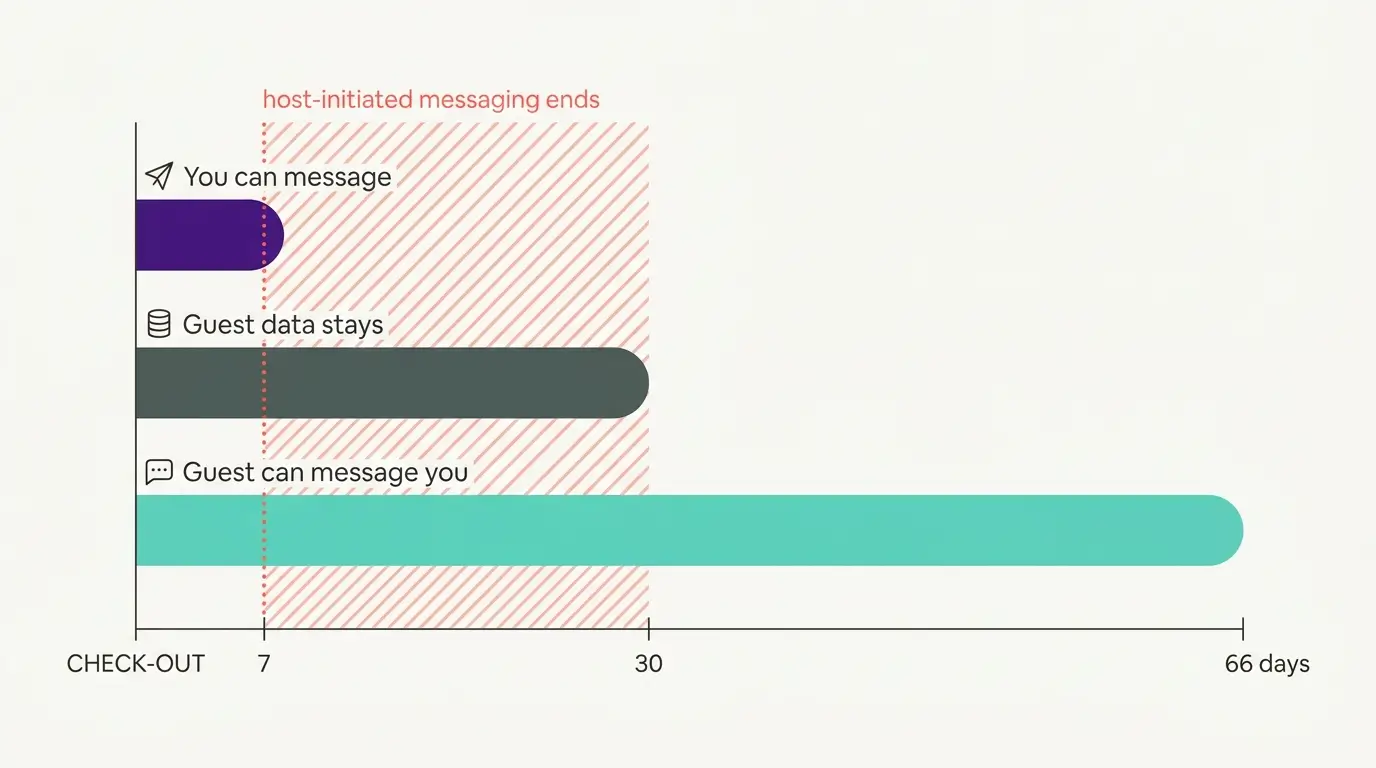
Booking.com guest messaging rules, verified at source: how long you can message a guest, why your links get removed, and what the partner terms say.
Vrbo's New Features for Fall 2026: What's Live, What's Gated, and What's US-Only
We sorted Vrbo's new features for fall 2026: what is live globally, what is gated behind eligibility, and what is US-only. Verified against Vrbo's own pages.