
A successful Airbnb pricing strategy combines location insights, strong guest reviews, high‑quality marketing, and seasonal adjustments, while using dynamic‑pricing tools like Beyond Pricing to automate rate changes. By focusing on long‑term occupancy and leveraging factors such as amenities, cleaning‑fee handling, and booking windows, hosts can set prices that maximize revenue without sacrificing occupancy.
Disclosure: Some links in this article are affiliate links. If you make a purchase, we may earn a commission at no extra cost to you. This helps support our content.
We've been pricing short-term rentals for more than ten years, across a row house in Washington, DC, a 4.5-bedroom home in Playa del Carmen, and a studio in Tulum. This post walks through the factors that actually move a nightly rate, with the real numbers and experiments from our own listings: what worked, what we'd skip, and where a tool should take over.
What should an Airbnb pricing strategy be based on?
Location and nearby comparable listings set your baseline. Your reviews and listing quality decide whether you price above or below that baseline. Seasonality, events, and booking pace move the number week to week, and a dynamic pricing tool handles those daily adjustments better than any host can manually. New listings should start 10 to 20% under comparable properties and raise rates as five-star reviews come in.
That's the whole system in four sentences. The rest of this post is each factor in detail.
Location sets your baseline
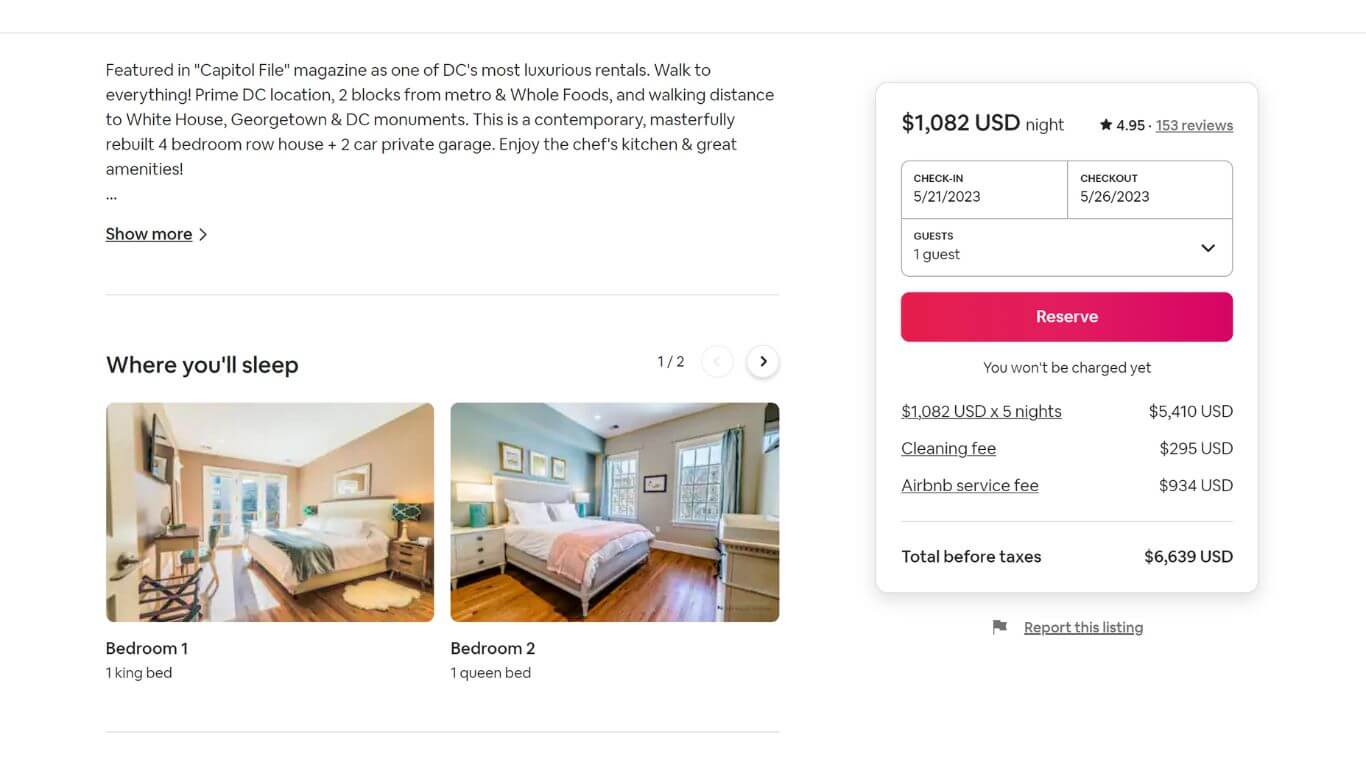
Properties in desirable areas or near major attractions command higher prices. Nothing surprising there, but the size of the effect surprises people. Our listing in Washington, DC sits one mile from the White House and usually prices higher than much larger, newer homes in the suburbs. Meanwhile our Playa del Carmen house is in a residential neighborhood, a ten-minute drive from the nearest beach, so beachfront prices are simply not available to us no matter how nice the house is.
Research similar listings to find your range, and keep the radius tight. We zone our analysis to two miles at most. A comp on the other side of town is not a comp.
You can't move your property. You can move almost everything else on this list, and several factors below can compensate for a weaker location.
Reviews are your pricing power
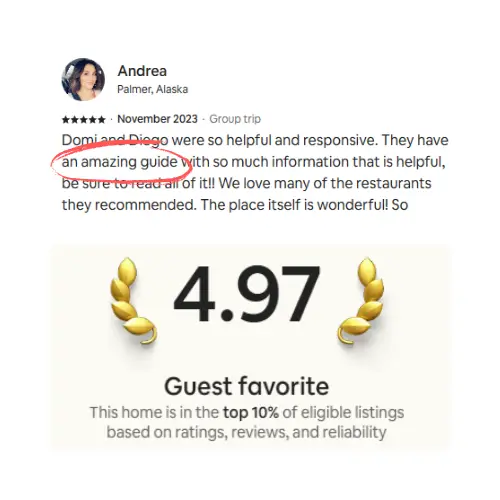
This sits at the top of our own pricing decisions. Strong reviews and high ratings increase demand and let you charge more. Weak ones do the opposite, and no pricing tool can fix that.
So be patient with a new listing. Pricing 10 or even 20% below the competition is a legitimate strategy, not a failure: most guests are reluctant to take a chance on an unreviewed property at full price, and the discount is how you buy your first bookings. In the beginning, prioritize a great guest experience over profit. Profitability suffers at first, but around the third or fourth five-star review you can start raising rates gradually, watching occupancy as you go. In our experience, once a property passes 30+ reviews with an overall five-star rating, you can charge 20 to 30% more than similar properties without occupancy suffering.
That premium is earned during the stay, mostly by getting guests their answers fast, which is the job our digital guidebook does on our properties.
Your photos and copy decide what guests will pay
Guests judge value before they ever see the house. Clear, bright, well-staged photos that honestly represent the space lead to more bookings at higher rates. A listing that looks professional and cared for reads as worth paying for; one with dim photos and thin copy forces you to compete on price alone.
Good copywriting does the same work. Highlight what makes your space different and write for the guest you want to attract. We've covered our full approach in how to write an Airbnb description that books, with the actual listing text we use.
Seasonality moves the floor and the ceiling
Demand swings hard with the calendar. Beach and ski properties peak in their obvious seasons; city properties often peak in summer. Your strategy needs different floors for high and low season, not one rate with small wiggles. In the Riviera Maya, our high-season winter weeks and low-season September weeks are practically different businesses, and we price them that way.
Amenities: showcase before you surcharge
Guests pay more for a pool, a hot tub, a dedicated workspace, a view. But if you identify a feature that sets you apart, don't just raise the price. Make it impossible to miss in your photos and your listing copy first. An amenity guests don't notice before booking is an amenity you can't charge for.
Cleaning fees are unpopular, so handle them deliberately
Guests increasingly resent cleaning fees, especially compared with hotels. The costs are still real: short-term rentals don't have a hotel's economies of scale on cleaning and maintenance.
In our Washington, DC rental we tried folding most of the cleaning fee into the nightly rate, charging a lower fee and a slightly higher rate. It worked. Guests aren't surprised by a big line item at checkout, and we still cover our costs. In the Riviera Maya, where cleaning costs much less than in DC, we lowered fees to cost and have seriously weighed removing them entirely, because the nightly rates absorb the expense.
Whatever you decide, know your real turnover cost first. Count everything you spend per guest turnover:
Professional cleaner costs
Laundry
Essentials and supplies (paper towels, toilet paper, soap, coffee)
A share of maintenance you can attribute to each turnover
Your cleaning fee doesn't have to equal that number, but you can't price profitably without knowing it. This is the kind of math that separates hosts who treat their rental as a real business from hosts who find out at tax time.
Booking window and last-minute gaps
The time between booking and check-in affects what guests will pay. Guests booking months ahead are often less price-sensitive than last-minute bookers hunting for a deal. Build that into your strategy: hold rates firm far out, and let them ease as unfilled dates approach. This is exactly the kind of daily adjustment pricing tools automate well.
Discounts: long stays and Airbnb's own levers
If you host extended stays, weekly and monthly discounts attract a different kind of guest, anywhere from a token 5% to an aggressive 30% off. Just run the math first. Long stays mean more wear, more supplies, and sometimes mid-stay cleans, so make sure the discounted rate is still profitable.
Airbnb also keeps adding its own discount levers. We've broken down the newest one, and how to use it without giving away margin, in our post on Airbnb's top-rated guest discount.
Price for the guest you actually host
Business travelers pay for a desk, fast WiFi, and flexible check-in. Families pay for cribs, fenced pools, and space. Figure out who books your property and price the amenities they value, not the ones you find impressive. Knowing who's coming is also a safety question; the same thinking runs through our guest vetting and safety playbook.
Fees and taxes you don't control
Platform fees discourage some guests even though you never see the money. As of mid-2026, Airbnb's service fees work two ways: a split structure where most hosts pay 3% and guests pay roughly 14 to 16.5% of the subtotal, and a single-fee structure of about 15.5% taken entirely from the host payout, which is mandatory for hotels and for hosts using property management software. Starting June 2026, hosts with listings in Mexico pay more under both structures (4% split, 16% single fee), a change we're absorbing on our own Riviera Maya properties. Many cities add occupancy taxes on top.
Our advice: know your market's price sensitivity. In a price-sensitive market, fees and taxes push the all-in total past what guests will pay, and your nightly rate has to give back some ground. In a less sensitive market, they matter far less.
Put the daily work on a dynamic pricing tool
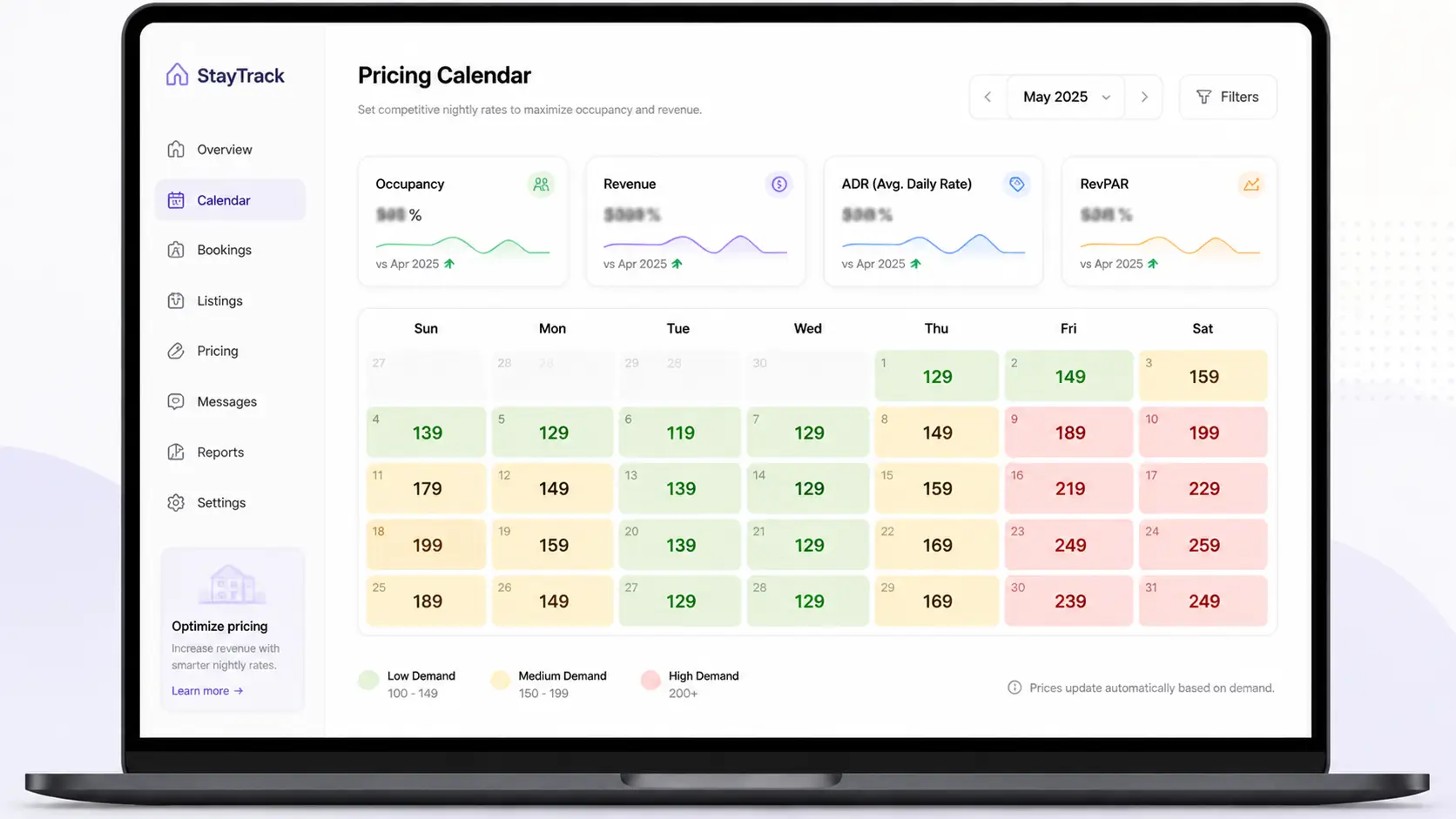
Your prices should never sit still, and updating them manually even weekly is a grind that most hosts abandon. This is the one part of pricing we think every host should automate.
The tool we recommend is Beyond. It reprices your calendar automatically using demand, seasonality, local events, and booking pace, and it connects to Airbnb, Vrbo, Booking.com, and the major property management systems. We've used Beyond hands-on across our own properties in the past (and PriceLabs too, at one point), and what kept us comfortable with this category is that you stay in control: overriding prices, setting minimum stays, and capping floors takes seconds. We recommend it because the move from static to dynamic pricing matters more than any brand choice.
These days, our own nightly rates run through the dynamic pricing built into our PMS, which is worth checking before you buy anything: if your property management software bundles pricing, that may be all you need.
FAQ
Should I charge a cleaning fee on Airbnb?
Cover your turnover costs, but consider folding most of the fee into your nightly rate. We did this in our DC rental: lower fee, slightly higher rate, same revenue, fewer surprised guests. Calculate your true per-turnover cost (cleaner, laundry, supplies, maintenance share) before setting anything.
How do I price a new Airbnb with no reviews?
Start 10 to 20% below comparable listings within two miles. Most guests won't risk an unreviewed property at full price, so the discount buys your first bookings and reviews. Begin raising rates after your third or fourth five-star review, watching occupancy as you go.
Is dynamic pricing worth it for a single property?
Yes. Rates should change with demand, seasonality, and booking pace, and nobody sustains that manually. A dedicated tool like Beyond handles it, and some property management systems bundle dynamic pricing, so check what you already pay for first.
How much more can I charge with great reviews?
In our experience, a property that passes 30+ reviews with an overall five-star rating can charge 20 to 30% more than similar listings without losing occupancy. Reviews are the strongest pricing lever a host controls.
When should I lower my prices?
When occupancy drops below your market's norm and stays there, when you're new and buying your first reviews, or when unfilled dates are approaching fast. Lowering rates to fill a near-term gap is revenue management, not weakness.
Pricing is never finished. Pick the two factors above where your listing is weakest, fix those first, and put the daily rate changes on software so your attention goes where a tool can't: the property and the guests.
Latest articles

How to Automate Check-In Instructions for Short-Term Rental Guests
Automate check-in instructions for short-term rental guests: the four-send sequence, what goes in a message versus a guidebook, and a copy-ready sample.

Vrbo Premier Host in 2026: Every Listing Now Stands on Its Own Record
Vrbo Premier Host requirements changed in 2026: per-listing scoring, tighter thresholds, quarterly checks. What each one means, and how it compares to Superhost.
Booking.com Guest Messaging Rules: What Hosts Can Send, When, and Why Links Get Removed
Booking.com guest messaging rules, verified at source: how long you can message a guest, why your links get removed, and what the partner terms say.
Vrbo's New Features for Fall 2026: What's Live, What's Gated, and What's US-Only
We sorted Vrbo's new features for fall 2026: what is live globally, what is gated behind eligibility, and what is US-only. Verified against Vrbo's own pages.