This guide walks you through 11 essential steps to launch and grow a successful Airbnb business, from legal compliance and market research to property preparation, guest experience, and ongoing optimization. It also highlights how SmoothStay’s free digital guidebook and other tools can streamline operations without over‑selling the platform.
We listed our first property in 2015: our own row house in Foggy Bottom, Washington DC. A decade later we still run that house, plus the home we built to be a rental in Playa del Carmen, a studio in Tulum, and two properties we co-host for other owners in the Riviera Maya. The biggest lesson from those years is sitting in the title. Hosts who treat this as a business build something that lasts. Hosts who treat it as a hobby usually burn out around year two.
This is the guide we'd hand a friend starting today. It assumes you'll run the property yourself, without a property manager or co-host. That's how we do it, and it's considerably more profitable.
What do you need to start an Airbnb business?
Five things before your first guest: confirmation that short-term rentals are legal at your address, insurance that covers commercial use, a property genuinely ready for paying guests, a listing with strong photos and honest pricing, and a way to answer guest questions without being on call all day. Everything else, software included, gets added as you grow. The eleven steps below run in the order you'll actually meet them.
1. Check local laws and regulations
Do this first, before you buy a single pillow. Short-term rental rules change block by block, and a property that can't legally host is just an expensive apartment.
City and county rules. Confirm short-term rentals are allowed at your address and whether you need a license. Washington DC requires one, and the renewal is a calendar event, not a memory exercise.
Building and community rules. An HOA or condo association can ban rentals even where the city allows them. Read the bylaws before you list, not after your first complaint.
An LLC, maybe. Plenty of hosts form an LLC to separate personal assets from the business. Whether it's worth it depends on your situation; see the FAQ below, then talk to a professional.
Insurance. Your homeowner's policy almost certainly excludes commercial use. Get a dedicated short-term rental policy or rider. Platform protection programs are not a substitute.
A legal read-through. One hour with a local lawyer who knows short-term rentals costs less than one violation.
2. Research your market
Before committing money, find out whether anyone wants to stay where you're offering. Search Airbnb, Vrbo, and Booking.com for properties like yours within a two-mile radius. Past that distance you're not really comparing.
Look at three things: nightly rates across the season, how many reviews the busy listings carry, and which amenities show up again and again in the top performers. If every well-booked listing in your area has a dedicated workspace and yours won't, that's information. This research tells you whether the numbers work before you're committed, and it hands you a starting price.
3. Choose the right property (if you don't have one yet)
Your property might be a spare room, your whole home, or a place you buy specifically to rent. Whichever it is, judge it on four things:
Location. It sets your ceiling. Our DC house outbooks larger suburban homes because of where it sits, and our Playa del Carmen place can't ask beachfront prices because it isn't beachfront. We wrote about working with an imperfect location in our post on running a successful Airbnb.
Property type. Match what your market actually books. Some areas are apartment markets, some are family-house markets, and some reward the odd yurt.
Size. A studio and a four-bedroom are different businesses. Bigger means higher rates and harder turnovers.
Amenities potential. A property that can take a pool, a serious kitchen, or a proper workspace gives you something competitors can't copy cheaply.
4. Create a standout listing
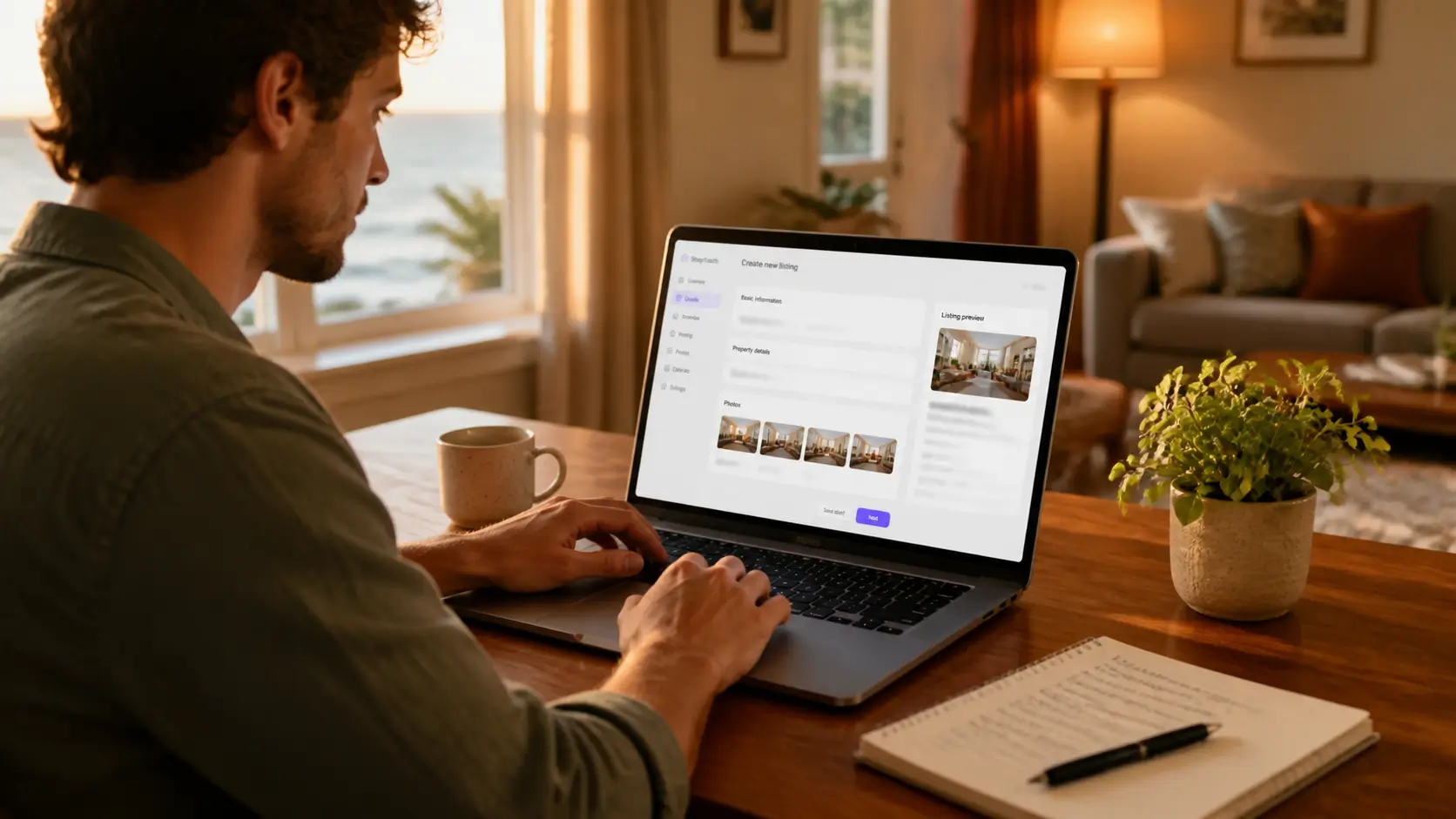
The listing is where research becomes revenue. Setting one up on any channel comes down to the same parts:
Photos first. Most guests decide whether to keep reading in the time it takes to swipe past three pictures. Shoot in bright mid-morning light, lead with the room that sells the property, and include the practical shots (bathroom, parking, laundry) guests otherwise message you about.
A description that sounds like a person. Lead with the one thing your property does best, then the practical details: beds, bathrooms, internet speed, parking. Our guide to writing an Airbnb description breaks down the structure with examples.
An honest opening price. Price 10 to 20 percent under your comp set until reviews arrive, because reviews unlock pricing power and nothing else does it as cleanly. The factors that should drive your rate are in our Airbnb pricing strategy post.
The admin. Expect to enter payout details and tax information that varies by country. Budget a quiet hour for it.
5. Set house rules and guest policies
Decide your rules before your first booking, write them explicitly, and put them where guests will see them: in the listing, in the booking flow, and at the property. We post ours as simple framed signs, and you can use our free signs template for that.
The policies that matter most:
Smoking. We don't allow it, full stop. Non-smoking guests notice the smell long after a smoker has left, and it shows up in reviews.
Pets. If you allow them, set a fee and check your insurance covers the liability.
Check-in and checkout times. Set times you can actually defend on a turnover day, and decide in advance how flexible you'll be.
Noise. Put real quiet hours in writing. We run NoiseAware sensors at our properties so we hear about a party before the neighbors do.
Deposits and cancellations. Decide how strict you want to be and say so plainly. Surprises here are what one-star reviews are made of.
6. Prepare your property
Get the property to the standard you'd want at double the price, then keep it there.
Clean like a hotel, not like a home. Guests forgive dated decor before they forgive a hair in the shower drain.
Furnish for use, decorate for photos. Comfortable beds and a working kitchen come first; personality earns the click. Our 8 tips for decorating an Airbnb covers the moves that pay off most.
Make everything work. Run every tap, test every appliance, sit in every chair. A slow drain you catch today is a refund you don't issue next month.
Cover safety. Smoke and CO alarms, a fire extinguisher in date, clear exits, and a smart lock so codes change between guests. We run Schlage and Ultraloq locks across our properties. More in our post on keeping your Airbnb rental safe.
7. Delight your guests
Hospitality is the product. Everything before this step gets a guest in the door; this step decides the review.
Communicate early and fast. Confirm the booking, send arrival details the day before, check in once mid-stay. Quick replies are the cheapest five-star habit there is.
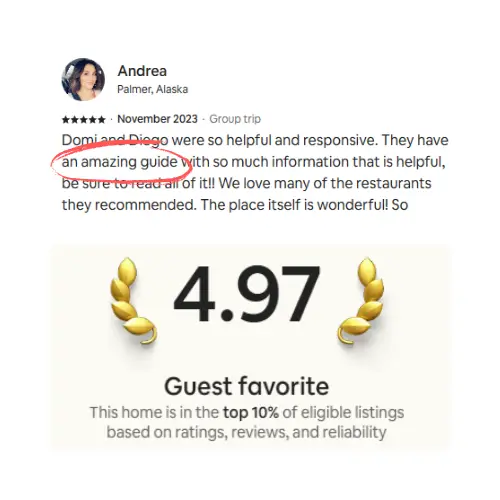
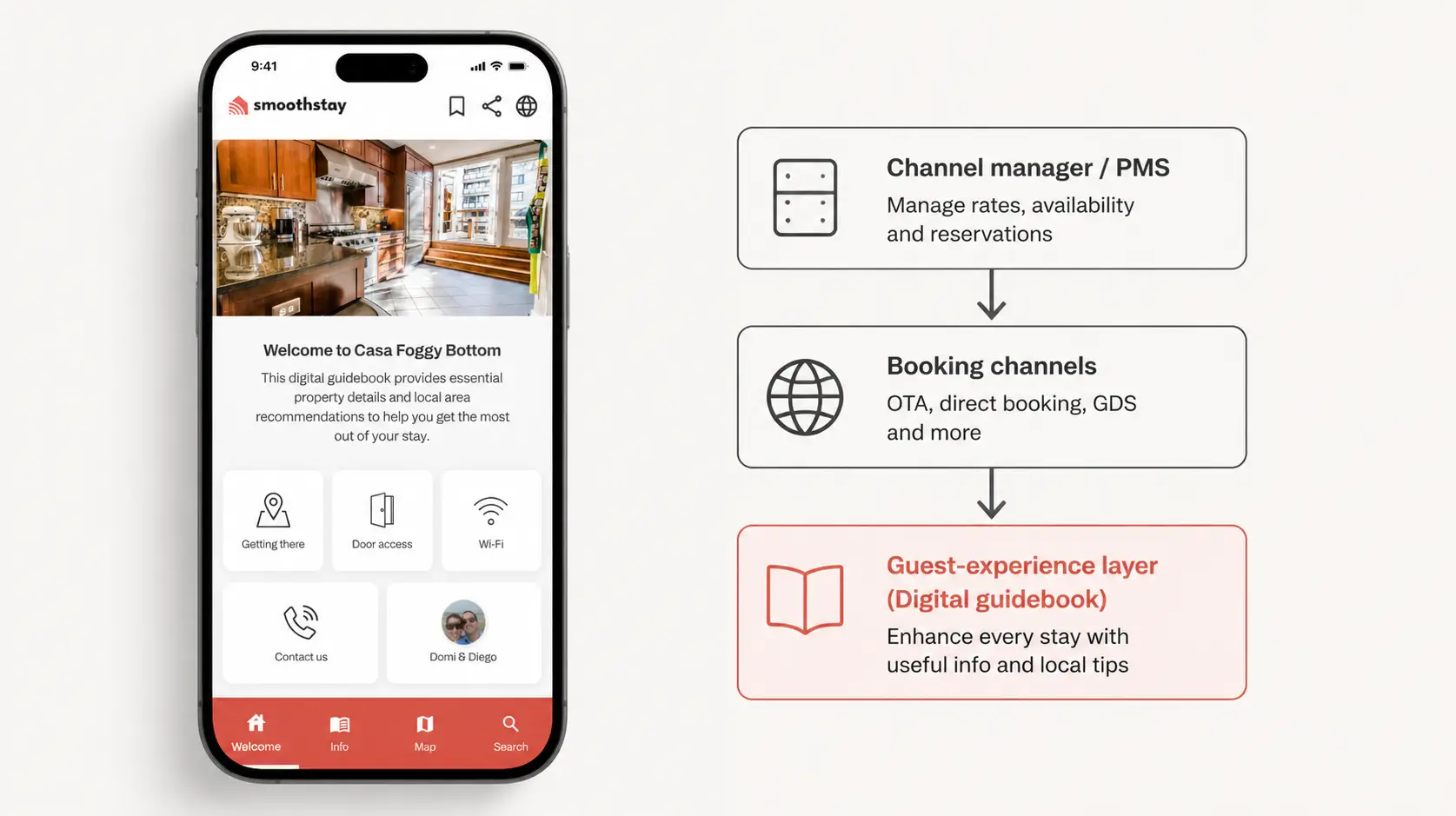
Answer questions before they're asked. Most guest messages are the same ten questions: the wifi, the door code, the AC, the trash, where to eat. Write the answers once in a digital guidebook guests open on their phone. This is exactly what we built SmoothStay for: a guidebook with an AI chatbot on top, so the guest asking about the wifi at 11pm gets the password without waking you. It's free for hosts with one property. If you're not ready to go digital, start with our printable welcome book template for Canva and upgrade later.
Be flexible when it's cheap to be. An early check-in on a day with no turnover costs you nothing and shows up in reviews.
Add one personal touch. A welcome note beats a generic basket you can't keep consistent.
Ask for the review. A short message at checkout, once, politely. Reviews are the engine of everything in step 4.
8. Put the right systems in place
One property on one channel needs almost no software. The moment you add a second channel or a second property, the picture changes. Here's the stack, in plain terms:
Tool | What it does | When you need it |
|---|---|---|
Channel manager | Syncs calendars, rates, and bookings across Airbnb, Vrbo, Booking.com | The day you list on a second channel |
Property management system (PMS) | Reservations, guest messaging, calendars, and reporting in one place | Two or more properties, or multi-channel |
Guest-experience layer | Guidebook, guest questions, and post-booking experience | From your first guest, with or without a PMS |
Channel manager. Its core job is preventing double bookings, which are the fastest way to torch a new listing's standing. Most modern PMSs include one.
Property management system. Once you run two or more properties or list on multiple channels, get a PMS. Hospitable, Guesty, and OwnerRez are the names you'll keep meeting. We run Hospitable across our own properties and it earns its fee monthly.
Where SmoothStay fits. SmoothStay is not a PMS and not a channel manager. It's the guest-experience layer that sits on top: the guidebook and guest-facing side that a PMS doesn't really cover, and it works the same whether you have a PMS or never get one.
Accounting. QuickBooks or Xero if you want it done properly, or at minimum a personal-finance tool where every rental transaction gets tagged. Future-you, at tax time, will be grateful.
9. Build an awesome local support team
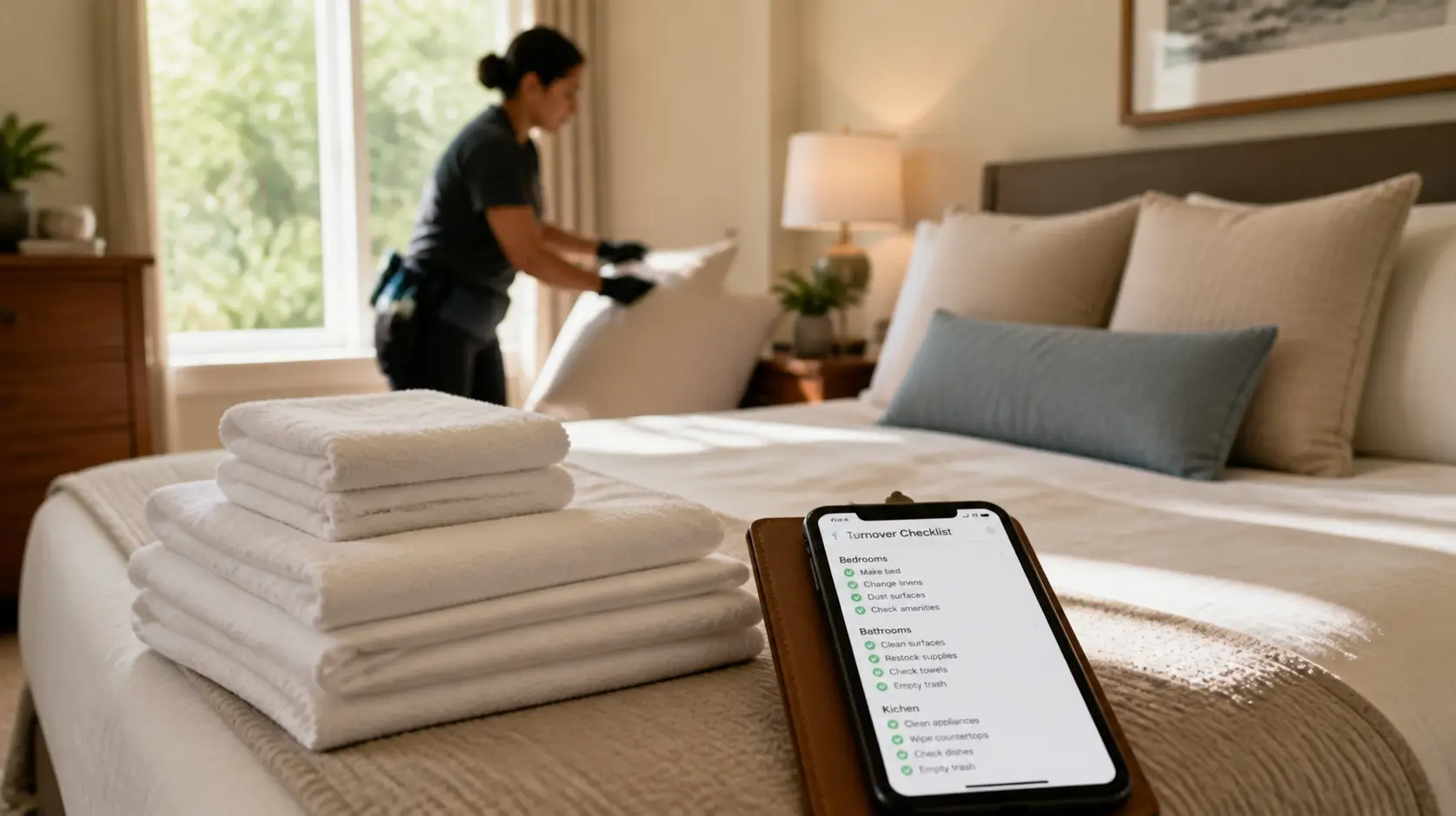
Skipping the property manager keeps their cut of every booking in your pocket, but it only works if two roles are covered by people you trust.
Cleaning. Cleanliness is the most reviewed line in your business. Don't hold out for someone with vacation-rental experience; hire reliable and detail-oriented, then train to a checklist. We did exactly that in DC with a cleaner who had never done a rental turnover. We taught her our checklist room by room, and she now turns our 4-bedroom house in under three hours. Our cleanliness reviews are impeccable largely because of her. When we set up in the Riviera Maya, we recruited the same way rather than chasing experience.
Maintenance and emergencies. You need someone who can be at the property within the hour when the AC dies on a Saturday. In DC we use a handyman we already trusted, who checks the house after turnovers and fixes what's needed at an hourly rate that varies with visits. We have the same arrangement in Mexico. Pay these people well and on time. They are the difference between a bad afternoon and a refunded week.
10. Monitor and optimize your business
Once you're running, watch four numbers and one habit:
Occupancy and rate. If you're fully booked months out, you're underpriced. If you're empty in high season, the photos or the price are wrong.
Reviews. Read every one, including the private feedback. Guests will tell you exactly what to fix next.
Expenses. Cleaning, utilities, restocking, repairs. Profit hides in these lines.
Regulations. Rules change. A license that lapses quietly can end the business loudly.
The habit: fix one thing every month. One paragraph in the listing, one appliance, one missing answer in the guidebook. Twelve compounding improvements a year separates hosts who quietly clear strong numbers from hosts who plateau.
11. Understand your tax obligations
The unglamorous step that decides whether the profit is real. Depending on your city, state, and country you may owe income tax, occupancy or tourism taxes, and sales tax, and platforms collect some but rarely all of it. Confirm what's remitted for you and what isn't. Keep records of every expense from day one, because furnishings, supplies, cleaning, and a share of utilities are commonly deductible. Then spend one hour a year with a tax professional who knows short-term rentals. It pays for itself every time.
FAQ
Is running an Airbnb business worth it?
For us, clearly yes, but it's earned. A well-run property in a legal market with honest pricing produces strong returns and real flexibility. The hosts who regret it are usually the ones who skipped step 1, underestimated turnover work, or priced on hope instead of comps. Run the numbers with realistic occupancy before you commit.
How much does it cost to start an Airbnb business?
It ranges too widely for one number: listing a furnished spare room can cost a few hundred dollars in supplies and photography, while furnishing a whole property from scratch routinely runs into the tens of thousands. The recurring costs catch new hosts off guard more than the setup: cleaning, restocking, repairs, insurance, and license fees. Build those into your nightly rate from the start.
Do I need an LLC to run an Airbnb?
No. Plenty of successful hosts operate without one. An LLC can separate the business's liabilities from your personal assets, which matters more as revenue and property count grow. Insurance is the first line of defense either way, so get the short-term rental policy before you spend money on entity paperwork. We're hosts, not lawyers, so confirm the right structure for your situation with a professional.
Do I need a channel manager or PMS from day one?
No. With one property on one channel, a guidebook, a smart lock, and fast replies cover most of what software would do. Add a channel manager the day you list on a second platform, and a PMS when you cross two properties or two channels. Guest experience is the exception: that matters from the first booking, which is why it's step 7 and not step 8.
Most of this list is habits, not purchases. If you'd rather not build the welcome guide part from scratch, you can have a SmoothStay guidebook running in under an hour: one property, free plan, no card needed.
Latest articles

How to Automate Check-In Instructions for Short-Term Rental Guests
Automate check-in instructions for short-term rental guests: the four-send sequence, what goes in a message versus a guidebook, and a copy-ready sample.

Vrbo Premier Host in 2026: Every Listing Now Stands on Its Own Record
Vrbo Premier Host requirements changed in 2026: per-listing scoring, tighter thresholds, quarterly checks. What each one means, and how it compares to Superhost.
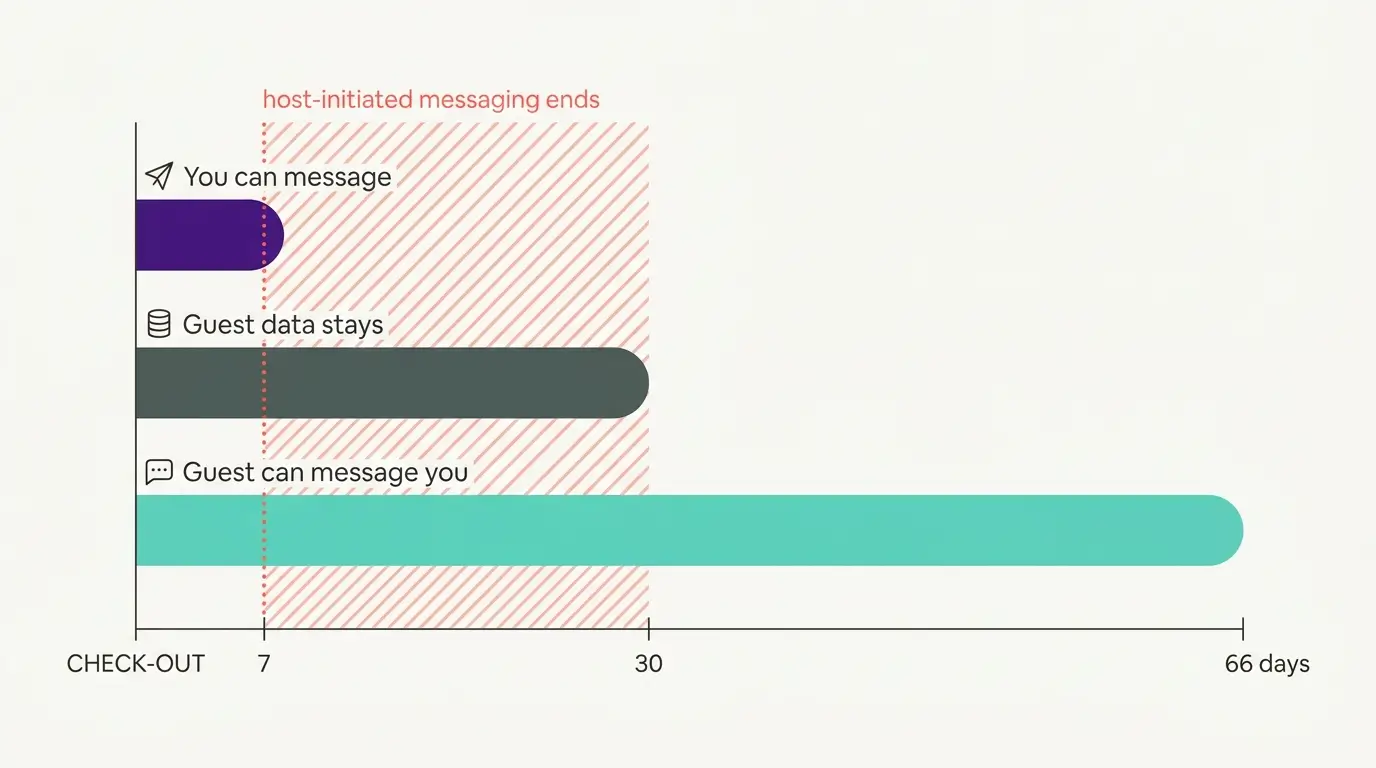
Booking.com Guest Messaging Rules: What Hosts Can Send, When, and Why Links Get Removed
Booking.com guest messaging rules, verified at source: how long you can message a guest, why your links get removed, and what the partner terms say.
Vrbo's New Features for Fall 2026: What's Live, What's Gated, and What's US-Only
We sorted Vrbo's new features for fall 2026: what is live globally, what is gated behind eligibility, and what is US-only. Verified against Vrbo's own pages.