This is a red-flag list about bookings rather than about the people making them. We read three things: what other hosts said, whether the trip makes sense, and whether straightforward questions get straightforward answers. Two flags change our answer on their own after ten years of hosting, a guest with no review history and a trip that doesn't need a bed. Three more end the conversation. The rest are reasons to send one message before you confirm.
Most red-flag lists written for hosts are really lists of people to avoid, which is the wrong axis and on Airbnb also breaks the rules. We started with a row house in Washington, DC over ten years ago and later added a house in Playa del Carmen, a studio in Tulum and two co-hosted Riviera Maya properties. Two things have done most of the work for us since: what other hosts have already said about the guest, and whether the trip they describe actually needs the room.
What are the red flags for Airbnb hosts?
In practice we are reading three things: what other hosts have said about the guest, whether the trip makes sense, and whether straightforward questions get straightforward answers. That sorts the flags below into three groups. Two change our answer on their own, a review history with nothing in it and a trip that doesn't need a bed. Three end the conversation outright. The rest are reasons to send one message before you confirm.
Screen the trip, not the person
Airbnb's Nondiscrimination Policy, last updated 24 March 2026, prohibits treating people differently or denying them service because of a protected characteristic "or the perception that they have a protected characteristic," and it names "declining or canceling a booking" among its examples. The characteristics it protects are race, religion, gender, age, disability, familial status, marital status, ethnicity, nation of origin, sexual orientation, sex, gender identity, caste, and pregnancy and related medical conditions.
Its companion FAQ is blunter about the version hosts actually ask about: on bad experiences with guests from a particular country, hosts "may not decline guests based on their nationality or ethnic background."
So run one test before acting on anything below: could you apply this identically to every guest who books, whoever they are? A blank review record passes; every guest either has one or doesn't. A profile photo, a name, an accent and the shape of someone's family all fail, and so does anything you inferred from them. Airbnb updates these policies periodically; the wording quoted here was current in August 2026.
The two that change our answer
These two are our own operating judgement rather than anything Airbnb publishes, and they are where ten years of it has concentrated.
1. A review history with nothing in it
Why it matters: this is the flag that sets how hard we look at every other one. A guest with a long run of positive reviews has been inside other people's homes and behaved, and that record is the best predictor available to us. When it is there, we say yes to most bookings without much thought. A blank profile isn't evidence of a bad guest. It just removes the evidence we normally rely on, which means every other flag below has to carry more weight.
The innocent version: everyone starts at zero, and the empty profiles we see are usually exactly what they look like, which is a first trip. So we ask instead of declining, and we keep Instant Book restricted to guests with a track record so unreviewed guests reach us as a request we can answer. That setting is covered in our safety guide. A missing profile photo is not part of this judgement at all.
2. A trip that doesn't need a bed
Why it matters: this is the one thing that makes us look twice at a booking we would otherwise take without hesitating, including from a guest with a long run of good reviews. When someone tells you they want the place for the evening, or that they live twenty minutes away and just need somewhere for the night, the room is often not the point of the trip. Airbnb weighs something in this family in its own automated reservation screening, which it says draws on signals that "may include, but are not limited to, data related to a guest's reservation, guest's account history, the listing itself, and message thread topics."
The innocent version: the ones we get are a kitchen mid-renovation, in-laws who need the spare room, a burst pipe, or parents of small children buying one quiet night. You only know any of this because the guest told you, so ask, and never infer it from a profile. And a screening model the platform runs at scale is no licence to operate a local-guests rule by hand; applied that way it lands unevenly and costs you good stays.
The ones that earn a question
3. One night, a weekend, the whole place
Why it matters: when Airbnb described its anti-party screening in 2022 it named "length of the trip" and "weekend vs. weekday" among the factors it weighed. A single Saturday night in an entire home is the booking shape we see go wrong most often.
The innocent version: a wedding two towns over. A concert. A red-eye the next morning. Short trips are ordinary, and we cover the operational side of them in how to handle last-minute bookings.
4. A trip purpose that stays vague after you ask
Why it matters: a guest planning an ordinary trip answers this in one line without thinking twice. A guest who deflects the same question twice, or answers a different question than the one you asked, has told you something. Airbnb's own screening page lists "message thread topics" among its signals.
The innocent version: people are private, or travelling for something they would rather not explain to a stranger. A medical appointment. A funeral. A job interview. And the length of a reply is not the signal: someone typing on a phone or across a time zone writes clipped answers and means nothing by it. Rephrase the question before you read anything into silence.
5. A headcount that doesn't fit the occasion
Why it matters: six adults for "a quiet weekend away" is a mismatch, and the number on the reservation is what your occupancy cap, your insurance and your neighbours are working from.
The innocent version: in our experience an extra head is usually a group that grew by one and wasn't sure it was allowed to ask. A large party may simply be a family, and familial status is on the protected list above, so the question is about the number and never about who those people are. Our answer depends on the property, which is the argument of our post on the Airbnb extra guest policy.
6. Pressure to waive a house rule before booking
Why it matters: a rule only helps you if the guest agreed to it before booking, so waiving one at the request stage removes the footing you would otherwise stand on. Our safety guide has the version we see most, a guest asking whether the no-smoking rule really covers the balcony.
The innocent version: the guest read your house rules, which not everyone does. A long positive review history behind the request is what makes us willing to flex.
7. A stay that is really a shoot or an event
Why it matters: Airbnb's ground rules for guests say guests "should not participate in film or photography that is intended for commercial use or profit, without documented permission from the host."
The innocent version: a guest who tells you up front is being straight with you, and that is a conversation about a different rate and a different agreement. The problem is the shoot you find out about afterwards.
Ask one question instead of declining
Declining carries a cost. Airbnb's guidance on declining a trip request tells hosts to respond within 24 hours because "your response rate will thank you," and warns that "turning down a lot of requests can impact your reservation rates and where your listing shows up in search." The same page tells you to review the Nondiscrimination Policy first.
Send one question and read the reply. What matters is that it asks for something specific:
"Happy to host you. So I can get the place ready, what brings you to town and how many of you will there be?"
"Quick one before I confirm: is this the full group, or are you still working that out?"
Then read the reply for specificity. "Three of us, my sister's graduation" answers what you asked. We stop when a direct question gets a second vague reply, because at that point we still don't know enough about the trip to judge whether it fits the property.
The ones that end the conversation
Two of these are things Airbnb prohibits outright. The third is ours.
8. A request to move the booking or the payment off the platform
Airbnb's Off-Platform and Fee Transparency Policy prohibits "asking or encouraging users to move current, future, or repeat bookings (including reservation extensions) off of Airbnb," and states that "requesting, sending, or receiving payments outside of Airbnb is prohibited." Repeated or severe violations can cost you the listing or the account.
The version we actually get is the one that policy names in its parenthesis. A few times over the years a guest partway through a stay has asked to add a night and pay us for it directly. We answer the same way every time, by sending a change request through Airbnb. Roughly half go through with it and pay. The other half go quiet, and we assume they were disappointed. That is fine by us as long as the account stays safe. What still surprises us is where they ask: inside the Airbnb message thread, in writing, apparently seeing nothing awkward about it.
If direct bookings are what you want, build a channel you own.
9. Links, urgency, or a payment problem raised in the thread
A message that sends you somewhere else to fix something is the shape we see most Airbnb scam attempts take. Airbnb's page on deception and scams says it prohibits "users from communicating, booking and paying, or sharing personal contact information outside of the platform," subject to the limited exceptions in the off-platform policy, and its safety guidance is blunter: "Be safe, and only communicate, book, and pay through Airbnb." Nothing about a real reservation requires you to click a link a guest sent you.
10. Refusing to say how many people are coming
You are entitled to know how many people will be staying, and whether the reservation reflects the group who will actually be there. You are not entitled to know who they are, and Airbnb's off-platform policy prohibits asking guests for contact information before booking. Nor is a booker who isn't travelling a problem: under Airbnb's booking permissions, a guest can authorise someone else to book, and the reservation details list both names. The flag is a guest who will not answer the question at all. Years ago a Vrbo guest booked, sent nothing, and ignored every message and call. We were forced to cancel it ourselves, took the penalty and lost our Premier status. Our safety guide sets out the better route: ask the platform to mediate and have the guest cancel.
What screening doesn't catch
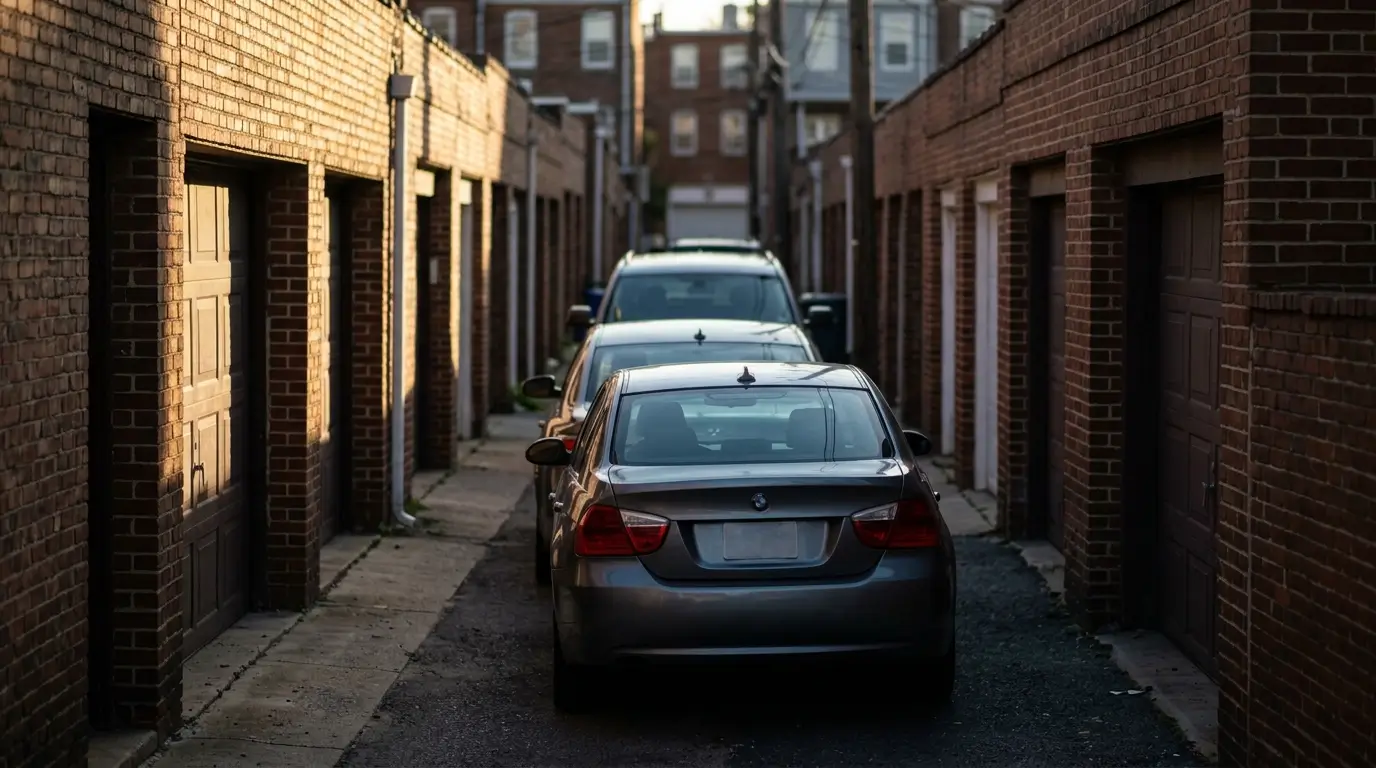
Ten years in, our read is that more of our problems have come from guests who tripped none of these flags than from guests we hesitated over. The neighbour complaint we get in DC is a parking one, which we wrote up in the extra guest policy post: four cars in the alley without a permit. No amount of vetting would have surfaced that, because it was never a screening problem. House rules belong in the listing, where the guest agrees to them before booking, and our post on Airbnb house rules examples covers what Airbnb will and won't back you on.
FAQ
Is a guest with no reviews a red flag on Airbnb?
For us it is the biggest one, though not for the reason most lists give. It removes the record hosts normally rely on, so everything else in the booking has to carry more weight. Ask what the trip is for and who is coming.
Can I decline an Airbnb booking because I have a bad feeling about the guest?
You can decline a request for reasons that have nothing to do with a protected characteristic. Airbnb's nondiscrimination FAQ encourages a host who is uncomfortable to use the listing description and house rules to set expectations, and to contact Airbnb about a specific concern. Unpack the feeling first, and write down what triggered it. If the answer is something about the trip, you have a flag. If it is something about the person, you do not.
Can someone book an Airbnb for someone else?
Yes. Airbnb's booking permissions let a guest authorise another person to book on their behalf, and the reservation details show you both names. A booker who isn't travelling is not something you need to challenge.
Can I ask an Airbnb guest for ID before they arrive?
Generally no. Airbnb's Off-Platform and Fee Transparency Policy lists "asking guests to send photos of their government ID prior to arrival" among prohibited behaviours, "except where required for legal or compliance reasons." Airbnb also says it does not share a guest's government ID with a host when they book. If a local registration law applies to you, put that in the listing.
How do I stop parties without turning away good groups?
Airbnb's Community Disturbance Policy already prohibits open-invite gatherings, and disruptive gatherings regardless of size, so you don't need your own version of that rule. Name the things neighbours actually notice instead, such as parking, quiet hours and the number of cars, and put them where a guest will see them before and during the stay.
Where the rules live once you've accepted
Screening only covers the bookings you have not taken yet. After that the job is making sure a guest can find the parking rule, the quiet hours and the door code without messaging you at 11pm. That is what we built SmoothStay for: a guidebook you maintain once, whatever channel the booking came through. The free tier covers one property, no card needed, and the AI Concierge, which answers follow-ups using only what you have published, is on the paid plans.
Latest articles
Glamping Amenities: What Guests Expect, and What to Say About Each One
Which glamping amenities guests actually expect, and what to say about each one so nobody discovers the shared bathroom on arrival. Plus two lists to publish.
Hotel Guest Data Privacy: The Process We Made for Our Own Properties
Hotel guest data privacy from the operator's side: the list we made for our own properties, what travelers say about consent, and a statement you can copy.
How to Word Airbnb Fees and Fines for Guests
How to word Airbnb fees and fines for guests so they inform instead of accuse: what Airbnb counts as a fee, where each number goes, and 7 examples to copy.
What Many Guests Do First When They Arrive
What guests do first when they arrive: the sequence we keep seeing, what goes wrong at each step, and why a QR code at the object beats another page.