

A hotel check‑in app is really three separate tasks—pre‑check‑in registration, door access, and arrival information—and most small hotels already have the first two but lack the guest‑facing information layer. SmoothStay’s digital guidebook fills that gap with timed, reservation‑linked instructions and an AI concierge, enabling truly contactless self‑check‑in without extra hardware or complex software.
What is a hotel check-in app?
A hotel check-in app lets a guest handle arrival from their phone instead of a front desk: confirm their details before they get there, get into their room, and find out how everything works. In practice it's rarely one product. It's three separate jobs stitched together, and most small hotels already own one or two of them without realizing the third is the one guests actually complain about.
Those jobs are pre-check-in and registration (collecting guest details), access (the lock or key that lets them in), and arrival information (where to park, which room is theirs, how to get in after hours, what the wifi is). Your PMS handles the first. Your lock provider handles the second. The third is usually the gap, and it's the one a digital guidebook fills.
So before you go shopping for a single "check-in app," figure out which of the three you're short on. For most independent properties the booking system and the locks are fine. What's missing is the guest-facing arrival layer, the part that tells a guest landing at 11 p.m. exactly what to do.
How does contactless hotel check-in work?
Contactless check-in means a guest arrives and gets settled without standing at a desk or waiting for someone with a key. It works when three layers line up: the guest's details are captured before arrival, the room is accessible without a person handing over a key, and clear arrival instructions are sitting on the guest's phone the moment they need them.
Miss any one of those and the "contactless" part breaks. A smart lock with no instructions just produces a confused guest in a dark parking lot texting you for the code. The information layer is what makes the hardware usable.
The three pieces of check-in, and the one you're probably missing
It helps to separate what each piece does, because that's also how you separate which vendor solves which problem.
Registration and pre-check-in. This is collecting guest info and, in some markets, ID and a payment hold. Most of this lives in your PMS or a dedicated check-in tool. If you need formal ID verification or to authorize a card, that's a PMS or kiosk function, not a guidebook one.
Access. This is the physical part: a smart lock, a keypad, a lockbox, or a mobile key. It's handled by a lock provider like a keypad system or a hotel access platform. No guidebook unlocks a door.
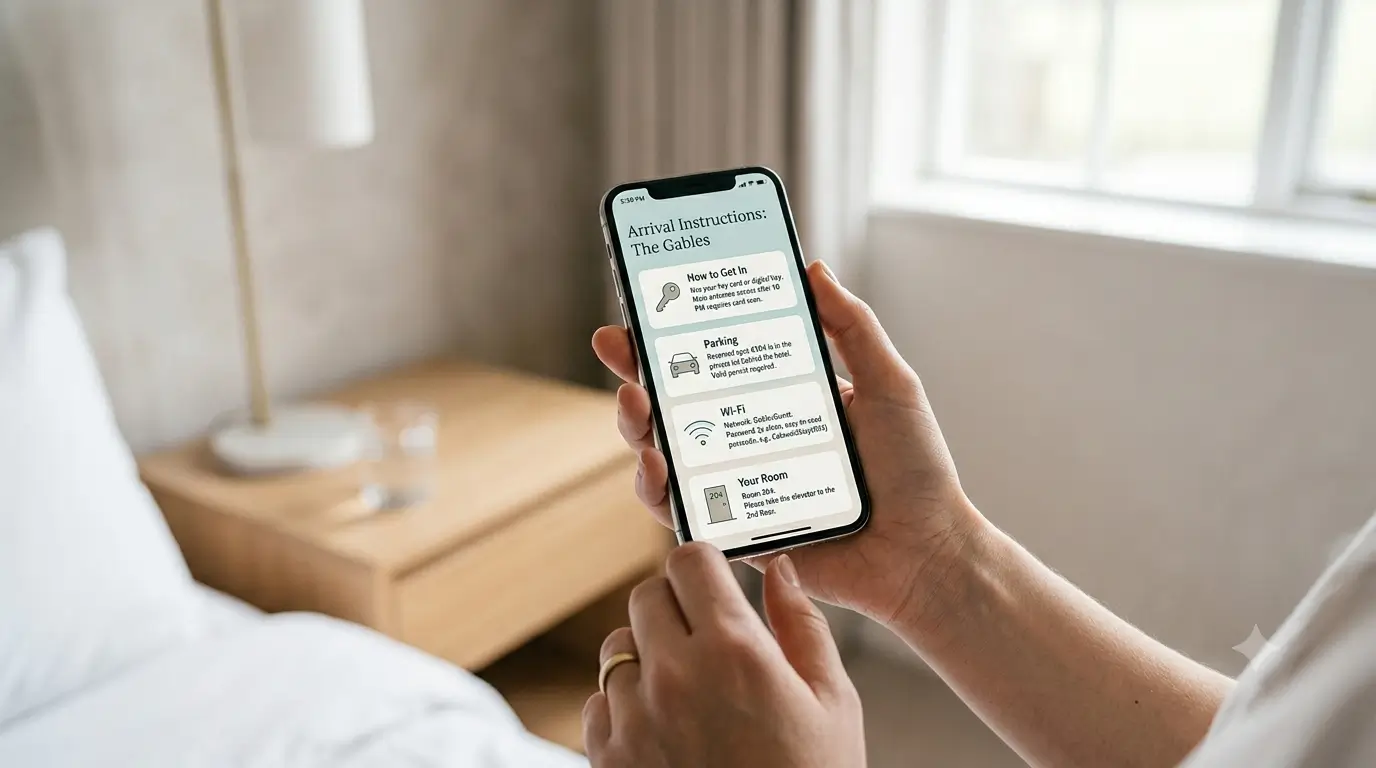
Arrival information. This is the part guests actually search for when they say "how do I check in." Directions, parking, which room is theirs, the door or lockbox code, the wifi, what to do if they arrive early. It's the most neglected of the three and the cheapest to fix.
A "check-in app" sold as one box usually bundles the first two and treats the third as an afterthought. For a small hotel, the third is where the late-night calls come from.
Check-in app vs. PMS pre-check-in vs. web guidebook
Here's how the common options compare for a small or boutique property:
Capability | Native check-in app / kiosk | PMS pre-check-in | Web-based arrival guidebook |
|---|---|---|---|
Collects guest details | Yes | Yes | Contact details and consent, not formal ID |
ID verification and payment hold | Yes | Often | No |
Unlocks the door | Some, with hardware | No | No |
Tells guests how to get in | Sometimes | Rarely | Yes, timed to the reservation |
Hardware or app-store install | Often | No | No |
Works on any phone instantly | After install | Browser link | Browser link or QR code |
Multilingual answers after hours | Rarely | No | Yes, with an AI layer |
Cost to a small property | High | Bundled with PMS | Low |
The pattern is clear. The expensive options own registration and access. The arrival-information layer, the thing guests touch first, is usually the weakest part of the whole setup.
What SmoothStay does for check-in
SmoothStay owns the part of arrival guests reach for first. The digital guidebook carries directions, parking, room details, door or lockbox codes, and everything a guest needs to walk in and feel at home, and the AI Concierge answers whatever the guide didn't cover, in the guest's language, at any hour. It's the piece that turns a lock and a reservation into a smooth, self-guided arrival.
It works right alongside the systems you already run. Your access provider runs the physical lock and your PMS handles bookings and any ID or payment step; SmoothStay makes the arrival itself effortless on top of them. And the platform keeps growing toward more of the check-in stack, so the part it handles for you gets bigger over time.
Why reservation-timed access is the real check-in hook
Here's the feature that makes a guidebook behave like a check-in tool. Time-based reservation access means sensitive details, the door code, the lockbox location, the exact entry steps, unlock for a guest shortly before their check-in and lock again after checkout. The current guest sees the code. Last week's guest doesn't. You're not emailing codes around or changing them by hand between stays.
Pair that with an AI Concierge that reads from your own content and answers in the guest's language, and the after-hours arrival stops being a problem. The guest who lands at midnight gets the code and the directions without waking anyone up. That's the honest version of contactless check-in for a property without a 24-hour desk.
A contactless check-in setup that actually works
If you're piecing this together for a small hotel, the order matters:
Keep your PMS for reservations and any pre-check-in or ID step. Don't rebuild what it already does. If it supports PMS integrations, stay details can flow into your guest layer automatically.
Pick a reliable lock system. Keypad, smart lock, or mobile key. This is your access layer and it's a separate purchase from anything guest-facing.
Put the arrival information on the guest's phone. A web-based guidebook delivered by link and QR code, with the entry details timed to each reservation.
Cover the off-hours questions. An AI layer that answers from your content means the front desk being closed doesn't mean the guest is stuck.
Collect what you need at registration cleanly. A guest registration step can capture contact details and consent without a paper form, with export when you need the list.
Three vendors, maybe, but each doing the job it's good at, and the guest experiencing it as one smooth arrival.
It layers on top of your PMS, it doesn't replace it
Most small hotels already run a property management system for rates, reservations, and housekeeping. Good. The guest-facing layer is a different job, and on most stacks it's the weakest link, often a printed sheet at the desk and a script the night auditor reads from memory.
A guidebook and AI Concierge ride on top of what you already use. They don't touch your booking engine or your rate plans. You fix the part guests actually interact with at arrival without ripping out the system that runs the back office. If you've already weighed whether you need a full guest app for this, our take on whether small hotels need a guest app lands in the same place: the job is the guest experience, not the download.
FAQ
What is a hotel check-in app?
It's software that lets guests handle arrival from their phone: confirming details, getting into the room, and finding out how things work. In practice it's three jobs combined, registration, access, and arrival information, and they're usually delivered by more than one tool rather than a single app.
How does self check-in work for a small hotel?
Capture the guest's details before they arrive, give them a way into the room that doesn't need a person (a smart lock or keypad), and put clear arrival instructions on their phone timed to the reservation. When all three line up, a guest can arrive at any hour without a front desk.
Do small hotels need a check-in kiosk?
Usually not. Kiosks are expensive hardware built for higher-volume lobbies. A small or boutique property gets most of the benefit from phone-based pre-check-in plus a reliable lock and a clear digital arrival guide, at a fraction of the cost.
Can guests check into a hotel without a front desk?
Yes, if the information and access are handled. The lock lets them in and the guidebook tells them how, where to park, which room, the wifi, what to do if they're early. An AI concierge covers the questions that come up when nobody's at the desk.
Is a digital guidebook the same as a check-in app?
It's the part of one guests use most. A guidebook owns the arrival-information layer and times sensitive details like door codes to the reservation, while your lock and PMS handle access and ID. Put together, they're what makes self check-in actually work for the guest.
How much does contactless check-in cost for a small hotel?
It depends which pieces you're missing. Locks are a one-time hardware cost, pre-check-in is often bundled with your PMS, and the guest-facing guidebook layer is low-cost; tools like SmoothStay start free for a single property, so you can see it work before you pay.
One last thing
The instinct to "get a check-in app" usually comes from wanting arrivals to feel effortless. That's the right goal. It just rarely means one piece of software. Keep the PMS, keep the locks, and fix the layer guests actually touch at the door. If you'd rather not build that arrival guide from scratch, you can have a digital guidebook with timed access and an AI Concierge running for your property in about an hour, and watch how guests use it before you spend a cent.
Latest articles

How to Automate Check-In Instructions for Short-Term Rental Guests
Automate check-in instructions for short-term rental guests: the four-send sequence, what goes in a message versus a guidebook, and a copy-ready sample.

Vrbo Premier Host in 2026: Every Listing Now Stands on Its Own Record
Vrbo Premier Host requirements changed in 2026: per-listing scoring, tighter thresholds, quarterly checks. What each one means, and how it compares to Superhost.
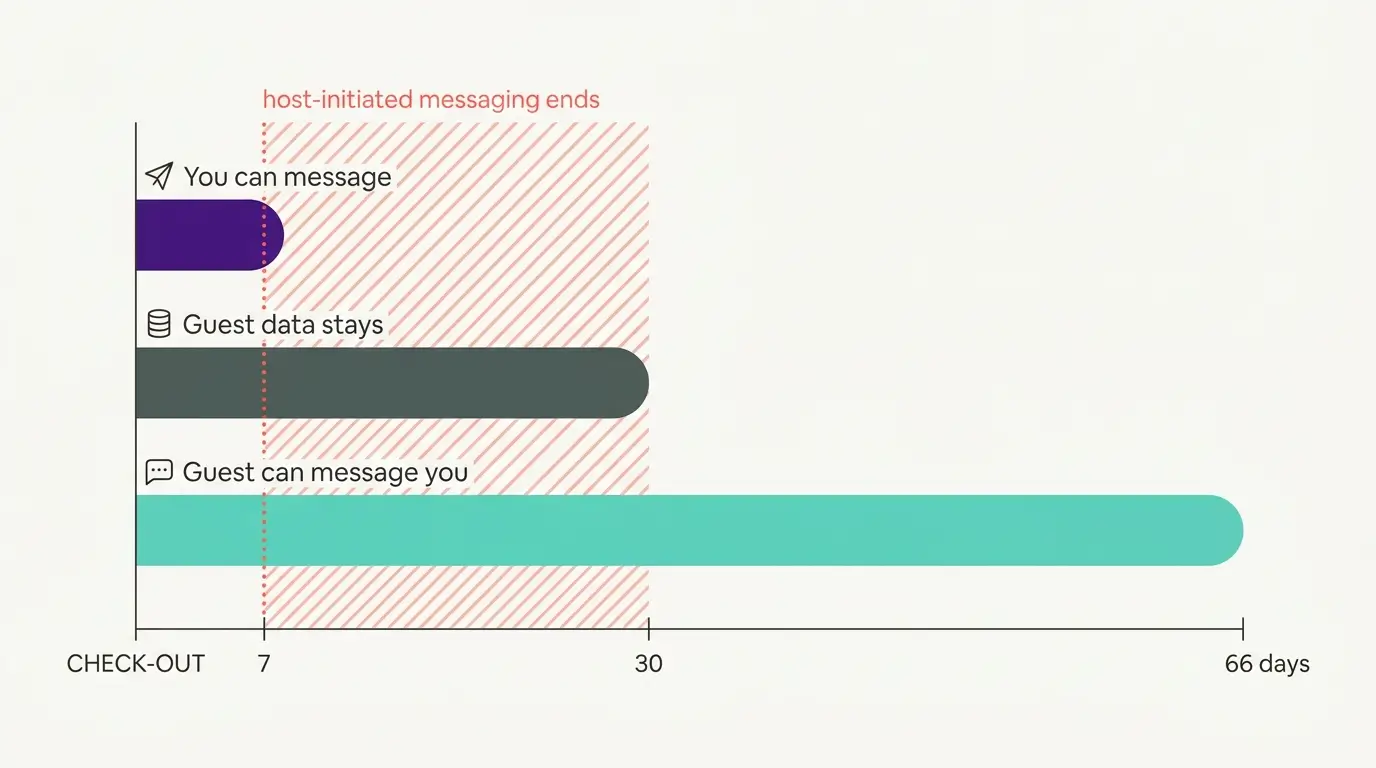
Booking.com Guest Messaging Rules: What Hosts Can Send, When, and Why Links Get Removed
Booking.com guest messaging rules, verified at source: how long you can message a guest, why your links get removed, and what the partner terms say.
Vrbo's New Features for Fall 2026: What's Live, What's Gated, and What's US-Only
We sorted Vrbo's new features for fall 2026: what is live globally, what is gated behind eligibility, and what is US-only. Verified against Vrbo's own pages.