

Small hotels don’t need to invest in a costly native guest app; a web‑based digital guidebook with an AI Concierge provides the same guest experience without download friction or high development costs. The post explains why this lightweight solution works better for independent properties and how it integrates with existing PMS systems.
What is a hotel guest app?
A hotel guest app is a mobile tool guests use during their stay to find room and property information, browse or request services, get local recommendations, and ask questions without hunting down the front desk. It can be a native app downloaded from the App Store or Google Play, or a web-based guide that opens from a link or a QR code. For most small and boutique hotels, the web version does the same job without the build cost or the download step.
Here's the part the agency pitching you a custom app tends to skip: a guest booking two nights at your 20-room property is not going to install software for the privilege. They'll use it if it opens in one tap. They won't if it asks them to find it in an app store, create an account, and approve notifications first.
So the real question isn't "should we have a guest app." It's "what's the lightest thing that gets a guest everything they need, with the fewest reasons to give up."
Do small hotels actually need a native app?
For most independent properties, no.
A native app earns its keep when you have a big base of repeat guests and a loyalty program to feed, the way the major chains do. Marriott and Hilton can justify the engineering because a frequent traveler opens that app dozens of times a year. Your guest is here for a weekend.
Three things work against the native app for a small hotel:
Cost. You're building and maintaining two apps, one for iOS and one for Android, plus paying for updates every time Apple or Google changes the rules. That bill never stops.
The download wall. Every extra step between a guest and the information loses people. Asking someone to visit an app store mid-trip is a big step, and plenty of guests won't take it.
Short stays. A guest who's here for two nights has no reason to download something they'll delete on the way home. The app never gets used enough to pay for itself.
None of this means guests don't want a digital experience. They do. They just don't want a download.
Native app vs. web guidebook vs. PMS portal
Here's how the three common options compare for a small or boutique property:
Capability | Native guest app | Web-based digital guidebook | PMS guest portal |
|---|---|---|---|
Guest downloads anything | Yes | No | Usually no |
Time to launch | Months | Hours to days | Already included |
Build and upkeep cost | High, ongoing | Low | Bundled with PMS |
Works on any phone instantly | After install | Yes | Yes, but basic |
Easy for staff to update | Needs a release | Edit and it's live | Limited |
Local tips and rich media | Yes | Yes | Rarely |
Answers guest questions on its own | Only if built in | Yes, with an AI layer | No |
Best for | Chains with loyalty programs | Independent hotels and small groups | Bare-minimum coverage |
The pattern is hard to miss. The native app wins on nothing that matters to a small property, and loses on cost and adoption.
What a guest app really needs to do
Strip away the word "app" and look at the jobs a guest actually needs done:
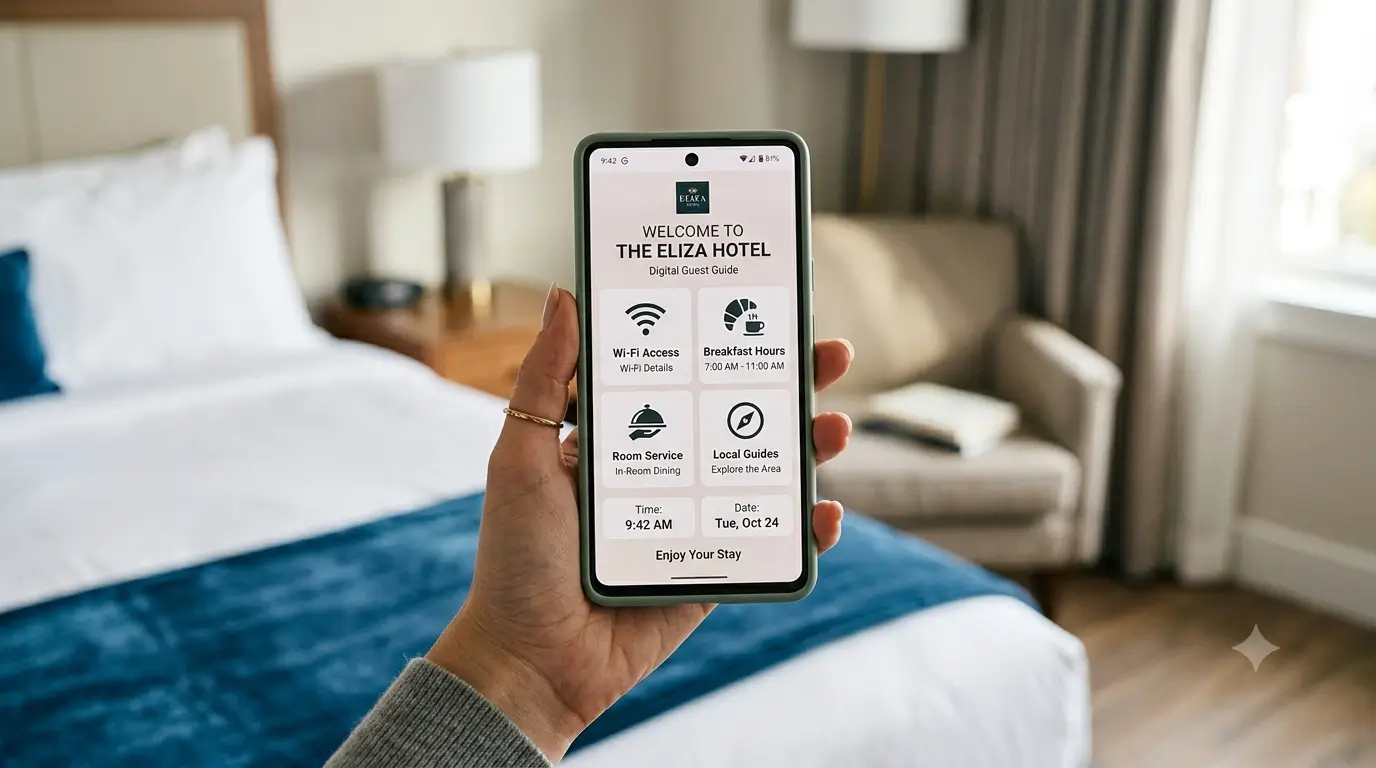
Find check-in details and how to get into their room.
Learn the property: wifi, breakfast hours, parking, the AC that works backwards, pool rules, checkout time.
See what you offer and how to ask for it, from late checkout to a dinner reservation.
Get local recommendations they'd otherwise text the front desk for.
Get answers at 11 p.m. when nobody's at the desk.
Not one of those requires an icon on the home screen. They require the information to be organized, easy to reach, and on the device the guest already has open.
The web-based way, and why more guests actually use it
A web-based digital guidebook for hotels solves the same problem from the other direction. Instead of pulling guests into an app, you put the guide where they already are.
It works like this. You print a QR code for the front desk and each room, and you drop a link into the booking confirmation and the pre-arrival message. The guest scans or taps, and the guide opens in their browser. No account, no install. They get the wifi password, the breakfast hours, the walking directions to the good coffee, all of it, in the language their phone is set to.
For the questions the guide doesn't directly answer, an AI Concierge reads from your own content and replies in the guest's language, day or night. That's the part that quietly replaces the after-hours phone calls.
This is also where adoption actually happens. A guide that opens in one tap gets opened. An app that needs a download gets skipped.
Isn't this just a digital concierge?
Sort of, and that's the point. When operators search for a digital concierge for hotels, what they usually want is the thing a good front-desk agent does: answer questions, point guests to the right service, recommend a restaurant, smooth out the small problems. A web-based guidebook with an AI Concierge does most of that without a person standing at a desk, and without a guest installing anything. The word "concierge" sounds high-touch, but the delivery can be as simple as a link in a confirmation email.
The difference worth keeping straight: a generic chatbot bolted onto your website talks to shoppers before they book. A guest concierge works during the stay, answering from your property's own information, for the people already in the room.
It should sit on top of your PMS, not replace it
You're probably already running a property management system for reservations, housekeeping, and rates. Keep it. The guest-facing layer is a different job, and on most small-hotel stacks it's the weakest link, often a printed binder and a tired front-desk script.
A guidebook or guest experience layer rides on top of what you already use. It doesn't touch your booking engine or your rate plans. If you run a system that supports PMS integrations, stay details can flow in automatically; if you don't, you can still publish a guide today. The point is to fix the part guests actually touch without ripping out the system that runs the back office.
How to choose a hotel guest experience tool
If you're weighing your options, look for these:
No download required. It should open in a browser from a link or QR code.
Works on every phone, instantly. No app store, no account.
Multilingual. Automatic translation matters more in hospitality than almost anywhere.
Easy to update. A staff member should be able to change breakfast hours in seconds and have it live for every guest.
Answers questions on its own. A guidebook plus an AI layer covers the after-hours gap.
Fair pricing as you add rooms. Check the pricing before you commit, and make sure it doesn't punish you for growing from ten rooms to fifty.
FAQ
Do hotel guests have to download an app?
Not with a web-based guide. They scan a QR code or tap a link and it opens in their phone's browser. Native apps require a download, which is exactly why most short-stay guests never install them.
What's the difference between a hotel guest app and a digital guidebook?
A native guest app is software installed from an app store. A digital guidebook is a web page that feels like a native app and guests open instantly with no install. Both deliver room info, services, and local tips. The guidebook just removes the download.
Can a web-based guidebook handle check-in?
It can carry your check-in instructions, door or lockbox codes, parking, and arrival directions, and time them to the reservation. It isn't a smart lock or a PMS, but it's where guests look first for how to get in.
Do small hotels need an app to compete with big chains?
No. Chains build apps to serve loyalty programs and frequent travelers. An independent hotel competes on the actual stay, and a fast, well-organized guest experience does more for a weekend guest than an app they'd never download.
How much does a hotel guest app cost?
A custom native app runs into real development and maintenance money, across two platforms, with no end date. A web-based guidebook is a fraction of that, and tools like SmoothStay start free for a single property, so you can see it work before you pay.
Does it work in other languages?
A good guest guidebook translates automatically to the guest's language, including the AI answers. For a hotel taking international bookings, that's the difference between a guest reading your guide and a guest texting the desk at midnight.
One last thing
The urge to "get an app" usually comes from wanting to look modern and make guests' lives easier. Both are good instincts. They just point at a web-based guide, not a download. If you'd rather not build all this from scratch, you can have a digital guidebook and AI Concierge running for your property in about an hour, and watch how guests use it before you spend a cent.
Latest articles

How to Automate Check-In Instructions for Short-Term Rental Guests
Automate check-in instructions for short-term rental guests: the four-send sequence, what goes in a message versus a guidebook, and a copy-ready sample.

Vrbo Premier Host in 2026: Every Listing Now Stands on Its Own Record
Vrbo Premier Host requirements changed in 2026: per-listing scoring, tighter thresholds, quarterly checks. What each one means, and how it compares to Superhost.
Booking.com Guest Messaging Rules: What Hosts Can Send, When, and Why Links Get Removed
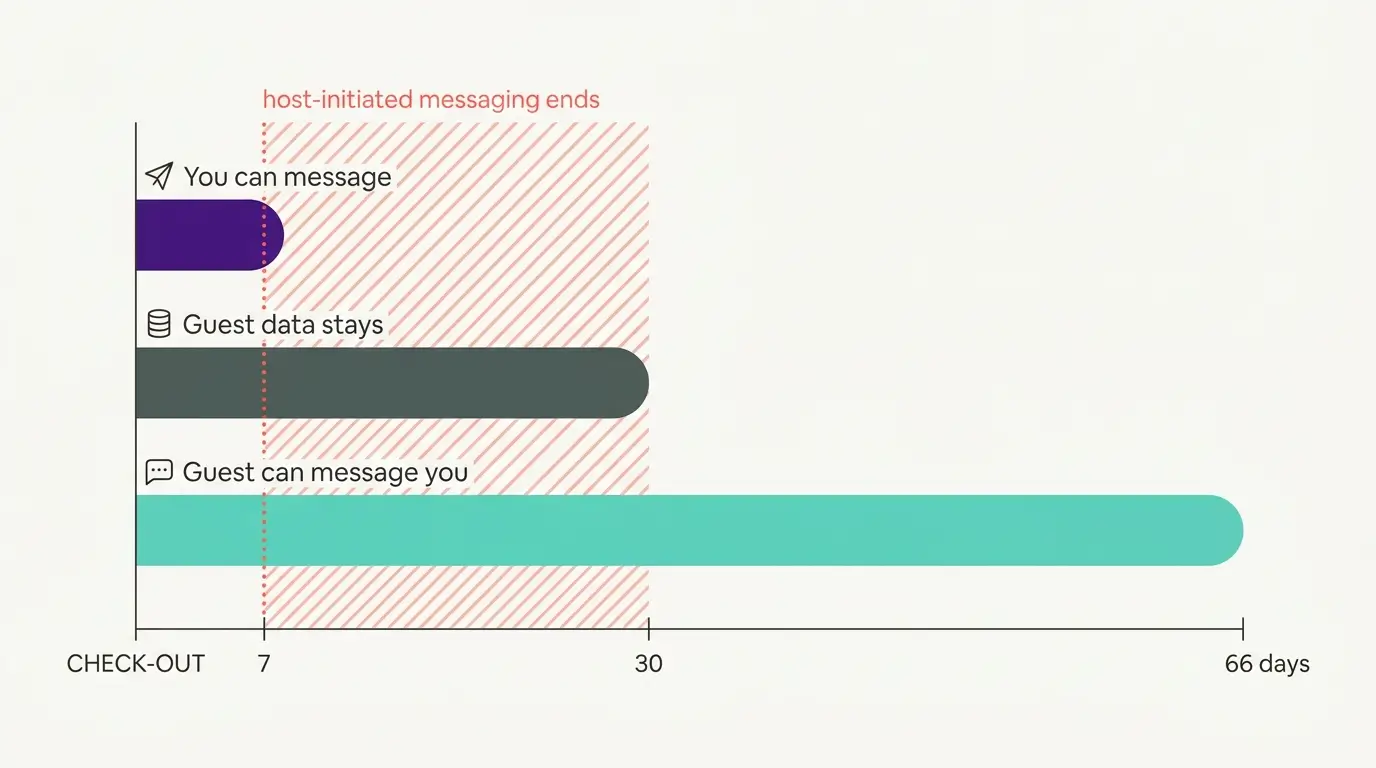
Booking.com guest messaging rules, verified at source: how long you can message a guest, why your links get removed, and what the partner terms say.

Vrbo's New Features for Fall 2026: What's Live, What's Gated, and What's US-Only
We sorted Vrbo's new features for fall 2026: what is live globally, what is gated behind eligibility, and what is US-only. Verified against Vrbo's own pages.