A guest asks whether your place will work for a fragrance sensitivity or an allergy. Very few hosts can honestly call a rental completely fragrance free, so describe it instead: your cleaning products, where the laundry is done, whether pets have stayed, the flooring, whether the air is shared. Put it in writing whether or not they answer. Describing what you did is something you can back up, and it is the version that holds up if a listing claim is ever disputed.
A message lands a week before check-in. The guest has a fragrance sensitivity, a pet-dander allergy, or a list of cleaning products they need you to avoid. They are polite about it, and they are clearly braced for a no.
Most hosts we know want to help and freeze anyway, because nobody fully controls a building they rent out. Neither side is being difficult: the guest is trying to judge a room they have never seen, and you are trying not to promise something you cannot deliver.
It is not a rare question, either. A four-country study in Air Quality, Atmosphere & Health found 34.7% of US adults surveyed reported adverse health effects from fragranced consumer products, and across the four countries 15.7% reported problems from a room cleaned with scented products. These are self-reported figures from 2019 rather than diagnosis rates, but they are enough to suggest some hosts will field this request at some point.
Can you make an Airbnb fragrance free?
Very few hosts can honestly say a property is completely fragrance free, and we are not among them. Some operators do build dedicated fragrance-free accommodation and run it as a specialism, which is a different business from adapting an ordinary rental for one stay. For the rest of us a rental is not a controlled environment: previous guests, a cleaner's own products, shared air and off-site laundry all sit outside what you can verify. What you can do is describe what you use and what the property is like, in enough detail that the guest decides for themselves.
Airbnb's own host guidance points the same way on the information half of this. Its page on hosting guests with accessibility needs says that "it's never the host's responsibility to determine suitability for a guest," and that the most useful thing a host can do is give clear, accurate information and communicate.
Why the request is hard to answer
Five of the bigger unknowns sit outside your control.
Previous guests. Perfume, hairspray and a cigarette on the balcony leave traces you cannot audit.
Your cleaner's products. Plenty of cleaning companies bring their own supplies. If you have never asked what is in the caddy, you do not know.
Laundry. Bedding sent out comes back washed in whatever that service uses, and on-site laundry shares a machine with everything else.
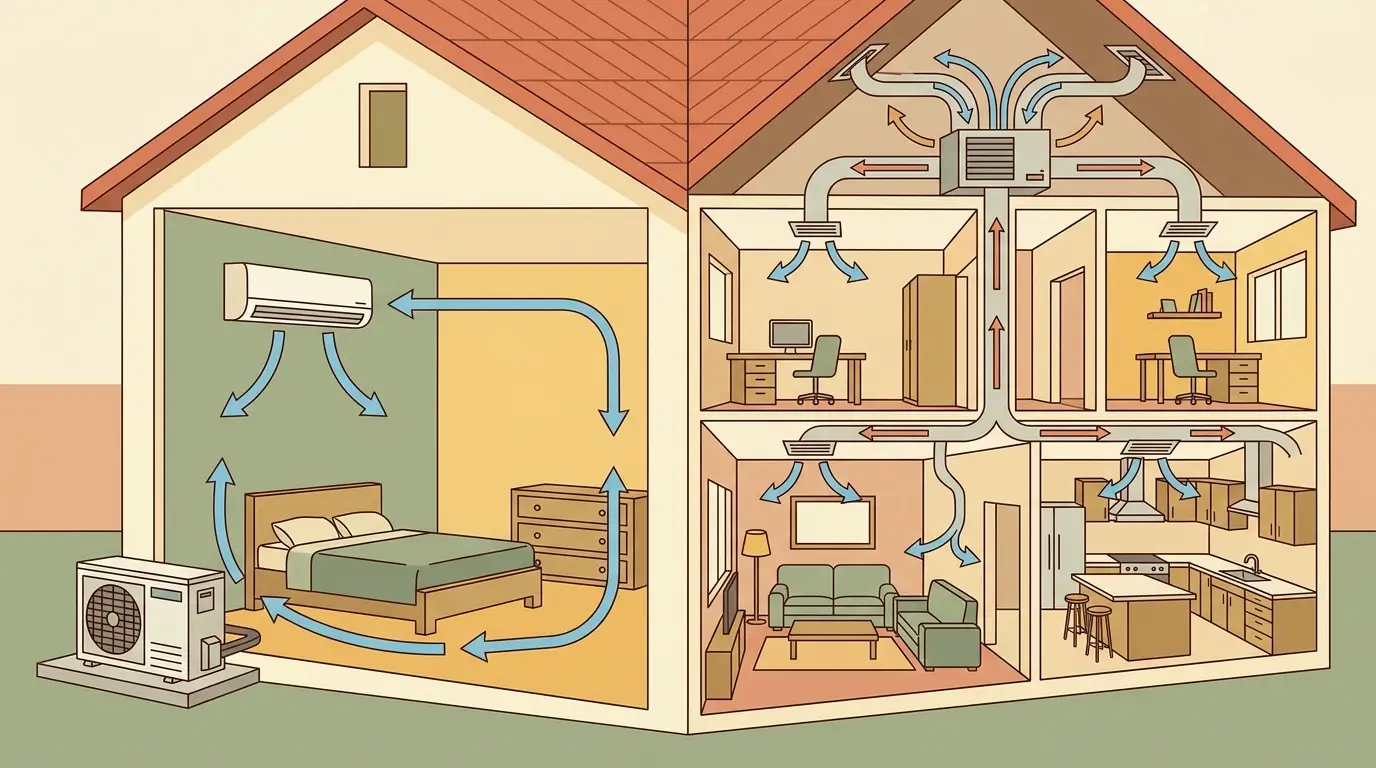
Shared air. This varies enormously by property, and it is the one we find hosts least sure about.
Neighbors. In an apartment building, a shared hallway or laundry room is not yours to describe.
Shared air is worth an example. Our Playa del Carmen house runs mini-splits, one per bedroom plus the living and dining rooms, with no ducts moving air between them. Our Washington DC row house is the opposite: central air on two zones, so the upper floors share ducted air. Same owners, completely different honest answer to the same question.
What you can honestly tell a guest
Answer with facts the guest can check, and leave the verdict to them. Work through:
The cleaning products you use, by name, and who does the cleaning
Where the laundry is done, and which detergent, if you know it
Whether pets have ever stayed, and whether you have pets of your own
Flooring and soft furnishings: wood, tile or carpet, rugs, heavy curtains, upholstered headboards
Whether heating and cooling are per-room or shared across the property
Whether you use air fresheners, plug-ins, diffusers or scented candles, and when one was last used
What you can change for their stay, and what you cannot
Several of those overlap with what guests want in an Airbnb.
Here is ours. We buy hypoallergenic-labelled products where we can get them, and since we host in two countries the brands differ between Mexico and the US. For shampoo and soap we lean on EWG's Skin Deep ratings, a nonprofit advocacy group's hazard ranking rather than a regulatory standard. We read the label ourselves when no rated product is available, which happens often enough in Playa del Carmen that we would not call our sourcing consistent. Cleanest option locally, never the cheapest.
Be straight about what that buys, though. The FDA's page on the term is blunt about it: "There are no Federal standards or definitions that govern the use of the term 'hypoallergenic.' The term means whatever a particular company wants it to mean." In our opinion that guidance is specifically about cosmetics rather than cleaning products, but it shows how loosely the word gets used, and it is why we name what is in the cupboard rather than the adjective on the label.
Laundry runs on site at every property except the Tulum studio, where it goes to a laundromat. So for Tulum we cannot tell a guest which detergent the bedding was washed in, and that is exactly what we say.
When you disclose and the guest goes quiet
One experience of ours, and only one, changed how we handle this. In February 2023 a guest booked our Playa del Carmen house and sent a single line with the booking: someone travelling with her was severely allergic to dust. At the time, our listing already said the house sits in an area with a lot of construction, and construction here means dust. We wrote back, repeated it, said it might not be the right area for her needs, and asked her to confirm she still wanted to go ahead. She did not reply. We asked again a week later. Nothing. We asked Airbnb to help us reach her and got nowhere.
There are ordinary reasons a guest goes quiet, so we do not read much into the silence itself. What we took from it is narrower. The disclosure being in the listing did not mean it had been read, which argues for repeating it in the thread. And the platform may not close this loop for you, so we now put what we know in writing whether or not the guest engages.
A reply you can adapt
Fill in the brackets and cut whatever does not apply.
Thanks for asking before booking, that makes this much easier to answer.
Here is what I can tell you. We clean with [product], and the laundry is done [on site with [product] / by an outside service, so I cannot tell you which detergent they use]. [We have had pets stay / We have not had pets stay since we took the property on in [year]]. The floors are [wood / tile / carpet] and the bedrooms have [rugs / no rugs]. Cooling is [a separate unit in each room, with no ducts between rooms / a central system shared across the whole house]. I do not use air fresheners or plug-ins, and the last scented candle in here was [when].
For your stay I can [switch to unscented cleaning and laundry products / skip the diffuser in the bathroom / wash the bedding separately / air the place out on the morning you arrive]. What I cannot do is [remove the carpet in the second bedroom / change the shared system in the building].
I would rather give you the details than tell you it will be fine, because I cannot know that. If any of it does not work for you, no hard feelings at all.
That last line is the one we would keep if we cut everything else. It leaves the decision with the guest.
What is reasonable to change, and what is not
This split is our own judgment from running and co-hosting five properties, not a standard anyone publishes.
Usually workable for one stay | Not something to take on |
|---|---|
Switching to unscented cleaning and laundry products for the turnover, where your cleaner will use what you supply | Removing carpet or replacing upholstered furniture |
Skipping air fresheners, diffusers and scented candles | Changing or re-ducting a heating and cooling system |
Washing bedding and towels separately, where you control the laundry | Cleaning ducts or upholstery to a standard you cannot verify |
Airing the property before arrival, where the climate allows | Speaking for a neighboring unit, a shared hallway or a shared laundry room |
Taking scented toiletries out of the bathroom | Stating that the property has never contained a given allergen |
For most of the left column the outlay is small, though a contract cleaner may charge for a product change or decline it. The right column is either a renovation or a claim you cannot check. We've found guests take "I cannot do that, here is why" far better than a vague yes.
Why this is a payout question too
There is a second reason to keep the listing factual, and it is commercial rather than moral. Airbnb's rebooking and refund policy for homes, effective February 2025, counts accommodations "significantly different than advertised" as a covered Reservation Issue, and gives an advertised "special amenity or feature" that is not present as one of its examples. Guests have 72 hours from discovery to report it with evidence, hosts can dispute it, and Airbnb says the amount depends on severity, the portion of the stay affected and the strength of that evidence. A refund may reduce the host payout, depending on how Airbnb resolves the case.
We will not guess how any particular case would go. The narrower point: "we clean with unscented products" is a claim you can produce the bottle for. A claim about the air in the property is not, and in our view it does not belong in a listing.
Answer it before anyone asks
A guest with a sensitivity asks before they book, so the listing description and the message thread carry nearly all of the weight. Spend your time there.
In the listing, a line or two: unscented cleaning, no plug-ins, tile floors, no pets during your ownership. Spell the flooring out in words even where your photos show it, because a guest looking for hard floors cannot search a photo. If the description needs work more generally, we have a guide to writing an Airbnb description.
The guidebook comes after the booking, so it is not what answers the question that started this. Where it earns its place is the second time and the tenth: a products-and-access article, covering the same ground plus step counts and door widths, means you work the wording out once and keep it current as your cleaner or laundry changes. We keep ours in shared guidebook content rather than retyping it per property. Related reading: how to reduce guest questions and what to put in a digital guidebook.
Accessibility requests work the same way
Our read is that Airbnb's accessibility features are most useful for what they leave out. At the time of writing, in August 2026, the list covers parking, a lit path, step-free access, doorway widths, step-free showers, grab bars, shower chairs and hoists, each requiring a photo Airbnb reviews against its own criteria. Every item is structural. There is no field for cleaning products or air, and no photo criterion could capture a smell, so this stays a conversation that happens in messages. Guests have been asking for that field on Airbnb's own community forum since 2022, in a thread still collecting replies in July 2026. That is community discussion rather than data, but it suggests the request is not unusual.
For the rest, give measurements. "Three steps up from the sidewalk, a further flight to the bedroom, a 30-inch bathroom door, no lip at the shower" tells someone far more than "reasonably accessible" does.
One line on obligations: what you are required to do varies by country, state and platform policy, and we are hosts, not lawyers. If a request raises a question about obligations rather than logistics, get advice for your own situation.
FAQ
Can I advertise my Airbnb as fragrance free or hypoallergenic?
We would not. Both can be read as a promise about the environment inside the property, and neither survives contact with a cleaner or neighbor you do not control. "We clean with unscented products and do not use air fresheners" says the same useful thing and a guest can check it.
What do I say if I do not know what my cleaner uses?
Say that. "The cleaning is done by a company and I do not have their product list, but I can ask them" is a better answer than a guess. Then ask, and write it down, because the question tends to come back.
Should I charge for switching to unscented products?
Our view is no, not for a single stay, unless your cleaner bills you for it. Across our properties, guests who ask tend to ask well ahead, which usually gives you time to plan the turnover around it.
Is it worth keeping a spare set of bedding washed in unscented detergent?
If the request reaches you more than once a year, we think so. It stores flat and makes the swap quick. Keep it sealed, or it can pick up the scent of the linen closet.
What about food allergies in a self-catering property?
You can say what is in the kitchen, whether cookware is washed between guests, and what you know about what has been cooked there. We are not in a position to speak to cross-contamination, so describe the kitchen and leave the judgment to the guest.
Where to start
If you change one thing this week, put your products, your laundry arrangement and your flooring briefly into the listing description if you need to disclose something about allergens, where a guest can find them before they book.
Latest articles
Glamping Amenities: What Guests Expect, and What to Say About Each One
Which glamping amenities guests actually expect, and what to say about each one so nobody discovers the shared bathroom on arrival. Plus two lists to publish.
Hotel Guest Data Privacy: The Process We Made for Our Own Properties
Hotel guest data privacy from the operator's side: the list we made for our own properties, what travelers say about consent, and a statement you can copy.
How to Word Airbnb Fees and Fines for Guests
How to word Airbnb fees and fines for guests so they inform instead of accuse: what Airbnb counts as a fee, where each number goes, and 7 examples to copy.
What Many Guests Do First When They Arrive
What guests do first when they arrive: the sequence we keep seeing, what goes wrong at each step, and why a QR code at the object beats another page.