
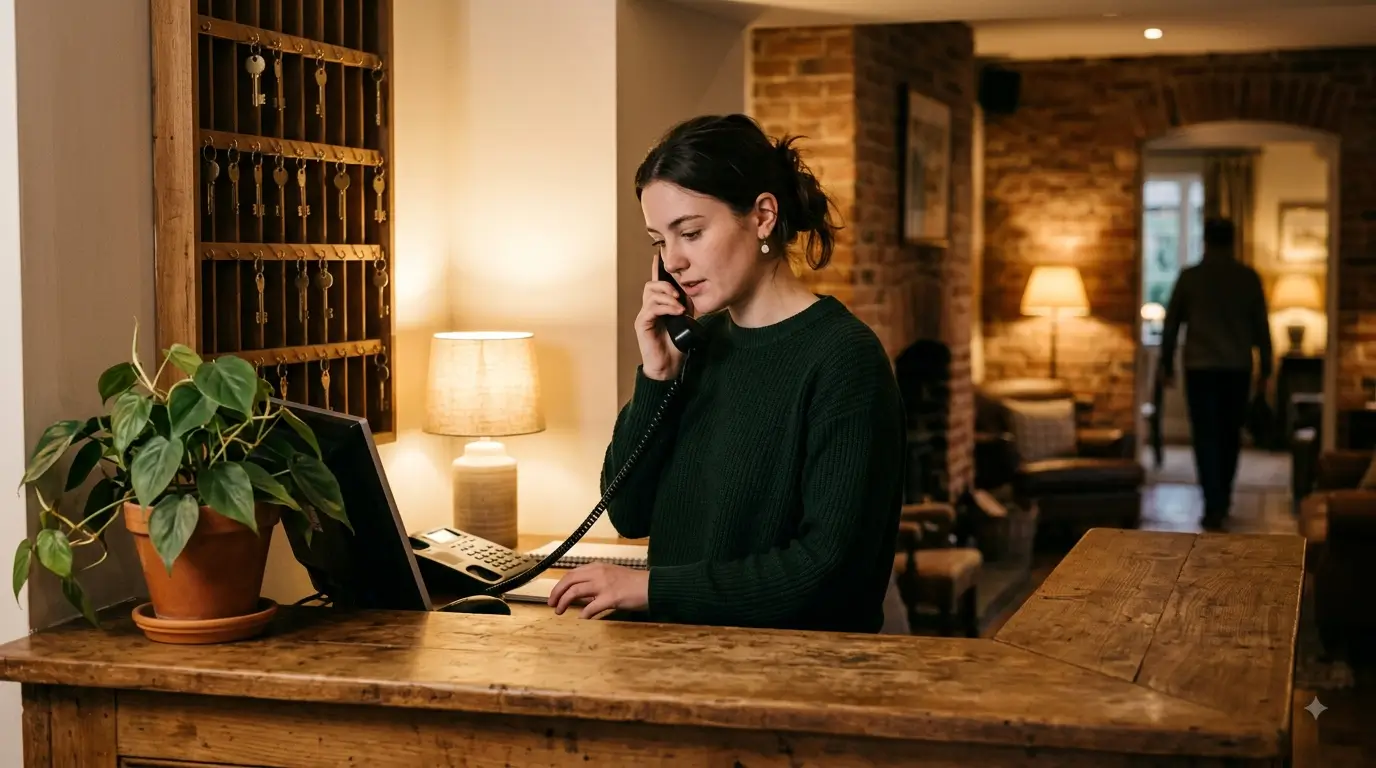
Guests who call a small hotel before booking usually want more than a discount: a quiet room, a confirmed late arrival, an answer the listing left out. Catching those enquiries takes a monitored phone and inbox, a published response time, and a policy your front desk can repeat. Winning the booking is only half of it. A direct guest still needs the confirmation and arrival details the OTA would otherwise have sent.
Airlines largely solved their direct-distribution challenge. Small hotel operators have had a harder time doing the same.
Phocuswright's U.S. Hotel & Lodging Market Essentials 2026 puts the online split between OTAs and hotel direct channels at roughly 52% to 48%, and expects that balance to hold through 2029. Next door, Phocuswright estimates that only 13% of airlines' online passenger revenue still runs through an OTA, while hotel bookings now make up 63% of OTA gross bookings. Travelers went back to booking flights on the airline's own site and app, and airlines helped that along with tighter capacity and higher fares that made shopping around less rewarding.
No independent property is going to reverse that with marketing spend. What you can act on is narrower: the guest who has already found you and picks up the phone before booking.
Why do guests book direct with a hotel?
Guests contact a property directly when they want something the OTA checkout cannot give them: a specific room, a late arrival somebody has actually confirmed, an answer to a question the listing did not cover, or reassurance that a real person works there. Price comes up, but it is often not the only thing being asked for. Many of these calls are from travelers deciding whether to make a direct booking or complete the reservation through an OTA. Most of what they want costs the property nothing to give.
What guests actually ask for when they call
Traveler and host communities online on Reddit, for example, turn this argument over regularly, swapping advice about phoning a property before booking and reporting back on what they got. That is anecdote, not measurement. It is still worth reading, because the requests that surface are ones any operator taking enquiries will recognise. The examples below are illustrative rather than logged.
What they ask | What they actually want | What it costs you |
|---|---|---|
"Do you have anything on a quiet floor?" | A room away from the elevator, the bar or the street | Nothing. You know which rooms those are. |
"We land at 11pm, is that a problem?" | Confirmation someone will let them in | Nothing, once late arrival is written down |
"Is the room with the balcony still free?" | The room they saw in the photos | Nothing. Room assignment is yours to give. |
"Can you do better than the price I'm seeing?" | A reason to book with you, not the OTA | Depends on your contracts. Often a perk, not a discount. |
"Is breakfast included, and until when?" | An answer the listing left out | A few minutes once, written where guests find it |
Most of those have nothing to do with rate. They are operational questions with operational answers, and a small property with no revenue-management team can handle them better than a booking engine can.
There is measured behaviour underneath this, even though it is not a measurement of phone calls. Oracle Hospitality and Skift's Hospitality in 2025 study, which surveyed 5,266 travelers and 633 hotel executives across nine countries, found that 73% of travelers wanted to manage their stay from their own phone and 38% wanted a fully self-service model with staff available only on request. That survey ran in 2022 and the contactless mood of the moment is baked into it, so treat the exact figures as dated rather than current. The survey still points to a clear preference for self-service among many travelers, and that is precisely what makes the phone call worth your attention: someone who picks the slower channel on purpose usually has a question the form could not answer.
This is not a "ditch the OTAs" argument
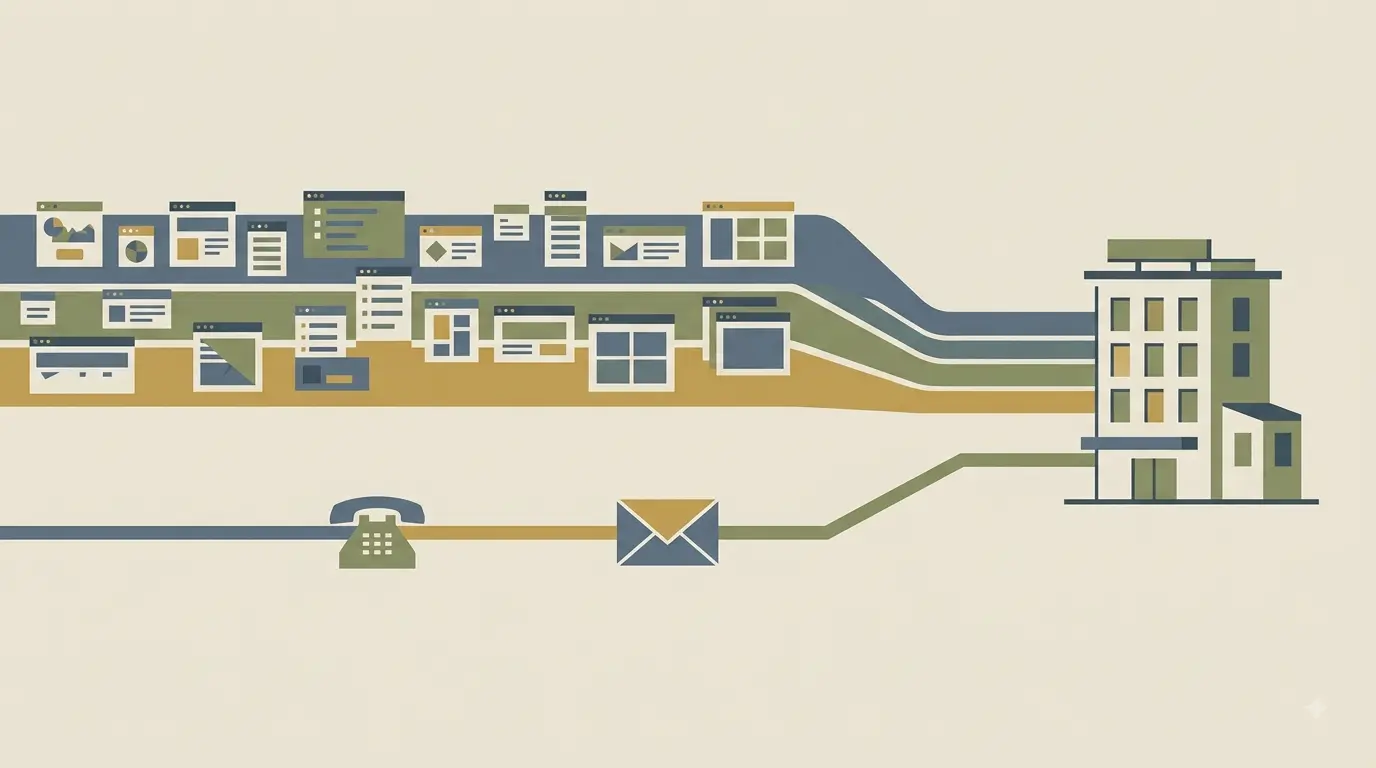
Discovery is the OTA's job and it is worth paying for as part of your diversified channels. Nobody with 30 rooms is going to outspend the major booking channels on paid search, and pretending otherwise is how small properties end up with an empty shoulder season and a very pretty website.
The opportunity is the last click, not the first. Someone already on your page and already reaching for the phone is a guest you have effectively paid to acquire. Whether you convert them direct or not, you want to answer them well.
There is also a new channel in this segment worth reading carefully. Airbnb's 2026 Summer Release brought boutique and independent hotels onto the platform across 20 destinations, New York, Paris, London, Madrid, Rome and Singapore among them, with more cities through the year, plus a price-match guarantee and credit toward a future Airbnb stay. Before you rearrange your channel strategy around it, read the terms: properties are selected by Airbnb rather than self-enrolled, big chains are excluded by design, and if you run 20 rooms outside those cities it is not something you can sign up for this afternoon.
We run short-term rentals, not hotels, so take our read for what it is. What we can tell you, after years on the platform, is that Airbnb's rules on guest contact are tighter than the ones most hotel operators are used to, and that catches people out. More on that below.
What a small property needs to catch a direct enquiry
Five things:
A phone number and an email address a human actually monitors. Not a general inbox somebody checks on Tuesdays. An enquiry that sits unanswered for days is usually a booking that went elsewhere.
A stated response window, published where guests can see it. "We answer enquiries within four hours" sets an expectation you can meet.
A parity and perks policy your front desk can read. Staff hesitate when a guest asks for a better rate, because nobody has told them what they are allowed to say. Write it down, whatever it says.
A way to answer the out-of-hours questions. Enquiries arrive after the desk closes, and they repeat: parking, breakfast timing, late arrival, pets, the walk from the station.
A way to actually take the booking. A booking engine, or a person authorized to confirm a rate and take payment. An enquiry you answer well and then cannot close is a lead handed back.
Decide what you can offer before the phone rings
One question stalls small front desks more than any other: can you beat the price I am seeing online?
Whether you can, and by how much, depends on your channel agreements. Those differ between OTAs, differ between contracts with the same OTA, and sit on top of local rules that have been changing in several markets. No blog post can answer it for your property, and we are not lawyers.
What we can tell you is to settle it once, in advance, rather than improvising at the counter. Read your actual agreements, decide what your property will and will not offer a direct caller, and write it down in a sentence your staff can repeat. Include the non-rate options, because that is often where independent properties have more room than they do on price: an upgrade, early check-in, a parking space, a later checkout. Whoever answers the phone should never have to guess.
The advantage most properties lose ten minutes after they win it
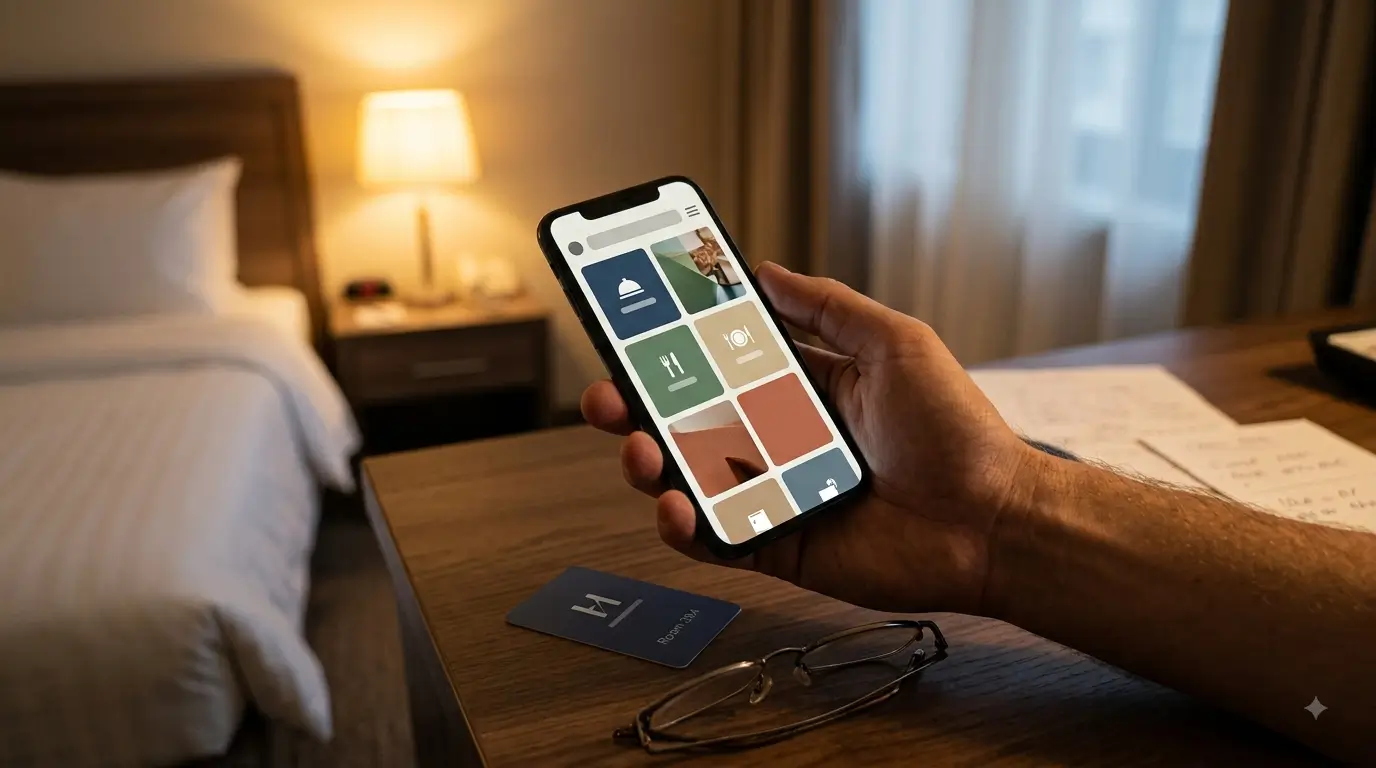
Say the call goes well and the guest books with you. The next job is the one the OTA was doing on your behalf: getting the guest everything they need between booking and arrival.
An OTA booking arrives with a confirmation flow attached: a confirmation email, an itinerary, an app the guest already has, somewhere to look up the address at midnight. A direct booking arrives with none of that. You supply it, or the guest you just won ends up worse off than if they had booked through the channel they were trying to avoid.
What the guest gets | OTA booking | Direct booking |
|---|---|---|
Confirmation and itinerary | Sent by the platform | Only if you send it |
Address, directions, parking | In the platform's trip view | Yours to supply |
Check-in instructions | Templated by the platform | Yours to supply |
Somewhere to look things up mid-stay | The platform's app | Whatever you've built |
Guest contact details | Depends on channel and contract | Yours, with consent |
Every row in that table is work the OTA was quietly doing on your behalf, and none of it is work your PMS picks up when the OTA stops. Your property management system runs rates, rooms and folios. It does not hand the guest a branded place to find the door code at 11pm. A digital guidebook does the same job whether the booking came from a channel or your own phone line, so the direct guest stops being the one with less information. Our AI Concierge, working only from what you have published in that guidebook, takes the follow-ups that land after the desk closes.
The last row of the table is the real prize, and it is where operators get themselves in trouble. Capturing contact details and inviting a future direct booking is fine on a direct reservation. Doing it on one that came from a restrictive OTA is a different matter, and platforms do enforce their terms. The line runs along the booking source, not the calendar.
This is where a hotel arriving on Airbnb should slow down. Airbnb's Off-Platform Policy is stricter than what the traditional hotel channels ask of you: it prohibits soliciting guests for contact details for marketing purposes, signing them up to a contact list, and encouraging them to move future bookings off the platform. If you have been running a mailing list off your channel bookings without thinking much about it, that habit does not travel to Airbnb reservations.
So on contact capture, the Guest Registration widget collects name, email, phone, language and country with the guest's own consent, then exports to CSV or pushes into your own marketing tools through webhooks. OTA Compliance Mode handles the channel line: on OTA-sourced links the marketing opt-in never renders, and you can hide the form entirely if you would rather. It applies automatically on reservation-specific links; general or public links need the restricted flag set by hand.
There is also a numbers story the reservation record never shows you. A booking gives you one name, the person who paid. A double room or a family suite holds two, three or four people who will each open the guidebook on their own phone, and each of them can register with their own consent. Across a season that builds a noticeably longer list than the booker-only record sitting in your PMS, and everyone on it opted in for themselves rather than being added by whoever made the booking.
Is it worth the effort at a small property?
Probably, though not for the reason most direct-booking pitches lead with. Commission saved on a handful of bookings a month is real but modest at this size. The better argument is that the enquiry channel doubles as guest intelligence: you find out what your listing fails to explain, which rooms people ask for by name, and which questions repeat often enough to belong on a page rather than in a phone call.
We run short-term rentals rather than a hotel, so the scale differs, but the shape is the same. The short-term-rental version of this argument, where the compliance risk is sharper, is in how to get direct bookings without risking your Airbnb account, and the boutique hotel guest experience is the companion piece for small properties.
FAQ
What should we tell guests who ask if booking direct is cheaper?
Answer plainly and lead with what you control. If your policy allows a better rate, say so. If it does not, say what booking direct does get them: room choice, flexibility on arrival, and someone who will pick up the phone if their plans change. Most guests accept "we cannot go under the online rate, but we will put you on a quiet floor and hold the room for a late arrival." Vague answers read as evasion.
Should a small hotel stop using OTAs?
For nearly all independents, no. The channels are how most travelers find a property they have never heard of, and that discovery is worth the commission. The opportunity is converting the guest who has already found you.
Can we put our phone number on our OTA listing so guests call us?
Most channels restrict contact details and off-platform links inside listing content, so check the terms for each channel you are on before adding anything. The places your number belongs are your own website, your confirmation email, and the information you give a guest once they have booked.
How do I handle enquiries that come in after the front desk closes?
Publish the answers so the guest does not have to ask. Out-of-hours enquiries repeat: parking, breakfast timing, late arrival, pets. A guidebook or information page the guest can open, with a monitored inbox behind it for anything unusual, covers most of them.
What do I need to send a direct booker that an OTA would have sent?
A confirmation with dates and total, the address with directions and parking, check-in timing and method, and a contact for arrival day. Then somewhere they can look it all up again without messaging you.
Can I collect guest contact details on OTA bookings for direct marketing later?
Not on reservations from channels whose terms restrict it, and several do. Contact capture and direct-booking invitations belong on your direct channel. Separate the two by booking source rather than judging it case by case.
Making the direct booking the better one
The enquiry is the easy part to fix. Answer the phone, write the policy down, publish the answers to the questions everyone asks. The harder part is making sure the guest who booked directly ends up better informed than the one who went through a channel, not worse.
If you would rather not build that layer yourself, you can have a branded digital guidebook running across your rooms in an afternoon, on pricing that does not change shape as you add properties. Have a look at what it includes.
Latest articles

How to Automate Check-In Instructions for Short-Term Rental Guests
Automate check-in instructions for short-term rental guests: the four-send sequence, what goes in a message versus a guidebook, and a copy-ready sample.

Vrbo Premier Host in 2026: Every Listing Now Stands on Its Own Record
Vrbo Premier Host requirements changed in 2026: per-listing scoring, tighter thresholds, quarterly checks. What each one means, and how it compares to Superhost.
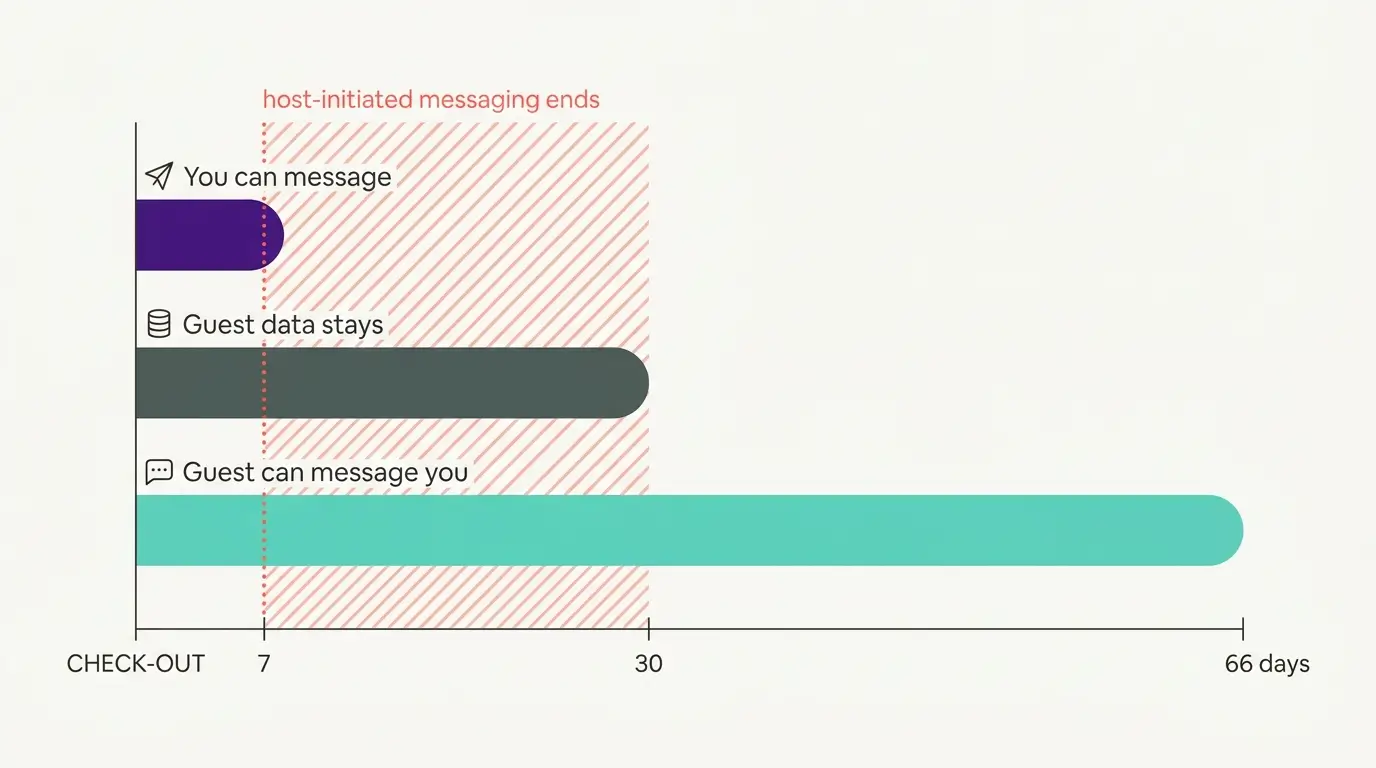
Booking.com Guest Messaging Rules: What Hosts Can Send, When, and Why Links Get Removed
Booking.com guest messaging rules, verified at source: how long you can message a guest, why your links get removed, and what the partner terms say.
Vrbo's New Features for Fall 2026: What's Live, What's Gated, and What's US-Only
We sorted Vrbo's new features for fall 2026: what is live globally, what is gated behind eligibility, and what is US-only. Verified against Vrbo's own pages.