
Boutique hotels stand out by offering highly personalized, locally‑rooted experiences that larger chains can’t replicate, leveraging their intimate scale to create memorable stays. By using a digital guidebook and AI concierge for routine, after‑hours, and multilingual tasks, independent hotels free their staff to focus on high‑touch hospitality that truly differentiates the guest experience.
Walk into a 300-room chain and you get consistency. Every towel folded the same way, every greeting from the same script. Walk into a good boutique hotel and you get something a chain spends millions trying to fake: a person who remembers your name, knows which café opens early, and quietly books the table you didn't know to ask for. That second thing is the whole reason boutique hotels exist, and it's the one advantage scale can't buy.
What makes a great boutique hotel guest experience?
A great boutique hotel guest experience comes from personal, local, and human attention that big chains have standardized away. The structural edge independents have is intimacy: fewer rooms, owners who are actually around, and staff who can treat a guest as a person instead of a confirmation number. The trap is that the same small team has to cover the gaps a chain fills with a 24-hour desk and a dedicated concierge. You win by protecting your people's time for the moments that matter and handing the repetitive, after-hours, and language questions to something that never sleeps.
Everything below is about doing both at once: keeping the human touch that makes guests choose you, without burning out the three or four people who deliver it.
The advantage chains can't buy
Big hotels compete on predictability and price. You can't beat them there, and you shouldn't try. What you can beat them on is everything that requires a human who cares and knows the neighborhood.
A boutique operator can change a room assignment because a guest mentioned it's their anniversary. They can recommend the taco stand two blocks over that isn't in any guidebook. They can notice a guest looks worn out from travel and skip the upsell pitch. None of that scales easily to 300 rooms, which is exactly why it's yours to own. Guests pay a premium for a stay that feels like it was run by people, not a brand manual.
The mistake is assuming this happens on its own. It doesn't. It happens when your staff has the time and headspace to pay attention, and that time is the first thing the daily grind eats.
Where boutique hotels actually lose guests
The personal touch breaks down in predictable places. Knowing where helps you defend against them.
It breaks at 11 p.m., when the front desk is dark and a guest can't figure out the Wi-Fi or which entrance to use. It breaks when the same three questions (where do I park, what time is breakfast, is there an iron) pull your one evening staffer away from a guest checking in. It breaks across a language barrier, when a French couple has a simple question and nobody on shift speaks French. And it breaks at scale-of-attention, when your team is so busy handling logistics that the warm, knowing recommendations never get made.
These aren't hospitality failures. They're coverage failures. A chain papers over them with headcount. A boutique hotel has to solve them a smarter way.
We run short-term rentals, not a boutique hotel, but there are some parallels to boutique hotels. Our properties have no front desk at all, which forced us to solve the no-staff version of this problem years ago. The week two separate guests messaged after 10 p.m. asking the same question about the pool gate code, and we realized the answer needed to live where they'd already look. The lesson carried over: the questions guests ask are remarkably repetitive, and most of them shouldn't need a human at all.
The boutique guest journey, stage by stage
A guest's experience is a sequence of moments, and each one is a chance to feel cared for or left guessing. Here's where a small hotel can shine without adding staff.
Before arrival
This is where anticipation gets built or anxiety creeps in. A short, warm message a day or two out, with directions, parking, check-in time, and what to do if they arrive early, does more for a stay than any welcome amenity. Boutique hotels that get pre-arrival right turn a nervous first-timer into a relaxed guest before they ever walk in.
Arrival and check-in
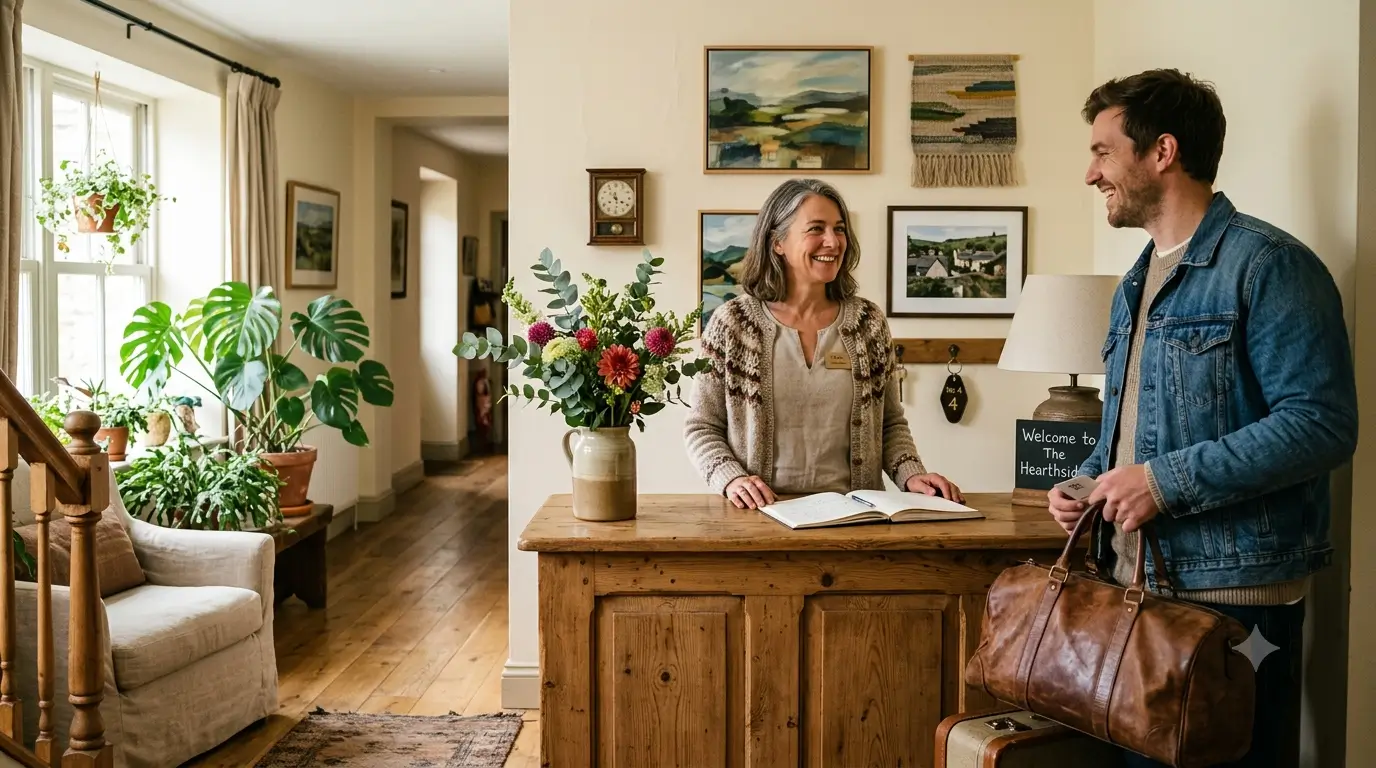
First impressions carry more weight than they should. A guest who knows exactly where to go, how to get their key, and what's happening that evening feels looked after. One standing in a quiet lobby unsure who to talk to feels like an afterthought. The goal is zero confusion in the first ten minutes.
During the stay
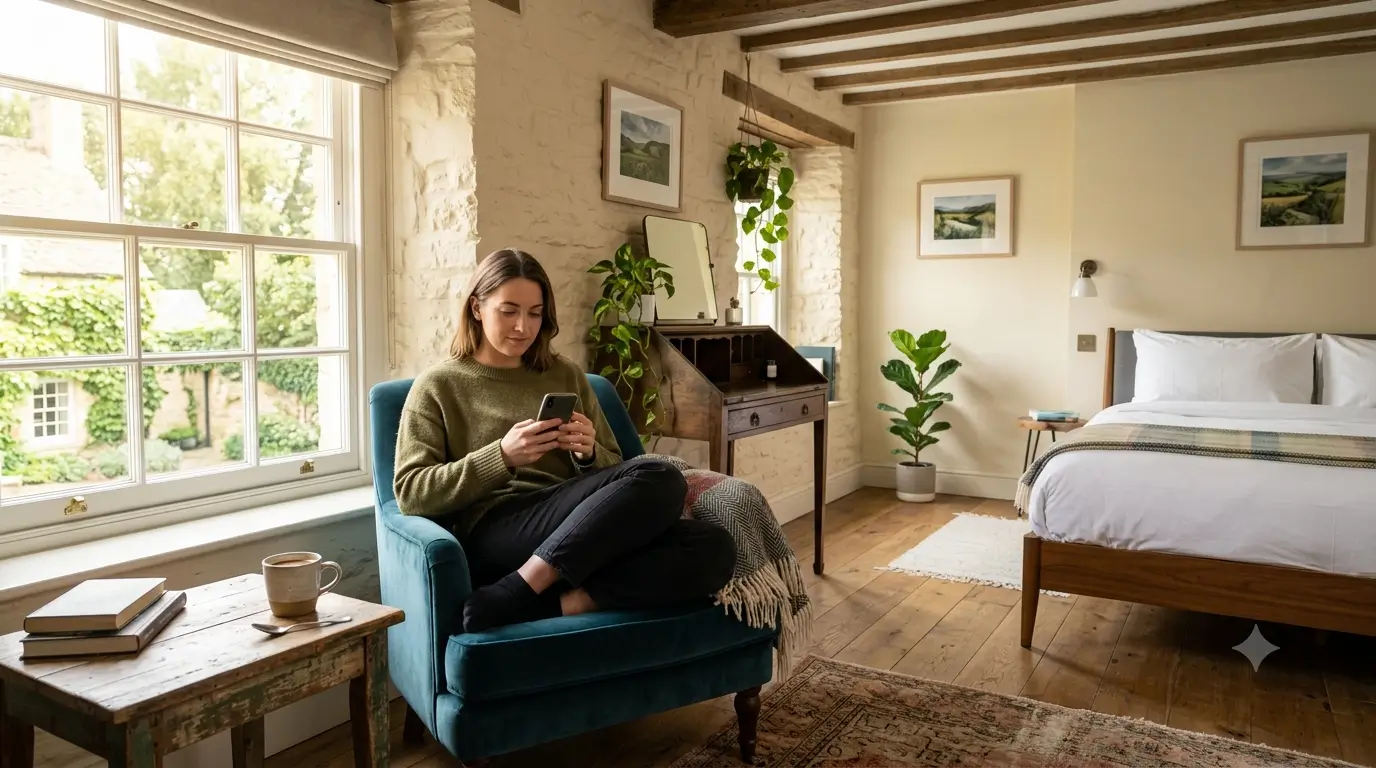
This is the long middle where most questions surface. How the coffee machine works, what the Wi-Fi is, whether late checkout is possible, where to get a good dinner nearby. Answer these fast and guests relax into the stay. Make them hunt or wait, and small frictions stack up into a mediocre review.
Local discovery
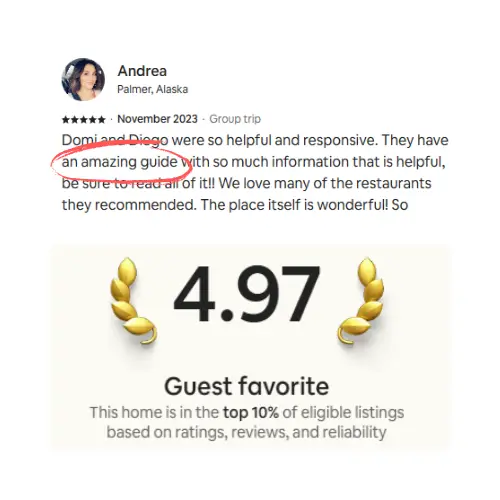
This is your home-field advantage. Guests came to your city, not just your building. Curated, opinionated local picks (the real coffee, the walk worth taking, the restaurant that doesn't show up on the first page of search) are the thing chains genuinely cannot replicate. Lean into it hard.
Checkout and after
A clear, low-stress checkout and a real thank-you is the last taste a guest leaves with, and it's what they carry into the review. A guest who felt personally hosted the whole way through is the one who writes the paragraph, not the one-liner.
Delivering each moment without chain-scale staffing
Here's how the journey maps to what a small team can realistically pull off.
Guest-journey moment | What the guest needs | How a small hotel delivers it |
|---|---|---|
Pre-arrival | Directions, parking, check-in details | A guide sent ahead, readable on a phone, in the guest's language |
Arrival | Zero confusion getting in and settled | Clear arrival info available before the desk even opens |
In-stay basics | Fast answers to repetitive questions | A self-serve guidebook plus a fallback that answers at 2 a.m. |
Local discovery | Trusted, specific recommendations | Owner-curated picks, kept current, not a printed list from 2019 |
Checkout | A calm, clear exit | Simple instructions, then a real thank-you from a human |
The pattern is the same at every stage. The information-and-logistics layer gets handled by a system, which buys your staff the time to be present for the recommendations, the anniversary upgrade, and the read-the-room moments that no software does well.
Where technology helps without making it feel corporate
The fear with any tech is that it makes a warm little hotel feel like a kiosk. Used right, it does the opposite. It clears away the cold, transactional friction so the human parts can stay human.
A digital guidebook is the piece guests actually open even before check-in: Wi-Fi, parking, how things work, breakfast hours, your local picks, all on their phone, with no app to download. An AI concierge sits behind it as the fallback for the question the guidebook didn't cover, answering at the hour your desk is closed. Because both work in the guest's own language, the French couple gets their answer without anyone on shift speaking French. That's the visual-first idea in practice: most guests browse the guidebook, and the AI catches the rest. We built SmoothStay around exactly that split. For the deeper version, our digital guidebook for hotels guide breaks down what to include and why it beats the binder, and the same no-front-desk thinking runs through the glamping guest experience.
If you already run a property management system, this layer sits on top of it instead of replacing it. SmoothStay works alongside your existing stack (our Hospitable integration is rolling out now), so the guidebook and the booking data stay in sync without double entry. Run more than one property and a single dashboard keeps each one's guide current from one place. And if you're weighing whether to commission a custom app for any of this, it's worth reading why a small hotel probably doesn't need the kind of guest app it thinks it does first.
None of this replaces your staff. It just stops them from answering the parking question for the fortieth time so they can do the work guests actually remember.
FAQ
What is a boutique hotel guest experience?
It's the end-to-end impression a guest forms at a small, independent hotel, shaped by personal attention, local knowledge, and the sense that real people run the place. It leans on intimacy and character rather than the standardized consistency of a chain.
How do boutique hotels compete with big chains?
Not on price or predictability, which the chains own. They compete on the things scale erases: personal recognition, genuine local recommendations, flexibility, and owner presence. The winning move is to protect staff time for those human moments and automate the repetitive logistics around them.
How can a small hotel offer great service with limited staff?
Hand the repetitive and after-hours questions to a self-serve visual guidebook and an AI fallback, so the team can focus on high-touch hospitality. Most guest questions repeat, and answering them once, in a place guests can reach anytime, frees your people for the work that sets you apart.
Do boutique hotels need an app for guest experience?
Usually not a native, downloadable app. A web-based guidebook that guests open instantly from a link or QR code covers the same need without the cost, and without asking guests to install something for a two-night stay.
What's the most overlooked part of the boutique guest experience?
Pre-arrival. A clear, warm message before the guest shows up sets the tone for everything after, and it's the cheapest, highest-return moment to get right.
A small nudge
If you'd rather not hand-build all of this from scratch, you can have a branded digital guidebook running in about an hour, with a multilingual AI concierge fielding the after-hours questions for you. It's the part of the boutique experience that's easy to systematize, so your team can spend its energy on the part that isn't.
Latest articles

How to Automate Check-In Instructions for Short-Term Rental Guests
Automate check-in instructions for short-term rental guests: the four-send sequence, what goes in a message versus a guidebook, and a copy-ready sample.

Vrbo Premier Host in 2026: Every Listing Now Stands on Its Own Record
Vrbo Premier Host requirements changed in 2026: per-listing scoring, tighter thresholds, quarterly checks. What each one means, and how it compares to Superhost.
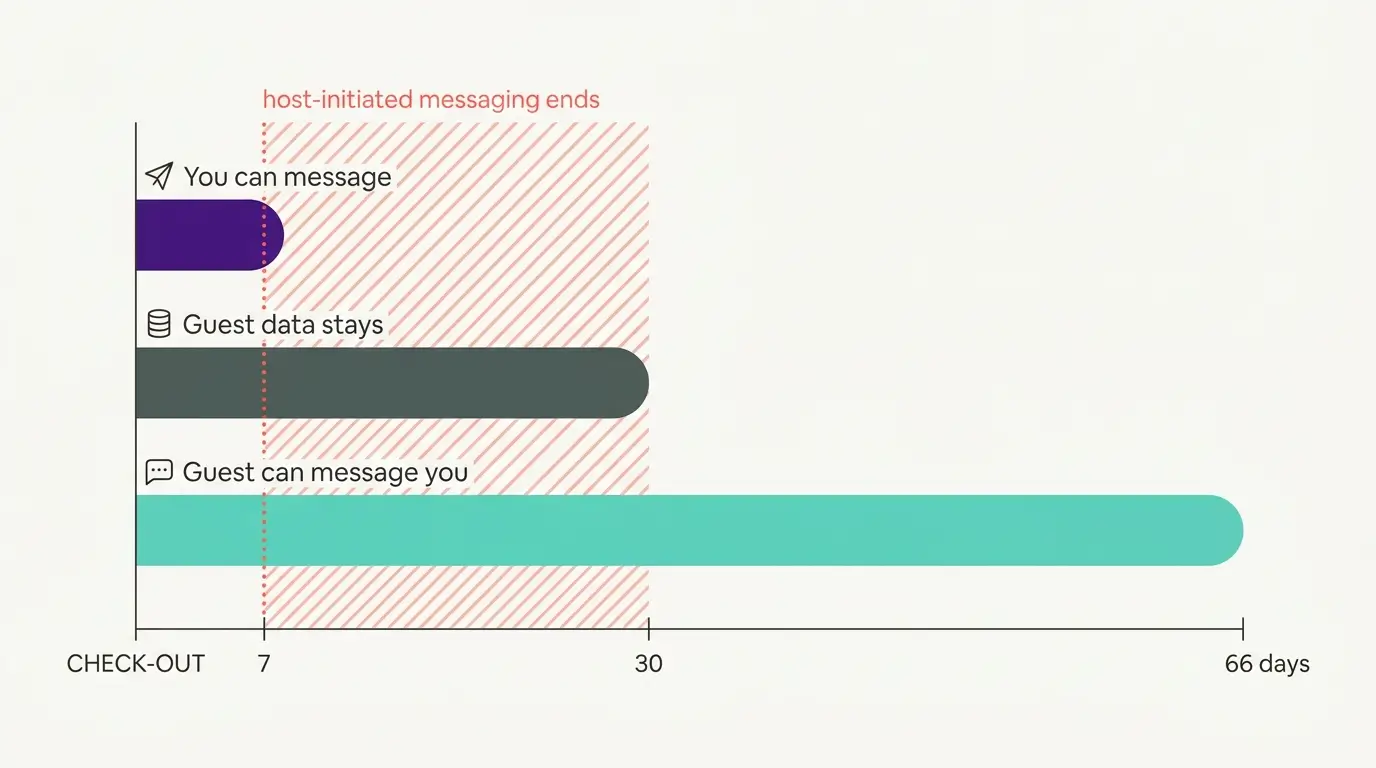
Booking.com Guest Messaging Rules: What Hosts Can Send, When, and Why Links Get Removed
Booking.com guest messaging rules, verified at source: how long you can message a guest, why your links get removed, and what the partner terms say.
Vrbo's New Features for Fall 2026: What's Live, What's Gated, and What's US-Only
We sorted Vrbo's new features for fall 2026: what is live globally, what is gated behind eligibility, and what is US-only. Verified against Vrbo's own pages.