
Airbnb says roughly a third of first-time hotel guests come back to book a home, and AirDNA found that cohort booked smaller places than other Airbnb guests did. The numbers are worth knowing and they prove less than they look like they prove, because nothing in them separates what the hotel stay did from who those guests already were. The part hosts can act on sits elsewhere: a guest whose recent stays were all hotels arrives expecting a front desk.
Airbnb spent the past year adding boutique and independent hotels to a platform built on homes, and the host reaction has mostly been "so we're competing with hotels now." The first real data on that landed this month.
Are Airbnb's hotel listings good or bad for hosts?
Too early to say, in our opinion. In its Q2 2026 shareholder letter, Airbnb said approximately 35% of first-time guests who book a hotel on Airbnb come back to book a home. AirDNA put its own version of that question to its booking data, got 36%, and found that cohort booked smaller places than the Airbnb baseline.
If that pattern persists, hotel-acquired guests appear more likely to book studios, one-beds and private rooms than larger homes, which could modestly shift where any incremental demand lands.
Where the two numbers come from, and who said what
The 35% is Airbnb's. It is one sentence in the Q2 2026 shareholder letter, with a footnote defining the population: guests who booked a hotel on Airbnb between July 2024 and June 2025 who came back to book a home within the following 365 days. We read that same letter earlier this month for what it said about support costs.
The unit-size breakdown is AirDNA's. Jamie Lane, its chief economist, published the analysis after the earnings call: global, guests acquired January 2024 to June 2025, a sample of 180,144. That is a differently drawn window, so the two percentages are close agreement and not a replication. Airbnb did not produce the unit-size split, and AirDNA did not produce the 35%.
For scale, Airbnb says hotels remain a single-digit percentage of nights booked on the platform, growing about three times as fast as the homes business from that base.
What a hotel-acquired guest actually booked
Home size | Guests who joined Airbnb via a hotel | All Airbnb home bookings |
|---|---|---|
Private or shared room | 18.1% | 11.0% |
Studio or 1-bed | 49.2% | 42.1% |
2-bed | 19.6% | 24.8% |
3+ bed | 13.1% | 22.0% |
The split runs one way. This cohort booked the two smaller sizes more often than the baseline and the two larger sizes less often, and the private-room row is the widest gap in proportional terms. About two thirds booked a private room or a studio or one-bed, and the group was roughly 40% less likely than the baseline to book three or more bedrooms. That is booking behaviour in one period, not a stated preference.
Two further findings sit alongside the table, and Airbnb left both out of its own telling. Guests who arrived through a hotel went on to take another trip at almost the same rate as guests who arrived through a home, 55.6% against 56.6%. And of all returning hotel guests, not only the first-timers, 87.8% booked a home next.
How the industry is reading it
Lane's own conclusion is that hotels are recruiting for homes rather than cannibalizing them, and plenty of people have read it the same way. It is a reasonable reading of what he published.
Jodie Odlin, who runs short-term rentals in the UK, took it somewhere more practical in the replies. Hotels, she wrote, are sending Airbnb "a stream of people who have never self-checked-in in their life," and the first home stay decides whether that guest comes back for a second.
The sharpest replies were sceptical. One asked whether the pattern survives being broken out by market: a city where Airbnb's hotels are high-end boutique is a different product from one where they are budget-adjacent, and the small booking afterwards might be an echo of the hotel a guest started with.
What this data does not show
The objection we keep coming back to is a selection problem, raised in those same replies. Somebody who books a hotel through Airbnb is probably already deeper in the Airbnb habit than the average traveller. If these guests were Airbnb-shaped before the hotel stay, the booking behaviour afterwards describes who they are, not what the hotel did. The data shows where they landed, not that the hotel booking is what sent them there.
Two more limits. This is one window with no trend line behind it, so nothing separates a real shift from a snapshot. And on a share of nights that small, the volume reaching any one property is small regardless.
So our position is that there is no position yet. It is an interesting early signal, read as encouraging by people who know this data better than most, and nowhere near enough to reorganise a business around. We will come back to it when there is a second quarter to compare.
One caveat applies whatever the answer turns out to be. Airbnb's figures describe Airbnb, not your market or your calendar. Our own corner of the Riviera Maya is having a rough year on occupancy while the platform posts growth.
What changes when a guest's recent stays were hotels
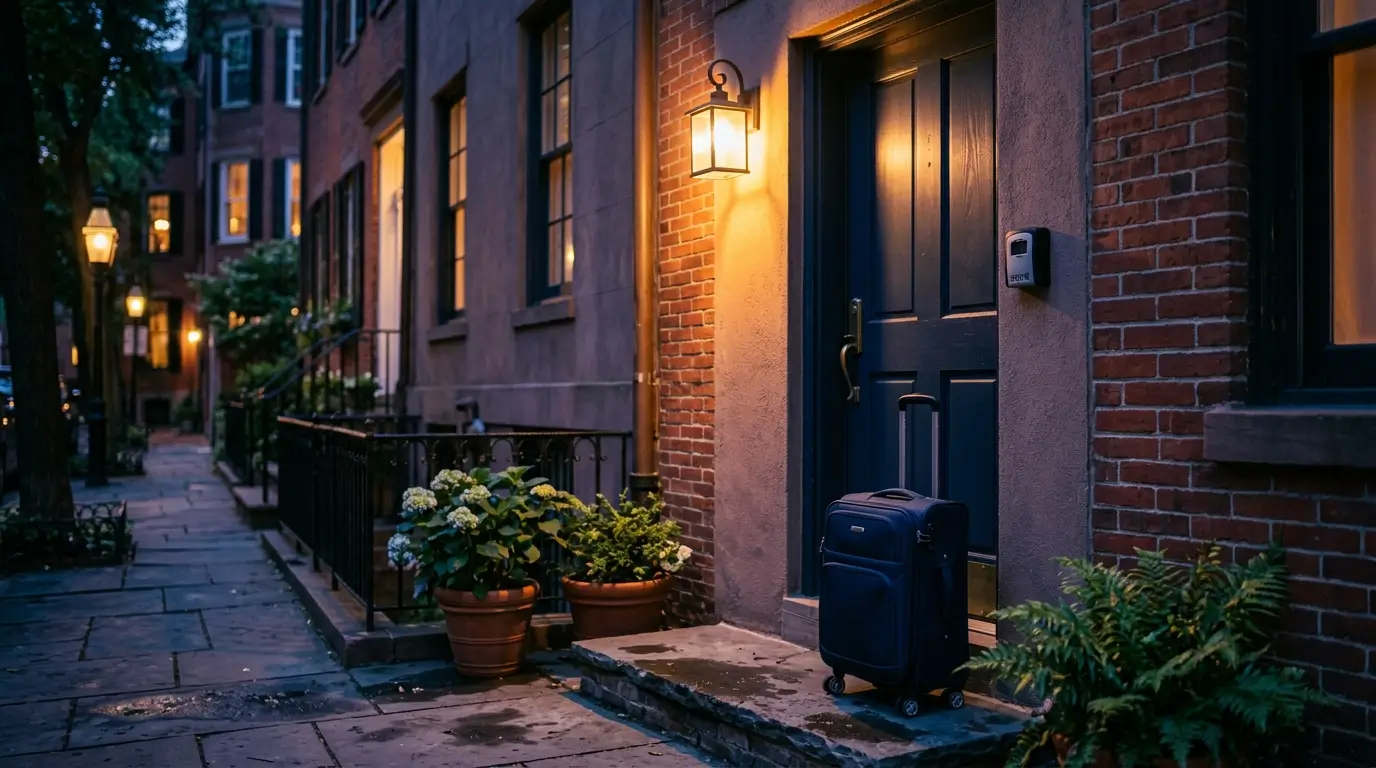
Nothing in the Airbnb or AirDNA data measures guest expectations. What follows comes from running properties, not from that dataset.
Brian Chesky put the underlying difference plainly on the Q2 earnings call, explaining why homes were the harder category to build:
Airbnb homes don't have front desks. We had to teach people hospitality.
He was talking about hosts. Our reading is that it runs the other way too: someone whose recent stays have all been hotels has not had to learn how a home works. In our experience it shows up in four ways, all of them expectations rather than preferences. Plenty of people book a home to get away from a lobby, but they have not had to do without one.
Check-in gets expected as something a person hands you. In a hotel someone in the lobby handles it, not a lockbox code in a message thread from eleven days ago.
An answer at an odd hour is assumed. There has always been someone at the desk at 11pm, so the expectation is an answer from somewhere, and not necessarily a fast one from you.
A short stay leaves no room to recover. Booking windows and stay lengths have been compressing across the market for a while, and we covered handling that compression in July. On a two-night booking, an arrival that goes wrong on night one is most of the stay.
You get benchmarked on hotel strengths. Cleanliness, fresh towels, someone accountable when a thing breaks. The kitchen and the spare bedroom sit further down that guest's list.
Our own guidebook analytics sharpen the third point. Across our Riviera Maya properties, guests do one fast skim of the practical articles, usually from home before they travel, then come back sporadically for a day-three question. On a two-night stay there is no day three.
Our Tulum studio has a small version of the front-desk habit. A few guests, not many, have taken the building's HOA office for a front desk and gone there with their questions. It can answer only a few of them, which is why we now mention it in the listing. It also means the occasional guest arrives assuming there is a desk to go to.
If you run a small hotel or a B&B listed on Airbnb
You may be the top of somebody else's funnel. On Airbnb's own figures, about a third of the first-time hotel guests it takes go on to book a home somewhere on the platform. Delisting over that seems like the wrong response to us. Your incentive and the platform's diverge after checkout, and what happens between check-in and checkout is the part of it that is yours.
Most independent properties already run a PMS. It handles the booking and the rate well, and it is rarely where a guest finds out how the room or the breakfast window works. That is a layer on top, the same job we describe in how small hotels out-host the chains.
What we would actually do with this
Each item is worth doing for a small unit whether or not the funnel story holds.
Write the arrival for someone who has never self-checked-in. Assume no knowledge of lockboxes, door codes or where the parking actually is. In our experience the instructions that fail are written by someone who already knows the building.
Put the answer next to the thing. A small QR code by the object, deep-linked to the article that explains it, is what worked for our properties. Both times, the article already existed and was accurate, so placement was what changed.
Front-load the practical set. Wifi, entry, checkout, climate. On a two-night stay these are most of what gets opened.
Keep that information somewhere you own. A guidebook inside one OTA's tools becomes a second copy to maintain the moment you take a Vrbo or a direct booking.
Treat Airbnb as one channel among others. A direct channel alongside it is about a second source of demand, not about moving Airbnb's guests off Airbnb, which the Off-Platform and Fee Transparency Policy prohibits. We've written up how to do that without risking your account.
How we're applying this at SmoothStay
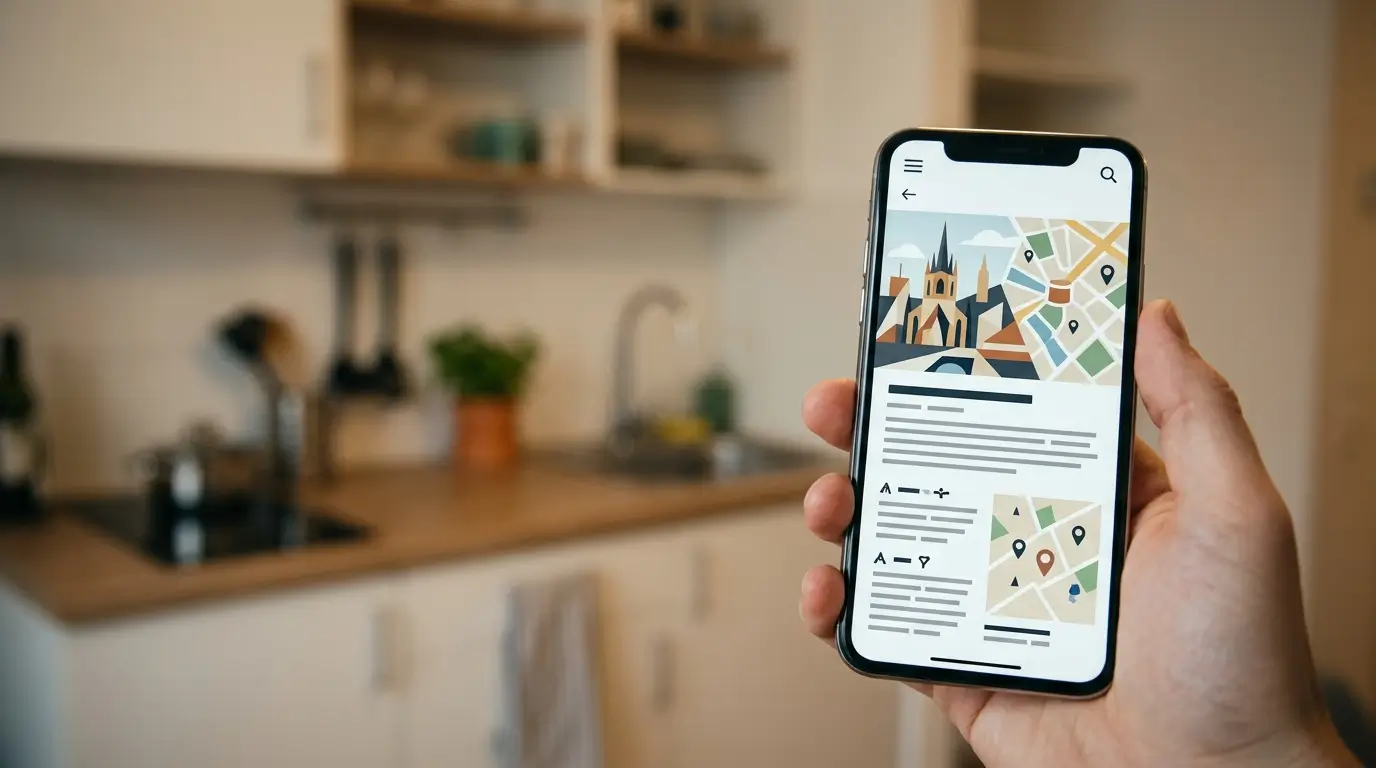
We build the product we run our own properties on. Our answer to the two-night arrival is the guidebook plus the AI Concierge, built to answer only from what you have published and your reservation data, so a gap in the guidebook reaches the guest as a gap rather than an invented answer. It works in the guest's own language, and it needs a signal to load, so anything needed before the door still belongs in a message.
FAQ
Is Airbnb competing with hosts by adding hotels?
The early data does not point that way, though there is not much of it. Across all returning hotel guests, AirDNA found 87.8% booked a home next rather than another hotel, and Airbnb says hotels remain a single-digit percentage of nights booked.
How many Airbnb hotel guests go on to book a home?
Airbnb's Q2 2026 shareholder letter puts it at approximately 35% of first-time hotel guests who booked between July 2024 and June 2025 and returned within 365 days. AirDNA's analysis of 180,144 guests acquired between January 2024 and June 2025 came out at 36%.
Do hotel-acquired guests book different properties than other Airbnb guests?
On AirDNA's numbers, yes, and the difference is size. It found 18.1% of this cohort booked a private or shared room against 11.0% of all Airbnb home bookings, and 13.1% booked three or more bedrooms against 22.0%. Whether the hotel stay caused that or simply attracted people who book small anyway is not something this data settles.
Should I change my nightly rate or minimum stay because of this?
No. One quarter of disclosure and one analysis is not a basis for a pricing decision. The only thing worth a look is whether your minimum stay quietly excludes the one and two-night bookings this cohort tends to make, and that is a call about your own turnover cost.
Doesn't Airbnb's own guidebook already cover this?
Airbnb's guidebook is a neighbourhood recommendations tool, separate from the arrival information attached to the reservation. Per Airbnb's check-in and checkout instructions page, checkout instructions are visible before booking while detailed check-in instructions release 48 hours before arrival. Neither reaches a guest who booked somewhere else.
Can a boutique hotel or B&B list on Airbnb?
Airbnb has been adding boutique and independent hotels across more than 20 top destinations, including New York, Paris, London, Madrid, Rome and Singapore, with more markets coming this year. Whether it suits a given property is a commercial decision about rate structure and channel mix.
If you would rather not format all this yourself
A guest who has spent the last year in hotels will look for the answer before they message you. Putting the practical articles in one place, in the guest's language, with a QR code next to what confuses people, is most of the work. If you would rather not build it from scratch, SmoothStay can have a digital guidebook running in minutes, with a free tier for one property and no card needed.
Latest articles
Glamping Amenities: What Guests Expect, and What to Say About Each One
Which glamping amenities guests actually expect, and what to say about each one so nobody discovers the shared bathroom on arrival. Plus two lists to publish.
Hotel Guest Data Privacy: The Process We Made for Our Own Properties
Hotel guest data privacy from the operator's side: the list we made for our own properties, what travelers say about consent, and a statement you can copy.
How to Word Airbnb Fees and Fines for Guests
How to word Airbnb fees and fines for guests so they inform instead of accuse: what Airbnb counts as a fee, where each number goes, and 7 examples to copy.
What Many Guests Do First When They Arrive
What guests do first when they arrive: the sequence we keep seeing, what goes wrong at each step, and why a QR code at the object beats another page.