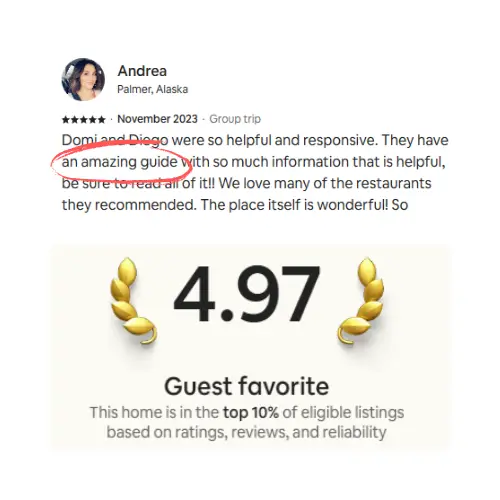

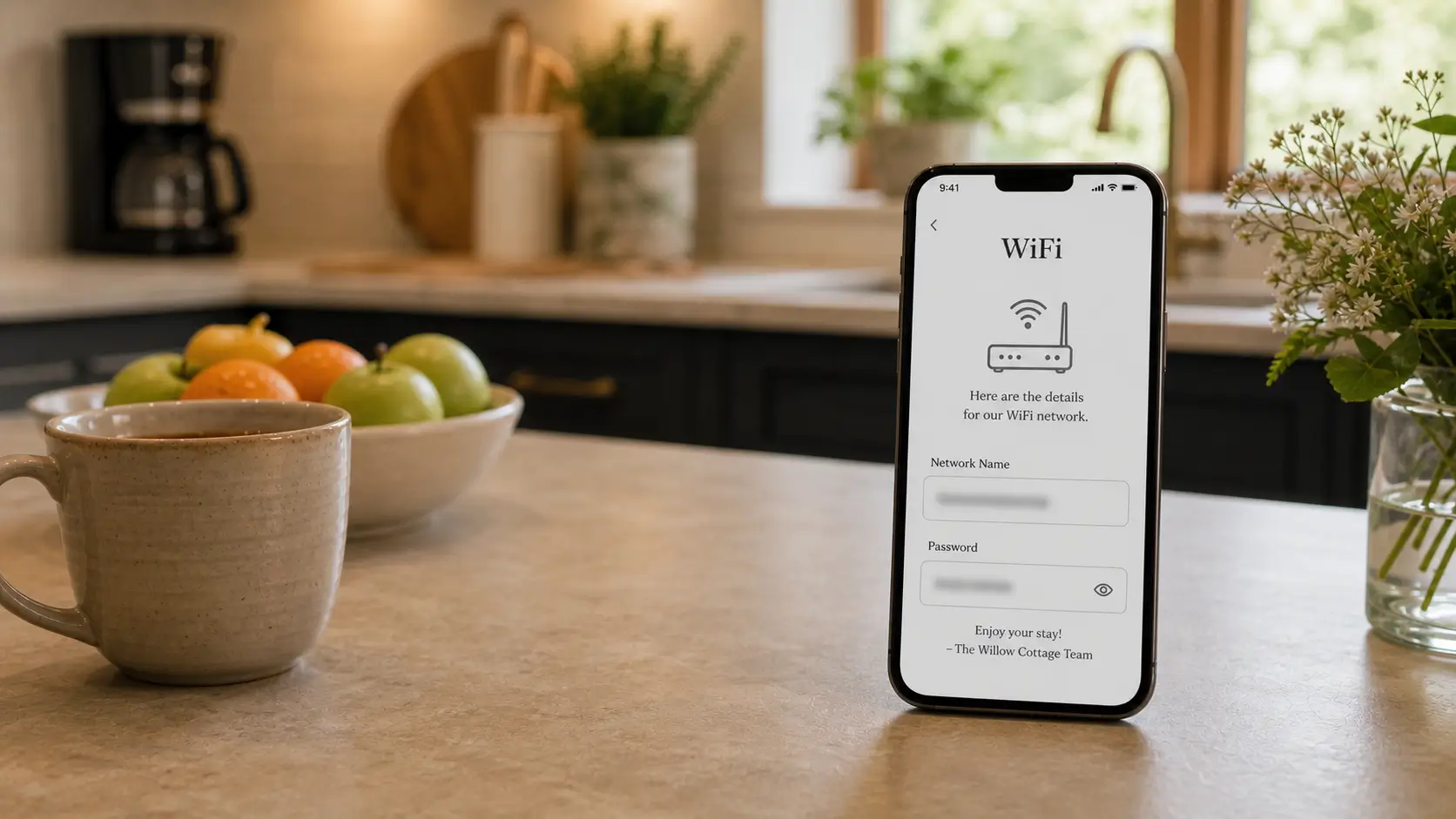
This post opens with a real‑world anecdote that shows why an Airbnb house manual is essential, then provides a concise, copy‑ready template that hosts can organize by room or topic, complete with tips for documenting appliances, handling waste, and managing repairs. It also shares practical pros and cons of each structure and includes a real example from Diego’s properties to help hosts implement the guide immediately.
Our place in Playa del Carmen sits behind two gates. When we started hosting it, two different guests in two months texted us stuck at the first gate for several minutes, because the guard asked for an ID and a unit number we'd never told them to have ready. None of them were upset about the gate. They were upset at us, because the information existed and we just hadn't written it down anywhere they could find it late at night with luggage in hand.
That's the whole reason a house manual exists. Not rules for their own sake. Reachable answers, in the moment a guest needs them.
We've run properties in Washington DC and the Riviera Maya for over a decade, and the house manual is the document we rewrite more than any other. This is the version we wish we'd had on day one: a template you can copy, the two sensible ways to structure it, and the parts hosts always forget until a guest runs straight into them.
What goes in an Airbnb house manual?
A house manual covers everything a guest needs to operate your property without texting you. At a minimum that means WiFi, check-in and checkout steps, how the main appliances work, heating and cooling, trash and recycling, parking, house rules, and who to contact when something breaks. Keep it scannable. Guests don't read it cover to cover. They jump to the one thing they need, usually at night, usually fast.
Here's the working checklist we use across all our properties:
WiFi network name and password, written exactly as typed, capital letters and all
Check-in steps, as a short numbered sequence
Checkout steps, same format, kept genuinely short
Appliance instructions for anything non-obvious: oven, dishwasher, washer, coffee maker
Heating and cooling, including which thermostat controls which room
Trash, recycling, and collection days
Parking: where to put the car, any permit, gate or garage codes
Connected extras: TV inputs, streaming logins, sound system
House rules, stated plainly and without the legalese
Emergency info: nearest hospital, water and breaker shutoffs, fire extinguisher location
Contact: how and when to reach you, and what actually counts as urgent
If you want the wider picture of where the manual sits among your guest documents, we cover that in why your house manual is the first system every host needs.
Organize by room or by topic?
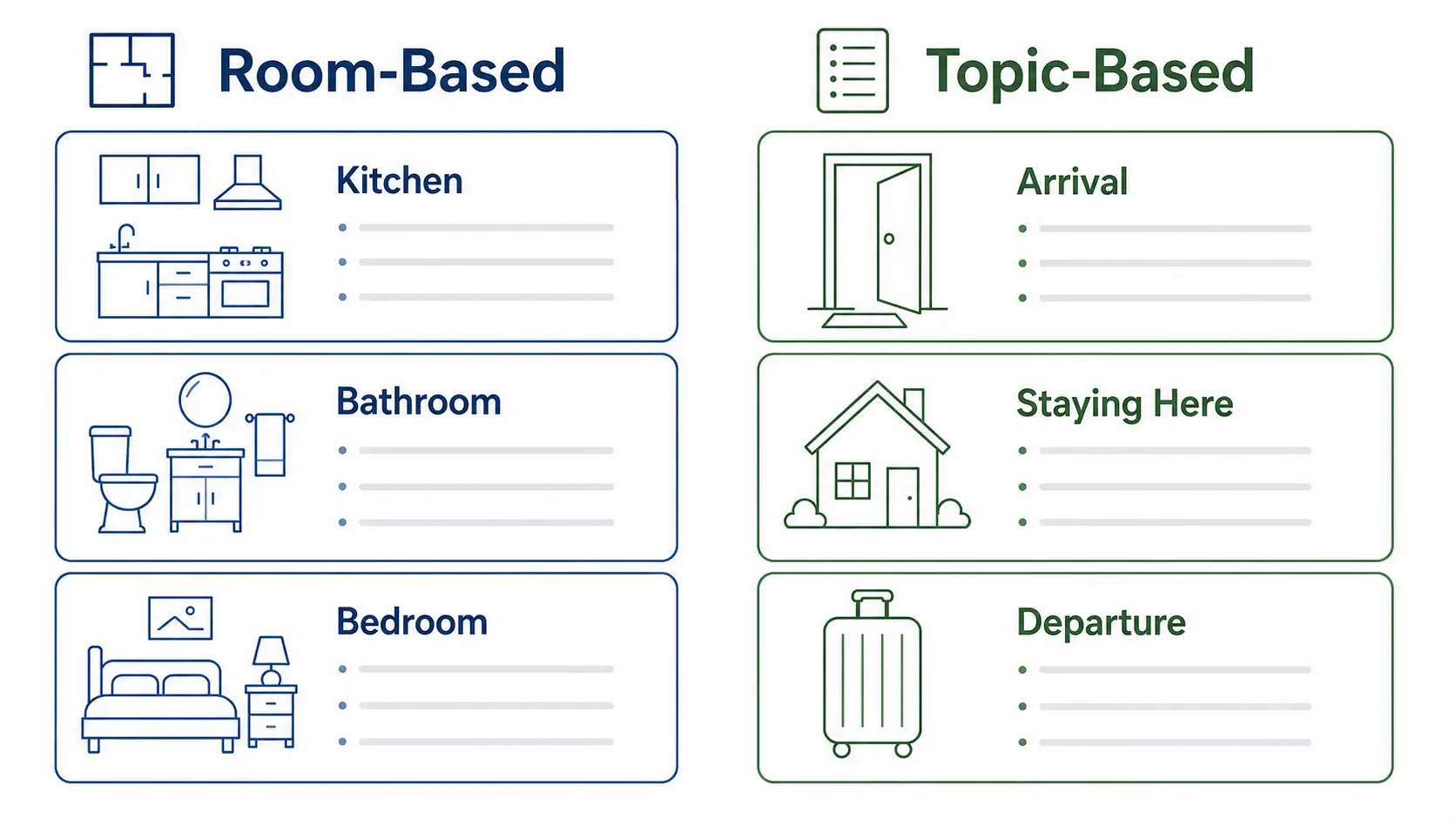
This is the first real decision, and there's no universal right answer. It depends on how your guests move through the space.
Structure | Works well when | The downside |
|---|---|---|
By room (Kitchen, Bathroom, Bedroom) | The property is large or has quirks tied to specific spaces, like a tricky shower or an appliance-heavy kitchen | Shared info (WiFi, trash) doesn't belong to any one room and ends up duplicated or buried |
By topic (Arrival, Staying Here, Departure) - Recommended for Most Units | Most stays follow the same arc, and you want the manual to match the guest's timeline | A guest hunting for one appliance has to know which topic it lives under |
For a studio like our Tulum unit, by topic wins easily. The guest arrives, settles, leaves, and the manual mirrors that. For the four-bedroom in Playa del Carmen, we lean heavily by room, because the kitchen alone has enough going on to justify its own section. Pick the one that matches how someone actually uses the place, then stay consistent.
Document appliances so you stop getting the same three texts
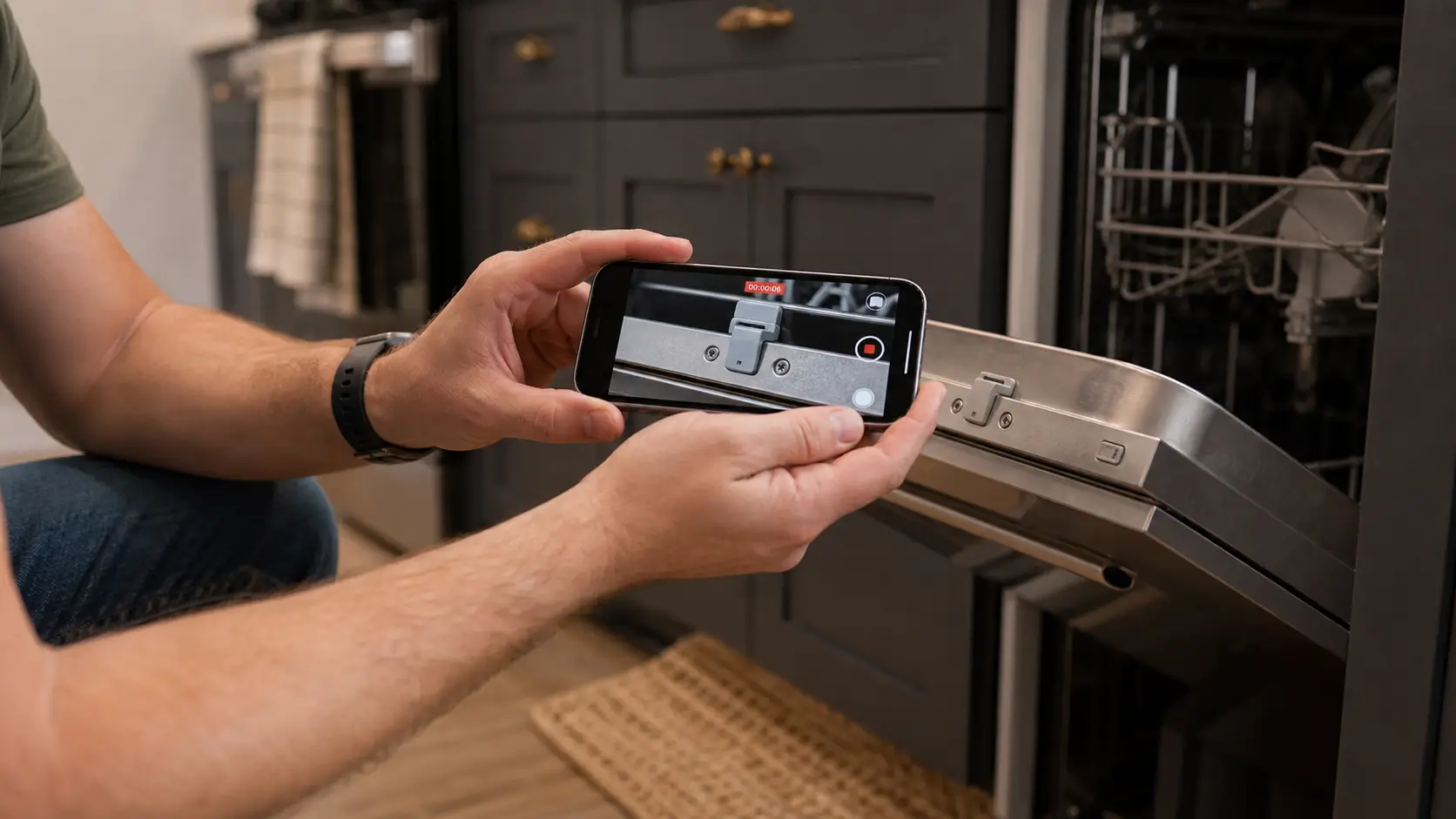
Most repeat guest questions are about the same handful of appliances. Three moves fix almost all of them.
First, write down the model number for anything a guest or a cleaner might need to look up. Second, link to the manufacturer's manual online instead of retyping instructions you'll get slightly wrong. Third, record a short video for the genuinely confusing ones. A fifteen-second clip of the dishwasher door latch beats a paragraph every time, and it's the kind of thing guests open on their phone instead of texting you. The washer in our DC row house has a child lock that guests triggered by accident; a ten-second video helped limit the texts completely.
This is the visual-first idea in practice. Guests scan, tap, and watch far more readily than they read, so the manual should lead with the thing they can see and do.
Don't skip trash and recycling
Trash is always more complicated than hosts expect, and it's the section guests get wrong most often. The rules are hyper-local, the collection days are easy to forget, and the consequences (a missed pickup, an annoyed neighbor, a fine) land on you.
The climate and the city change everything here. Our DC property has strict recycling sorting and a specific bin-out night, plus the winter reality that bins freeze occasionally shut and a few guests give up. Our Mexico properties have different specific instructions based on the neighborhood. Write the version that's true for your address, not a generic line about "taking out the trash."
What to do when something breaks
Something will break during a stay. The manual's job is to keep a small problem from becoming a 2am phone call. Give guests a simple protocol:
Check the manual first. Half of "it's broken" turns out to be a tripped breaker or an unplugged unit.
Try the one obvious fix you list (reset the breaker, restart the router, check the water valve).
Message us with a photo if the fix doesn't work, so we can tell whether it waits or needs someone today.
For anything urgent (no water, no power, a leak), call rather than message, and here's the number.
This exact order is what we hand guests; the breaker line alone resolves most AC complaints during humid season before they ever reach us. The point isn't to dodge your guests. It's to triage, so the real emergencies get your attention fast and the false alarms solve themselves.
The printed-manual problem
A laminated binder feels solid right up until something changes. You swap the coffee maker, and the binder now lies to every guest until you reprint it. You change the WiFi password, and you're editing pages by hand across however many copies exist. We loved our binder until we counted how many were quietly out of date. The honest trade-offs are worth reading if you're on the fence: we laid them out in paper versus digital guest guides.
Keeping the manual digital means one edit updates it for every future guest, instantly. That's the case we make for building a guidebook your guests actually use, and it's why we eventually built SmoothStay around it. The other piece that earns its place: an AI chatbot that answers from your manual, so when a guest asks "which bin goes out tonight" at 9pm, they get the answer you already wrote instead of waiting on a text back.
FAQ
What's the difference between a house manual and a guidebook?
They overlap, but the searcher who typed "house manual" usually means the operational stuff: how things work, what the rules are, what to do when something fails. A guidebook leans toward recommendations and the local experience. Many hosts keep both in one place so guests aren't hunting across two documents.
How long should an Airbnb house manual be?
Long enough to answer the real questions, short enough that nobody dreads opening it. Comprehensiveness beats length. If a section isn't something a guest would actually look up, cut it. A tight manual that covers WiFi, appliances, trash, parking, and emergencies beats a twenty-page document nobody finishes.
Do guests actually read the house manual?
Not front to back. They scan it, then return to it when a specific question hits. That's exactly why structure and search matter more than prose. Write for the guest who's looking for one answer at 9pm, not the guest who reads for pleasure on arrival (there isn't one).
Should I print the house manual or keep it digital?
A printed copy on the counter is a fine fallback, and we still leave one. But the master version should be digital, because every appliance swap and password change is otherwise a reprint. Keep a printed quick-reference for arrival, and point it at the full digital version for everything else.
Where should guests find the manual?
Put the link where guests already look: the check-in message, a QR code by the door, and the listing's house manual field. The easiest manual to ignore is the one a guest has to go searching for.
Get it running
If you'd rather not format all of this yourself, you can have a digital house manual running in about an hour, then edit it once whenever something changes instead of reprinting anything. Built by hosts who run properties in DC and the Riviera Maya, for hosts who'd like their evenings back.
Latest articles

How to Automate Check-In Instructions for Short-Term Rental Guests
Automate check-in instructions for short-term rental guests: the four-send sequence, what goes in a message versus a guidebook, and a copy-ready sample.

Vrbo Premier Host in 2026: Every Listing Now Stands on Its Own Record
Vrbo Premier Host requirements changed in 2026: per-listing scoring, tighter thresholds, quarterly checks. What each one means, and how it compares to Superhost.
Booking.com Guest Messaging Rules: What Hosts Can Send, When, and Why Links Get Removed
Booking.com guest messaging rules, verified at source: how long you can message a guest, why your links get removed, and what the partner terms say.
Vrbo's New Features for Fall 2026: What's Live, What's Gated, and What's US-Only
We sorted Vrbo's new features for fall 2026: what is live globally, what is gated behind eligibility, and what is US-only. Verified against Vrbo's own pages.