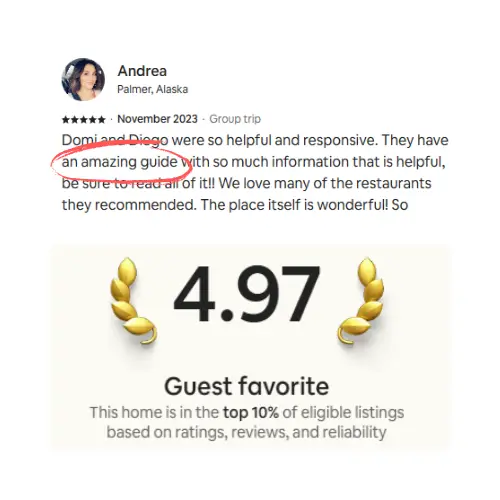


Established listings with repeat guests and strong reviews can maintain their rates in a price‑driven market, as shown by AirDNA’s 2026 Repeat Rent Index, while newer listings are forced to discount. Hosts can secure this advantage by delivering a smooth guest experience and capturing consent‑clean guest data with SmoothStay’s live Guest Registration widget to own and reuse the relationship.
How do you get repeat guests for a vacation rental?
Two things, and they build on each other. First, earn a stay that's worth repeating: a guest experience good enough to bring someone back and good enough to get the five-star review. Second, own the guest relationship, so you can actually reach the people who already loved your place instead of hoping the platform surfaces you again next year. AirDNA's mid-2026 read on the U.S. market makes the payoff concrete: the listings holding their nightly rate are the established ones with reviews and returning guests. Newer listings without that track record are stuck competing on price.
One caveat before we go further. AirDNA's numbers below are U.S.-only. If you host in Mexico, Canada, or Europe your local market may look different. The pattern (established listings hold rate, new ones discount) tends to travel, but treat the specific figures as a read on the U.S.
What AirDNA's 2026 midyear data actually says
AirDNA released its 2026 Midyear Outlook on July 8, 2026. The headline finding is that fewer new listings are entering the market, and that's helping established operators keep their occupancy and strengthen their pricing.
A few numbers from the report:
Occupancy is forecast to average 57.4% in 2026, slightly above the pre-pandemic norm of 57.0%.
Demand and available listings are both projected to grow 2.7%, which is unusually balanced.
RevPAR is forecast up 2.9%, driven by stronger nightly rates. Rate growth accelerated from 0.7% year-over-year in January to about 3% by spring.
AirDNA's Bram Gallagher, their Director of Economics and Forecasting, tied it to borrowing costs: "renewed inflation... pushed mortgage rates back above 6%, delaying investment. That slower supply growth, combined with healthy travel demand, has supported occupancy while creating stronger pricing conditions for established operators."
AirDNA also runs a Repeat Rent Index, which tracks what the same listings charge over time instead of blending in every listing that just went live. It's a cleaner read on whether real pricing power is holding, because a flood of cheap new listings can drag down a simple market average even when tenured hosts aren't cutting a dollar. The midyear signal is that established listings are the ones holding the line.
Worth saying plainly: AirDNA sells short-term rental data and a rate-recommendation product, so a report whose conclusion is "granular data is how you win this market" is also a report that sells more AirDNA. That doesn't make the numbers wrong. The occupancy, supply, and RevPAR figures are the strongest independent read we have on the U.S. market. Just read the "you need our data" framing for what it is.
Why repeat guests are the thing under the pricing power
Here's the part the report doesn't spell out but every long-tenured host feels. "Established listing" isn't an age. It's a track record. What makes a listing able to hold its rate while the new place down the street discounts is the stack of reviews and the guests who already know the place is good. That's what lets you charge what you charge without a race to the bottom.
We've hosted in Washington, DC and the Riviera Maya for over a decade. The properties that let us hold rate through soft seasons are the ones with years of reviews and a handful of guests who rebook directly because they already trust the place. A repeat guest is worth more than a new one in almost every way: they don't need hand-holding, they treat the place better, they leave the review, and they don't cost you anything to acquire. In a market where new supply competes on price, that quietly compounding advantage is the whole game.
So "how to get repeat guests" is really two jobs: earn the return, and be able to reach the guest again.
Earning the return: the stay has to be worth repeating

Nobody rebooks a place that was merely fine. The return gets earned during the stay, mostly in the small stuff that removes friction.
The lever most hosts underrate is information. When a guest can find the Wi-Fi password, the check-out time, the good taco place, and how the weird shower works without texting you, the stay feels smooth, and smooth is what they remember. A well-built digital guidebook that lets you track guest feedback and engagement does that quietly in the background, and an AI concierge that answers from your guidebook catches the 11 p.m. questions the guidebook didn't cover. That combination is a big part of what turns into "everything was so easy, we'd stay again."
The other lever is the review, which is really the same lever pointed at future guests. Reviews are how a listing earns the pricing power AirDNA is describing, and the fastest way to more good reviews is fewer bad moments during the stay. We wrote a longer piece on fixing weak reviews with better communication if you want the full version, but the short version is: get ahead of the questions and the complaints mostly don't happen.
For the deeper tactical playbook on winning return stays, we put it all in one place: how to get repeat guests for your vacation rental. This post is about why it matters right now; that one is the field manual.
Owning the guest relationship (the part most hosts skip)
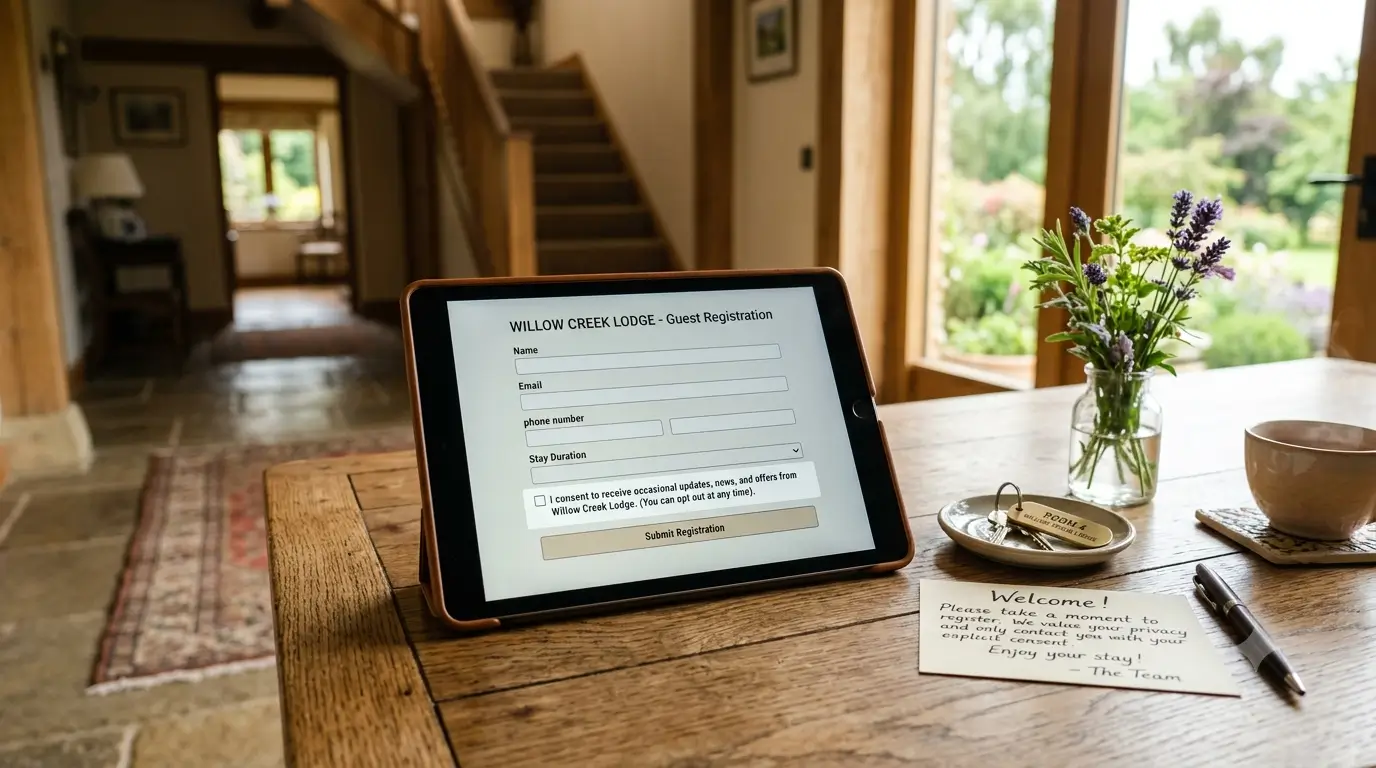
Earning the return is only half of it. If your only way to reach a past guest is hoping Airbnb shows them your listing again, you don't really own that relationship. The platform does.
Owning it means building your own record of who stayed with you, with their consent, so a great guest is a contact you actually have rather than a name that vanishes after checkout. This is where you have to be careful, because the OTAs have firm rules about contacting guests off-platform, and stepping over those lines can cost you your account.
The clean way to do it is to collect guest details at the point where it's allowed and expected, with clear consent, and to keep those channel rules baked in so you never accidentally cross one. SmoothStay's Guest Registration widget does exactly that, and it's built to respect OTA compliance at the platform level. On a restrictive channel like Airbnb, the contact-collection fields simply don't render, which protects your account. On your direct bookings and on channels that permit it, you build a first-party, consent-clean contact list you own. We wrote up the full mechanics in guest registration for short-term rentals, done right.
One honest note on scope, because it matters. SmoothStay helps you capture and own that relationship. It is not a messaging tool that blasts win-back campaigns for you, and we're not going to pretend otherwise. Your contacts are yours: exportable to CSV, portable, no lock-in. When you want to reach past guests, you do it through your own email or marketing tool. We think that's a feature, not a gap. You own the list, you own the relationship, and nobody can hold it hostage.
FAQ
Can I collect Airbnb guest emails?
Not during an active Airbnb stay through Airbnb's own channels, and not by pushing guests off-platform mid-booking. Airbnb's rules restrict off-platform contact, and violating them risks your account. The compliant path is to collect details where it's permitted (your direct bookings, or a registration step that respects each channel's rules) with clear consent. A tool that hides contact-collection fields on restrictive channels keeps you on the right side of this automatically.
Are repeat guests really worth more than new ones?
For most hosts, yes. A returning guest costs nothing to acquire, needs less support, tends to treat the place better, and is more likely to leave a strong review. In a market where new listings compete on price, a base of guests who rebook because they already trust your place is what lets you hold your rate.
Does building repeat business mean lowering my price?
No, and that's the point of the AirDNA data. The listings discounting hardest right now are the new ones without reviews or a guest history. Repeat guests and strong reviews are what let established hosts hold rate rather than cut it. You build repeat business through the experience, not through price.
What's the difference between owning the guest relationship and just getting good reviews?
Reviews win you the next stranger. Owning the relationship wins you the same guest again. Reviews live on the platform and help future bookings; a consent-clean contact list is yours, and it's how you reach a past guest directly instead of waiting for the algorithm to reintroduce you.
Do I need a PMS or CRM to start?
No. Start by earning the return (a smooth stay and the review that follows) and by capturing guest contacts compliantly with consent. That's the foundation. You can reach out with a simple email tool you already have. The heavier automation is something to add later, not a prerequisite.
If you want the relationship without the busywork
Earning repeat guests is mostly about running a smooth stay and keeping the relationship you've earned instead of handing it to a platform. If you'd rather not build all of that by hand, you can have a digital guidebook and a compliant guest-registration flow running in about an hour, and own your guest list from day one.
Note: this post covers channel rules and consent capture generally and isn't legal advice. Confirm your own privacy and marketing-consent obligations (GDPR, CAN-SPAM, and any state privacy laws) for the places you host and market.
Latest articles

How to Automate Check-In Instructions for Short-Term Rental Guests
Automate check-in instructions for short-term rental guests: the four-send sequence, what goes in a message versus a guidebook, and a copy-ready sample.

Vrbo Premier Host in 2026: Every Listing Now Stands on Its Own Record
Vrbo Premier Host requirements changed in 2026: per-listing scoring, tighter thresholds, quarterly checks. What each one means, and how it compares to Superhost.
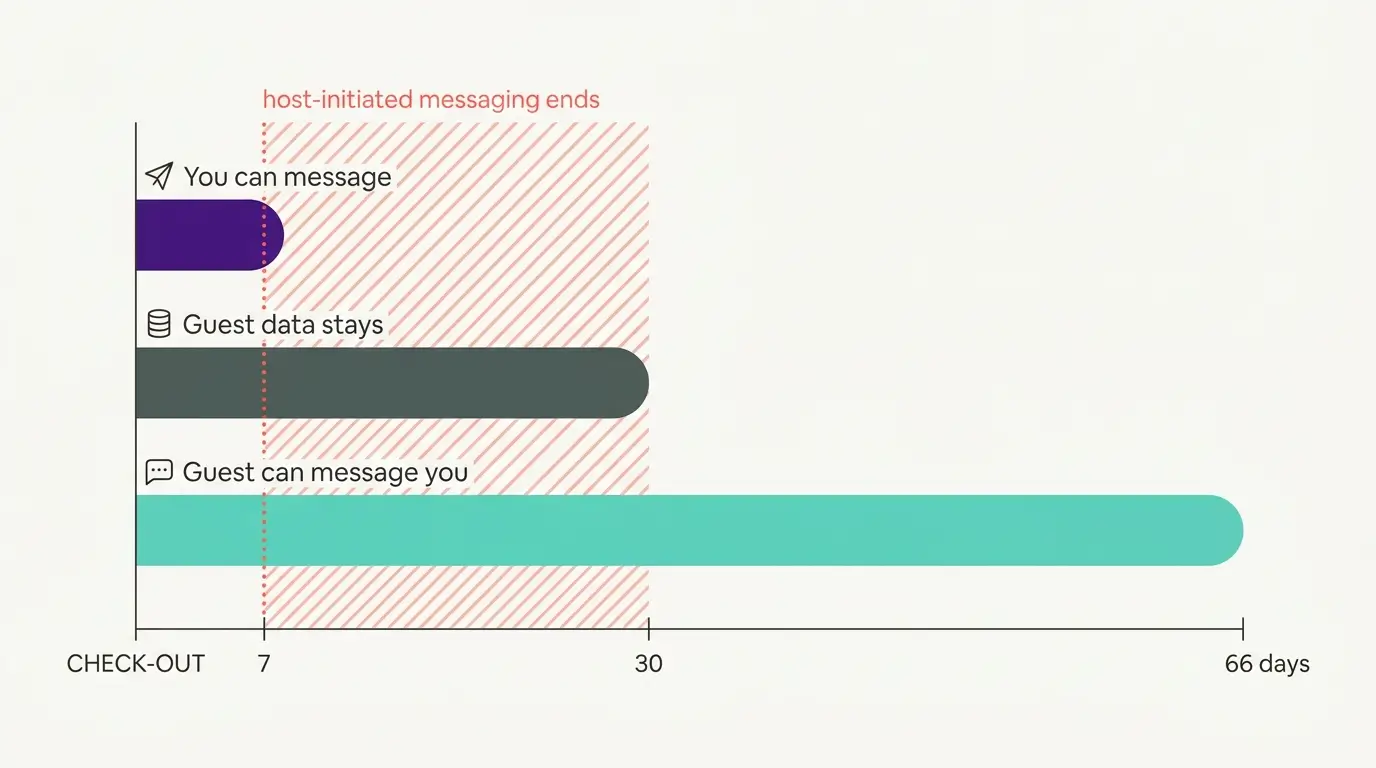
Booking.com Guest Messaging Rules: What Hosts Can Send, When, and Why Links Get Removed
Booking.com guest messaging rules, verified at source: how long you can message a guest, why your links get removed, and what the partner terms say.
Vrbo's New Features for Fall 2026: What's Live, What's Gated, and What's US-Only
We sorted Vrbo's new features for fall 2026: what is live globally, what is gated behind eligibility, and what is US-only. Verified against Vrbo's own pages.