

Why It Matters
How it Works
1
Add a new article for the place
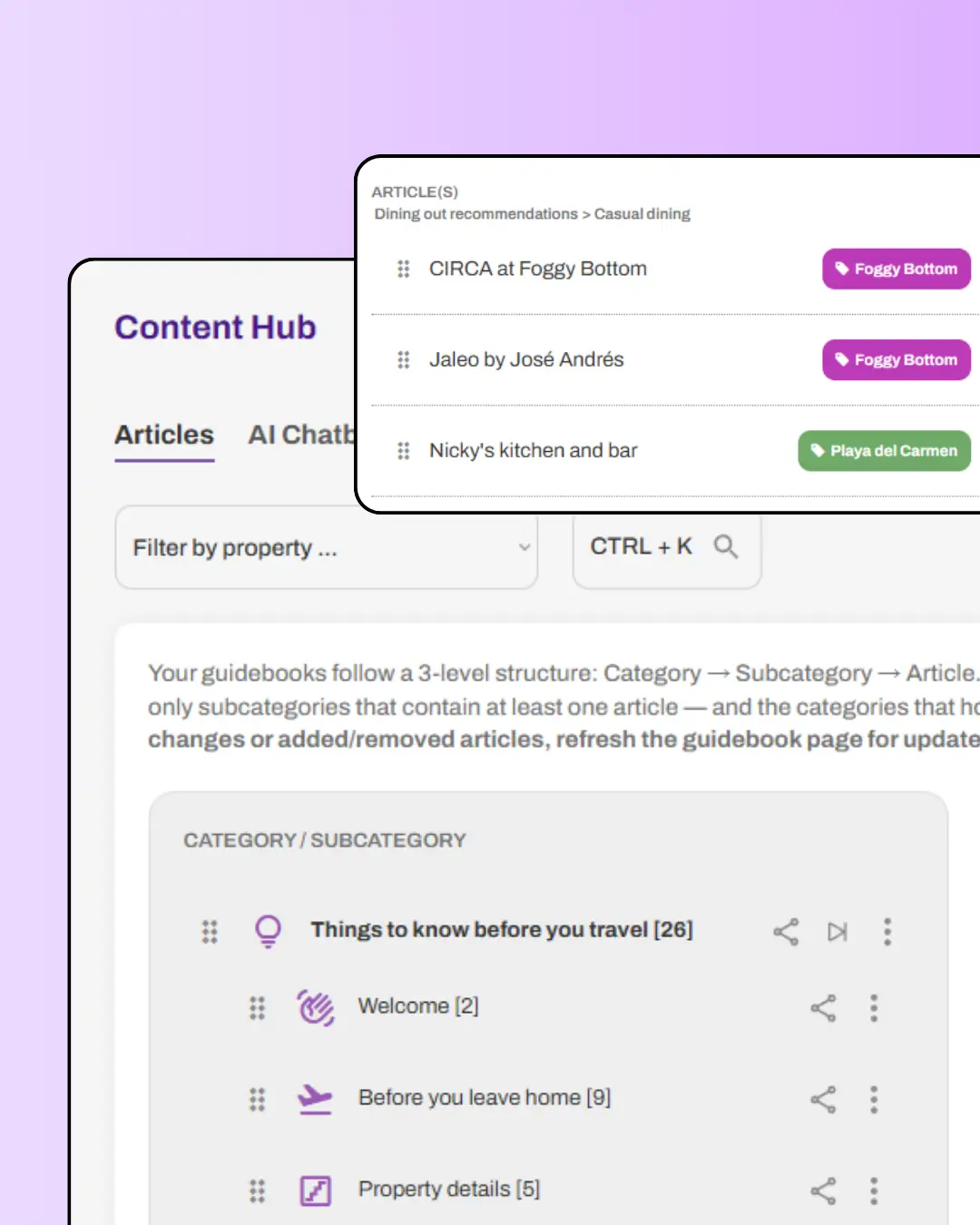
In the Content Hub, create an article inside the right category and subcategory — say, *Restaurants → Mexican* for a taqueria, or *Health & emergencies → Pharmacies* for a 24-hour clinic.
2
Import from Google
Click *Import a place from Google* and search by name. Pick the right one from the results. Address, phone, website, rating, map location, and a starter description all populate automatically.
3
Make it yours, then show it on the map
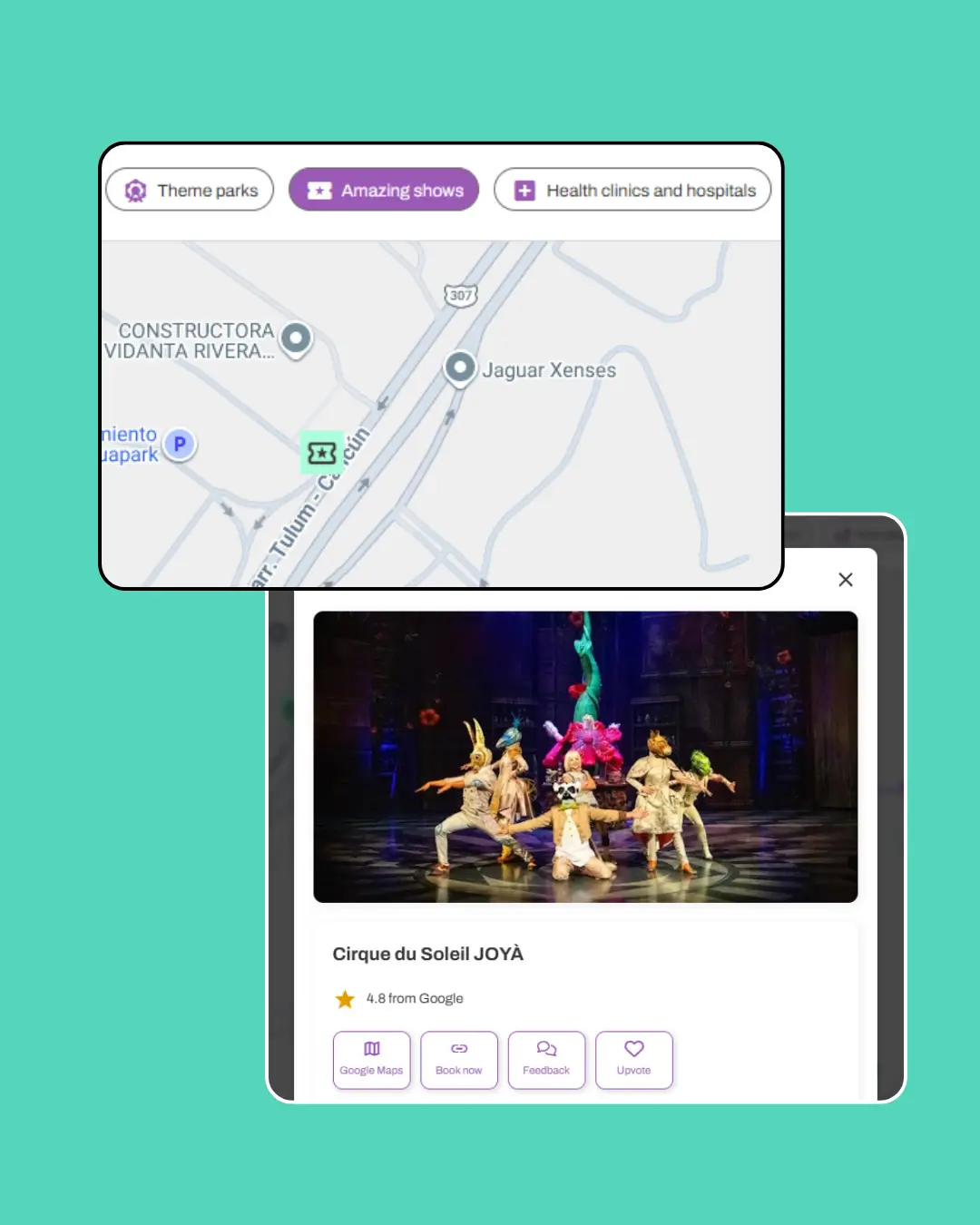
Edit anything that needs fixing. Add your photo. Write a one-line tip your guests won't find on Google. Toggle *Show on map* and the place appears on the guidebook's map view, organized by its subcategory and filterable by your guests.
Pricing
Local Info with Google is included on every paid plan
How to Build a Great Local Recommendations Map
The recommendation is in your tip, not Google's description. Guests can find a restaurant on Google themselves. What they can't find is best sit at the bar — the bartender is the owner's brother and he'll tell you what's actually fresh tonight. Edit the imported description so it sounds like you, not like Yelp.
Curate ruthlessly. Twenty places guests trust beats two hundred they'll ignore. If you wouldn't send a friend there, don't put it on the map. Hosts who edit down to 15–25 great recommendations consistently get more "this guidebook saved our trip" feedback than hosts who add everything.
Use subcategories to make the map filterable. *Restaurants* alone is a wall of pins. *Restaurants → Mexican / Italian / Vegan* lets a guest with a craving find their place in two taps. The map filter follows your category structure, so the more thoughtfully you organize your articles, the more useful the map becomes.
Related features