A Superhost's Guide to Starting an Airbnb
Thinking about starting an Airbnb? Learn from our decade of Superhost experience, from property selection to five-star reviews, in this practical guide.
Disclosure: Some links in this article are affiliate links. If you make a purchase, we may earn a commission at no extra cost to you. This helps support our content.
Diving into the world of Airbnb is more than just listing a spare room—it's about launching a hospitality business. We learned this firsthand, starting with our 4-bedroom house in Washington, D.C., and later with beach properties in Mexico. The journey breaks down into a few key stages: analyzing your market, prepping your property, crafting a standout listing, and systemizing the guest experience.
From our experience, success hinges on treating it like a real venture from day one.
Is Starting an Airbnb Right for You?
Before you start hunting for the perfect throw pillows, it’s worth taking a moment to get clear on your goals. When we first listed our place, we quickly realized there’s a massive difference between being a landlord and being a host.
A landlord is all about the property and the lease. A host, on the other hand, is all about the people and their experience. Getting that mindset right is probably the single most important key to success.
Assess Your Goals and Mindset
First things first: what are you trying to accomplish? Are you aiming to build a primary income stream, get a little help with the mortgage, or find a project to pour your creative energy into?
Your goals will steer every decision you make, from the kind of property you choose to the level of service you offer guests.
To get a handle on what you could actually earn, it’s smart to run the numbers. There are tons of great tools out there to help with financial planning. For instance, our guide on using a vacation rental investment calculator can walk you through forecasting potential revenue and expenses.
What worked for us: We initially thought hosting was just a straightforward way to make some extra cash. We quickly learned the real satisfaction—and profit—came from creating truly memorable stays. That’s what fuels positive reviews and repeat bookings, and ultimately, that's what makes the business thrive.
Understand the Financial Realities
The income potential is definitely there. Airbnb now has over 5 million hosts managing more than 8 million listings worldwide. The average host pulled in about $14,000 in 2023, while top-tier Superhosts collectively earned a staggering $23 billion between late 2021 and 2022.
These figures show what's possible, but they also signal just how competitive the market has become.
Beyond the dollar signs, ask yourself some tough questions:
Time Commitment: Are you really prepared to field guest messages at 10 PM or find a plumber on a holiday weekend?
Personal Readiness: How will you handle negative feedback? Can you see it as a business problem to solve instead of a personal attack?
Financial Risk: Do you have a cash buffer to get you through the slow season or cover an unexpected roof repair?
Answering these questions honestly is the foundational work that sets you up for the long haul. Think of it as the business plan for your hosting journey—the kind of groundwork we wish we’d done more thoroughly before jumping in.
Choosing and Preparing Your Property
Your property is the heart of your short-term rental business. Every decision here—from the location you choose to the thread count on your sheets—directly shapes your booking potential, your nightly rate, and ultimately, your reviews.
We learned this firsthand. What makes our DC townhouse a hit with guests is completely different from what draws people to our beach properties in Playa del Carmen and Tulum. The property itself sets the entire tone.
Finding the Right Spot and Doing Your Homework
Finding the right property isn't just about chasing a popular tourist destination. You have to dig deeper. When we were scouting locations in the Riviera Maya, we analyzed everything: seasonality, local festivals that could drive off-season bookings, and how many other rentals were already competing in the area. A beautiful condo is great, but a beautiful condo with year-round demand is a real business.
Today’s market is also shifting. While big cities can feel oversaturated, there's a huge opportunity opening up elsewhere. You're entering a global marketplace with over 7.7 million active listings, but the growth isn't where you might think.
Recent data shows that supply in suburban and rural areas shot up by 18% and 23%, respectively. Meanwhile, urban centers actually saw a 4% decline, often due to stricter local rules. This trend is a clear signal: you can find incredible success in less-crowded markets. For a closer look, you can dive into the latest market trend reports.
This infographic breaks down the key pillars to consider before you even think about signing a lease or a mortgage.
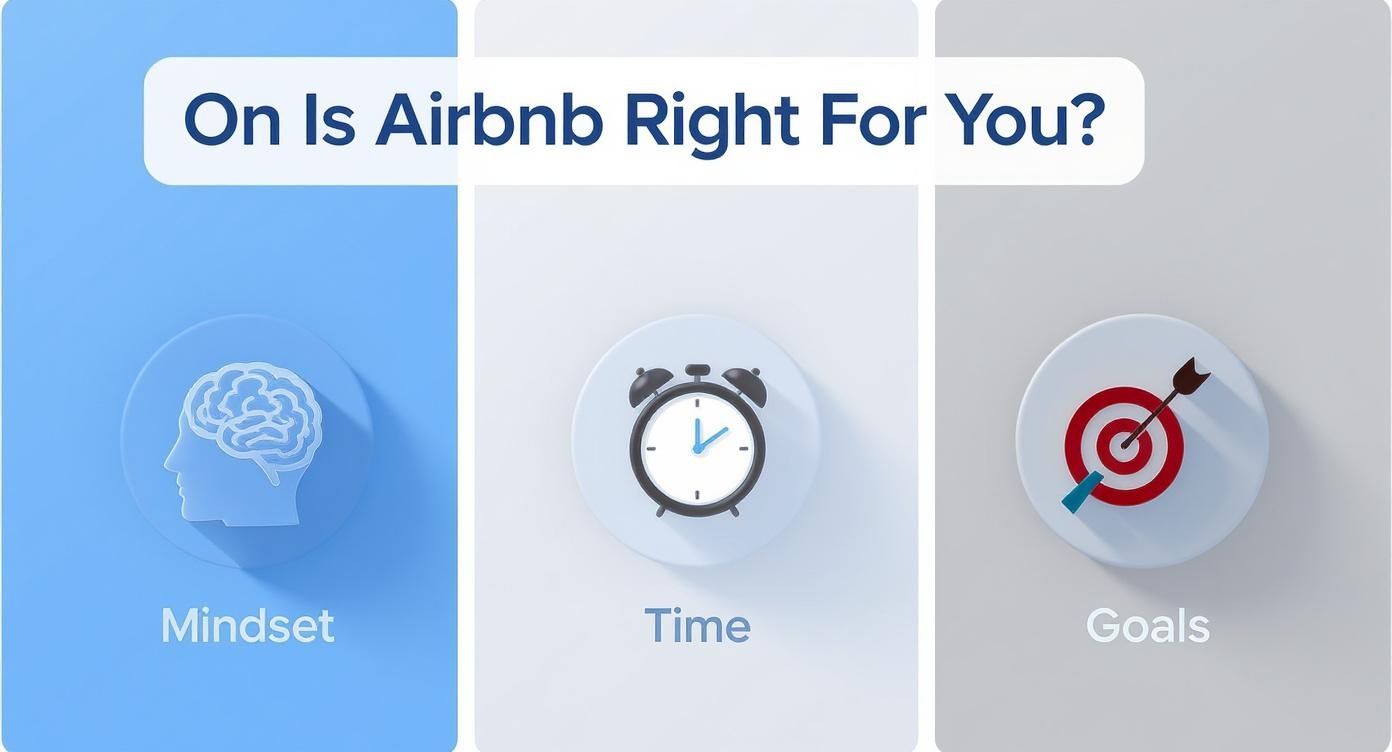
Think of this as a quick gut check. Making sure your mindset, time, and financial goals are aligned is just as critical as the property itself.
Navigating the Maze of Local Rules and Regulations
Before you get to the fun part of picking out furniture, you have to become an expert on local laws. This step is completely non-negotiable and, frankly, it's where many new hosts trip up. City ordinances, zoning laws, and HOA rules can absolutely shut down your business before it even starts.
We learned this the hard way with a property we were considering managing for a third party. The HOA had buried some incredibly strict rules against short-term rentals that weren't obvious at first glance. Always do your due diligence.
Check City Websites: Look for specific ordinances related to short-term rentals (STRs).
Review HOA Bylaws: If there's an HOA, get a copy of the covenants and restrictions before you do anything else.
Understand Permit Requirements: Know if you need a license, what it costs, and what the renewal process looks like.
Ignoring these rules isn't just risky; it's a direct threat to your entire investment. Trust us, a "forgiveness is easier than permission" approach rarely works in this business.
Furnishing for Standout Photos and Five-Star Stays
Once you've cleared the legal hurdles, it's time to set up the space. The goal here is a delicate balance—you need furnishings that are durable, comfortable, and look amazing in photos. You don't need to spend a fortune to achieve a high-end feel.
Think about the guest's experience from the second they walk through the door. We stock our kitchens so a family could realistically cook a full meal if they wanted to. That means more than just a couple of pots; it means sharp knives, a decent coffee maker, and plenty of dishes.
Our approach to furnishing: We prioritize our investment in three key areas: comfortable beds with quality linens, a great sofa for lounging, and excellent Wi-Fi. In our experience, guests will forgive a quirky coffee table, but a bad night's sleep or spotty internet will show up in your reviews every time.
To help you decide where to focus your budget, here's a look at the amenities guests have come to expect versus the ones that can really set you apart.
Essential vs. Standout Amenities Checklist
Category | Essential (Must-Have) | Standout (Premium-Worthy) |
|---|---|---|
Kitchen | Coffee maker, microwave, basic pots & pans, dishes, utensils | High-end espresso machine, blender, full spice rack, sharp knives, quality cookware |
Living Area | Comfortable seating, Smart TV with streaming access | Larger Smart TV, sound system or soundbar, board games, local interest books |
Bedroom | Quality mattress, blackout curtains, extra pillows & blankets | High thread-count sheets, memory foam pillows, white noise machine, luggage racks |
Bathroom | Towels, hairdryer, shampoo, conditioner, body wash | Plush oversized towels, makeup remover wipes, full-size toiletries, vanity mirror |
Work/Tech | High-speed Wi-Fi, accessible power outlets | Dedicated workspace with desk & ergonomic chair, universal charging station |
Family | (If applicable) Basic safety features like outlet covers | Pack-n-play, high chair, kid-friendly dishes, toys/books, stroller |
Outdoor | (If applicable) Basic seating | BBQ grill with tools, fire pit, string lights, outdoor games (cornhole, etc.) |
Striking the right balance is key. Nailing the essentials prevents complaints, while adding a few standout items is what earns you those glowing, five-star reviews.
Stocking the Small Things That Earn Raving Reviews
It’s the small, thoughtful touches that separate a good stay from a truly great one. These are the things guests go out of their way to mention in their reviews. It’s all about anticipating their needs before they even realize they have them.
Here are a few of our tried-and-true essentials that always make an impact:
A Welcome Basket: This doesn't have to be elaborate. A simple handwritten note, a couple of local snacks, and some bottled water make a great first impression.
Bathroom "Forgot-Me-Nots": We keep a small basket stocked with travel-sized toothpaste, disposable razors, and makeup remover wipes. This has saved the day for many of our guests.
Family-Friendly Items: If you're targeting families, having a pack-n-play, a high chair, and some kid-friendly plates and cups is a massive draw that can seal the deal on a booking.
These details show you genuinely care, turning a simple transaction into a memorable hospitality experience. This commitment to guest comfort is the foundation for building a successful Airbnb business.
Creating a Listing That Converts Browsers to Bookers
Your Airbnb listing is your digital storefront—it’s the single most important piece of marketing you’ll create. After all the work of preparing your property, this is where you persuade potential guests that your place is the perfect home base for their trip.
Think of it this way: your photos grab their attention, your headline makes them click, and your description seals the deal. We learned early on that a lazy listing, no matter how great the property, simply doesn't get bookings. Every element has to work together to tell a compelling story.

Professional Photos Are Non-Negotiable
If you take only one piece of advice from this guide, let it be this: invest in professional photography. Smartphone pictures, no matter how good your phone is, generally won't cut it in today's competitive market. Professional photos are the single highest-return investment you can make when starting an Airbnb.
They don’t just show what your space looks like; they sell an experience. A pro knows how to use lighting, angles, and staging to make your property look its absolute best—bright, spacious, and inviting. It’s the difference between a guest scrolling past your listing and stopping to learn more.
To make your listing truly stand out and attract potential bookers, explore these essential real estate photography tips. They offer practical advice for staging shots that convert.
Crafting a Compelling Headline and Description
Your headline is your first impression. It needs to be catchy and informative, highlighting your property's best feature in just a few words. Instead of a bland "2BR Condo in the City," try something like "Modern 2BR Retreat | Walk to Downtown | Free Parking."
The description is where you bring your property to life. Don't just list features; tell a story. Help guests imagine themselves enjoying their morning coffee on the balcony or relaxing by the fire pit after a day of exploring.
Lead with the Best: Start with your most unique selling points. Is it the ocean view? The hot tub? The chef’s kitchen? Put that front and center.
Be Specific: Mention brands ("Nespresso coffee maker") or details ("1,200 thread-count sheets") that signal quality.
Paint a Picture: Use descriptive language that appeals to the senses. Talk about the "sun-drenched living room" or the "quiet, tree-lined street."
Writing a great description takes practice. To help you get started, we put together a complete guide on how to write a killer Airbnb description, packed with templates and real-world examples from our own properties.
What worked for us: We write our descriptions for our ideal guest. For our family-friendly DC house, we highlight the spacious yard and proximity to parks. For our Tulum condo, we focus on the rooftop pool and romantic atmosphere. Know your audience and speak directly to them.
Setting Clear and Friendly House Rules
House rules are essential for protecting your property and setting expectations, but they don't have to sound like a legal contract. The key is to be firm but friendly. A harsh, demanding tone can scare off great guests before they even book.
Frame your rules positively whenever you can.
Instead of This... | Try This... |
|---|---|
NO parties. | To ensure a peaceful stay for you and our neighbors, we do not allow parties or events. |
Don't be loud after 10 PM. | Please be mindful of our neighbors and observe quiet hours from 10 PM to 8 AM. |
No unregistered guests. | For safety and insurance reasons, only registered guests are permitted on the property. |
This simple shift in tone makes guests feel respected rather than restricted. Clear, friendly rules attract responsible guests and help ensure every stay is a smooth one.
Setting Your Price to Secure Early Bookings
Pricing is where the art of hospitality meets the science of market dynamics. Getting this right when you’re just starting an Airbnb is crucial for building the momentum you need to succeed.
Your initial goal isn’t to squeeze every last dollar out of each booking. It's about attracting those all-important first guests—the ones who will leave the reviews that build your listing’s reputation.
We’ve found the best way to do this is to price your property just a little below the market average for your first three to five bookings. This isn't about undervaluing your space; it’s a calculated marketing investment to get your first glowing reviews on the board, fast.
Understanding Your Competitive Landscape
Before you can pick a number, you have to become a student of your local market. Spend an afternoon browsing Airbnb just like a guest would. Search for properties that are similar to yours in size, style, and location.
Take note of what they're charging for weekdays versus weekends and any upcoming holidays. Just as important, look at their calendars. Are they wide open, or are they booked solid? This hands-on research gives you a realistic baseline and shows you exactly where your new listing fits in.
What worked for us: When we launched our first property in Playa del Carmen, we pinpointed five comparable listings and priced ours 15-20% lower for the first month. This simple move helped us lock in our first three bookings within a week. The positive reviews that followed allowed us to raise our rates to market level much faster than we expected.
Smart Pricing Tools and Calendar Management
Once you have a few reviews under your belt, you can start thinking more dynamically. This is where automated pricing tools can be a game-changer. They analyze real-time data—like local events, flight bookings, and competitor pricing—to adjust your rates automatically. This helps you capitalize on high-demand periods without having to manually tweak your calendar every day.
A word of caution: don't just "set it and forget it." Always review the suggestions to make sure they align with your property’s true value. For a deeper dive, check out our guide on the key factors to consider when setting up your Airbnb pricing strategy. It’s a resource we wish we’d had when we were starting out.
The market is also incredibly diverse depending on where you are. While North America and Europe currently generate over 80% of Airbnb's total revenue, emerging markets are showing incredible growth. For instance, Latin America saw its gross revenue jump by over 80% and nights stayed increase by more than 55% in just one year. This data highlights massive opportunities for new hosts in growing regions. To see the full breakdown, you can explore more Airbnb statistics on Search Logistics.
Optimizing Your Calendar and Inquiries
Your calendar settings are just as important as your nightly rate. You need to use them strategically to attract the kinds of bookings you want.
Minimum Night Stays: Setting a two or three-night minimum can cut down on turnover costs and attract more serious travelers. You can always adjust this for any "orphan days" (single nights stranded between longer bookings).
New Listing Promotion: Airbnb often gives new listings a boost in search results. You can add fuel to that fire by turning on their new-listing promotion, which automatically applies a 20% discount for your first three bookings.
Quick Responses: In the beginning, speed is everything. We’ve seen that answering inquiries within an hour dramatically increases your chance of converting them into a booking.
This initial phase is all about building social proof. By pricing competitively, managing your calendar smartly, and being incredibly responsive, you’re creating a foundation of trust and positive feedback that will fuel your business for years to come.
Delivering a Five-Star Experience with Smart Systems
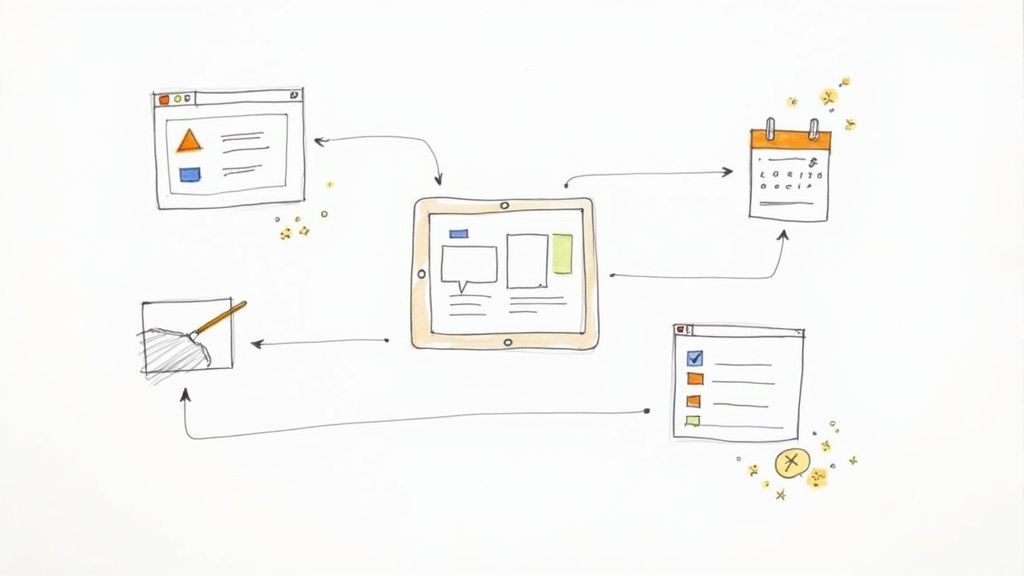
Great guest experiences don't just happen by accident. They're the direct result of having excellent systems in place. As you shift from hosting as a hobby to running it like a business, automation and smart systems become your most valuable assets. This is how you deliver consistent, five-star quality without burning yourself out.
We built our systems over years of managing our DC house, our beach properties, and other rentals in the Riviera Maya. The goal was always the same: create a seamless, professional experience for our guests while saving ourselves countless hours of repetitive work.
Automating Guest Communication
One of the first things you'll realize is just how much time you spend sending the same messages over and over. This is the perfect place to bring in automation.
Setting up automated messages is a game-changer. These aren't cold, robotic replies; they are thoughtfully crafted communications sent at just the right moment in the guest’s journey.
Booking Confirmation: An immediate, warm welcome that confirms the booking and thanks the guest. This sets a positive tone right from the start.
Pre-Arrival Check-in: A message sent a few days before arrival with check-in instructions, door codes, and a link to your digital guidebook.
First-Day Check-up: A short, friendly message the morning after they arrive, simply asking if everything is okay and if they need anything.
Check-out Reminder: A helpful reminder sent the evening before departure with instructions for trash, keys, and a final thank you.
This system ensures no guest ever feels ignored and no critical information gets missed.
Building Your A-Team for Cleaning and Maintenance
Your cleaning team is the backbone of your short-term rental business. A sparkling clean property is the absolute minimum expectation, and anything less will show up immediately in your reviews. Finding a reliable cleaner who understands the specific demands of vacation rental turnovers is critical.
Look for cleaners with experience in STRs—they get the need for speed, consistency, and an eye for detail. They're not just cleaning; they're resetting the stage for the next guest. A great cleaner will report damage, let you know when supplies are low, and become your trusted eyes and ears on the ground.
To consistently get positive feedback, give your team a comprehensive short term rental cleaning checklist. This ensures nothing is missed, from checking under beds to sanitizing all high-touch surfaces.
Elevating the Guest Experience with a Digital Guidebook
This is where you can truly stand out. A professional, easy-to-use digital guidebook transforms a good stay into a great one. It’s the central hub for everything your guests need to know, accessible right on their phones. Gone are the days of binders with printed-out pages.
We use SmoothStay to create a custom digital guidebook for each of our properties. It's a simple, elegant solution that consolidates all the essential information in one spot.
We’ve found that a great guidebook does more than just answer questions; it anticipates them. By providing information proactively, you dramatically reduce the number of messages you receive and empower guests to feel more independent and in control of their stay.
Our guidebooks always include:
Arrival Info: Wi-Fi password, smart lock codes, and parking instructions.
House Quirks: How to use the smart TV, thermostat, or that tricky coffee maker.
Local Recommendations: Our personal favorite coffee shops, restaurants, and hidden gems—the kind of local insight guests can't get from a generic travel site.
Emergency Contacts: Phone numbers for local services and our property manager.
Tools like a customizable, professional guidebook not only save us hours but also make the guest experience feel incredibly polished and thoughtful. It shows guests you're a professional host who has considered every detail of their comfort.
Common Questions About Starting an Airbnb
Even after years in the business, we still remember the flood of questions we had when we were just getting started. It’s a big move, and it's normal to have some uncertainties.
Based on our own journey—from our first property in DC to managing rentals in the Riviera Maya—here are our answers to the questions we hear most often from new hosts.
How Much Money Do I Really Need to Start an Airbnb?
This is the big one, and the honest answer is: it varies wildly. But it's always more than just the property's price tag. It helps to think of your startup costs in a few key buckets.
First up is furnishing and setup. For a small apartment, you might get away with spending $5,000, but for a full house, that number can easily climb to $30,000 or more. This covers everything from the sofa and beds to the kitchen knives and bathmats. Then you've got professional photography, a non-negotiable expense that typically runs $300-$800.
Beyond the initial setup, you'll also need to budget for:
Initial Supplies: Think bulk toilet paper, paper towels, cleaning products, and coffee.
Smart Tech: A smart lock for keyless entry is pretty much a must-have for modern hosting.
Safety Gear: Fire extinguishers, smoke/CO detectors, and a first-aid kit are essentials.
Most importantly, you need a financial cushion. We always recommend having three to six months of operating expenses saved up. This buffer covers your mortgage, utilities, and other fixed costs before your booking calendar really starts to fill up.
What Is the Biggest Mistake New Airbnb Hosts Make?
Hands down, the most common mistake we see is underestimating the "hospitality" part of the business. Many people are drawn to short-term rentals with dreams of passive income, but the reality is that this is an active, service-based business.
Neglecting guest communication, not having a go-to plumber for a weekend emergency, or skimping on cleaning will tank your reviews faster than anything else. And those first few reviews can make or break your listing.
The second-biggest mistake is failing to thoroughly research local laws and regulations. Don't even think about buying a property or listing a spare room without knowing the rules inside and out. You can learn more about the complete process in our detailed guide on how to become an Airbnb host.
Should I Use a Dynamic Pricing Tool from the Beginning?
That’s a great question. For your very first bookings, we recommend setting your prices manually. Price your listing just a little below the market rate to attract those crucial first guests and start building a foundation of positive reviews.
Once you have three to five solid reviews under your belt, integrating a smart pricing tool can be a game-changer. These tools are fantastic for analyzing real-time demand, seasonality, and local events to optimize your rates. They can increase your revenue and save you hours of manual research.
Just be sure to review the automated suggestions to make sure they align with your property's value and your financial goals. The tool is a powerful assistant, not the final decision-maker.
How Do I Handle a Bad Review?
First, take a deep breath. A bad review feels personal, especially in the beginning, but it’s just business feedback. The key is how you respond to it.
Always respond publicly and professionally, ideally within 24 hours. Here's a simple framework that has worked for us:
Acknowledge the Feedback: Start by thanking the guest for their comments. It shows you're listening.
Avoid Defensiveness: Never argue or make excuses in your public reply. It just looks unprofessional to future guests.
State Your Solution: If they made a valid point, explain how you've already fixed the issue. For example, "Thank you for letting us know about the slow Wi-Fi. We've since upgraded our internet package to ensure a faster connection for future guests."
This approach demonstrates to anyone reading the reviews that you are a responsive and proactive host. It effectively turns a negative into a positive by showcasing your commitment to a great guest experience.
Starting an Airbnb is a rewarding journey, and you don't have to figure it all out alone. At SmoothStay, we believe that being a great host means focusing on the guest. Our tools are built by hosts, designed for guests, to help you create unforgettable stays. With features like our customizable, professional guidebooks and AI-powered features, you can deliver a five-star experience from day one. See how we can help you get started by visiting SmoothStay.