Short Term Rental vs Long Term Rental: Your Guide to the Best Strategy
Explore our expert short term rental vs long term rental comparison. We analyze income, management, and risks to help you choose the right property strategy.
Disclosure: Some links in this article are affiliate links. If you make a purchase, we may earn a commission at no extra cost to you. This helps support our content.
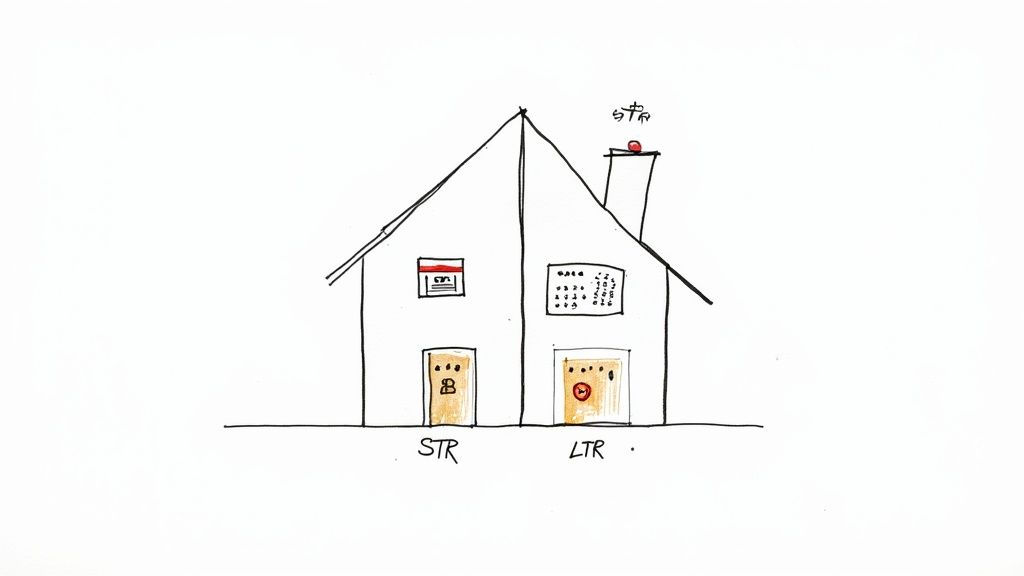
When it comes down to it, the difference between a short-term and a long-term rental is pretty straightforward: short-term rentals (STRs) offer higher revenue potential with active, hands-on management, while long-term rentals (LTRs) provide stable, predictable income with minimal daily effort. Your choice really depends on whether you're chasing maximum cash flow or prefer a more passive, consistent return on your investment.
Choosing Your Rental Strategy: STR vs LTR
Deciding between a short-term rental and a long-term rental is a key moment for any property owner. It’s a choice that shapes not just your income, but your day-to-day life as a landlord or host. Having managed properties for over a decade—from our own 4-bedroom house in Washington, D.C., to a few beach properties in the Riviera Maya—we've walked this path ourselves and learned a lot along the way.
The global short-term rental market has seen incredible growth, with projections suggesting it could reach $134.26 billion by 2034, outpacing many traditional sectors. That kind of growth signals a massive opportunity, but it doesn't automatically make it the right move for everyone.
The right path depends entirely on your financial goals, your property’s location, and just how involved you want to be.
Key Differences Between STR and LTR at a Glance
To give you a quick snapshot, here’s a table that lays out the core differences between the two models. It’s a great starting point for understanding the fundamental trade-offs you’ll be making.
Factor | Short-Term Rental (STR) | Long-Term Rental (LTR) |
|---|---|---|
Income Potential | Higher, but variable and seasonal | Lower, but stable and predictable |
Management | Active and high-touch (hospitality) | Passive and low-touch (landlord) |
Flexibility | High (personal use, dynamic pricing) | Low (fixed lease agreements) |
Property Wear | Higher turnover, but frequent cleaning | Lower turnover, but potential for hidden neglect |
Regulations | Complex and city-specific | Established landlord-tenant laws |
Before you commit one way or the other, it’s always a good idea to run the numbers. Plugging your property's details into a vacation rental investment calculator can bring some much-needed clarity to the financial side of things.
This guide is designed to move beyond a simple pros and cons list. We’ll dive into the nuances of the short term rental vs long term rental debate, exploring everything from income models and operational demands to the critical legal differences. Our goal is to give you the clarity you need to make the best decision for your investment.
Analyzing the Financial Equation of Each Model
When you boil it down, the choice between short-term or long-term rentals nearly always comes down to the numbers. Let’s be honest, the biggest draw for STRs is the potential for significantly higher gross revenue. By using dynamic pricing, you can adjust your rates for seasons, holidays, and big local events, often earning more than you ever could with a traditional lease.
But that higher income is balanced by higher and more frequent operational costs. With an STR, you’re on the hook for everything—utilities, professional cleanings between every single guest, restocking supplies like coffee and soap, and paying platform service fees.
Long-term rentals, in contrast, are all about predictable, stable cash flow. Your tenant typically covers their own utilities, and your expenses are much lower simply because turnover is rare. It's a simpler, more straightforward financial model.
Revenue Potential Unpacked
The income difference between the two models can be stark, especially in the right location. Recent data shows that the U.S. short-term rental market is projected to reach between $21 billion and $24.78 billion in revenue by 2029. This is fueled by dynamic pricing that can yield 2-3 times more income in tourist hubs compared to a fixed long-term lease.
A long-term rental provides a steady floor for your income—you know exactly what you’ll make each month. An STR, on the other hand, has a much higher ceiling but a much lower floor. A great month in our Playa del Carmen house during high season can bring in multiples of what a long-term tenant would pay, but a slow month during hurricane season might bring in less.
What worked for us: We found the key to maximizing STR revenue isn't just about high nightly rates. It's about optimizing your occupancy rate through smart pricing and excellent guest experiences, which is a continuous, hands-on process.
To accurately analyze the financial equation of either model, understanding how to calculate rental yield is a crucial metric for comparing investment performance.
Comparing Operational Costs
This is where the financial comparison gets really interesting. While STRs win on gross revenue, LTRs often have the edge when it comes to lower expenses.
Here’s a look at the typical costs you can expect with each:
Utilities: With an STR, you cover everything—electricity, water, gas, and high-speed internet. For an LTR, these are almost always the tenant's responsibility.
Cleaning Fees: An STR requires professional cleaning after every single guest, which can easily add up to thousands per year. An LTR only needs cleaning during tenant turnover, which might be once every few years.
Supplies: You'll be constantly restocking an STR with everything from toilet paper and shampoo to coffee filters and cooking oil. LTR tenants purchase all their own consumables.
Maintenance: Wear and tear just happens faster with STRs due to the frequent turnover. While you can address issues quickly between guests, the costs are more frequent compared to the occasional maintenance calls from a long-term tenant.
Effectively tracking these variables is essential for understanding your true profitability. Diving deep into your numbers with the right tools can reveal which model truly performs better for your specific property. You can learn more about this by exploring our guide to short-term rental analytics. This detailed financial breakdown—comparing revenue potential against a realistic budget for maintenance, vacancy, and management—is the only way to accurately project your net return.
Comparing Daily Operations and Management Demands
Your role as a property owner changes completely depending on your rental strategy. When weighing a short-term rental vs. a long-term rental, you have to think about the kind of business you actually want to run. One is a hands-on hospitality venture, while the other is a more traditional, passive investment.
Managing a short-term rental is a lot like running a small hotel. It’s an active, daily commitment that involves juggling bookings, communicating with guests, and coordinating cleanings between every single stay. You’re the point person for immediate problem-solving, whether it’s a Wi-Fi outage at 9 PM or a question about the best local tacos.
In contrast, long-term rental management is far more passive. Once you’ve secured a qualified tenant and they’ve moved in, your responsibilities shrink dramatically. The job boils down to collecting rent once a month and handling the occasional maintenance request. It's less of a daily grind and more of a periodic check-in.
The Short-Term Rental Hustle
The management cycle for a short-term rental is constant and fast-paced. It’s a rewarding business, but you absolutely need a system to avoid burnout. From our experience running properties, we've found the workload breaks down into a few key areas.
Constant Communication: You're fielding inquiries from potential guests, sending check-in instructions, answering mid-stay questions, and then following up to request reviews after checkout.
Logistical Coordination: This is the behind-the-scenes scramble of scheduling cleaners, restocking supplies like coffee and paper towels, and arranging for maintenance or repairs between guest stays.
Dynamic Problem-Solving: Every guest and every stay brings something new. You have to be ready to handle unexpected issues on the fly to protect the guest experience and your reviews.
What worked for us: Our biggest breakthrough in managing the STR hustle was realizing we couldn't do it all manually. Automating guest communication was a game-changer, freeing up hours each week and ensuring every guest got the same high level of service.
The constant turnover is both a challenge and an opportunity. On one hand, it's a ton of work. On the other, it lets you inspect and maintain your property frequently, catching small issues before they blow up into big problems. We’ve found this regular oversight keeps our properties in much better condition over the long run compared to a unit we only see once a year.
The Long-Term Rental Rhythm
The pace of managing a long-term rental is significantly slower and more predictable. The operational demands are minimal once you have a good tenant in place.
Tenant Screening: The most critical task is right at the beginning—thoroughly vetting applicants to find a reliable, responsible tenant. This means running background checks, pulling credit reports, and verifying income.
Rent Collection: Once the lease is signed, your primary monthly task is simply collecting rent. Most of this can be put on autopilot with online payment platforms.
Maintenance on Request: Unlike an STR where you proactively fix everything, LTR maintenance is typically reactive. You address problems as the tenant reports them, like a leaky faucet or a broken appliance.
The challenge with LTRs isn’t the daily workload; it's the higher stakes of single interactions. A difficult tenant or a lengthy eviction process can create significant stress and financial loss, which makes that initial screening process absolutely critical. Your success hinges on finding the right person and locking in a clear, legally sound lease agreement from day one.
Ultimately, choosing between these two operational models comes down to your personality and lifestyle. For those who want to build a hands-on business and love the energy of hospitality, the STR model can be incredibly fulfilling. If you're looking for a more hands-off investment that generates steady income with minimal intervention, an LTR is likely the better fit. Learning the ropes is part of the process, and our guide to managing short-term rentals can offer more detailed workflows.
Navigating the Evolving Legal and Regulatory Landscape
One of the sharpest dividing lines in the short-term vs. long-term rental debate is the mountain of rules you have to follow. The legal frameworks for each are worlds apart, and this is one area you absolutely can’t afford to skim over. It might not be the most exciting part of property investing, but getting it wrong can bury you in headaches and steep fines.
Long-term rentals operate under a well-established system of landlord-tenant laws. These rules have been around forever, offering a clear and stable structure for everything from leases and security deposits to evictions. While the fine print varies by state, the core principles are pretty consistent and predictable.
Short-term rentals, on the other hand, live in a much wilder, often confusing regulatory world. Cities and towns everywhere are constantly dreaming up and updating rules, and the goalposts can move in a flash.
The Shifting Rules of Short-Term Rentals
When we first started hosting, the rules were simple because, in many places, there just weren't any. That’s a distant memory now. Today, anyone thinking about running an STR needs to become a local expert on regulations, which often include:
Licensing and Permits: Many cities now require you to register your property and get a special license to operate legally.
Occupancy Taxes: Just like hotels, you’ll probably need to collect and hand over local and state occupancy or tourist taxes from your guests.
Zoning Restrictions: Some neighborhoods are zoned purely for residential use, making any kind of short-term rental activity a non-starter.
Nightly Caps: To curb the impact on local housing, some places cap the number of nights you can rent out your property each year.
The most critical first step before you even think about launching an STR is to do your homework. Dig into your city's official government website, join local host groups, and maybe even chat with a local attorney to make sure you’re fully compliant. Assuming the rules are the same as the next town over is an expensive mistake to make.
Long-Term Stability vs. Short-Term Scrutiny
The established nature of LTR laws gives you a certain level of security. You know exactly what process to follow if a tenant breaks their lease. For STRs, a sudden rule change could literally shut down your business overnight.
These regulatory pressures are actively reshaping the rental game. Some 2024-2025 market analyses suggest that new caps and registration rules could push 10-20% of global short-term inventory back into the long-term market. We’re seeing this trend pick up steam in major cities across Europe and Australia, where housing shortages are driving up demand for stable, long-term homes. You can get more insights on this trend from Greystone's full analysis.
This legal risk has to be a central part of your decision. While a solid lease is key for an LTR, staying on top of ever-changing local ordinances is a constant, non-negotiable part of running a successful STR. For any short-term rental operator, a clear and comprehensive vacation rental lease agreement is your first line of defense, setting clear expectations for guests and protecting your property from day one.
How to Choose the Right Rental Strategy for You
Picking the right rental strategy isn't a one-size-fits-all deal. It's a personal decision that hinges entirely on your situation. When you're weighing a short-term rental vs long-term rental, the best move is the one that lines up with your financial goals, your stomach for risk, your property’s location, and just how much of your own time you’re willing to sink into it.
Are you chasing maximum cash flow and genuinely enjoy the fast-paced energy of hospitality? An STR in a hot market could be a perfect fit. Or do you put a premium on steady, predictable income with as little day-to-day fuss as possible? If so, an LTR might be the smarter, more sustainable route for your lifestyle.
Assessing Your Goals and Resources
First things first, you need to have an honest chat with yourself. What do you really want to get out of this, and what are you prepared to put in?
Financial Objectives: Is the main goal to squeeze out the highest possible monthly revenue? Or are you focused on building long-term equity with a stable income that comfortably covers the mortgage and leaves a little extra?
Time Commitment: Do you have the bandwidth for daily tasks like messaging guests and scheduling cleanings? Or does your life demand a more hands-off, set-it-and-forget-it approach?
Risk Tolerance: Can you handle the income swings that come with seasonal demand? Or do you sleep better knowing exactly how much money is hitting your bank account each month?
Your answers will start to nudge you in one direction or the other. From our experience, the much higher revenue from our beach properties in Mexico made the active management worth it. But if we had a property in a less touristy spot, the stability of a long-term rental would look a lot more appealing.
Considering Hybrid and Mid-Term Models
And remember, this doesn't have to be a rigid, either-or choice. A hybrid model can be a clever way to get the best of both worlds.
For instance, you could run your property as an STR during the high season to cash in on peak demand, then flip to a mid-term rental (like a 3-month lease for a traveling nurse or a professional relocating for a project) during the slower months. This strategy gives you a stable income floor while still letting you capture those high-profit peak periods.
What worked for us: We’ve found that being flexible is key. The rental market is always changing, and what works one year might need adjusting the next. Being open to a hybrid model can be a smart way to adapt and keep your property performing well.
A Practical Decision Checklist
To pull all of this together, here's a straightforward checklist to help you weigh the variables. Use it to get a clear, side-by-side look at the realities of running a short-term rental vs long-term rental for your specific property.
Decision Checklist: Choosing Between STR and LTR
Use this checklist to assess your goals, property, and market, helping you identify which rental strategy aligns best with your circumstances.
Consideration | A Short-Term Rental May Be a Better Fit If... | A Long-Term Rental May Be a Better Fit If... |
|---|---|---|
Your Location | Your property is in a popular tourist destination, near major attractions, or a business hub. | Your property is in a residential neighborhood, near schools, or in an area with stable job growth. |
Your Involvement | You enjoy hands-on work, interacting with people, and have time for daily management tasks. | You prefer a passive investment with minimal day-to-day responsibilities. |
Your Income Needs | You are seeking the highest possible revenue potential and can handle income variability. | You prioritize consistent, predictable monthly cash flow for easier financial planning. |
Your Property | The property is furnished, well-maintained, and has amenities that appeal to travelers. | The property is unfurnished and suitable for tenants who want to make it their long-term home. |
Local Regulations | Your city has clear, favorable regulations for short-term rentals that you can easily follow. | Your area has strict STR regulations, or the legal landscape is uncertain and risky. |
At the end of the day, picking a rental strategy is all about finding the right balance between profit and lifestyle. By taking a hard look at your property, your market, and your own goals, you can build a rental business that not only succeeds financially but also fits seamlessly into your life.
Making a Short-Term Rental Successful: It's All About the Guest
If you’ve decided the hands-on, high-reward path of short-term renting is for you, then here’s the truth: your long-term success lives and dies by the guest experience. It’s about so much more than just a clean space. It’s about crafting genuine, thoughtful hospitality at every single turn.
The journey starts with a killer listing and sharp, professional photos, but it’s truly defined by every interaction that follows. Things like a seamless check-in and friendly, proactive communication aren’t just nice-to-haves; they are the absolute fundamentals of a five-star stay.
Mastering the Guest Experience
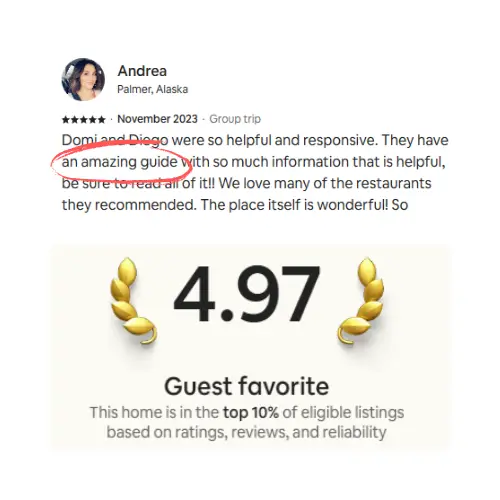
From our own years managing properties, we learned pretty quickly that one of the most powerful tools in our hosting arsenal is a comprehensive digital guidebook. By creating a beautiful, professional guide, we answer guest questions about everything from the Wi-Fi password to our favorite local coffee shop before they even think to ask.
This single step does more than just save us from typing out the same messages over and over. It consistently results in glowing reviews because guests feel cared for and well-informed from the moment they book. They see us as professional, organized hosts who have anticipated their needs.
Focusing on these small, guest-centric details is how you build a resilient short-term rental business that doesn't just survive but actually thrives, earning repeat bookings and standout reviews that push you to the top of search results.
This approach transforms your property from just a place to stay into a memorable experience. It's the difference between a guest having an okay trip and a guest leaving a review that says, "This was the best Airbnb I've ever stayed in!" To really push your short-term rental’s performance and keep your calendar full, you might also want to look into advanced strategies to boost your Airbnb bookings.
Tools That Make a Difference
Building this kind of experience doesn't have to be complicated. Modern tools are designed to help hosts like us automate the tedious parts of the job so we can focus on what really matters—hospitality.
For instance, a platform like SmoothStay allows you to create those beautiful, customizable guidebooks we mentioned. You can brand them with your logo and colors, making your operation look incredibly professional. With guest-first features and AI-powered tools to help write content, you can put together a polished guide that anticipates every need.
Ultimately, the key is to build systems that deliver consistent, high-quality experiences. This focus on detail is precisely how you can maximize your earnings and build a sustainable business. For a deeper dive, check out our guide on how to make money on Airbnb, which covers more on this topic. When you invest in the guest experience, you're investing in the long-term success of your rental.
Common Questions from Property Owners
Making the jump from one rental strategy to another can feel like a big leap. Over the years, we've heard just about every question in the book from owners weighing their options. Let's tackle a few of the most common ones.
Can I Switch from a Long-Term to a Short-Term Rental?
Absolutely. We see owners do this all the time, but it's a process that needs a thoughtful approach, not a rushed one. First and foremost, you have to honor your current lease agreement and give your tenant the proper legal notice to vacate. There are no shortcuts here.
Once the property is empty, the real transformation begins. You'll be furnishing the entire space, hiring a professional photographer to make it shine online, and crafting listings for platforms like Airbnb or Vrbo. The most critical step, though, is getting compliant with local short-term rental laws. This often means applying for specific permits or business licenses before you can even think about welcoming your first guest.
Which Rental Strategy Offers a Better ROI?
There's no magic bullet answer here. The "better" return on investment (ROI) depends entirely on your market, the type of property you have, and—most importantly—how efficiently you can run the operation.
Short-term rentals often dangle the carrot of much higher gross revenue and a better cash-on-cash return, particularly in tourist hotspots or business hubs. But that potential comes with a tradeoff: significantly higher operating costs, the risk of seasonal vacancies, and a much, much bigger time commitment.
Our experience: Long-term rentals generally provide a more stable and predictable ROI with far less hands-on effort. A detailed financial analysis comparing your projected net operating income for both models is the only way to make an accurate comparison for your unique situation.
How Does Property Wear and Tear Compare?
This is a hot topic in the short term rental vs long term rental debate, and the reality is that the nature of wear and tear is just different for each model. With a long-term tenant, you might see more gradual, cumulative wear over the years. Small issues can sometimes go unreported and snowball into bigger, more expensive problems.
With short-term rentals, the high guest turnover definitely puts more mileage on your amenities. However, that constant turnover forces you to inspect the property, perform deep cleans, and handle preventative maintenance between every single stay. In our opinion, this consistent oversight often leads to better long-term preservation of the property's condition.
Ready to elevate your short-term rental and create an unforgettable guest experience? With SmoothStay, you can build beautiful, AI-powered digital guidebooks that answer guest questions, share local tips, and earn you more 5-star reviews. Try it free and see how our guest-first features and customizable designs can save you time and delight your visitors.