
Mastering Short Term Rental Management: A Practical Guide
Learn proven strategies for managing short term rentals, including pricing, operations, and guest satisfaction, to maximize earnings.
Disclosure: Some links in this article are affiliate links. If you make a purchase, we may earn a commission at no extra cost to you. This helps support our content.
Managing a short-term rental is all about building smart, efficient systems. It’s the secret to handling everything from guest messages to a leaky faucet without pulling your hair out. The real goal is to automate the routine stuff, get your pricing right, build a team you can count on, and stay on the right side of local laws. Get that down, and you transform a demanding side-gig into a business that can actually grow.
Your Playbook for Smarter Rental Management
After more than a decade of hosting—from our family home in Washington, DC to beach properties down in the Riviera Maya—we learned a hard lesson: success isn't about working harder, it's about working smarter. Juggling bookings, cleanings, and a flood of guest questions can feel like a recipe for burnout, especially once you have more than one property.
The key isn't to hustle more; it's to build a reliable operational playbook.
This guide is the system we wish we’d had from day one. It’s built on our own experience, not just theory. Our goal is to show you exactly how to build the core systems that turn a stressful side hustle into a streamlined, profitable venture.
Building Your Foundation for Success
First things first, you need to think like a business owner, not just a host. That means creating repeatable processes for every single part of your operation. To really streamline things, implement systems letting you offload the tasks you simply don't have time for.
From our experience, a solid foundation for managing your rentals should include:
Standardized Checklists: Don't leave turnovers to chance. A detailed checklist ensures every clean is perfect, from scrubbing the floors to restocking the coffee pods. You can grab a great starting point from our complete checklist for getting an Airbnb ready.
Automated Communication: Get those scheduled messages set up for booking confirmations, check-in instructions, and checkout reminders. This saves you hours each week and makes sure your guests always have the info they need, right when they need it.
A Reliable Local Team: You can't be everywhere at once. A trusted cleaner and a go-to handyperson are the most important partners you'll have. They become your eyes and ears on the ground.
We learned early on that trying to do everything ourselves was a fast track to burnout. Our first real breakthrough came when we created a simple, photo-based cleaning checklist for our team. It instantly improved consistency and slashed the number of back-and-forth questions we had to answer.
This guide will walk you through setting up these systems and a whole lot more. We'll dive into everything from dynamic pricing strategies that boost your revenue to navigating the often-confusing world of local regulations. Everything here is practical and actionable, designed to save you time, reduce headaches, and help you create the kind of unforgettable guest experiences that lead to glowing reviews and repeat bookings.
Let's build a smarter rental business together.
Automate Communication Without Losing the Personal Touch
If there’s one task that can eat up your entire day as a host, it’s guest messaging. The constant pings about Wi-Fi codes, check-in times, and where to take the trash are all part of the job, but they don't have to be a manual grind. This is where a smart automation strategy becomes your most valuable asset.
The secret isn't to replace your voice with a robot. It’s about automating the routine, predictable communication so you have more time for the personal touches that actually create memorable stays. A well-timed message about a local farmers market makes a much bigger impact than another generic "how is everything?" text.
This visual perfectly captures the journey from operational chaos to streamlined success, which is exactly what smart automation helps you achieve.
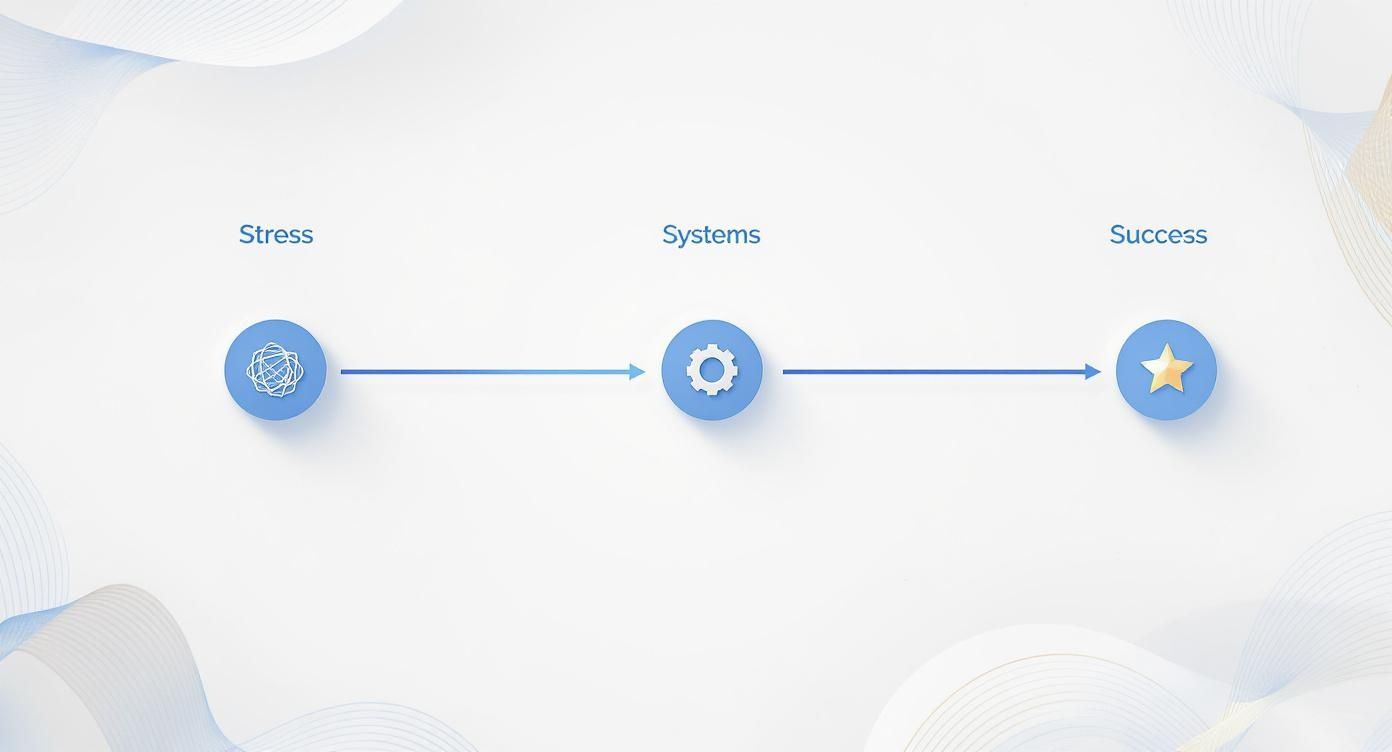
By setting up clear systems for communication, you shift from constantly putting out fires to proactively hosting. It feels effortless for your guests, and it's a total game-changer for you.
Crafting the Perfect Messaging Flow
Over the years, we've refined our messaging sequence down to a science. It’s designed to give guests all the information they need, right when they need it, which dramatically cuts down on those repetitive questions. Our goal is to anticipate needs before they even arise.
This is the exact timeline we use across all our properties, from our row house in DC to our condos in the Riviera Maya.
Here's an overview of the essential messages every host should automate.
Timing | Message Purpose | Key Information to Include |
|---|---|---|
At Booking | Confirmation & Welcome | Thank the guest, confirm their dates, and express excitement for their visit. |
7 Days Pre-Arrival | Build Anticipation | A friendly check-in with a link to your digital guidebook for trip planning. |
24 Hours Pre-Arrival | Critical Check-In Details | Full address, smart lock/lockbox code, Wi-Fi info, and check-in time reminder. |
Day 2 of Stay | Mid-Stay Check-in | A brief, non-intrusive message to see if they need anything. |
Morning of Checkout | Departure & Review Nudge | A quick reminder of checkout tasks and a gentle request for a review. |
This structured approach ensures nothing falls through the cracks and keeps your guests feeling informed and cared for every step of the way.
From Booking to Check-In
Let's break down the first part of the sequence. These initial messages set the tone for the entire stay.
Booking Confirmation: An immediate thank-you message that confirms their dates and expresses genuine excitement for their stay. This sets a warm, welcoming tone from the moment they book.
Pre-Arrival (7 Days Out): A friendly check-in to build anticipation. We always include a link to our digital guidebook here, giving them a full week to browse local recommendations and plan their trip.
Check-In Instructions (24 Hours Before): This is the most critical message of all. It needs to include the full address, lockbox or smart lock codes, and a reminder of the check-in time. Keep it concise and crystal clear.
In our experience, a professional digital guidebook answers about 80% of guest questions before they’re even asked. Details on how to use the coffee machine or the smart TV are right at their fingertips, meaning fewer late-night texts for us.
Mid-Stay and Post-Stay Communication
The communication doesn't stop once your guests have the keys. A thoughtful mid-stay check-in can make guests feel looked after, while a well-crafted departure message is crucial for securing those coveted 5-star reviews.
Our final two messages in the sequence are just as important:
Mid-Stay Check-In (Day 2): We send a brief, non-intrusive message in the morning asking if they have everything they need to enjoy their stay. This is your chance to solve a small issue—like a burnt-out lightbulb—before it becomes a complaint in a review.
Departure & Review Request (Morning of Checkout): This message provides a quick reminder of checkout procedures (like taking out the trash or starting the dishwasher) and thanks them again for staying. We then gently ask them to leave a review if they enjoyed their time, which has significantly boosted our review rate.
Building a system like this allows you to deliver top-tier, personalized service at scale. You free up your time to handle unique guest requests, making them feel truly valued.
For more specific examples and templates, you can find a deep dive into our favorite automated Airbnb messages that have helped us maintain Superhost status for years. By automating the essentials, you create the space to be an exceptional host.
Dynamic Pricing Strategies That Maximize Revenue
Leaving your rental prices static is one of the quickest ways to leave money on the table. We learned this the hard way early on. Setting one price for the entire year and hoping for the best simply doesn’t work in today’s market.
The right price is a fluid blend of art and science, and a dynamic strategy is the only way to stay competitive and keep your calendar full.
This goes way beyond just hiking up your rates for weekends. True dynamic pricing means your rates are constantly adjusting based on real-time supply and demand. Think of it like airline tickets—the price changes based on how many seats are left, the time of year, and how close you are to the departure date. Your rental should operate the same way.
The short-term rental market is growing, and hosts who adapt their pricing are the ones who will come out ahead. The market is projected to reach $119 billion by 2030, according to Research Nester's May 2024 report, showing that savvy pricing isn't just a "nice-to-have"—it's a core part of running a profitable rental business.
Setting Your Foundational Rate
Before you can start adjusting your prices, you need a solid starting point. Your base rate is your standard price for a typical, low-demand night. It needs to be high enough to cover all your costs and turn a profit, but still competitive enough to attract bookings during those slower periods.
To figure out our base rate, we look at a few key factors:
Fixed Costs: This includes the unavoidable stuff—mortgage, insurance, property taxes, and any recurring HOA fees.
Variable Costs: Think utilities, cleaning fees (if you absorb them), restocking supplies, and setting aside funds for maintenance.
Market Analysis: What are comparable properties in your area charging on a random Tuesday in the off-season? Do a little recon.
Once you have this number, you have a floor for your pricing. From here, all your adjustments will be layered on top of this foundational rate. Learning how to price rental property for maximum profit is all about starting with a smart baseline and building from there.
When we first listed our DC house, we set our price based on a gut feeling and what a neighbor was charging. We were leaving so much revenue on the table. Our income jumped nearly 30% the first year we implemented a real dynamic pricing strategy based on data, not guesses.
Layering in Demand-Based Adjustments
With your base rate locked in, the real work begins. Now you can start creating rules and adjustments that automatically respond to shifts in demand. This is how you ensure you're priced optimally without spending hours glued to your calendar.
These are the primary factors we always adjust for:
Seasonality: This is the most obvious one. Our rates for the beach properties in Playa del Carmen and Tulum are significantly higher during the winter high season (December-April) than in the hotter, slower summer months.
Local Events: A big conference at the convention center in Washington, DC, can create more demand than a national holiday. We keep a calendar of major local events—concerts, festivals, sporting events, and university graduations—and set custom rates for those dates months in advance.
Day-of-the-Week Demand: Weekends are almost always in higher demand. We typically set our Friday and Saturday rates 25-50% higher than our weekday base rate, depending on the season.
Booking Window: We use what’s called "far-future" and "last-minute" pricing. We might offer a small 5-10% discount for guests booking more than six months out to lock in those early reservations. Conversely, we often increase the price for unbooked nights within a week of arrival to capture that last-minute demand.
Trying to manage all these variables manually is a recipe for burnout. We strongly recommend using a dynamic pricing tool that integrates with your listing platform. These tools analyze billions of data points—including competitor pricing, local demand signals, and even flight data—to suggest and automate optimal pricing for you every single day.
While they come with a subscription fee (often around 1% of your booking revenue), the return on investment is almost always worth it.
For a deeper look into building your strategy from the ground up, check out our guide on the key factors to consider when setting up your Airbnb pricing strategy. It provides a more detailed framework for new hosts.
Building Your A-Team for Cleaning and Maintenance

Let’s be honest: you can't do it all yourself. This is especially true when you’re managing properties from a distance, like we do with our places in the Riviera Maya while living in DC. A reliable local team isn't a luxury; it's the absolute backbone of a successful short-term rental business.
They are your eyes and ears on the ground, making sure your property is always guest-ready and protecting your investment. Without a fantastic team, even the most beautifully designed space will fall flat and start racking up mediocre reviews.
Building this team takes time and a clear process. It's about finding people who see themselves as partners in your success, not just contractors ticking off a to-do list.
Finding and Vetting Your Team
The hunt for great cleaners and handypeople usually starts with local referrals. We’ve had the most success by asking for recommendations in local host forums or from real estate agents who specialize in rentals.
Once we have a few candidates, we move to a structured vetting process. It always starts with a brief phone interview to get a feel for their professionalism, their experience with the chaos of short-term rentals, and their general attitude.
During the call, we ask specific questions designed to see how they think on their feet:
Scenario-Based Questions: "What would you do if you arrived for a cleaning and discovered the previous guest had shattered the coffee pot?"
Experience Questions: "How do you normally report minor maintenance issues you spot during a clean?"
Logistical Questions: "What’s your availability for same-day turnovers?"
The final—and most important—step is a paid trial cleaning. We pay them their full rate to clean one of our properties. It's the only way to truly see the quality of their work. We inspect the place afterward using our own detailed checklist, looking for the tiny things that guests always notice.
Empowering Your Team with Systems
Finding the right people is only half the battle. The other half is setting them up for success with the right tools and systems. After all, a great team member with vague instructions is still being set up to fail.
This is where standardized checklists become non-negotiable. We don’t just use a simple list of text-based tasks. Instead, we’ve built a comprehensive, photo-based guide for each room. It shows exactly how the pillows should be arranged, how the towels must be folded, and what the welcome basket setup needs to look like.
A detailed checklist does more than ensure consistency; it shows your team you care about the details and respect their work. It removes guesswork, cuts down on the back-and-forth questions, and empowers them to own the outcome of every turnover.
This system ensures that no matter who is on the job that day—your primary cleaner or a backup—the guest experience remains identical. You can learn more about creating a powerful system by checking out our complete vacation rental cleaning checklist, where we break down our entire process.
Turning Contractors into Partners
The best teams don't just clean and fix things; they proactively protect your property. We encourage our crew to be our eyes on the ground by making it dead simple for them to report issues.
We use a dedicated group chat where our cleaners can instantly send a photo of a low battery warning on a smoke detector, a scuff mark on the wall, or a dripping faucet. We thank them for every single report and act on it immediately. This simple feedback loop shows them their input is genuinely valued.
By fostering this kind of partnership, they become invested in the property’s success. They take pride in maintaining a 5-star standard because they know they are an essential part of delivering that experience. This proactive maintenance saves a ton of money in the long run and, more importantly, gives you priceless peace of mind.
Navigating Regulations and Staying Compliant
Ignoring local regulations is one of the biggest—and most expensive—mistakes you can make in this business. We've seen it happen. The rules are always in flux, and what was perfectly fine last year might get your listing shut down today. Overlooking this crucial part of running a short-term rental isn't just a risk; it's a direct threat to your entire operation.
From our experience managing properties in wildly different markets—a dense urban center like Washington, D.C., and international tourist hubs like Playa del Carmen and Tulum—we've learned that compliance is an ongoing, non-negotiable part of the job. It’s not just about dodging fines. It's about being a responsible operator and protecting your investment for the long haul.
Creating Your Compliance Framework
Staying on top of local laws requires a proactive approach. You can't just set up your listing, cross your fingers, and hope for the best. We treat compliance as a core operational pillar, right up there with cleaning and guest communication. It’s that important.
Our framework for staying on the right side of the law is simple but effective:
Bookmark Municipal Websites: Your first and most reliable source of information is always your local city, county, or municipal government website. We have these bookmarked and check them quarterly for any updates to short-term rental rules.
Join Local Host Groups: Online forums and local host associations are absolute gold. These groups are often the first to buzz about proposed changes, share firsthand experiences with permit applications, and offer tips for navigating local bureaucracy.
Set Calendar Reminders: Never miss a renewal deadline. We put reminders in our calendar 90 days out for permit renewals, tax filings, and any required safety inspections.
We learned this the hard way when a permit for one of our Riviera Maya properties nearly lapsed because we missed an email. Now, it's a non-negotiable calendar event. Treating compliance with the same seriousness as a guest booking is the only way to operate.
Understanding Common Regulations
While the specifics can vary wildly from one city to another, most regulations cover a few key areas. Think of these as the main categories you'll almost certainly need to research and handle to keep your operations above board.
Key Compliance Areas to Master:
Permits and Licensing: Most places require some form of registration or business license to operate legally. This usually involves an application, a fee, and proof that you actually own the place.
Taxes: Get ready to collect and remit occupancy taxes (often called tourist or hotel taxes) at the city, county, and state levels. Platforms like Airbnb often handle this for you in many areas, but it's ultimately your responsibility to make sure it's being done correctly.
Occupancy Limits: It's common for cities to set limits on how many guests can stay in a property, typically based on the number of bedrooms or total square footage.
Safety Standards: This bucket includes requirements for smoke detectors, carbon monoxide detectors, fire extinguishers, and clearly marked emergency exits. Honestly, these are things you should be doing anyway for your guests' safety.
The global regulatory scene is only getting tighter, which makes staying informed more critical than ever. According to a May 2024 report from Enso Connect, trends for 2025 show increased government oversight and new registration schemes in major tourist markets. You can read more about how global trends are shaping short-term rental regulations to get a sense of the bigger picture.
At the end of the day, being a compliant host builds trust with your community and local officials. It proves you're a professional who contributes to the local economy, not just some operator trying to fly under the radar.
Creating an Unforgettable Guest Experience

At its heart, managing short-term rentals is really about great hospitality. A seamless operation with automated messages and a reliable team is the foundation, but it's the memorable, thoughtful details that earn glowing reviews and bring guests back.
These are the specific, cost-effective touches that have consistently earned us praise in our own reviews. It’s about creating an experience that feels personal and curated, showing guests you genuinely care about their stay.
The market is certainly growing. The global short-term rental market is projected to reach $119 billion by 2030, with a huge part of this growth driven by hosts integrating technology to create better guest experiences. You can find out more about the future of the short-term rental market in Research Nester's May 2024 report.
Beyond the Welcome Basket
A simple welcome basket with snacks is nice, but it’s become expected. To truly stand out, you need to go a step further. We’ve found that the single most impactful tool for creating a five-star experience is a professional, easy-to-use digital guidebook.
Think of it as a personal concierge in your guests' pocket. It's where we put everything from Wi-Fi codes to instructions for the tricky espresso machine. But its real power comes from sharing our curated local knowledge—the kind you won’t find on a generic travel blog.
For our Playa del Carmen house, we include a walking map to a tiny, family-run taco spot that has the best al pastor in town. For our DC property, we list our favorite running trail along Rock Creek Park. These personal recommendations make guests feel like they're getting an insider’s look at the destination. We've compiled our best advice on building an effective Airbnb welcome book to get you started.
Small Investments with a Big Impact
You don't need a massive budget to elevate your property. Guests notice the small things, and a few strategic investments can dramatically improve their perception of quality and comfort.
Based on our own guest feedback, these amenities consistently deliver the highest return in guest satisfaction:
Luxurious Linens: We stopped buying cheap sheets years ago. Investing in high-quality, high-thread-count cotton linens makes a huge difference in comfort and durability.
A Great Coffee Station: Don't just provide a machine. Offer a coffee grinder, fresh local beans, a French press, and a variety of teas. Coffee lovers will remember it.
Smart Home Features: Simple additions like a smart speaker for music, smart plugs for lamps, or a smart lock for keyless entry add a layer of convenience that guests appreciate.
We once had a guest in Tulum leave a review that specifically mentioned how amazing the locally roasted coffee we provided was. It’s a small detail, but it was their detail—the one that made their stay special.
These thoughtful touches are where your personality as a host can shine through. They help build a unique brand that guests remember long after checkout, turning a simple stay into a truly unforgettable experience.
A Few Questions We Hear All the Time
After more than a decade of managing short-term rentals, we’ve pretty much heard every question in the book. From dealing with a tough review to figuring out the finances, some challenges just keep popping up.
Here are our straight-up answers to a few of the most common questions we get from fellow hosts.
How Should I Handle a Negative Guest Review?
First, don't panic. A bad review feels personal, but it’s a business problem with a business solution. Our approach is to respond quickly, publicly, and without emotion.
Acknowledge their feedback, offer a brief, sincere apology for whatever went wrong, and then—this is the most important part—share what you’ve done to fix it. A calm, solution-oriented reply shows future guests that you’re a responsive and caring host, which honestly cancels out most of the sting from the original complaint.
How Much Should I Budget for Maintenance and Supplies?
This is a big one. A solid rule of thumb is to earmark 5-10% of your gross rental income for maintenance, repairs, and restocking all those little things guests need.
Of course, this number can shift depending on how old your property is and how many guests you're hosting. We’ve always found it helpful to keep a totally separate bank account for these funds. That way, when an appliance inevitably breaks, you’re covered without taking a hit to your regular cash flow.
Is It Better to Self-Manage or Hire a Management Company?
This really boils down to your goals, your location, and how much time you genuinely have to spare.
If you self-manage, you keep full control and pocket a much higher profit margin, but it’s a serious time commitment. On the flip side, a management company is fantastic for a hands-off investment, but they'll typically take 20-30% of your revenue for the convenience.
Over the years, we've landed on a hybrid model that works best for us. We handle our nearby properties in DC ourselves but use trusted co-hosts for our international places. It lets us keep control of the overall strategy while outsourcing the daily, on-the-ground work.
Ultimately, there’s no single right answer. The best path is the one that fits your lifestyle and what you want to get out of hosting.
Ready to create an unforgettable guest experience and slash repetitive questions? With SmoothStay, you can build a beautiful, customizable digital guidebook in minutes. Our AI-powered features help you share everything from check-in details to local gems, creating the 5-star stays that drive repeat bookings. Start your free 14-day trial today and see the difference.