A Host's Guide to Short Term Property Management
Master short term property management with our host-to-host guide. Learn key services, compare DIY vs. hiring a pro, and use tech to boost your rental income.
Disclosure: Some links in this article are affiliate links. If you make a purchase, we may earn a commission at no extra cost to you. This helps support our content.
Short term property management is the art and science of running a vacation rental like a small, high-end hospitality business. It’s not just a checklist of chores; it’s the entire engine that keeps a property profitable, sparkling clean, and consistently earning five-star reviews.
This means handling everything from marketing your property and chatting with potential guests to coordinating cleaners, tackling maintenance, and keeping the books in order.
What Exactly Is Short Term Property Management?
Think of it less as a task list and more as the complete operational system for your rental. We learned this firsthand over the last decade, managing everything from our family's 4-bedroom house in Washington, D.C. to our beach properties in the Riviera Maya. It’s a hands-on business, whether you decide to do it yourself or bring in professional help.
And it's a skill that's more valuable than ever. The global short-term rental market was valued at an estimated USD 134.51 billion in 2024 and is expected to climb to USD 256.31 billion by 2030, according to recent industry analysis. This boom is fueled by travelers seeking authentic, home-like stays, creating a massive opportunity for hosts who can get the management side right.
The Four Pillars of Management
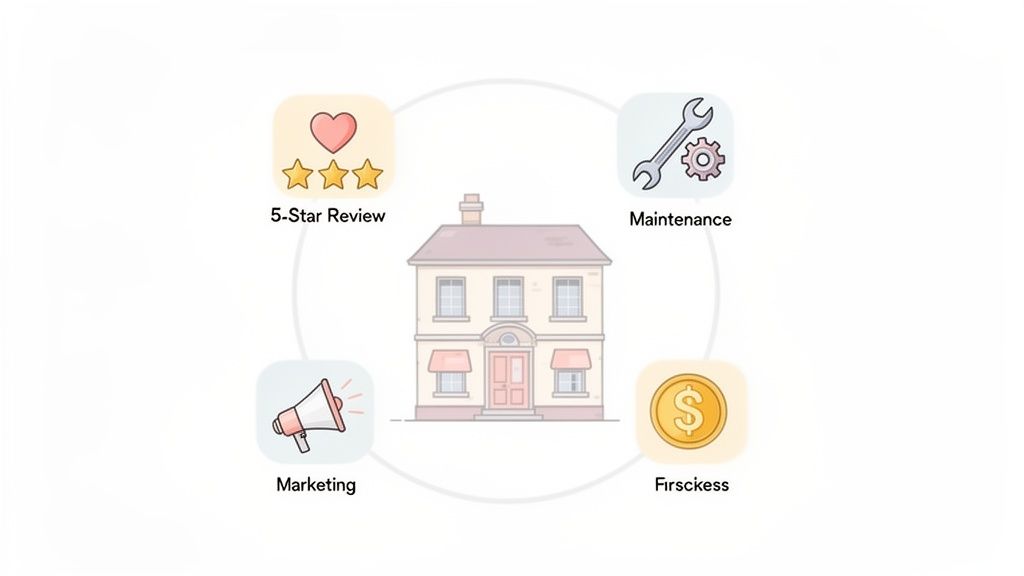
In our experience, successful management boils down to mastering four key areas. Nail these, and you’ve built the foundation for rave reviews and a full booking calendar. We’ve found that framing our work around these pillars helps organize the chaos and ensures no critical detail gets dropped. It's the same system we use for our own properties and those we manage for others.
At its core, great property management is about creating a reliable, professional, and welcoming experience for every guest, every time. It’s the difference between a property that simply exists and one that truly performs.
These core responsibilities are the heartbeat of your rental business. If you let one slip—say, guest communication—you risk a bad review. If you neglect pricing, you leave money on the table.
We've found it helpful to break down the job into four essential functions. Here’s a quick look at what each one covers.
Pillar | Key Responsibilities |
|---|---|
Guest Experience | Handling inquiries, sending check-in details, being available during the stay, and requesting reviews. |
Property Operations | Scheduling cleaners, restocking supplies, performing routine maintenance, and fixing anything that breaks. |
Marketing & Revenue | Crafting a compelling listing on sites like Airbnb and Vrbo, and using smart pricing to maximize bookings. |
Financial Administration | Tracking all income and expenses, handling taxes, and generating clear owner statements. |
This table gives you a bird's-eye view of what it takes to run a tight ship. Each pillar supports the others, creating a seamless operation that leads to happy guests and a profitable business.
Understanding this full scope is your first step. Whether you're just starting out or looking to improve your existing operation, you can learn more by checking out our guide on managing short-term rentals.
The Core Services a Property Manager Handles
So, what does a short-term property management company actually do all day? It's way more than just handing off keys and fielding the occasional late-night call. Think of it as running three distinct, yet totally interconnected, mini-businesses under one roof.
When we started managing our first properties in the Riviera Maya, we quickly learned the job could be split into three core domains: Guest Management, Operations, and Revenue Management. Getting your head around this breakdown is the key to seeing the real value a manager provides—or figuring out how you can successfully tackle the job yourself.
Guest Management: The Hospitality Hub
This is the front-facing, people-centric part of the job. It kicks off the second a potential guest sends an inquiry and doesn't wrap up until after they've left a glowing review. This entire domain is about communication and creating a five-star experience from start to finish.
A manager's responsibilities here usually include:
Responding to Inquiries: Answering questions promptly and professionally across multiple booking platforms.
Screening Guests: Vetting potential renters to make sure they're a good fit for your property.
Managing Bookings: Handling reservations, sending confirmations, and processing payments.
24/7 Guest Support: Being the on-call contact for any issues during a guest's stay, from a tricky lockbox to a Wi-Fi outage.
Review Management: Following up after checkout to encourage positive reviews and professionally addressing any negative feedback.
Great guest service isn't just about solving problems; it's about anticipating needs and making guests feel genuinely cared for. This is where the magic of a memorable stay happens.
Operations: The Logistical Engine
If guest management is the "front of house," operations is the critical "back of house." This is the engine that keeps the property running smoothly, making sure it's always clean, safe, and perfectly stocked for the next arrival. The logistics can get incredibly complex, especially when you're juggling multiple properties.
This is where we developed a streamlined communication system with our cleaning teams in Mexico to guarantee every turnover was flawless. A manager handles all the nitty-gritty details, so you don’t have to.
Key operational tasks involve:
Cleaning Coordination: Scheduling professional cleaners between every single stay and ensuring quality control.
Maintenance and Repairs: Conducting routine inspections and quickly addressing any issues, from a leaky faucet to a broken appliance.
Supply Management: Keeping the property stocked with essentials like toiletries, coffee, and cleaning supplies.
Revenue Management: The Financial Strategy
Finally, there's the strategic side of the business. An empty calendar doesn't pay the bills, so a manager's most vital job is to maximize your income. This goes far beyond just setting a nightly rate; it's a constant process of analysis and adjustment.
This involves fine-tuning your listing to attract the right guests and using hard data to drive every pricing decision.
A property manager's revenue duties include:
Listing Optimization: Crafting compelling property descriptions, taking professional photos, and making sure your listing ranks high on platforms like Airbnb and Vrbo.
Dynamic Pricing: Using market data, seasonality, and local events to adjust prices and maximize both occupancy and revenue.
Channel Management: Syncing calendars and listings across multiple booking sites to avoid the nightmare of double bookings.
Financial Reporting: Providing you with clear, detailed monthly statements showing income, expenses, and overall performance.
Understanding these services is a crucial first step, especially when you start to think about bringing on new properties or clients. If you're looking to grow, you might find our detailed onboarding client checklist helpful for organizing the process.
Choosing Your Path: DIY vs. Hiring a Manager
Sooner or later, every host hits this fork in the road. Do you keep running the show yourself, or is it time to hand the keys to a pro? This is one of the biggest decisions you'll make for your rental business, and there's no single right answer. It boils down to a classic trade-off: your time versus your money.
The DIY (Do It Yourself) approach puts you in complete control. You call all the shots, from the brand of coffee in the kitchen to your pricing strategy. Best of all, you keep 100% of the profit. The catch? You're paying for it with your own time and energy. We've certainly learned this the hard way, trying to field urgent guest messages during what was supposed to be a relaxing family vacation.
On the flip side, hiring a professional short-term property manager buys you back your freedom. A seasoned manager comes with market knowledge, proven systems, and a team ready to tackle the 24/7 grind of hosting. The price of that freedom, of course, is a slice of your revenue. Your choice will ultimately hinge on your personal goals, how close you live to your property, and just how deep in the weeds you really want to be.
The DIY Host Path
Going the self-management route is incredibly empowering and rewarding. It's a fantastic fit for hosts who live near their properties and genuinely enjoy the hospitality side of the business. You get to personally craft every aspect of the guest experience and build a brand that's entirely your own.
Just remember, being a DIY host means you're not just the owner—you're the CEO, customer service rep, maintenance coordinator, and marketing director all rolled into one. It demands a serious time commitment and a readiness to be on call. Before you dive in, ask yourself honestly:
Can I realistically respond to guest inquiries within an hour?
Am I comfortable finding and coordinating cleaners and handymen?
Do I have the skills to market my property and adjust pricing to stay competitive?
Am I prepared to handle a leaky faucet or a Wi-Fi outage at 10 PM on a Saturday?
This hands-on style is perfect if you want to learn the business inside and out and squeeze every last dollar of profit from your investment.
Hiring A Professional Manager
Bringing in a professional manager is a smart move for hosts who are remote, juggling multiple properties, or simply see their rental as a more passive investment. A good manager lifts the entire operational weight from your shoulders, freeing you up to focus on literally anything else.
The market is also getting fiercer, which makes professional oversight even more valuable. In early 2024, data from AirDNA showed that available listings on Airbnb and Vrbo had grown by 14% in the U.S. and 20% in Europe year-over-year. With that level of competition, expert management can be the very thing that makes you stand out.
A great property manager doesn't just check off tasks on a list. They act as a strategic partner, working to protect your asset and maximize its financial performance.
The main drawback is, of course, the cost. Full-service management fees typically run anywhere from 15% to 30% of your gross booking revenue. It's a significant chunk of change, but for many hosts, the optimized returns and sheer peace of mind are well worth it. This guide comparing different property management styles for short-term rentals offers some great perspective. At the end of the day, the core calculation is weighing that fee against the value of your own time.
DIY Management vs Hiring a Professional: A Head-to-Head Comparison
To help you weigh the pros and cons more clearly, we’ve put together a direct comparison. Think of this table as a tool to help you align your personal goals, resources, and desired level of involvement with the right management style.
Factor | DIY Management | Hiring a Manager |
|---|---|---|
Control | Total Control. You make every decision, from decor to guest rules. | Delegated Control. You set the overall strategy, but the manager handles day-to-day decisions. |
Profit Margin | 100% of Net Revenue. You keep everything after expenses. | 70%-85% of Net Revenue. You pay a management fee, typically 15-30% of gross bookings. |
Time Commitment | High. You are on call 24/7 for guest needs, cleaning, and maintenance. | Low. The manager handles all operations, freeing up your time completely. |
Expertise | Self-Taught. You learn as you go, which can involve a steep learning curve. | Professional Expertise. Access to market data, pricing strategies, and established vendor networks. |
Guest Communication | Direct & Personal. You handle all inquiries, reviews, and issues yourself. | Managed & Systematized. A professional team handles all communication, often using automated systems. |
Stress Level | Can be high. Juggling guest issues, emergencies, and scheduling can be stressful. | Minimal. The manager is the first point of contact for all problems, giving you peace of mind. |
Best For | Hosts who live nearby, enjoy the hands-on work, and want to maximize profit. | Remote owners, investors with multiple properties, or those seeking a passive income stream. |
Ultimately, there is no universally "better" option—only the one that’s better for you. Reflect on your lifestyle, financial goals, and how much of your personal bandwidth you're willing to dedicate to your rental. This decision will shape your entire hosting journey.
How to Find and Vet the Right Property Manager
Deciding to hand over the keys to a property manager is a huge step. But finding the right partner? That’s everything. You’re not just hiring a service; you’re entrusting someone with a massive asset. The goal is to find a manager who will treat your property with the same care you would.
The search can feel like a mountain to climb, but it usually starts closer than you think. Tapping into your local network is almost always a reliable way to find people who know what they’re doing.
Local Host Communities: Jump into local Airbnb or VRBO host groups on Facebook or other platforms. These are goldmines for honest recommendations from peers who have been in your shoes.
Industry Referrals: If you know any real estate agents or other investors in your market, ask who they trust. They’re usually well-connected and have a shortlist of proven managers.
Online Search: A quick search for "short term property management near me" will give you a list, but this path requires more digging. Look for companies with a professional website and a portfolio of properties that look and feel like yours.
The Vetting Process: A Checklist of Key Questions
Once you’ve got a shortlist, it’s time for interviews. This is your chance to dig in and make sure their management style truly lines up with your goals. Don't be afraid to ask detailed questions—a great manager will have no problem sharing their expertise.
We've learned over the years that getting total clarity upfront saves you from massive headaches later. Always show up prepared with a list of questions that get to the heart of their business.
Here are the essential questions we ask based on what has worked for us:
Experience & Portfolio: How many properties are you currently managing? Can you show me some examples of properties similar to mine in size, location, and guest type?
Fee Structure: Can you give me a complete breakdown of your management fees? What’s included, and are there any extra charges for things like marketing or coordinating maintenance?
Technology Stack: What software do you use for managing bookings, pricing, and guest communication? Is there an owner portal where I can see performance data?
Marketing Strategy: How are you going to market my property? Which booking sites do you use, and do you have a plan for getting direct bookings?
Maintenance & Repairs: What’s your process for handling maintenance issues? Do you have an in-house team or a network of trusted vendors? What’s the spending limit before you need my approval for a repair?
A Hard-Won Lesson: Early in our hosting journey, we hired a manager without explicitly defining a maintenance spending limit in our contract. A minor plumbing issue turned into a surprisingly large bill because they approved a costly repair without checking with us first. Now, we always get a specific dollar amount in writing.
That last point is non-negotiable in our book. Getting a maintenance spending cap nailed down in your contract is critical. It protects you from surprise expenses and keeps you in the driver’s seat for any major financial decisions about your property.
Reading the Fine Print: What to Look for in the Contract
After the interviews, you should have a clear frontrunner. Before you sign anything, it's time to carefully review the property management agreement. This legal document lays out all the responsibilities and expectations for both you and your manager.
Look for specific clauses covering:
Services Provided: A detailed list of every single responsibility, from screening guests to sending you financial reports.
Fee Details: Exactly how and when management fees are calculated and paid out.
Owner Responsibilities: Your obligations, like maintaining property insurance and funding a reserve account for repairs.
Termination Clause: The conditions for ending the contract, including notice periods and any potential fees for breaking it early.
Taking the time to find and thoroughly vet a manager is one of the best investments you can make in your property's success. A solid partnership won’t just maximize your revenue—it will buy you priceless peace of mind.
The Role of Technology in Modern Management
Let’s be honest: technology has become the ultimate co-host for any modern short-term rental. Whether you're a hands-on host or a professional manager juggling dozens of properties, the right digital tools aren't just a nice-to-have anymore. They're the engine that keeps the entire operation smooth, scalable, and profitable.
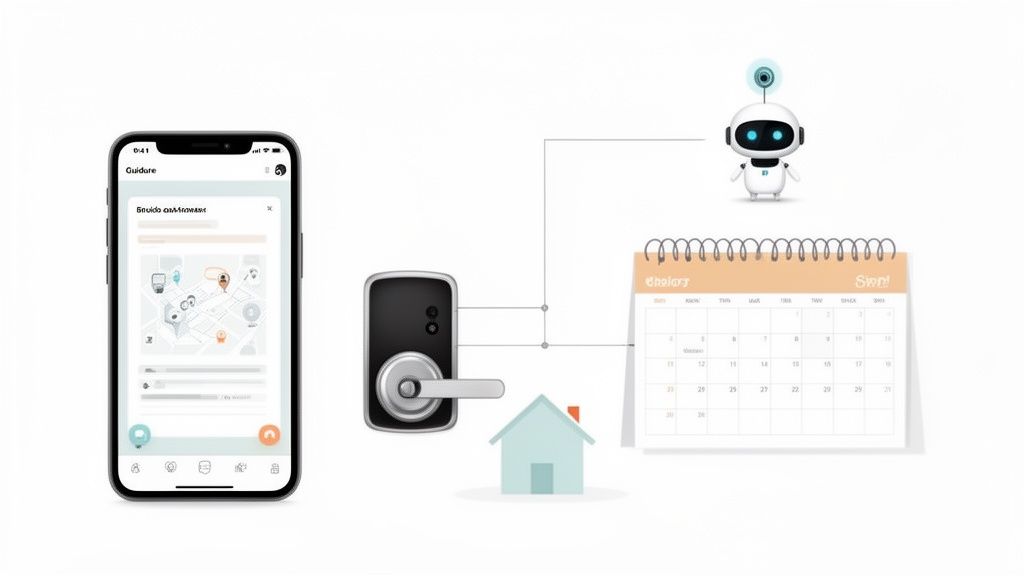
Smart tools are all about automating the repetitive, time-sucking tasks that used to eat up our days. Think about property management systems (PMS) that centralize all your bookings, or dynamic pricing software that adjusts your rates based on real-time market demand. Even something as simple as a smart lock can make a huge difference by completely eliminating the headache of key handoffs forever.
From Manual Work to Automated Workflows
The biggest shift we've seen is the move from manual checklists to automated workflows. Instead of texting your cleaner after every single checkout, the software can trigger an alert the moment a guest departs. Rather than answering the same questions over and over, you can give guests a single, comprehensive resource that has all the answers they need.
To get these workflows humming, many managers rely on specialized software. You can explore a list of the best property management apps to find tools that fit your specific needs, whether you manage one property or one hundred.
The right tech stack doesn't just save you time—it elevates the guest experience, which leads directly to better reviews and more bookings. It’s all about working smarter, not harder.
We experienced this firsthand with one of our properties in Playa del Carmen. We were constantly getting late-night texts about the Wi-Fi password or how to work the smart TV. By setting up an AI-powered digital guidebook, we essentially created a digital front desk. Those repetitive questions dropped to nearly zero overnight, freeing us up while empowering guests to find answers on their own schedule.
Meeting Modern Guest Expectations
Today's travelers have high expectations. They want the unique charm of a rental combined with the seamless convenience they'd get at a hotel. As the market continues to grow, hosts who use tools like AI assistants and customizable digital guidebooks are in a much better position to meet this demand. Based on our experience, hosts can slash guest inquiry time by up to 80% with these tools.
Here are a few key areas where technology is making the biggest impact:
Guest Communication: AI-powered tools and digital guidebooks provide instant answers 24/7, so you don't have to be on call.
Access and Security: Smart locks and noise monitors provide security and peace of mind for both you and your guests.
Operational Efficiency: Automated messaging and cleaning schedules ensure flawless turnovers, every single time.
Revenue Optimization: Dynamic pricing tools analyze market data to make sure you’re not leaving money on the table.
Adopting the right technology is fundamental to staying competitive and delivering the five-star service that keeps guests coming back. You can learn more about which tools are shaping the industry in our article covering the latest property management technology trends.
Wrapping It All Up: What's the Right Call for You?
We've walked through the A-to-Z of short-term property management. If there’s one thing to take away, it's that there is no single, one-size-fits-all answer. The "perfect" strategy is the one that actually fits you—your personal goals, your property’s quirks, and maybe most importantly, how you want to spend your time.
The right path isn’t about copying what the host down the street is doing. It's about making a deliberate choice that works for your life. Are you someone who genuinely enjoys the hands-on hospitality and wants to squeeze every last dollar of profit out of your listing? Or do you see this property as more of a hands-off investment, where your time and peace of mind are the real prize?
A Few Final Thoughts for Your Hosting Journey
Whether you decide to jump in as a DIY host armed with some slick automation tools or you'd rather hand the keys to a pro, getting clear on your "why" is your single biggest advantage. This decision will color your entire experience as a host.
Before you make the final call, really sit with these questions:
What’s my main goal here? Am I chasing maximum income, building a passive investment, or is this more of a passion project?
How much time can I actually give this? Be brutally honest with yourself about your real-world availability for late-night messages and operational headaches.
What’s my stress tolerance? Are you ready to field a call about a broken water heater at 11 PM on a Saturday?
Where do I naturally shine? Are you a people person who excels at guest communication, a marketing whiz, or someone who loves the nitty-gritty of scheduling and maintenance?
At the end of the day, success comes from building a system you can actually sustain for the long haul. Whether that system is just you and a handful of smart tools or a trusted management partner, the mission is the same: create a smooth, professional operation that doesn't burn you out.
Here at SmoothStay, our philosophy is simple—the best tools are built by hosts, for hosts. We created our platform from our own experiences on the ground, managing properties and hitting the same roadblocks you have. We know firsthand that the right technology can be a total game-changer. Our customizable, AI-powered guidebooks, for instance, were designed to give you your time back and help you create those unforgettable stays, no matter which management path you take.
Whatever you decide, the core goal never changes: providing outstanding hospitality that makes guests want to come back. We hope this guide has given you the confidence to build a management plan that not only works for your property but, more importantly, works for you.
Your Top Property Management Questions, Answered
Alright, let's dive into some of the questions we hear all the time from fellow hosts. After years of managing our own places and helping others navigate the tricky parts, we've boiled down the essentials to give you clear, straightforward answers.
What’s the Going Rate for a Short-Term Property Manager?
This is the big one, and the honest answer is: it really depends. Generally, you can expect a full-service manager to charge anywhere from 15% to 30% of your gross booking revenue. It's a wide range because the level of service can vary from one company to the next.
For that fee, a manager might handle absolutely everything—from 2 AM guest calls to coordinating cleaners and fixing a leaky faucet. But it's critical to get a crystal-clear breakdown of what that percentage actually covers. Some companies tack on extra charges for things like coordinating major repairs or running specific marketing campaigns, so always ask for a full list of what's included versus what's extra before you sign anything. You might also come across flat-fee or hybrid models, which can be a good fit depending on your property's booking patterns.
Do I Need My Own Insurance If I Hire a Manager?
Yes, you absolutely do. This trips up a lot of new hosts, but it’s a non-negotiable for protecting your investment. While your property manager will have their own business liability insurance, that policy is designed to protect their business, not you as the property owner.
You will still need your own dedicated short-term rental insurance policy. This specific type of insurance is built to cover the unique risks that come with hosting, protecting your property, everything inside it, and your personal liability. Standard homeowner's insurance almost never covers commercial activities like renting out your home. We always tell hosts to talk to an insurance agent who specializes in vacation rentals to make sure you’ve got the right coverage locked in.
Don't ever assume your manager's insurance or your homeowner's policy has your back. A dedicated short-term rental policy is the only way to get real peace of mind and financial security.
How Do I Know If My Property Manager Is Doing a Good Job?
Transparency is the hallmark of a great management partner. You should never be left guessing how your property is performing. The best managers deliver clear, consistent, and easy-to-digest data.
At a bare minimum, here’s what you should expect to see:
Regular Owner Statements: These should land in your inbox every month, detailing all revenue, your occupancy rates, and the average daily rate (ADR).
Detailed Expense Reports: Every single cost, from cleaning fees to minor repairs, should be clearly itemized. No mystery charges.
Full Calendar and Review Access: You should be able to log in and see your live booking calendar and read guest reviews as they come in.
This level of reporting isn't just about keeping them accountable; it’s about fostering a true partnership. When the data is open and honest, you and your manager can have productive conversations about strategy and make sure you're both pulling in the same direction.
Can Technology Completely Replace a Property Manager?
That's a fantastic question, and our honest take is no—but for the right kind of host, it gets you incredibly close. Technology can't physically unclog a toilet at midnight or deep-clean a kitchen after a big holiday weekend. There will always be a need for that hands-on, in-person work.
However, technology can automate a massive chunk of the management workload, especially the most time-sucking parts like routine guest communication. For hosts who live near their property and already have a reliable team for cleaning and maintenance, the right tools can make self-management not just doable, but incredibly efficient and profitable. An AI-powered digital guidebook, for instance, can field nearly all of those repetitive guest questions, freeing you from being on call 24/7.
At SmoothStay, we build tools designed by hosts, for hosts. Our customizable, professional guidebooks and AI-powered features help you automate communication and create exceptional guest experiences, whether you self-manage or work with a pro. See how SmoothStay can give you your time back.