10 Key Property Management Technology Trends To Watch
Discover the top 10 property management technology trends changing the STR game. Learn about AI, smart locks, and guidebooks to boost your hosting success.
Disclosure: Some links in this article are affiliate links. If you make a purchase, we may earn a commission at no extra cost to you. This helps support our content.
Running a vacation rental has always been about balancing a personal touch with efficiency. From our own start over a decade ago with a single house in Washington, DC, to now managing properties in the Riviera Maya, we've seen technology evolve from a nice-to-have to a core part of the business. It’s not about chasing every new gadget; it’s about finding tools that solve real challenges, save you time, and create better stays for your guests.
We’ve learned firsthand that the right tech can feel just as personal and welcoming as a handwritten note, but at a scale we couldn't manage otherwise. This year, certain property management technology trends are truly making a difference. These aren’t just futuristic concepts; they are practical tools being used right now to gain a competitive edge.
Based on what’s worked for us and what we see shaping the industry, this article dives into the essential trends that matter. We'll explore everything from AI-powered communication and dynamic pricing to smart home integrations and digital guidebooks. Our goal is to give you a clear, actionable roadmap, showing you not just what these technologies are, but how you can use them to streamline your operations and elevate your guest experience. Let's get started.
1. AI-Powered Property Management Platforms
Artificial intelligence has moved from a futuristic idea to a practical tool that’s reshaping property management. AI-powered platforms are helping us automate routine tasks and provide insights that were once out of reach for most hosts. This isn't about replacing the human touch; it's about freeing you up to deliver a better guest experience and run a more efficient business.
These platforms analyze data on booking patterns, guest communications, and market demand to optimize everything from pricing to guest support. For example, an AI chatbot can handle most repetitive guest inquiries 24/7, letting you focus on more complex issues. We've seen this firsthand with our properties; automating answers to common questions like "What's the Wi-Fi password?" or "What are the check-out instructions?" saves us hours each week.
How to Implement AI in Your Operations
Getting started with AI doesn't have to be complicated. Our advice is to begin with small, high-impact tasks and expand from there.
Start with a Smart Chatbot: Begin by automating your most common guest questions. Platforms like SmoothStay use AI to provide instant, accurate answers drawn directly from your digital guidebook, ensuring guests get consistent information.
Leverage AI-Driven Pricing: Use dynamic pricing tools that analyze market data, local events, and historical trends to suggest optimal nightly rates. This helps maximize revenue without constant manual adjustments.
Monitor and Refine: Regularly review AI interactions to see where the system excels and where it struggles. Use these insights to refine its knowledge base and improve accuracy. Always maintain a clear path for guests to reach a human for escalated issues.
The future of short-term rentals is being shaped by artificial intelligence. To understand the full potential, it's helpful to see how ChatGPT and integrations are revolutionizing short-term rentals and transforming host operations. This evolution is a core component of modern property management technology trends.
2. Smart Lock Technology & Keyless Entry Systems
The days of coordinating key handoffs and worrying about lost keys are quickly becoming a thing of the past. Smart locks and keyless entry systems have been a game-changer for the check-in process, offering a secure and seamless way to grant guests access. These devices allow you to provide temporary, unique access codes via a digital keypad or a guest's smartphone, removing a major operational headache.
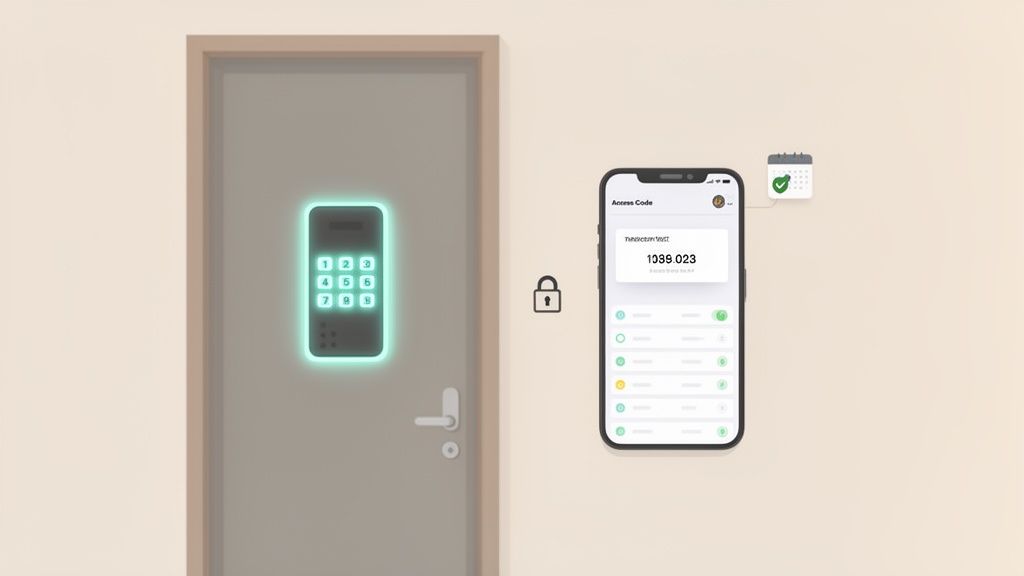
These systems integrate directly with property management software to automatically generate a unique access code for each reservation. The code becomes active at check-in and expires at check-out, which really enhances security. For our properties, this integration means we never have to worry about a previous guest retaining access, and new guests feel secure knowing their code is exclusive to their stay. It’s a crucial element among modern property management technology trends because it directly improves both security and guest convenience.
How to Implement Smart Locks in Your Operations
Integrating smart locks is a high-impact upgrade that modernizes your property and streamlines guest arrivals. The process is pretty straightforward.
Choose and Install a Reliable Smart Lock: Select a durable, well-reviewed smart lock like those from August, Yale, or Lockly. Ensure it integrates with your property management system to enable automatic code generation.
Automate Access and Communication: Configure the integration to send the guest their unique access code automatically a day or two before arrival. We include these instructions directly in our SmoothStay digital guidebook, complete with a short video tutorial.
Provide Clear Instructions and a Backup Plan: Add a dedicated section in your guidebook explaining how to use the lock. We always have a mechanical key backup in a nearby lockbox for emergencies and share that code separately if a guest reports an issue.
3. Dynamic Pricing & Revenue Management Algorithms
Leaving your nightly rates static is like leaving money on the table. Dynamic pricing has evolved from a tool for airlines and hotels into an essential component of modern property management technology trends. These algorithms automatically adjust your rates based on real-time market data, including competitor pricing, local events, and seasonal demand. The goal is to find the perfect price that maximizes both occupancy and revenue.
These tools eliminate the guesswork and constant manual adjustments. Instead of setting a rate and hoping for the best, these platforms analyze hundreds of data points to predict demand and set the optimal price for every single night. For our beach properties, using a dynamic pricing tool meant we could capitalize on a local festival we otherwise would have missed, increasing our revenue for that weekend by over 40% without lifting a finger.
How to Implement Dynamic Pricing in Your Operations
Integrating an algorithm-based pricing strategy is straightforward and can yield immediate results. From our experience, the key is to provide the system with the right boundaries and then trust the data.
Set Your Boundaries: Start by defining your minimum and maximum nightly rates. This ensures the algorithm never prices your property below what you're comfortable with or so high that it deters potential guests.
Integrate and Sync Calendars: Connect your chosen pricing tool (like PriceLabs or Wheelhouse) to your PMS or directly to your OTA calendars. This allows for seamless, automatic rate updates across all your channels.
Monitor and Make Small Adjustments: While the algorithms are powerful, they aren’t perfect. We recommend reviewing the suggested rates weekly, especially for key dates. Compare them against your top competitors to ensure you remain aligned with the market, and adjust your base rate as needed.
4. Mobile-First Digital Guidebooks & Intelligent Content Management
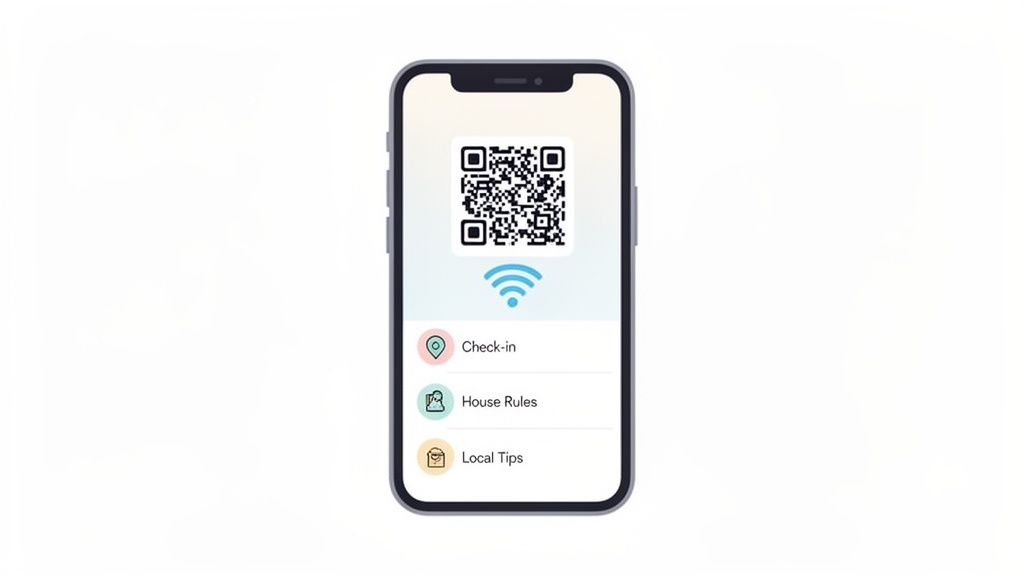
The days of leaving a dusty three-ring binder on the coffee table are over. Mobile-first digital guidebooks have emerged as a cornerstone of modern guest communication, replacing paper manuals and endless email chains with a single, accessible link. This technology provides guests with instant access to property details, local recommendations, and house rules directly on their smartphones, which significantly improves their arrival experience.
This trend is about more than just convenience; it's about delivering helpful, dynamic content. Unlike a static PDF, these platforms can be updated in real-time. In our own properties, we've found that guests are far more likely to engage with a well-designed digital guide than a printed book. This has led to fewer calls about how to use the smart TV or where to find extra towels. This is a key property management technology trend that directly impacts guest satisfaction.
How to Implement Digital Guidebooks in Your Operations
Creating a digital guidebook is a straightforward process that yields immediate benefits. The goal is to create a resource so helpful that it becomes the guest's first point of reference.
Choose a Mobile-First Platform: Select a tool like SmoothStay that is designed for mobile viewing. Make sure it's easy to access via a link or QR code, removing any friction for the guest.
Structure Content Logically: Organize your guide with clear, concise sections. Start with critical information like check-in instructions, Wi-Fi details, and emergency contacts.
Incorporate Visuals and Videos: Use photos to illustrate instructions (e.g., how to use the keyless entry) and short videos for complex tasks, like operating the hot tub or a tricky appliance.
Curate Local Recommendations: Go beyond generic tourist spots. Recommend your favorite local coffee shop, the best family-friendly restaurant, or a hidden hiking trail. This personal touch adds immense value.
Digital guidebooks empower guests with self-service information while saving you valuable time. To learn more about this approach, discover the key benefits of using an electronic guidebook for your vacation rental and how it can elevate your hosting.
5. Guest Communication Automation & Unified Messaging Platforms
Constant communication is the backbone of a five-star guest experience, but it can also be the biggest time drain for hosts. Unified messaging platforms centralize guest conversations from multiple channels like Airbnb, Vrbo, and email into a single inbox. This consolidation, combined with smart automation, is a game-changer for staying responsive without being glued to your phone.
These systems use predefined rules and templates to automate routine messages, from booking confirmations to check-out reminders. Imagine a guest books your property; the platform can instantly send a personalized welcome message with a link to your digital guidebook. This not only ensures timely communication but also sets a professional tone. We’ve found that a well-timed automated message can prevent dozens of future questions, significantly reducing our workload while making guests feel cared for.
How to Implement Communication Automation in Your Operations
Implementing a unified messaging system is about creating efficiency and consistency. The goal is to automate the predictable while leaving you more time for meaningful interactions.
Centralize Your Inbox: Start by connecting all your booking channels to a single platform like Hostaway, Guesty, or Hospitable. This gives you a complete overview of all guest conversations in one place.
Create Essential Templates: Develop message templates for key touchpoints: booking confirmation, pre-arrival instructions, a mid-stay check-in, and departure details. Ensure these messages link to your digital guidebook to proactively answer common questions.
Set Up Smart Triggers: Configure automated messages to send based on specific triggers, such as a new booking, 24 hours before check-in, or the morning of check-out. For initial inquiries, an AI-powered tool can provide instant answers, escalating to you only when necessary.
Refine and Personalize: Regularly review your automated message performance. Use guest feedback to refine your templates, and use custom fields (like
[guest_first_name]) to make automated messages feel personal.
6. Property Analytics & Guest Behavior Insights
Data is a powerful tool that every host can leverage to make smarter decisions. Advanced analytics platforms move beyond basic occupancy rates, offering deep insights into guest behavior, booking patterns, and operational efficiency. These tools transform raw data into actionable intelligence, revealing what truly drives bookings, positive reviews, and profitability.
By tracking how guests interact with your listings and guidebooks, you can pinpoint what information they need most and where your processes can be improved. For example, by analyzing our own guest data, we noticed a high number of views on the "Appliance Instructions" section of our digital guidebook. This told us our high-end coffee maker was a point of confusion, so we added a short video tutorial, which immediately reduced guest questions. This is a prime example of how property management technology trends are enabling more proactive hosting.
How to Implement Analytics in Your Operations
Integrating analytics is about asking the right questions and using data to find the answers. Here’s what has worked for us.
Track Guest Engagement: Use tools that show how guests interact with your digital resources. Platforms like SmoothStay provide engagement metrics that reveal which sections of your guidebook are most viewed. A spike in views on your "Wi-Fi" section might mean the information is hard to find.
Analyze Review Feedback Systematically: Instead of just reading reviews, categorize feedback to identify recurring themes. Are guests consistently praising your clean property but mentioning confusing check-in instructions? This data points to a clear area for improvement.
Connect Operations to Outcomes: Compare occupancy and revenue data before and after implementing a new tool, like a digital guidebook. This helps you quantify the ROI and understand what’s truly moving the needle for your business.
By regularly monitoring these insights, you can shift from reactive problem-solving to proactive, data-driven management.
7. Automated Cleaning & Turnover Management Systems
The time between guest check-out and the next check-in is one of the most critical and stressful periods for any host. Automated cleaning and turnover management systems are a game-changer, transforming this chaotic rush into a streamlined process. These platforms sync with your booking calendars to automatically schedule cleaners, track progress, and ensure every property is perfectly prepared for the next arrival.
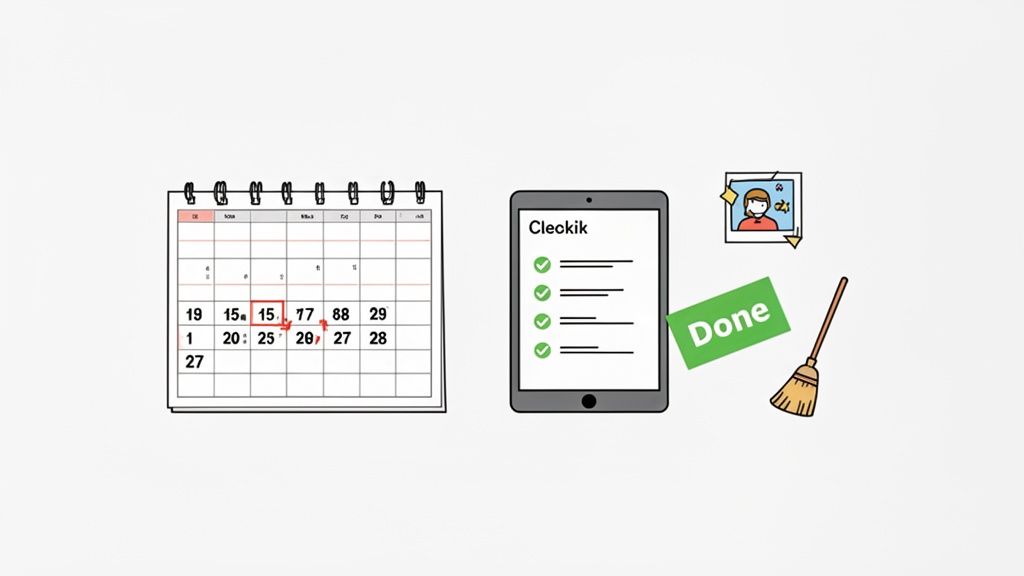
This technology moves beyond simple scheduling. It serves as a central hub for communication and quality control. Cleaners receive instant notifications, detailed checklists with photos, and specific instructions for each property. In our own operations, this has eliminated last-minute phone calls and misunderstandings, ensuring our standards are met consistently across all our rentals, from our DC home to our properties in the Riviera Maya.
How to Implement Automated Turnovers in Your Operations
Integrating an automated turnover system helps guarantee five-star cleanliness and operational efficiency. Here’s a practical approach.
Create Detailed Digital Checklists: Use a platform like Properly or Guesty's housekeeping module to build visual, task-by-task checklists for your cleaners. Include photo references for staging details, like how to arrange pillows or where to leave the welcome gift.
Automate Scheduling and Access: Connect your turnover software to your booking calendar and smart locks. The system should automatically schedule a cleaning job after every check-out and grant the assigned cleaner temporary access for the scheduled window.
Establish a Damage Reporting Protocol: Train your team to use the app to photograph and report any damage or missing items immediately. This creates a time-stamped record that is invaluable for security deposit claims.
Automating your turnover process is a key property management technology trend that provides the structure needed to deliver a consistently high-quality guest experience.
8. Integration Ecosystems & Property Management Platforms
The days of juggling multiple disconnected spreadsheets and apps are over. Modern property management has moved toward powerful, all-in-one platforms that act as the central hub for your entire operation. These integration ecosystems connect everything from booking calendars and guest communications to cleaning schedules and accounting, creating a single source of truth that eliminates tedious manual work. This shift is a cornerstone of current property management technology trends.
These platforms, often called Property Management Systems (PMS), use integrations to sync data automatically across all the tools you rely on. When a booking comes in through one channel, it instantly blocks the calendar on all others and triggers a notification to your cleaning team. For our own properties, using a PMS like Hostaway has been a game-changer, allowing us to manage listings across multiple platforms without the fear of double bookings.
How to Implement an Integration Ecosystem in Your Operations
Adopting a PMS is a big step, but a strategic approach makes the transition smooth. The goal is to build a tech stack where every component communicates seamlessly.
Map Your Current Workflow: Before choosing a platform, document every step of your process. Identify which tasks are manual and could be automated, helping you prioritize must-have integrations.
Start with Core Connections: Begin by integrating your most critical tools: channel managers (like Airbnb and Vrbo), direct booking calendars, and your primary guest messaging system. Ensure your digital guidebook platform, like SmoothStay, can also be connected.
Test and Refine: Once your core systems are connected, run several test bookings to ensure data flows correctly. Check that calendar updates are instant and messages are triggered appropriately before going fully live.
Choosing the right PMS is crucial for scaling your business efficiently. To dive deeper, you can explore a detailed comparison of the best vacation rental management software to find a platform that can unify your operations.
9. QR Code Technology for Contactless Guest Experiences
Quick Response (QR) codes have become an essential tool in creating seamless, contactless guest experiences. They act as a universal bridge between the physical and digital worlds, allowing guests to access information instantly with their smartphones. By scanning a simple code, guests can be directed to your digital guidebook, Wi-Fi login, or check-in instructions without downloading an app or typing a URL.
This technology is incredibly effective at reducing guest friction. Instead of a guest fumbling through emails to find the Wi-Fi password, they can simply scan a code on a welcome card. We’ve found that placing QR codes in key areas, like on the back of the front door linking to check-out instructions, streamlines the departure process and reduces last-minute questions. It’s a simple but powerful part of the modern property management technology trends that prioritizes convenience.
How to Implement QR Codes in Your Operations
Integrating QR codes is easy and delivers an immediate impact on the guest experience. The goal is to make essential information accessible exactly when and where guests need it.
Generate and Place Strategically: Use a platform like SmoothStay to automatically generate a unique QR code for each property's digital guidebook. Print these on welcome cards, laminate them for durability, and place them in high-traffic areas like the entryway or kitchen counter.
Simplify Access to Essentials: Create specific QR codes for key information. A code on the refrigerator can link to local restaurant recommendations, while one near the thermostat can link to instructions on how to use the smart home system.
Test and Provide a Fallback: Always test your QR codes with multiple devices to ensure they scan correctly. It's also a good practice to print the short URL below the code, giving guests a manual entry option just in case.
10. AI-Assisted Content Creation & Copywriting Tools
Crafting compelling property descriptions, engaging guidebook content, and thoughtful review responses is a time-consuming but crucial part of hosting. AI-assisted content and copywriting tools are emerging as a key trend, helping to automate the writing process without sacrificing quality. These platforms use language models to generate text that captures your property's unique voice and highlights its best features.
These tools can produce everything from catchy listing headlines to detailed local recommendations. For example, instead of struggling to describe your beachfront condo, an AI assistant can instantly draft three different versions, each targeting a different type of traveler. We've used this to refresh our listings for our Riviera Maya properties, generating fresh descriptions that boosted their appeal and saved us significant time.
How to Implement AI Content Tools in Your Operations
Integrating AI into your content strategy is about enhancing your creativity, not replacing it. The goal is to produce high-quality content faster.
Draft Your Guidebook with AI: Start by using an AI assistant to generate initial drafts for your digital guidebook. Platforms like SmoothStay have built-in AI copywriting features that can create sections for check-in instructions or house rules based on simple prompts.
Refine Your Listing Descriptions: Use tools like ChatGPT or Jasper.ai to create new property descriptions or A/B test different marketing angles. Provide specific details like "cozy fireplace" or "ocean-view balcony" for the most accurate results.
Review and Personalize: AI-generated content is an excellent starting point, but it always needs a human touch. Review every draft to add your personal voice and local expertise. To ensure your AI-produced content genuinely resonates, it's often necessary to give it a human touch. Learn practical strategies to effectively humanize AI-generated text and make it truly your own.
Top 10 Property Management Tech Comparison
Technology | Implementation Complexity 🔄 | Resource Requirements ⚡ | Expected Outcomes 📊 | Ideal Use Cases 💡 | Key Advantages ⭐ |
|---|---|---|---|---|---|
AI-Powered Property Management Platforms | 🔄 High — extensive training & legacy integration | ⚡ High — data, compute, vendor fees, ongoing tuning | 📊 Automates tasks, faster response, data-driven ops (⭐️⭐️⭐️⭐️) | 💡 Multi-property hosts; 24/7 guest support; scaling ops | ⭐ Scalable automation, predictive insights, instant support (⭐️⭐️⭐️⭐️) |
Smart Lock Technology & Keyless Entry Systems | 🔄 Medium — hardware install + system pairing | ⚡ Medium — hardware cost, batteries, occasional maintenance | 📊 Reduces check-in friction; audit trails; improved security (⭐️⭐️⭐️) | 💡 Self-check-in properties; remote hosts; short stays | ⭐ Convenience, security, fewer lost-key incidents (⭐️⭐️⭐️) |
Dynamic Pricing & Revenue Management Algorithms | 🔄 Medium–High — data feeds and rule tuning | ⚡ Medium — pricing subscription, accurate calendar data | 📊 Revenue uplift (≈10–30%), optimized occupancy/profit (⭐️⭐️⭐️⭐️) | 💡 Competitive markets; portfolio revenue optimization | ⭐ Real-time pricing, demand response, profit focus (⭐️⭐️⭐️⭐️) |
Mobile-First Digital Guidebooks & Intelligent Content Management | 🔄 Low–Medium — content creation & setup | ⚡ Low — platform subscription and time to create content | 📊 Cuts pre-arrival queries (~80%), boosts satisfaction (⭐️⭐️⭐️) | 💡 All hosts wanting contactless info and consistent branding | ⭐ Instant guest access, easy updates, engagement analytics (⭐️⭐️⭐️) |
Guest Communication Automation & Unified Messaging Platforms | 🔄 Medium — channel integrations & templates | ⚡ Medium — platform fees, template maintenance, training | 📊 Faster responses, fewer missed messages, consistent tone (⭐️⭐️⭐️) | 💡 Hosts with multi-channel bookings or team-based messaging | ⭐ Consolidation, automation, team collaboration (⭐️⭐️⭐️) |
Property Analytics & Guest Behavior Insights | 🔄 Medium — connect multiple data sources | ⚡ Medium — data integration, dashboards, analyst time | 📊 Actionable insights for occupancy, reviews, ROI (⭐️⭐️⭐️) | 💡 Growing portfolios seeking performance optimization | ⭐ Data-driven decisions, trend detection, benchmarking (⭐️⭐️⭐️) |
Automated Cleaning & Turnover Management Systems | 🔄 Low–Medium — SOPs and staff onboarding | ⚡ Low–Medium — platform, staff devices, process docs | 📊 Faster turnovers, consistent cleanliness, fewer conflicts (⭐️⭐️⭐️) | 💡 High-turnover listings; outsourced housekeeping teams | ⭐ Scheduling automation, accountability, photo documentation (⭐️⭐️⭐️) |
Integration Ecosystems & Property Management Platforms | 🔄 High — migration, mapping, custom integrations | ⚡ High — platform costs, implementation, vendor dependency | 📊 Unified ops, fewer errors, scalable workflows (⭐️⭐️⭐️⭐️) | 💡 Large portfolios seeking single-source operations | ⭐ Centralized data, sync across tools, scale efficiency (⭐️⭐️⭐️⭐️) |
QR Code Technology for Contactless Guest Experiences | 🔄 Very Low — generate and deploy codes | ⚡ Very Low — generator tool, print materials | 📊 Instant contactless access; measurable scans (⭐️⭐️) | 💡 Contactless check-in; guidebook & Wi‑Fi access points | ⭐ Fast, low-cost, works on any smartphone (⭐️⭐️⭐️) |
AI-Assisted Content Creation & Copywriting Tools | 🔄 Low–Medium — prompt tuning & review workflow | ⚡ Low — subscription + editing time | 📊 Saves hours, consistent tone, SEO-ready drafts (⭐️⭐️⭐️) | 💡 Hosts scaling listings or creating many guidebooks | ⭐ Rapid drafts, multilingual output, A/B content variants (⭐️⭐️⭐️) |
Your Next Step: Making Tech Work for You
We've covered a lot of ground, from AI platforms and dynamic pricing to smart locks and digital guidebooks. Each of these innovations is more than just a new piece of software; it's a strategic opportunity to reclaim your most valuable asset: time.
From our years managing properties, we've learned that the biggest barrier to adopting new tech isn't cost or complexity; it's the fear of losing the personal touch. Yet, what we’ve found is that the opposite is often true. By automating the repetitive tasks, you free yourself to focus on the human elements of hosting. No more late-night messages about the Wi-Fi password means more energy for a thoughtful welcome note.
Key Takeaways and Actionable First Steps
You don’t need to overhaul your operations overnight. The most successful adoption of these property management technology trends happens one step at a time. It's about identifying your biggest headache and finding a tool to solve it.
Overwhelmed by repetitive questions? Start with a digital guidebook or a guest communication tool. This is often the highest-impact, lowest-effort change you can make.
Struggling with check-in logistics? A smart lock is your answer. It eliminates key handoffs and enhances security.
Feel like you're leaving money on the table? Implement a dynamic pricing tool. Let algorithms optimize your rates so you can focus on the guest experience.
The central theme connecting all these trends is the move toward a more efficient, data-informed, and guest-centric way of hosting. Technology is the enabler, but your hospitality is what truly matters. The goal isn't to replace your personal touch but to amplify it, ensuring every guest feels cared for from the moment they book.
Our Experience: We didn't adopt all this technology at once. We started with what became the foundation for SmoothStay: a better way to answer guest questions. From there, we layered in a smart lock, then a pricing tool. Each step was a response to a specific operational headache, and each one gave us back time to be better hosts.
Ultimately, mastering these tools is about future-proofing your business. Traveler expectations are always evolving, and technology is setting a new standard for convenience. By thoughtfully integrating these solutions, you’re not just keeping up; you’re positioning yourself to deliver a consistently superior guest experience. Your next step isn't to do everything, but to do something. Pick your challenge, choose your tool, and start building a smarter, more sustainable, and more enjoyable hosting business today.
Ready to elevate your guest experience with one of the most impactful property management technology trends? See how SmoothStay transforms guest communication with beautiful, AI-powered digital guidebooks that guests love. Start your free trial at SmoothStay and spend less time answering questions and more time earning 5-star reviews.