How to Set Up an Airbnb: A Host's Guide to 5-Star Listings
Discover how to set up an airbnb for 5-star reviews with practical tips from Superhosts, from legal prep to listing optimization and pricing strategies.
Disclosure: Some links in this article are affiliate links. If you make a purchase, we may earn a commission at no extra cost to you. This helps support our content.
Before you even think about duvet covers or welcome baskets, the real work of setting up an Airbnb happens behind the scenes. Getting your property ready for guests is exciting, but the foundational steps you take before you list are what will make or break your success. It’s about building a solid business from the ground up, not just decorating a room.
Laying a Strong Foundation for Your Airbnb Business
Thinking about how to set up an Airbnb can feel like a mountain to climb. But here's the truth we've learned: the most critical work has nothing to do with furniture. It's the due diligence phase—less glamorous, sure, but absolutely essential for a profitable, headache-free hosting journey.
From our own experience managing everything from our 4-bedroom house in Washington, D.C. to beachfront properties in the Riviera Maya, we've learned this lesson the hard way. Skipping the foundational research is the fastest path to compliance nightmares, bad reviews, and an empty calendar.
Understand Your Local Regulations
First thing's first: get clear on the rules. Don't even start shopping for decor until you know you can legally operate. Short-term rental regulations can be a minefield, varying wildly from one town to the next, and sometimes even by neighborhood.
Start by digging into your local government's official website. You’re looking for specific ordinances related to short-term or vacation rentals. Key things to hunt for include:
Permits and Licenses: Many cities require hosts to get a business license or a special STR permit.
Occupancy Taxes: Find out if you need to collect and remit local or state lodging taxes. Airbnb sometimes handles this, but the ultimate responsibility is always yours.
Zoning Restrictions: Some residential zones flat-out prohibit commercial activities like running an Airbnb. You need to know if you're in one.
Safety Requirements: Your property will likely need to meet specific safety codes, like having smoke detectors, carbon monoxide alarms, and fire extinguishers in the right spots.
In our experience, ignoring local laws is a costly mistake that’s 100% avoidable with a bit of upfront research. This isn't just about red tape; it's about protecting your investment and building a legitimate business.
Before launching your Airbnb, it's critical to ensure all your legal, financial, and operational ducks are in a row. The following table highlights the essential areas to focus on for a smooth and compliant start.
Pre-Launch Checklist Key Setup Areas
Area | Key Action | Why It Matters |
|---|---|---|
Legal & Compliance | Research and obtain all required local permits and licenses. | Avoids fines, shutdowns, and legal trouble. Builds a legitimate business. |
Market Analysis | Analyze local competitors on Airbnb and identify a unique niche. | Helps you set competitive pricing and stand out in a crowded market. |
Financial Setup | Establish a business bank account and understand tax obligations. | Keeps finances organized for tax time and tracks profitability accurately. |
Safety & Insurance | Install safety equipment (e.g., fire extinguisher) and secure STR insurance. | Protects your guests, your property, and your financial liability. |
Property Preparation | Furnish the space and stock all essential guest amenities. | Ensures a comfortable stay, meets guest expectations, and drives 5-star reviews. |
Addressing these core pillars before you go live sets the stage for a much more successful and less stressful hosting experience.
Analyze Your Market and Find Your Niche
Okay, so you've confirmed you can legally host. Now it's time to play detective in your own market. Who are your competitors? More importantly, who are your ideal guests? In today's crowded market, just listing a spare room and hoping for the best won't cut it. You need a game plan.
Start by opening up Airbnb and searching for properties just like yours in your area. Dive deep. Look at their pricing on different nights, check their calendar availability, and scrutinize their amenities. What do their photos and descriptions have in common? The top-performing listings always leave clues. This research is your roadmap to understanding what guests expect and where you can find a unique edge.
This is all about defining what makes your place special. Instead of being just another "one-bedroom condo," you could become "the perfect pet-friendly downtown condo for remote workers." Then, you can back that up with a dedicated workspace, lightning-fast Wi-Fi, and even a welcome basket for furry friends. You can dive deeper into this process in our guide on starting an Airbnb business.
This simple infographic breaks the initial setup process into three core phases—it’s all about research and preparation before you list.
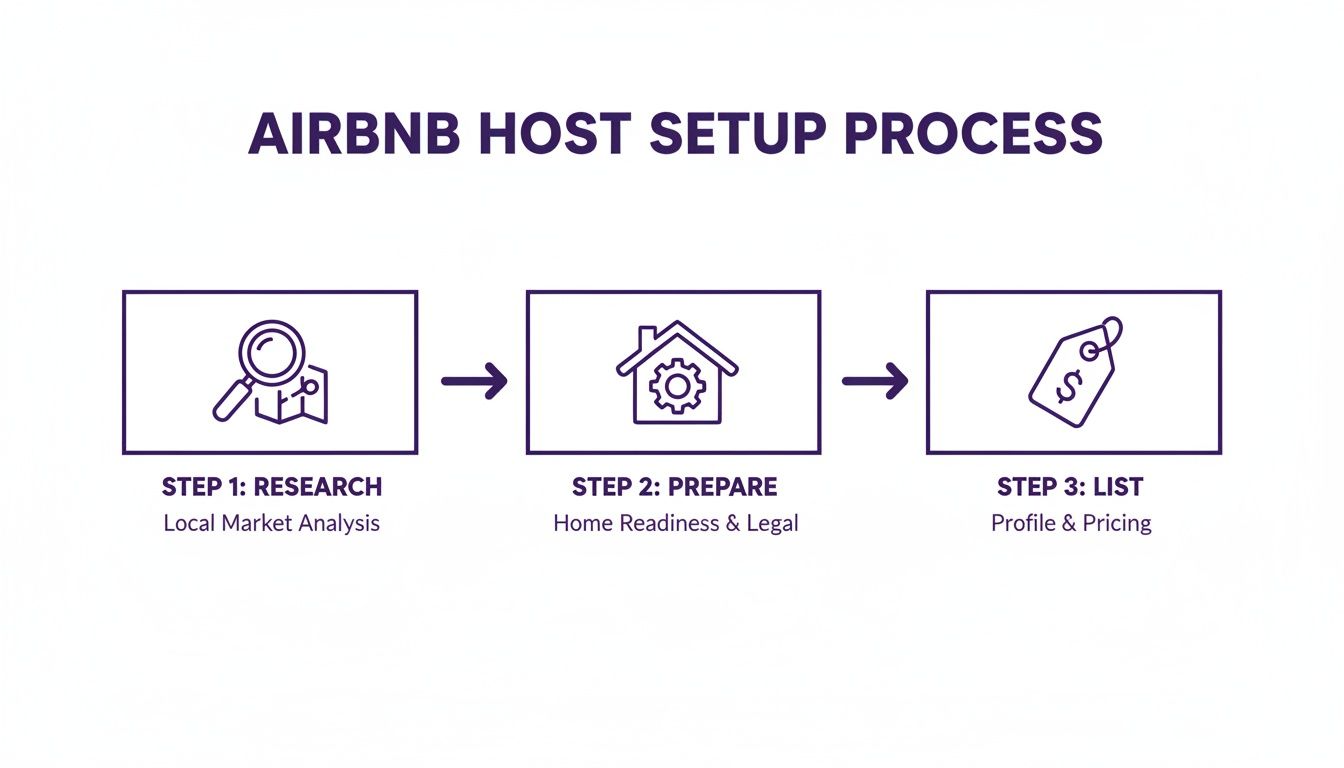
As the visual shows, listing your property is the final step, not the first. Getting this groundwork right is everything. Market trends also show that where you set up is more important than ever. An April 2024 report from AirDNA noted that while the overall number of available listings grew, demand didn't keep pace, leading to a slight drop in occupancy rates. This means standing out is crucial. By doing your homework now, you position yourself for success before ever hitting "publish."
Crafting a Listing That Turns Lookers Into Bookers
Once your place is guest-ready and you’ve sorted through the local rules, it's time to tackle your digital storefront—the Airbnb listing itself. You have to think of it this way: thousands of potential guests are endlessly scrolling, and you’ve got just a few seconds to make them stop and believe your space is the one. A great listing doesn't just list features; it sells an entire experience and builds trust long before anyone clicks "Book Now."
We've launched listings for everything from city homes to beach getaways, and our goal is always the same: create a narrative that gets guests excited and makes them feel secure in their choice. This goes way beyond just posting a few photos and a basic description.
Your Photos Are Your Most Powerful Tool
Let's be blunt: before a guest reads a single word you've written, they will judge your property entirely on your photos. In our experience, professional photography isn't a luxury; it's a non-negotiable investment. We've seen countless great properties fail because of bad photos—dark, blurry, or cluttered shots will sink your listing before it ever has a chance.
A pro photographer knows how to use natural light and clever angles to make your space feel bright, spacious, and welcoming. We always schedule our photoshoots for sunny days and stage every single room like a guest is about to walk in. That means hiding cords, fluffing pillows, and adding small touches like a bottle of wine on the counter or fresh towels in the bathroom. The idea is to help people instantly visualize themselves kicking back and relaxing in your space.
Your first five photos are the most critical. You absolutely have to lead with your best shot—usually the living room, a stunning view, or the primary bedroom. These images need to be compelling enough to make someone stop scrolling and click to see more.
Writing a Title and Description That Converts
Your listing title is your headline. It has to be catchy, descriptive, and packed with value. Don't just write a generic "2BR Condo in Downtown." Instead, tell a story. Something like, "Sunny 2BR Walk to Cafes & Shops | Fast WiFi & Patio" immediately highlights key benefits for a specific type of traveler.
When it's time to write the copy, remember that effective persuasive copywriting techniques are your best friend here. The principles are the same whether you're selling a product or an experience.
Your description needs to be easy to scan and should answer questions before they're even asked. Break it up with short paragraphs and bullet points. Here’s a structure that has consistently worked for us:
Opening Hook: Kick things off with a warm, inviting paragraph that summarizes the unique experience you offer.
The Space: Go through each room, but focus on the feeling and the benefits, not just the features. Instead of "queen bed," say "a comfortable queen bed with crisp linens for a restful night's sleep."
Amenities: Use a bulleted list to highlight your best features—fast Wi-Fi, a fully stocked kitchen, a smart TV with streaming, or a dedicated workspace.
Guest Access: Be perfectly clear about what parts of the property guests can use. No ambiguity.
The Neighborhood: Describe what makes your location special. Mention your favorite local coffee shop, the walking distance to the beach, or any nearby attractions that guests would love.
What works for us: We always write for our ideal guest. If you're targeting families, talk about the high chair, pack-n-play, and the park down the street. If you're aiming for remote workers, emphasize the dedicated desk and high-speed internet. Speaking directly to their needs makes them feel understood and confident in their choice.
Honesty and Transparency Build Trust
Finally, be honest. Is your apartment on the fourth floor with no elevator? Mention it. Is there some street noise at night? Be upfront about it. Managing expectations is the absolute key to avoiding bad reviews from guests who feel like they were misled.
And when it comes to rules, we recommend framing them positively. Instead of a harsh "No parties," try something like, "We ask that you respect our quiet hours to ensure a peaceful stay for you and our neighbors." This sets a cooperative, respectful tone from the very beginning.
For a deeper dive, check out our complete guide on how to optimize your Airbnb listing for maximum visibility and bookings. A well-crafted listing is your hardest-working employee—make sure it represents your property perfectly.
Nail Your Pricing and Availability from Day One
Getting your pricing right is one of the trickiest balancing acts in the world of Airbnb. Price too high, you’re staring at an empty calendar. Price too low, and you're leaving money on the table. It’s a constant dance.
After managing properties in wildly different markets—from our fast-paced D.C. home to breezy beach rentals in the Riviera Maya—we've learned one thing for sure: a "set it and forget it" mindset just doesn't cut it. The real secret is building a dynamic pricing strategy that moves with the market, maximizing your revenue without you having to obsessively tweak rates every single day.
Set Your Baseline, Then Let the Tools Do the Work
First up, you need a base rate. Think of this as your standard price for a regular weekday. The only way to find it is to do some old-fashioned snooping. Open an incognito browser window and see what comparable properties in your area are charging. Look for listings with a similar vibe—same bedroom count, amenities, and guest ratings.
Once you’ve locked in a competitive base rate, it's time to let technology take over. Airbnb’s own Smart Pricing is a decent place to start. It automatically adjusts your nightly rate based on things like local demand and seasonality. But in our experience, we've found that third-party tools like PriceLabs or Wheelhouse give you way more control and use smarter algorithms, which translates to a serious edge.
These tools are brilliant at automatically capturing higher rates for:
Weekends and Holidays: Bumping up Friday and Saturday prices is a given, but a smart tool will also hike rates for those lucrative three-day weekends and major holidays.
Local Events: Concerts, conferences, festivals—these things create massive demand spikes. Dynamic pricing ensures you're not leaving a pile of cash on the table when a big event rolls into town.
Seasonality: Your rates in July should look very different from your rates in January. This is especially true for our beach properties, where the high season commands a serious premium.
Your Calendar Settings Are Your Best Friend
Your calendar settings are just as important as your price tag. These are the rules that protect your time, streamline your operations, and save you from the kind of bookings that lead straight to burnout. Getting this right is a huge part of setting up an Airbnb that will last.
Spend some real time thinking about these:
Minimum Night Stays: A one-night stay is almost never worth it once you factor in the cost and headache of a full turnover. We stick to a two-night minimum pretty much year-round, bumping it to three or four nights for peak weekends and holidays.
Preparation Time: Automatically blocking one night between bookings has been an absolute lifesaver for us. It gives our cleaning team a comfortable buffer, prevents those frantic same-day turnovers, and guarantees the place is perfect for the next guest.
Booking Window: You need to decide how far out you'll accept bookings. We’ve found a 3-to-6-month window is the sweet spot. It keeps you from locking in a low rate way too far in advance, before you have a real sense of future demand.
Optimizing your strategy is more important than ever. Recent data shows that U.S. occupancy rates dipped to around 50% in 2025, down from 57% the year before, because the supply of listings grew faster than the demand from guests. But don't let that scare you—there are still incredible opportunities, especially in hot markets like London, which is killing it with a 73% occupancy rate and an average daily rate of $190. You can read the full Mashvisor report on Airbnb growth for more on these trends.
Our Pro Tip: For your first three to five bookings, price yourself a little more conservatively. A brand-new listing with zero reviews is a tough sell. A slightly lower introductory rate is the fastest way to get those crucial first reviews, build some social proof, and get your momentum going.
At the end of the day, a smart pricing and availability strategy is what turns a side hustle into a sustainable business. It ensures you’re competitively priced, your calendar is filled with profitable bookings, and your workflow doesn’t drive you crazy. This is the approach that has allowed us to consistently hit our revenue goals while keeping our standards sky-high across all our properties.
Taming the Guest Communication Beast
Five-star hospitality is built on clear, timely, and personal communication. When we first started hosting, we were completely glued to our phones, tapping out the same messages over and over for every single booking. It was exhausting and, frankly, not a scalable way to run a business.
The real goal isn't just to answer questions; it's to anticipate them so well that guests rarely even need to ask. This means building a system that delivers the right information at exactly the right time, every single time—without you having to personally hit "send."
Let Automation Do the Heavy Lifting
The secret to scaling your hosting business while keeping that personal touch is automation. Airbnb has a fantastic built-in tool called Scheduled Messages, which lets you create templates that fire off automatically at key moments during a guest's stay.
Setting this up is an absolute game-changer. We've fine-tuned a core set of messages over thousands of stays that covers every essential touchpoint. This simple workflow ensures no guest ever feels left in the dark and has dramatically cut down the number of repetitive questions we get.
Here are the must-have messages we automate:
The "You're Booked!" Confirmation: Sent the instant someone books. This message thanks the guest, confirms their dates, and gives them a heads-up on when to expect more details. It immediately sets a professional and welcoming tone.
The Pre-Arrival Hype Message: Sent three days before check-in. This one is crucial. It includes the full address, crystal-clear check-in instructions, and the link to our digital guidebook. It’s everything they need for a seamless arrival.
The First Morning Check-In: Sent the morning after they arrive (around 10 AM). This is a simple, proactive "Hope you settled in well! Let us know if there's anything you need." It shows you care and helps you catch any small issues before they become real problems.
The Gentle Checkout Reminder: Sent the evening before departure (around 7 PM). This is just a friendly nudge reminding them of the checkout time and any simple departure tasks, like where to leave the keys or take out the trash.
When you're writing these templates, make sure you use Airbnb's "shortcodes" like
[guest_first_name]or[checkin_date]. These automatically pull in reservation details, making every automated message feel like you wrote it just for them.
Your 24/7 Virtual Co-Host: The Digital Guidebook
If there is one single tool that has saved us more time than any other, it's the digital guidebook. Think of it as your round-the-clock virtual assistant—a single, central hub for everything a guest could possibly need to know about your property and the neighborhood.
Instead of a massive welcome message or a printed binder that's instantly outdated, a digital guidebook organizes all that information beautifully. Guests can pull it up on their phones anytime, which means fewer late-night calls asking for the Wi-Fi password.
A solid guidebook should always include:
Arrival & Access: Step-by-step check-in instructions, complete with photos or even a short video.
House Info: Wi-Fi details, instructions for appliances (like the smart TV or that fancy coffee maker), and trash/recycling info.
Local Recommendations: This is your chance to shine. Share your personal favorite cafes, restaurants, and things to do. It’s how you share your local expertise and add incredible value.
Emergency Contacts: Local emergency numbers and the contact info for your property manager or handyman.
Our digital guidebooks, which we build with SmoothStay, have cut down repetitive questions by what feels like 80%. They let us provide a top-tier guest experience and come with professional, custom branding for each of our properties. The AI features even help us write compelling local recommendations, saving us even more time.
By combining automated messaging with a comprehensive digital guidebook, you create a communication workflow that practically runs itself. For a more detailed breakdown, you can learn more about how to automate your Airbnb messages in our guide. This system has been absolutely essential in helping us scale our business while consistently earning those five-star reviews.
Preparing Your Space for a 5-Star Guest Experience
A beautifully crafted listing gets guests in the door, but it’s the physical space that truly earns a 5-star review. Think about it: a spotless, well-stocked, and comfortable property isn't just a nice-to-have. It’s the absolute foundation of your business.
Behind every single rave review is an efficient, repeatable turnover process that guarantees every guest gets the same flawless experience. Over the years, managing our properties from D.C. to Playa del Carmen, we've fine-tuned our preparation and turnover system into a science. It's designed to be ironclad, whether we're handling the cleaning ourselves or coordinating with our trusted teams.
The Art of the Perfect Turnover
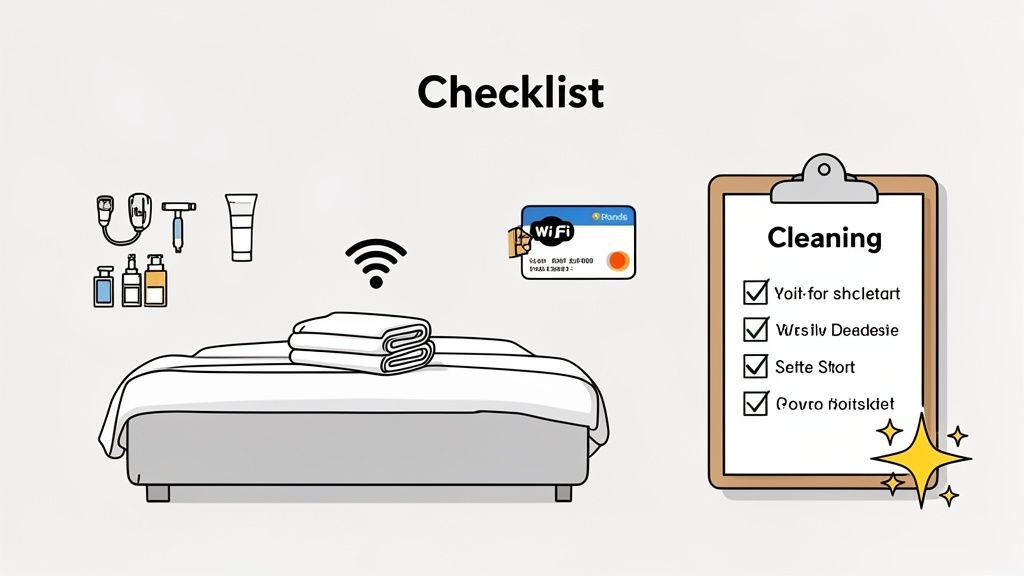
Nothing sinks a stay faster than finding remnants of a previous guest. A thorough, systematic cleaning process is your first line of defense against negative feedback. That’s why we created a detailed checklist that our cleaning teams use for every single turnover, leaving zero room for error.
This isn't just about wiping counters. It’s about checking for hair in drains, making sure there are no fingerprints on stainless steel appliances, and sanitizing every high-touch surface from light switches to TV remotes. We also have a simple rule: if it looks worn out, stained, or just plain tired, we replace it. This applies to everything from towels and linens to bathmats and kitchen sponges.
Making sure your furniture is spotless is also paramount. Mastering effective fabric sofa cleaning techniques helps maintain that pristine condition guests notice and appreciate. It’s all these little details that, together, create a powerful feeling of cleanliness and care.
To Hire or Not to Hire a Cleaner
When you're starting out, cleaning the property yourself can save money and give you total control over the quality. It’s a great way to learn the ropes. But as you scale or start managing properties remotely, finding a reliable cleaning partner becomes absolutely essential.
Here’s a quick breakdown to help you decide:
Cleaning Yourself (DIY): This works best for hosts with one local property who have the time and physical ability. It guarantees your personal standards are met every single time.
Hiring a Team: This is a non-negotiable for remote hosting, managing multiple properties, or simply freeing up your time. Look for cleaners with specific vacation rental experience—they understand the need for hotel-level standards and quick turnarounds.
To find a great cleaner, we recommend checking local host forums, asking for referrals, and—this is key—always doing a paid "test clean" before you commit. A great cleaning partner is truly worth their weight in gold.
Stocking Essentials and Standout Amenities
Knowing what to stock is a delicate balance between meeting guest expectations and managing your costs. Guests expect certain basics, but it's the thoughtful extras that elevate their stay from good to unforgettable. The real goal is to anticipate their needs before they even have them.
We’ve found it helpful to think about amenities in two buckets: the must-haves that guests absolutely expect, and the "wow" items that make your property shine. Here's a look at how we break it down.
Essential vs. Standout Amenities
Category | Essential Amenity | Standout Upgrade |
|---|---|---|
Kitchen | Basic pots, pans, salt, pepper, oil | A high-quality coffee maker with local beans, a full spice rack |
Bathroom | Toilet paper, hand soap, shampoo, body wash | A basket of travel-sized extras (toothpaste, razors), quality lotion |
Bedroom | Clean linens, extra pillows, clothes hangers | Blackout curtains, a white noise machine, multiple pillow firmness options |
Living Area | Fast Wi-Fi, comfortable seating | A cozy throw blanket, board games, a smart speaker for music |
A small investment in standout amenities can pay for itself many times over in glowing reviews and repeat bookings. Things like a welcome basket with local snacks or a premium coffee setup are consistently mentioned in our positive feedback.
Ultimately, preparing your space is about creating an environment where guests can truly relax and feel cared for. A systematic approach to cleaning, coupled with thoughtful amenities, is the most reliable path to securing those 5-star reviews and building a reputation for excellence.
Your Top Questions About Getting Started on Airbnb
Jumping into the world of hosting always kicks up a storm of questions. We’ve been there. From figuring out startup costs to worrying about guest arrivals, it’s completely normal to have a lot on your mind. Here are some straight-up answers to the questions we hear the most, based on our own experiences getting properties off the ground.
How Much Does It Really Cost to Start an Airbnb?
Honestly, there’s no magic number. It all comes down to what you’re starting with. We've seen setups range from a few thousand dollars for a space that’s nearly guest-ready to upwards of $15,000 for a property that needs a complete furniture overhaul.
Your biggest expenses will break down into a few buckets:
Furniture and Decor: This is your biggest variable. It’s tempting to use that old sofa from the basement, but investing in a stylish, durable, and cohesive look pays for itself in higher nightly rates and glowing reviews.
Essential Amenities: Think beyond the big stuff. This is all your kitchenware, linens, towels, and the small appliances that make a stay comfortable.
Professional Photos: Budget $200-$500 for this. Consider it a non-negotiable investment. Great photos are the single most important factor in getting bookings.
Permits and Licensing: These fees vary by city, but they’re a necessary cost of doing business the right way.
In our experience, a smart initial investment in creating an amazing space will always deliver a better return than cutting corners from day one.
How Do I Deal with Taxes and Legal Stuff?
Navigating the legal side of short-term rentals is a must-do, and it’s the one area where the answer is almost always: "it depends on where you live."
Start by heading to your city or county’s official government website. Look for anything related to short-term rentals (STRs). Some places require special permits or licenses, while others might limit the number of days you can host each year.
When it comes to taxes, you’ll likely need to collect and pay occupancy taxes. While a platform like Airbnb often handles this for you in many areas, it is always your responsibility to double-check this. All your rental income is subject to federal income tax, so keeping meticulous records of both your income and expenses is key to maximizing your deductions.
We can’t say this enough: find a local accountant who specializes in real estate or vacation rentals. They will be your single most valuable resource in making sure you’re 100% compliant and will save you from massive headaches down the line.
What's the Best Way to Handle Guest Check-Ins?
For us, the answer has always been self-check-in. It gives guests total flexibility and has been the key to scaling our own business without being chained to our properties. Guests love not having to sync up an exact arrival time, and it removes a huge logistical headache for hosts.
The two most reliable methods are:
Smart Locks: These are our absolute favorite. You can remotely assign a unique, temporary code for each guest's stay. It activates automatically at check-in and expires right at checkout.
Lockboxes: A high-quality, secure lockbox is a solid, lower-tech option. The trick is to change the code frequently for security.
Whichever you choose, the real secret to a perfect arrival is providing ridiculously clear instructions. In your welcome message and digital guidebook, include step-by-step directions with photos showing guests exactly how to find the lock and get inside. This simple system makes for a smooth, independent start to every stay.
How Do I Get My First Bookings and Reviews?
Getting those first few bookings on a brand-new listing can feel a little daunting. With zero reviews, you have to build trust and make it an easy "yes" for potential guests.
First, price your listing competitively—maybe even a touch below the market average for your area. A great introductory rate is one of the biggest motivators for a guest to take a chance on a new place. Enabling Instant Book also signals confidence and removes a barrier for travelers who want to book and go.
In your description, don’t be afraid to mention that you’re new. You can frame it as a positive: "Be one of our first guests! We're new hosts and we're excited to earn a fantastic 5-star review from you." After a guest has a great stay, send a polite, personalized message. Thank them for choosing your home and explain that as a new host, their feedback in a review would be incredibly helpful. That small, personal touch often makes all the difference in landing those crucial first reviews that get the ball rolling.
Ready to deliver a 5-star guest experience without the endless questions? SmoothStay helps you create beautiful, professional digital guidebooks that guests love. Our customizable, AI-powered platform puts everything from check-in instructions to local recommendations right at their fingertips, reducing repetitive inquiries and freeing up your time.
Start your free 14-day trial with SmoothStay today and see how easy it can be.