How to Optimize Your Airbnb Listing for More Bookings
Learn practical, field-tested strategies to optimize airbnb listing - from photos and pricing to SEO - to attract more guests and boost bookings.
Disclosure: Some links in this article are affiliate links. If you make a purchase, we may earn a commission at no extra cost to you. This helps support our content.
Optimizing your Airbnb listing is about more than just tweaking a few words. It’s about building a solid foundation that speaks directly to the kind of guest you want staying in your property. Before you touch a single photo or adjust a price, you have to get clear on who you're trying to attract and what they're looking for.
Getting this groundwork right makes everything else you do more effective.
Building a Foundation for a Bookable Listing
Before we get into specific tactics, let's nail the fundamentals. Think of your listing as the digital welcome mat for your property. Is it inviting the right people in? We've learned over the years that you can't use the same strategy for a family-friendly house in Washington, D.C., as you would for a romantic condo in Tulum. Each property needs its own game plan.
So, the very first step is to define your ideal guest. Are you targeting:
Families on vacation? They'll be scanning for amenities like a high chair, a pack-and-play, and maybe some board games.
Remote workers? For them, high-speed Wi-Fi, a dedicated workspace, and good coffee nearby are non-negotiable.
Couples on a weekend getaway? They might be dreaming of a king-sized bed, a hot tub, or your curated list of romantic restaurants.
Once you know exactly who you're talking to, you can audit your current listing with fresh eyes. Does your headline mention being "family-friendly"? Do your photos show off that dedicated desk with a view? This forces you to see your property from a guest's perspective—which is the only perspective that matters.
We've seen so many hosts skip this foundational step. They jump straight to playing with pricing or adding new photos without first defining their target audience. This almost always leads to attracting the wrong guests or just getting lost in a sea of generic listings.
This simple flow helps visualize how to put it all together.
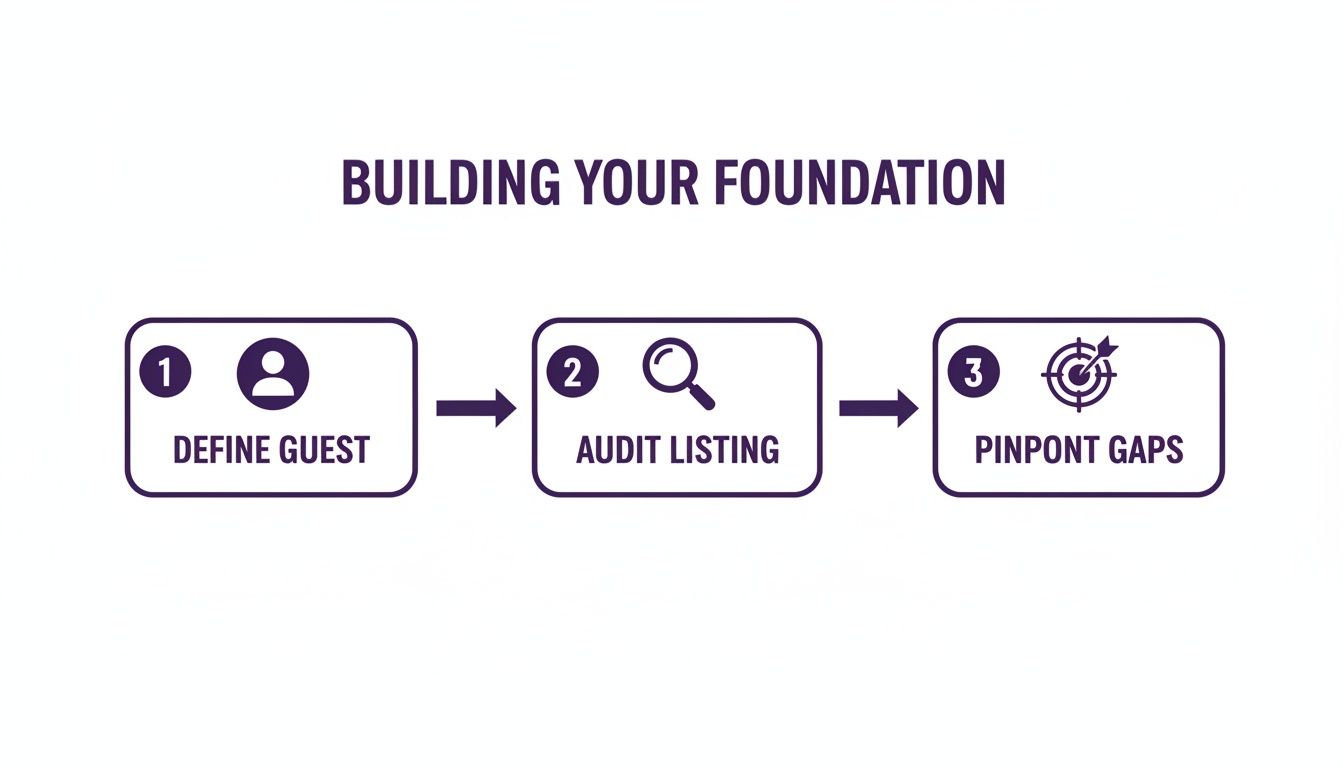
By starting with your ideal guest and then auditing your listing, you can pinpoint the exact gaps that need your attention. It’s a focused approach that ensures every single change you make is strategic and moves you closer to that fully booked calendar.
Creating Photos and Descriptions That Convert Views to Bookings
Think of your listing's photos and description as your digital storefront. In the endless scroll of options, they are often the only things standing between a guest choosing your place or skipping right past it. After managing properties everywhere from a bustling D.C. neighborhood to the calm beaches of Playa del Carmen, we can tell you it’s not about having the most expensive camera. It’s about telling a compelling story that makes someone say, “I want to stay there.”
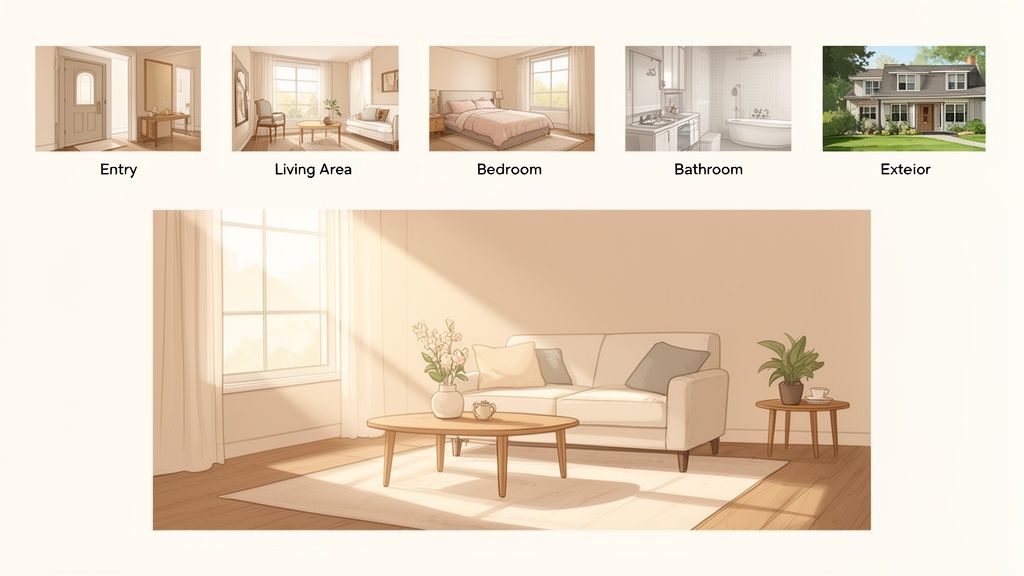
That story always starts with your photos. You’re essentially giving a guided tour, so your first photo has to be the showstopper—the one that stops the scroll. This is usually a bright, wide-angle shot of your main living space or a stunning exterior view that instantly captures the vibe of your property.
Staging a Space That Sells
You don’t need to hire a professional interior designer to get this right. It's the small, thoughtful touches that can make a world of difference. Here's what has worked for us:
Declutter ruthlessly. Get rid of personal items, extra furniture, and anything that makes the space feel cramped. Less is truly more.
Let there be light! Open every blind and curtain. The best time to shoot is during the day when you can flood the space with natural light. Even then, turn on all the lamps to add a warm, inviting glow.
Add a touch of life. A simple bowl of fresh fruit on the kitchen counter, a couple of neatly folded towels on the bed, or a vibrant plant can make a space feel welcoming and lived-in without looking messy.
Your first five photos are the most critical. They need to give a potential guest an immediate feel for the layout: the main living area, the primary bedroom, the kitchen, and a standout amenity like a beautiful patio or a cozy fireplace. Show them what makes your place special right from the start.
We once had a beachfront condo in Tulum that wasn't booking as we expected. The photos were okay, but they didn't capture the feeling of being there. We spent a weekend re-staging—we added colorful pillows, set the balcony table for a sunset cocktail, and made sure every shot was bright and crisp. Bookings shot up by over 30% the next month.
Crafting Headlines and Descriptions That Connect
Once your photos have grabbed their attention, your words need to close the deal. Your headline is your first—and maybe only—chance to stand out in a sea of search results. Instead of a generic "2BR Condo with Pool," try something that paints a picture, like "Sunny 2BR Retreat with Rooftop Pool & Ocean Views." You're not just listing facts; you're selling an experience.
Your description should continue telling that story, blending persuasive language with all the practical details guests need. Help guests imagine themselves relaxing in your space. For a much deeper dive on this, check out our guide on how to write a killer Airbnb description with examples.
While not an official Airbnb stat, a recent data analysis from an industry source suggests that listing word count has a correlation score of 0.897 with stronger ranking and conversion. In simple terms, this suggests that longer, more detailed descriptions that help guests truly picture their stay are more likely to rank higher and turn views into bookings.
Optimizing Your Written Content
To really nail your description, you need to structure it for both scannability and impact. Here’s a quick rundown of what we’ve found works best:
Lead with the experience. Kick things off with a captivating opening paragraph that describes the feeling of staying at your property.
Use bullet points. Break down amenities, sleeping arrangements, and key features into easy-to-scan bulleted lists. Nobody wants to read a wall of text.
Anticipate their questions. Put yourself in your guest's shoes. What would they want to know? Proactively address things like parking, check-in, proximity to local attractions, and Wi-Fi speed.
Be honest and transparent. This is huge. If your apartment is on the fourth floor with no elevator, say so. Honesty builds trust from the get-go and leads to much better reviews.
Here’s a quick checklist to see how a few small changes can completely transform your listing's first impression.
Photo & Description Optimization Checklist
Use this checklist to transform your listing's visual and written content from basic to fully optimized.
Checklist Item | Basic Approach | Optimized Approach |
|---|---|---|
Headline | "2 Bedroom Apartment" | "Cozy 2BR Walk to Downtown |
Photos | Dark, phone-quality images of messy rooms. | Bright, professional-quality photos showing a clean, staged space. |
Description | A single paragraph listing the number of beds and rooms. | A well-structured description with a welcoming intro, bulleted amenities, and detailed neighborhood info. |
Call to Action | "Book now." | "We'd love to host you! Book your city getaway today." |
By investing a little extra time in your photos and descriptions, you're doing more than just decorating your listing. You’re building a powerful engine that attracts the right guests and keeps your calendar full.
Nailing Your Pricing and Availability Strategy
Your pricing and availability are two of the most powerful levers you can pull to optimize your Airbnb listing. Get them right, and you'll see a steady stream of bookings at profitable rates. Get them wrong, and you'll either leave money on the table or sit with an empty calendar.
This isn't about picking a number and hoping for the best. A smart strategy is dynamic and responsive to your specific market—whether that’s a bustling city like D.C. or a seasonal beach town in the Riviera Maya. It's about finding that sweet spot where guests feel they're getting great value and you’re maximizing your revenue.
Finding Your Base Rate (Without Just Copying the Neighbors)
First things first: you need a solid base rate. This isn't the price you'll charge every night, but the foundation from which all your other pricing decisions will stem. It’s tempting to just peek at a few nearby listings and copy their prices, but that's a common way to either undervalue your property or price yourself out of the market.
Instead, start by doing a little research on your competition. Tools like AirDNA can give you a ton of data on what similar properties in your area are actually earning, their occupancy rates, and future demand.
This kind of data-driven insight helps you move beyond guesswork and understand the true market value of a listing like yours. Look for listings that are a direct comparison in terms of:
Size and Bedrooms: Compare your 2-bedroom condo to other 2-bedroom condos.
Guest Capacity: How many people can your property sleep comfortably?
Key Amenities: Do they also have a pool, free parking, or a dedicated workspace?
Review Score: Look at properties with a similar review count and rating.
Once you have a handful of truly comparable listings, analyze their calendars for the next few months. This will give you a realistic picture of the local pricing landscape and help you set a competitive yet profitable base rate.
Mastering Dynamic Pricing and Your Calendar
A static, "set-it-and-forget-it" price is one of the biggest mistakes we see hosts make. Your pricing should breathe with the market. This is where dynamic pricing comes into play—strategically adjusting your rates based on demand.
Think about it: a Tuesday in February shouldn't cost the same as a Saturday during a major music festival. Here’s a simple framework we use:
Weekend Premiums: Bump up your rates by 15-30% for Friday and Saturday nights.
Seasonal Adjustments: If you're in a summer destination like our places in Playa del Carmen, your peak season rates should be significantly higher than in the slower months.
Event-Based Pricing: Keep an eye on local events—concerts, conferences, holidays—and adjust your prices accordingly. Don't be afraid to double or even triple your rate for high-demand dates.
Last-Minute Discounts: If you have unbooked nights a few days out, offer a small discount (10-15%) to attract spontaneous travelers and fill those gaps.
Your calendar settings are just as crucial. Setting the right minimum night stay can dramatically improve your occupancy and reduce turnover. For example, we often set a 3-night minimum for weekends to avoid those single-night stays that leave a Saturday stranded and unbookable.
Your price is a direct signal to the Airbnb algorithm. Some industry data suggests that absolute price has a correlation score of 0.901 with higher visibility and bookings—meaning the platform may weigh how your price compares to similar listings.
According to a 2023 AirDNA report, the global average daily rate for short-term rentals was $250. The consensus among experienced hosts is clear: use dynamic pricing. A good starting point is to set your base rate competitively within your local market, then apply discounts for weekly stays to attract longer, more stable bookings.
Using Discounts to Attract High-Value Guests
Discounts can be a powerful tool, but only when used strategically. They’re not just about lowering your price; they’re about incentivizing the kinds of bookings you actually want.
Weekly & Monthly Discounts: Offering a significant discount (say, 20% for 7+ nights or 40% for 28+ nights) is a fantastic way to attract remote workers or families looking for a longer stay. This means less turnover, fewer cleanings, and more predictable income for you.
Early Bird Discounts: Encourage guests to book far in advance by offering a small discount (10% is a good starting point) for bookings made 3+ months out. This helps you lock in your calendar early.
Ultimately, your pricing strategy is a crucial part of the guest experience. Just like in e-commerce, it's vital to implement effective strategies to reduce booking abandonment by being transparent and competitive. A well-priced listing that adjusts to demand not only maximizes your income but also keeps you visible and appealing in a crowded marketplace.
Beyond your photos and pricing, some of the most powerful tools for getting seen on Airbnb are hiding in plain sight. I’m talking about the details—the amenities, accessibility features, and even house rules that guests actively filter for.
Getting this right isn't guesswork. It's about methodically checking every single box that applies to your property. Think of it as one of the simplest yet most effective ways to tell Airbnb’s algorithm exactly who your listing is for.
Auditing Your Amenities for Maximum Impact
So many hosts fill out their amenities list once during setup and never look at it again. This is a massive missed opportunity. Airbnb is constantly adding new options based on what guests are searching for, and if you haven't checked the box, you simply won't show up when a guest applies that filter.
Your first move should be a full audit of your amenities list. Go through every category, from "Kitchen" to "Safety," and tick off everything you offer, no matter how minor it seems.
Based on recent travel trends, some of the most heavily filtered amenities include:
Pet-friendly: A huge and fast-growing segment of travelers.
Dedicated workspace & high-speed Wi-Fi: Non-negotiable for remote workers and digital nomads.
EV charger: Increasingly essential for road-trippers and eco-conscious guests.
Self check-in: A must for guests arriving on late flights or those who just prefer a seamless arrival.
Air conditioning: The difference between a booking and a pass in most climates, especially in the summer.
Each box you check is another chance to appear in a guest's narrowed-down search. We make it a quarterly habit to review the amenities for all our properties—from our D.C. house to our condos in the Riviera Maya—just to catch anything new Airbnb has added.
A classic mistake is assuming guests will just know you have something. If it's not checked in the amenities list, it doesn't exist to the search algorithm. Be thorough. Be precise.
Weaving Keywords into Your Listing Naturally
Once you've maxed out your visibility from filters, it's time to get smarter with your words. This isn't about "keyword stuffing," which just makes your description sound clunky and robotic. It's about speaking the same language your ideal guests are using when they search.
You need to think about the experience they're after, not just the features of your home. A guest isn’t just looking for a "condo near downtown." They're dreaming of a specific kind of trip.
Your mission is to embed descriptive, long-tail keywords that paint a picture and match what someone might actually type into Google or the Airbnb search bar.
Finding the Right Keywords
So, where do you find these magic words?
Think Like a Guest: Get in their head. Instead of thinking "nice condo," brainstorm what they might actually search for, like "romantic beachfront getaway for two" or "family-friendly house with a big backyard."
Analyze Your Top Competitors: Take a look at the top-performing listings in your market. What words and phrases pop up again and again in their titles and opening descriptions? Jot down the patterns.
Get Specific with Local Highlights: Don't just say you're "near restaurants." Try something like, "a relaxing 10-minute walk to the city's best cafes on Main Street." Mentioning specific, sought-after landmarks or streets by name can be a game-changer.
When you start using these specific, descriptive phrases, you're doing more than just feeding the algorithm. You're connecting with potential guests on a human level, showing them you understand exactly what they’re looking for.
Turning Great Stays into 5-Star Reviews
Getting the booking confirmation isn't the finish line. Honestly, it’s just the starting gun. Your beautiful photos and killer headline got them in the door, but it's the on-the-ground experience that earns the 5-star review—the kind of review that fuels your search ranking.
The game has changed. Airbnb’s algorithm is now laser-focused on recent guest satisfaction. It’s no longer about your all-time average rating; it’s about creating a positive feedback loop where great stays lead to glowing reviews, which in turn drive more visibility and bookings.
The New Reality of Airbnb Rankings
Forget coasting on a long history of good ratings. Recent algorithm updates have made the entire guest journey more critical than ever to optimize your Airbnb listing. The platform now gives much more weight to how happy your last few guests were, not just your performance over the past few years.
What does this mean in practice? A property with a flawless 5.0 rating could see its visibility dip after a single 1-star review. Meanwhile, a listing with a rocky start but ten stellar recent reviews might climb right past it. As you can see from the latest insights on Airbnb's algorithm, your recent performance is everything.
Creating a Flawless Check-In and Stay
A guest's experience starts long before they unlock the door. It kicks off with clear, proactive communication. A simple "welcome" message a few days before arrival immediately sets a positive tone and gives you a chance to share essential info.
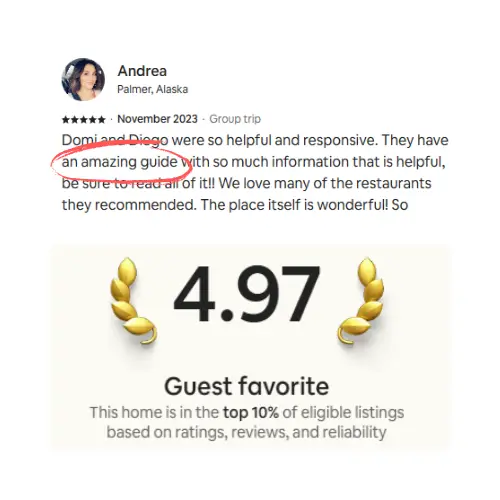
This is where a high-quality digital guidebook becomes a host's secret weapon. Instead of fielding the same questions over and over—"What's the Wi-Fi password?" or "How does this coffee maker work?"—you empower guests with all the answers right at their fingertips.
In our Washington, D.C. house, we used to get late-night texts about the smart lock. After creating a digital guidebook with a short video tutorial on how to use it, those messages stopped completely. Guests feel more independent, and we get fewer interruptions.
A great guidebook isn't just a list of house rules. It's your chance to be a virtual concierge. Share your curated local spots, from the best tacos in Tulum to a hidden coffee shop in D.C. This kind of detail shows you genuinely care and helps make their trip unforgettable.
With a tool like SmoothStay, you can build a beautiful, customizable digital guidebook that matches your brand. Our AI-powered features can even help you generate local recommendations in minutes. It’s a small touch that feels incredibly professional and cuts down guest questions in a big way.
The Gentle Art of Encouraging Reviews
Let's be real, asking for reviews can feel a bit awkward. But it’s a crucial part of the process. The trick is to be genuine, not demanding. We've landed on a two-part approach that feels natural and consistently gets us results.
Here’s the simple strategy we use:
The Post-Checkout Thank You: A few hours after checkout, send a message thanking them for being great guests. If you can, mention something specific, like, "We hope you enjoyed the farmers market!" At the end, just add, "We've left you a positive review and would appreciate it if you could share your feedback when you have a moment."
The Review Reminder: Airbnb sends its own reminders, but a personal touch goes a long way. If a day or two goes by without a review, a gentle follow-up can make all the difference. Keep it short, sweet, and friendly.
By focusing on the whole guest journey—from pre-arrival messages to the post-stay follow-up—you stop just hoping for good reviews and start actively creating the conditions for them. To dig deeper into this, we’ve put together a full guide on how to get good reviews on Airbnb that breaks down even more strategies.
Common Questions About Listing Optimization
Over the years, we've heard from countless hosts trying to crack the code of the Airbnb algorithm. Most of the time, the same questions pop up again and again. Here are the most common ones we get, along with the answers that have consistently worked for us.
How Often Should I Update My Listing?
We recommend making small tweaks to your calendar and pricing at least weekly. Then, plan on doing a deeper dive into your entire listing about once a month.
The Airbnb algorithm seems to favor active hosts. Even tiny adjustments signal that you're engaged and paying attention. A monthly check-in is the perfect time to refresh photos for the new season, add a few new local attractions to your description, and double-check that your amenities list is up to date. This consistent activity is one of the easiest ways to keep your listing feeling fresh and relevant.
Does Responding Quickly to Inquiries Really Matter?
Yes, it absolutely does. Your response rate and response time are direct ranking factors for Airbnb. Think about it from their perspective: they want to give travelers a great experience, and a host who replies promptly is a massive part of that.
Try to reply within an hour if you can, but always, always within 24 hours. Not only does this give your listing's visibility a nice little boost, but it also gives you a much better shot at locking in the booking before a potential guest gets distracted and moves on to another option.
What Is the Biggest Mistake Hosts Make?
In our experience, the single biggest mistake is getting hyper-focused on one thing—like obsessing over pricing or photos—while letting everything else slide. To truly optimize an Airbnb listing, you have to take a balanced approach.
You can have the most competitive price in town, but if your photos are dark and uninviting, you won't even get the clicks. On the flip side, stunning photos won't convert if your price is completely out of sync with the market or your calendar is never updated.
Optimization is a holistic process. A balanced strategy across your photos, copy, pricing, calendar, and guest communication is what truly moves the needle and leads to consistent bookings.
For a more comprehensive look at maximizing your rental's potential, you can learn more about how to increase Airbnb bookings and keep a steady stream of guests coming through your door.
Optimizing your listing is an ongoing process, but every improvement you make adds up. By focusing on creating a fantastic guest experience from the very first click, you're not just playing the algorithm—you're building a successful, sustainable hosting business.
SmoothStay is built by hosts, for hosts, to help you do just that. Our customizable, professional guidebooks and AI-powered features are designed to put your guests first, saving you time and earning you more 5-star reviews. Start your free trial at https://www.smoothstay.io.