How to Run an Airbnb: A Superhost's Guide to Profitable Hosting
Learn how to run airbnb successfully with tips from top Superhosts on listings, pricing, and guest experiences that boost profits.
Disclosure: Some links in this article are affiliate links. If you make a purchase, we may earn a commission at no extra cost to you. This helps support our content.
Running a successful Airbnb isn't just about listing a spare room—it's about building a real, honest-to-goodness business. From our experience, the secret is to establish a solid foundation by digging into local rules, researching your market, and picturing your ideal guest long before you even dream of your first booking. Getting this groundwork right is what separates the pros from the folks who burn out after a year.
Building a Foundation for Your Airbnb Business
Before your first guest even walks through the door, the most important work happens behind the scenes. We learned this firsthand when we launched our house in Washington, D.C., and again with our beach properties. If we could give you one piece of advice, it would be this: treat your rental like a business from day one.
This is a mental shift from "renting a room" to "launching a small hospitality brand." It means doing your homework, making a plan, and getting familiar with the legal landscape. Trust us, skipping these steps is a fast track to fines, bad reviews, and a whole lot of stress you just don't need.
Navigating Local Rules and Regulations
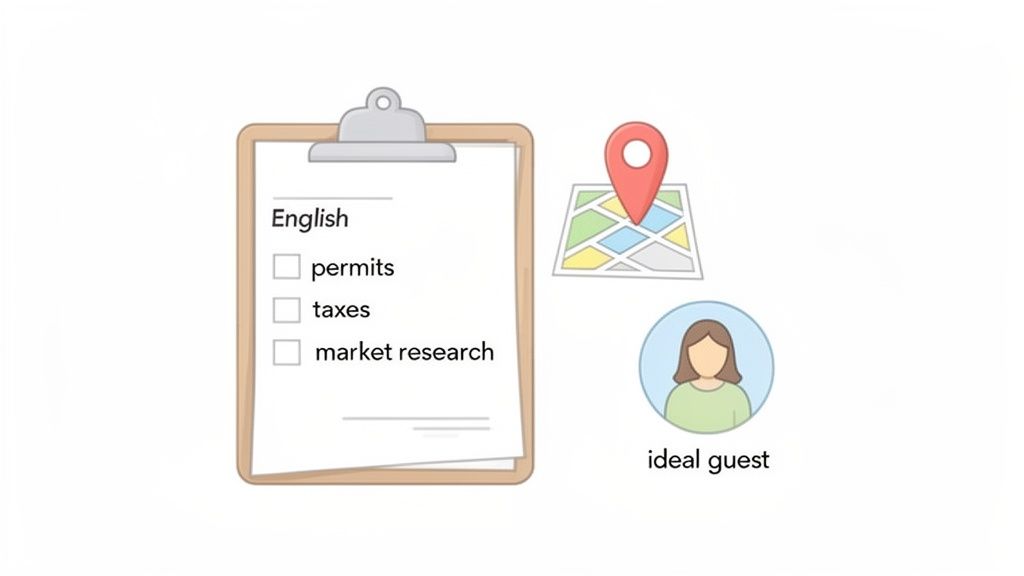
Your first, non-negotiable step is to get familiar with your local laws. Short-term rental regulations can be wildly different from one city, county, or even neighborhood to the next.
Permits and Licenses: Many cities now require a specific business license or short-term rental permit to operate legally. In some cities, you might even have to live in the property as your primary residence to qualify.
HOA and Building Rules: If you're in a condo or a neighborhood with a Homeowners Association (HOA), you need to read those covenants carefully. Many HOAs ban or severely restrict short-term rentals.
Taxes: Get ready to learn about local and state lodging taxes. While platforms like Airbnb often collect some of these for you, the ultimate responsibility for being fully compliant is yours.
We’ve seen hosts get excited, furnish an entire property, and then discover their city has a cap on rental permits that's already been hit. Always verify the regulations before you spend a single dollar. It’s a five-minute check that can save you thousands.
Defining Your Niche and Ideal Guest
Once you’ve confirmed you're legally good to go, it's time to figure out who you’re actually hosting. A generic, one-size-fits-all approach is a recipe for so-so reviews. The magic happens when you define a specific type of guest and design your space just for them.
When we set up our house in Playa del Carmen, we zeroed in on families on vacation. That meant investing in durable furniture, a high chair, and blackout curtains. For our D.C. property, the focus was on business travelers, so we made sure to have fast Wi-Fi, a dedicated workspace, and a simple self-check-in process. This is what's worked for us.
This focused approach makes your marketing much easier and leads to happier guests who feel like the space was made for them—which, of course, it was. You can find more practical advice on this in our complete guide to starting an Airbnb.
Creating a Listing That Converts Browsers Into Bookers
Your Airbnb listing is your digital storefront. It’s the very first impression a potential guest has of your space. From our experience managing properties from our own home in D.C. to our condos in Tulum, getting it right is one of the most important parts of securing bookings. A great listing doesn't just show pictures; it tells a story that makes someone feel like they’ve already found their perfect getaway.
Think of it this way: your listing has one job—to turn a casual browser into a confirmed guest. Every photo, every word, and every detail should work together to build trust and excitement.
Photography Is Your Most Powerful Tool
If you take one piece of advice from this section, let it be this: invest in professional photography. We learned this the hard way early on. Our phone pictures were okay, but when we hired a pro for our D.C. house, bookings jumped almost immediately. Professional photos with great lighting just make your space look brighter, bigger, and more inviting.
A photographer who specializes in real estate or short-term rentals knows exactly how to:
Capture the best angles to showcase the flow and size of a room.
Use natural light to make the space feel warm and welcoming.
Highlight the unique features that make your property special.
Before the photographer arrives, stage your space. Make the beds perfectly, clear all countertops, hide any personal clutter, and add small touches like a bowl of fresh fruit or a couple of books on a nightstand. The goal is to create a clean, aspirational look that helps guests envision themselves relaxing there.
Crafting a Compelling Title and Description
Your title is your headline. It needs to be catchy and informative, grabbing attention while highlighting your best feature. Instead of "Nice 2BR Apartment," try something like "Sunny 2BR Retreat with Rooftop Deck & City Views." Be specific and focus on what makes you stand out.
Your description is where you sell the experience. Don't just list features; paint a picture of what a stay is like.
In our listings, we always start by describing who the space is perfect for—"Ideal for a family beach vacation..." or "A quiet, dedicated workspace for business travelers..." This helps the right guests find you and sets clear expectations from the start. Be honest about quirks, too. If you’re on a busy street, mention it. Trust is everything.
Writing a great description takes practice. For a deep dive, check out our complete guide on how to write a killer Airbnb description with examples.
Setting Clear House Rules and Amenities
The final pieces of a great listing are your house rules and amenities list. These aren't just formalities; they are crucial tools for managing guest expectations and attracting the right kind of visitor.
Your house rules should be simple, clear, and written in a friendly tone. Instead of a long list of "don'ts," try framing them positively. For example, "Please be mindful of our neighbors with quiet hours after 10 PM." This sets a respectful tone.
Your amenities list needs to be 100% accurate. If you list a hot tub, it better be working. Go through Airbnb's checklist and be thorough. Small things like a hairdryer, fast Wi-Fi, or a well-stocked coffee station can be deciding factors for guests.
Ultimately, a strong listing is key to standing out. Running a successful Airbnb means understanding the massive scale of the market you're entering. As of 2024, Airbnb boasts over 8.1 million active listings worldwide, operated by more than 5 million hosts. To keep your property booked, explore effective marketing strategies for rental properties, which often begins with optimizing these listing details. You can discover more about the market's growth and host statistics in this detailed industry report.
Mastering Your Pricing and Occupancy Strategy
Pricing your Airbnb shouldn't feel like a shot in the dark. Getting it right is a delicate dance between maximizing your income and keeping your calendar full—a skill that separates thriving hosts from those who are constantly scrambling. After years in this business, we've learned that a static, "set it and forget it" price is one of the fastest ways to leave money on the table.
Think of your pricing strategy as a living, breathing thing. It needs to adapt to your market, the season, and even what’s happening in town on any given weekend. This is what's known as dynamic pricing, and mastering it is a cornerstone of running a profitable Airbnb.
Understanding the Levers of Dynamic Pricing
At its core, dynamic pricing is all about adjusting your rates based on supply and demand. A Tuesday in February is just not worth the same as a Saturday during a major festival. Your job as a host is to anticipate these ebbs and flows.
Here are the key factors that should be influencing your nightly rate:
Seasonality: For our properties in the Riviera Maya, rates during high season (December to April) are much higher than during the slower, rainier months like September and October. Know your local peaks and valleys.
Local Events: Concerts, conferences, holidays, and university graduation weekends create spikes in demand. Keep a local event calendar handy and adjust your prices well in advance.
Day of the Week: Weekend nights almost always command higher prices than weekdays. Dig into your market to figure out just how steep that difference should be.
Lead Time: Some hosts price higher for last-minute bookings, while others offer discounts. Test what works for you, but avoid dropping your price too low.
This isn't just theory; it's about competing effectively on a massive platform.
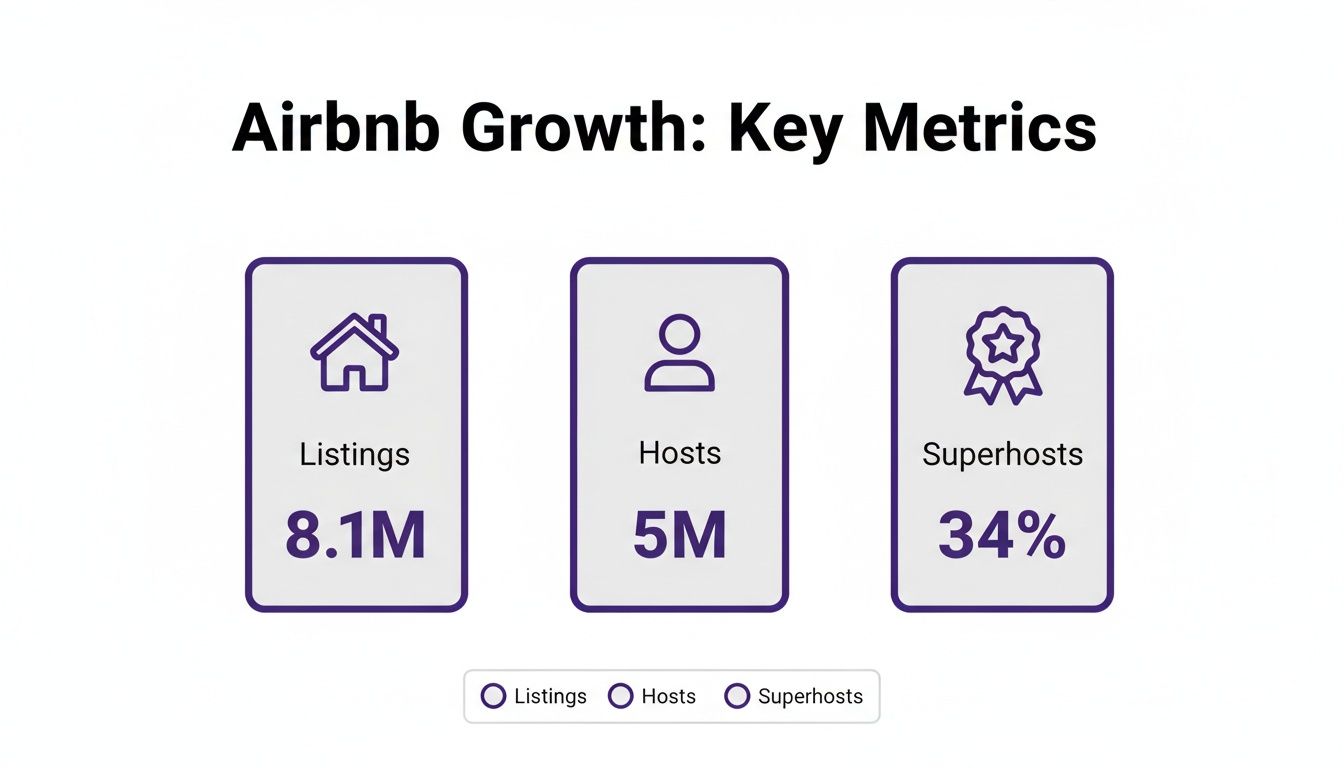
With over 8.1 million listings and 5 million hosts globally (as of early 2024), a smart pricing strategy is what helps you stand out and join the 34% of hosts who earn Superhost status.
Smart Pricing Tools vs. Manual Adjustments
So, how do you actually do dynamic pricing? You have two main paths: using automated smart pricing tools or setting your rates by hand. After managing a diverse portfolio, we’ve found that a hybrid approach usually works best.
Automated Pricing Tools (like Airbnb's Smart Pricing or third-party apps):
The Good: They save a massive amount of time by automatically adjusting rates based on market data. They're a fantastic starting point for new hosts.
The Bad: They can sometimes be too aggressive in dropping prices to fill gaps, undervaluing your property. They also don't know about smaller local events that you do.
Manual Pricing:
The Good: You have 100% control. You can use your specific knowledge of your property and neighborhood to set premium rates for key dates.
The Bad: It's incredibly time-consuming. You have to constantly research your competitors and keep an eye on what's happening locally.
Our approach? We use an automated tool like PriceLabs as a baseline, but then we manually override it for key dates. We'll block off dates far in the future and set our own premium prices for holidays or events we know will sell out, like New Year's Eve in Playa del Carmen.
Don't Forget About Fees and Minimum Stays
Your nightly rate is just one piece of the puzzle. You also need to be strategic with your fees and minimum night requirements to optimize your calendar.
Your cleaning fee should reflect the actual cost to have your place professionally cleaned. Don't try to turn it into a hidden profit center—guests are savvy to this and will call you out in reviews.
Minimum night stays are your best friend for preventing burnout and awkward one-night gaps in your calendar. We typically use a 2-night minimum on weekdays, a 3-night minimum on weekends, and stretch it to 5 or even 7 nights during peak holidays. This ensures our turnovers are profitable and reduces wear and tear on our properties.
Getting your pricing strategy right takes time and a bit of trial and error. Start by researching comparable listings, use tools to get a baseline, and don't be afraid to tweak things. To give you a clearer picture, let's look at how some top markets perform.
Key Airbnb Metrics Across Top Global Markets
This table provides a snapshot of what's possible in different cities around the world. Use these numbers as a benchmark to see how your market stacks up and to inform your own pricing strategy.
Market | Occupancy Rate | Average Daily Rate (ADR) | Annual Revenue Potential |
|---|---|---|---|
Paris, France | 82% | $215 | $64,300 |
London, UK | 78% | $250 | $71,300 |
New York City, USA | 75% | $300 | $82,100 |
Tokyo, Japan | 79% | $150 | $43,200 |
Sydney, Australia | 76% | $220 | $61,000 |
Source: Data compiled from 2023-2024 industry reports like AirDNA and Mashvisor. Note that regulations can heavily impact earnings in these cities.
Seeing these figures makes it clear that a well-priced listing in a popular market has incredible earning potential. However, market trends are always shifting. For instance, recent data shows that while U.S. occupancy is stabilizing, suburban and rural markets are seeing much faster growth than urban areas. A recent Skift report from 2023 highlighted that business travel has become a significant portion of Airbnb stays.
To stay ahead of the curve, you can explore more detailed 2025 market predictions in this comprehensive Airbnb trends report.
Delivering a Five-Star Guest Experience
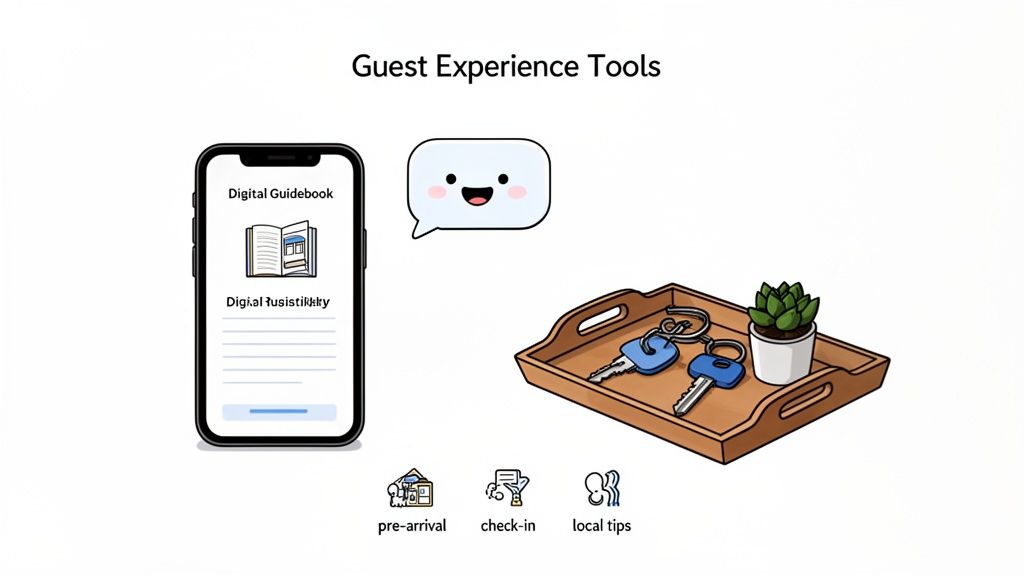
Your listing gets people in the door, but the actual experience you provide is what brings them back—and what earns you those coveted five-star reviews and Superhost status. After more than a decade of hosting, we’ve learned that a memorable stay isn’t about huge, expensive gestures. It’s built on thoughtful communication and making guests feel genuinely looked after, from the second they book to the moment they leave.
This is where you build your reputation. It’s what separates a simple transaction from true hospitality that people can't stop talking about. The goal is to get ahead of your guests' needs and make everything feel completely seamless.
The Power of Proactive Communication
Great communication is the absolute backbone of a five-star experience. When guests know what to expect, they feel more secure and confident in their booking. We’ve found that a simple, automated sequence of messages can solve most potential issues before they ever become problems.
This isn’t about spamming your guests; it’s about sending the right information at just the right time. The whole workflow should feel helpful, not annoying.
Booking Confirmation: Send an immediate "thank you" message confirming their reservation. A small touch like this sets a warm, welcoming tone right from the start.
Pre-Arrival Message: About 2-3 days before check-in, send over all the critical details—the address, parking instructions, and the door code.
First-Day Check-in: Shoot them a quick message on the evening of their arrival. A simple "Did you get in okay? Is everything to your liking?" shows you care and lets you fix any small problems right away.
Checkout Reminder: The evening before they leave, a gentle reminder about the checkout time and any simple tasks (like taking out the trash) is always appreciated.
We’ve tweaked these messages for years, and they’ve become a non-negotiable part of our system. It cuts down on guest anxiety and saves us from answering the same questions over and over.
Centralizing Information with a Digital Guidebook
If there's one thing that completely changed the game for us, it was ditching the old laminated binder for a professional digital guidebook. A guest's first few hours in a new place can be a little disorienting. They're trying to figure out the Wi-Fi, the thermostat, the TV, and where to grab a decent cup of coffee.
A digital guidebook puts all of that information right in their pocket, accessible with a quick link or QR code scan. No app to download, no binder to dig for.
We realized guests were asking the same ten questions every single time. A digital guidebook answered 80% of them automatically. It freed us up to focus on true hospitality instead of just being tech support.
This is where a tool like SmoothStay becomes a lifesaver. It lets you create a beautiful, custom-branded guidebook that feels like a polished extension of your property. You can add your own logo and colors to make it feel completely unique.
Making Your Guidebook a Go-To Resource
A great guidebook is more than just a list of house rules. It acts as your guest's personal concierge, making their entire trip better. This is how you really add value and create a stay they won't forget.
We like to structure our guidebooks to cover three main areas:
Property Essentials: This is the nuts and bolts. We include short video tutorials on how to use the smart TV, the coffee machine, or any other quirky appliances. We also have crystal-clear instructions for check-in and checkout, complete with photos.
Local Recommendations: This is your chance to share your insider knowledge. We list our favorite coffee shops, family-friendly restaurants, and hidden gems you won’t find in a generic travel guide. We even organize them by categories like "Best Tacos Within Walking Distance" to make it super easy to use.
Emergency Information: We include contact info for local emergencies, the nearest pharmacy and hospital, and our own contact details. It gives guests peace of mind knowing that help is easy to find if they need it.
By putting everything in one place, you empower your guests. They feel more in control and are far less likely to text you with minor questions. An AI-powered guidebook can even answer guest questions instantly, creating a seamless experience 24/7. This combination of thoughtful communication and smart technology is the modern blueprint for running an Airbnb that consistently wows guests.
Nailing Your Cleaning and Maintenance Game
Once your booking calendar starts lighting up, the real work of hosting kicks in. This is where the rubber meets the road. The day-to-day grind of cleaning, restocking, and maintenance is what separates the amateurs from the Superhosts. A single dirty corner can tank a review, but a consistently spotless space is your ticket to five-star ratings.
We learned a long time ago that the secret to staying sane (and successful) is having a rock-solid system. You need a turnover process so dialed-in that it practically runs on autopilot. This isn't about working yourself to the bone; it’s about building a smart, repeatable workflow that gives every guest that same immaculate, welcoming experience.
Building Your Turnover A-Team
Let's be real: you can't do it all, especially if you want to scale or you're managing from a distance. Finding a reliable cleaning team is probably the single most important partnership you'll make as a host. Look for pros who get the short-term rental world—they understand the breakneck pace and the obsessive attention to detail that’s required.
When we're vetting cleaners, we always ask for references and insist on a paid trial clean. A fantastic house cleaner isn't always a great turnover specialist; it's a different ballgame.
Our philosophy is simple: pay well for reliability. A great cleaning partner is worth every penny. They become your eyes and ears on the ground, spotting a leaky faucet or a scuffed wall long before a guest ever does. That proactive approach saves you from those dreaded emergency calls and the bad reviews that follow.
The Ultimate Turnover Checklist
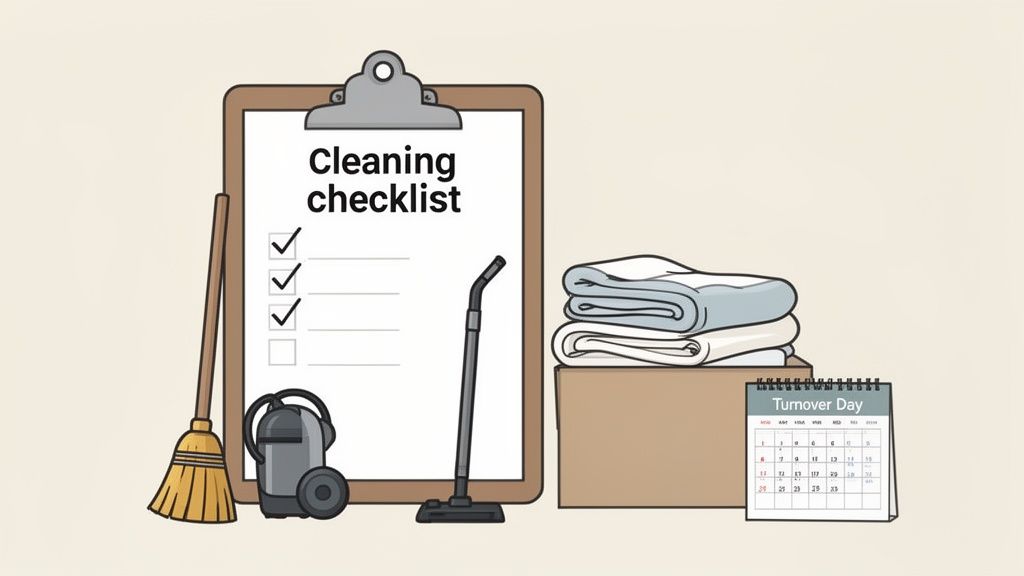
Never assume a cleaner knows what "clean" means to you. A detailed checklist is your absolute best friend for guaranteeing consistency. It eliminates guesswork and empowers your team to deliver the same high-quality result, every single time. We keep a laminated copy in the supply closet at each of our properties.
To make sure your property is always impeccable for arriving guests, think of it like an end-of-tenancy cleaning checklist. Your list needs to go way beyond just the basics.
Key Checklist Categories:
Room-by-Room Tasks: Get granular. Detail every surface to be wiped, dusted, and sanitized, from the baseboards to the ceiling fan blades.
Staging and Presentation: This is about the guest experience. Specify exactly how towels should be folded, where throw pillows go, and how the welcome note is placed. Consistency builds your brand.
Inventory Restock: Create a list of all consumables to check and replenish—think coffee pods, toilet paper, soap, and sponges.
Maintenance Check: Ask your team to flip on every light, check for drips under sinks, and report any signs of wear and tear immediately.
Smart Systems for Inventory and Maintenance
Running out of toilet paper or clean sheets mid-turnover is a rookie mistake that can throw your entire day into chaos. We sidestep this with a simple but super-effective inventory system.
For starters, we keep two complete sets of linens and towels for each property. This is a game-changer. It allows our cleaners to haul one set off-site to wash while the fresh set goes straight on the beds, dramatically speeding up the turnover. For essentials like shampoo and paper towels, we use a "par level" system—we set a minimum quantity we need on hand and automatically reorder when stock hits that level.
Proactive maintenance is just as important. Don't wait for things to break. We schedule routine checks for all the important stuff:
Quarterly: Test smoke detector batteries, clean the dishwasher filter, and inspect for any leaks under the sinks.
Annually: Service the HVAC system and schedule a deep clean for carpets and upholstery.
This kind of preventative care keeps your property in prime condition, protects your investment, and ensures guests have a smooth, problem-free stay. It's all the behind-the-scenes work that makes running a top-tier Airbnb look completely effortless.
Automating and Scaling Your Hosting Business
The jump from managing one property to running a small portfolio can feel huge. For us, the decision to expand beyond our D.C. house was a mix of excitement and a little bit of fear. How do you maintain that personal, five-star touch when you're not physically there for every turnover?
The answer isn't working harder; it's working smarter. It's about embracing automation and building repeatable systems. This final stage is all about transforming your hosting gig into a scalable business that can grow without overwhelming you. Sustainable growth is all about putting the right technology and processes in place to handle the repetitive tasks, freeing you up to focus on the big picture.
When Are You Ready to Scale?
There’s no magic number of bookings that signals it’s time to grow. Instead, it’s about having your core operations dialed in. You’re likely ready if your first property runs like a well-oiled machine.
This means you have a reliable cleaning team, your inventory is managed systematically, and your guest communication is largely automated. If you find yourself with more time to analyze your performance data than you spend answering questions about the Wi-Fi password, that's a great sign. It shows your systems are solid enough to be replicated across new properties.
Smart Tech is Your Scaling Superpower
Trying to manage multiple properties with spreadsheets and text messages is a fast track to burnout. Technology is what makes scaling possible and, dare we say, enjoyable. It’s the key to maintaining high standards without being everywhere at once.
This is where investing in the right tools becomes non-negotiable.
Smart locks, for instance, eliminate key handoffs entirely.
Automated messaging platforms handle the bulk of guest communication, from booking confirmations to checkout reminders.
For a deeper look at the essentials, our complete guide to vacation rental automation breaks down the must-have tools for any host looking to grow.
The real game-changer for us was centralizing guest information. Managing multiple guidebooks used to be a headache until we found a better way. The right platform can be your command center for your entire portfolio.
Tools like SmoothStay are built for this. From a single dashboard, we can manage unique, professionally branded guidebooks for each of our properties—from the city rowhouse to the beach condos. It allows us to deliver a consistent, high-quality guest experience everywhere, with custom AI-powered features for each location. By implementing smart tech, you can maintain that personal touch and operational control, building a rental business that truly lasts.
Your Questions Answered
Stepping into the world of Airbnb hosting always brings up a ton of questions. After more than a decade as Superhosts, we’ve heard them all. Here are some quick, no-fluff answers to the big questions that pop up for new and aspiring hosts.
How Much Money Can I Realistically Make?
This is the million-dollar question, and the honest answer is: it’s all over the map. Your income potential is tied directly to your location, the size of your property, and how well you run the show. In a strong market, it’s not unusual for hosts to earn anywhere from $30,000 to over $80,000 a year per property.
But don't forget about the costs. Expenses like cleaning fees, restocking supplies, higher utility bills, and the occasional repair will definitely take a bite out of your profits. A smart move is to earmark about 25-30% of whatever you make for taxes and all those operational costs.
How Much Time Does It Take to Manage an Airbnb?
When you’re just getting started, plan on dedicating around 5 to 7 hours a week to your rental. This is your time for answering guest questions, coordinating with your cleaner, and putting out any small fires that come up. The initial setup, of course, is a much bigger time investment.
The great news is that once you get your systems humming and start using tools for automated messaging and dynamic pricing, that time commitment can drop dramatically. We've always built our business to serve our life, not the other way around.
Is It Better to Clean Myself or Hire a Professional?
Right at the beginning, doing the cleaning yourself is a great way to save a little cash. It also gives you a firsthand understanding of what it really takes to make your place sparkle for every guest. But let’s be real—this isn’t a long-term solution, especially if you have plans to scale up or manage your property from a distance.
We’re firm believers that hiring a reliable, professional cleaner is one of the smartest investments you can make in this business. It frees up your time, guarantees a consistently high standard of cleanliness, and gives you an essential team member on the ground.
Running a successful Airbnb is a marathon, not a sprint. It’s all about continuous learning and fine-tuning your process. With the right systems, you can build a business that delivers both income and freedom. SmoothStay was created by hosts like us to help you provide that five-star experience with less work, using our customizable, AI-powered digital guidebooks.
Ready to make hosting simpler? Explore SmoothStay and start your free trial today.