The Top 10 Pros and Cons of Airbnb for Hosts in 2025
Thinking of hosting? We break down the top pros and cons of Airbnb, from revenue and fees to guest management, to help you decide if it's right for you.
Disclosure: Some links in this article are affiliate links. If you make a purchase, we may earn a commission at no extra cost to you. This helps support our content.
Deciding to list your property on Airbnb is a big step. For many, it's the gateway to building a thriving short-term rental business. For others, it can feel like a maze of hidden fees, demanding guests, and unpredictable algorithms that directly impact your income. After more than a decade of managing our own properties—from our family home in Washington, D.C. to a few beach getaways in the Riviera Maya—we've navigated nearly every challenge and celebrated every success the platform has to offer.
The hosting landscape has changed dramatically. What worked five years ago isn't guaranteed to deliver results today, making a clear-eyed assessment more important than ever. This guide provides a balanced, no-hype breakdown of the pros and cons of Airbnb, drawing directly from our hands-on experience as hosts. We'll explore everything from revenue potential and platform dependency to guest screening and the administrative burden of scaling your business.
Our goal isn't to tell you what to do, but to share what we've learned so you can make an informed decision for your own hosting journey. We'll examine the good, the bad, and the complex, offering practical insights to help you determine if becoming an Airbnb host is the right move for you.
1. Pro vs. Con #1: Cost Structure and Pricing Transparency
One of the most significant pros and cons of Airbnb is its commission-based model. On one hand, you get access to a global audience without any upfront marketing costs, which is a massive advantage for new hosts. On the other hand, the variable fees can make accurate financial forecasting a real headache.
The Double-Edged Sword of Platform Fees
Airbnb’s "pay-as-you-go" structure means you only pay when you secure a booking. The platform typically charges hosts a fee between 3% and 5% for its split-fee structure or a flat 14-16% for its host-only fee structure. While this seems straightforward, the total cost is higher when you account for the service fee charged to guests, which influences their final booking price and can impact your competitiveness.
For example, on a $200 per night booking, a 16% host-only fee means you immediately lose $32. If that booking is for a month, you're looking at nearly $1,000 in platform fees alone, which can significantly eat into your net revenue.
Key Insight: To protect your profit margin, you must calculate your nightly rate after accounting for all potential platform fees. Don't base your pricing solely on your costs; base it on your desired take-home amount. This is a lesson that has really worked for us.
How to Take Control of Your Profitability
To build a sustainable business, you need a clear picture of your real income.
Audit Your Payouts: Regularly review your transaction history to determine the actual percentage you're paying in fees. This figure is often higher than the advertised host fee.
Calculate Your Break-Even Point: Compare your cumulative annual Airbnb fees against the cost of tools that could drive direct bookings or streamline operations. A tool like SmoothStay helps stabilize your operational expenses with a fixed cost, making your variable platform fees more manageable.
Price Strategically: Use your break-even analysis to set a nightly rate that ensures profitability after all deductions, including commissions, taxes, and operational costs.
2. Guest Communication and Support Burden
One of the most challenging pros and cons of Airbnb is the constant need for guest communication. While direct interaction can build rapport and lead to great reviews, the sheer volume of repetitive questions creates a significant administrative burden that can quickly lead to burnout.

The Never-Ending Cycle of Guest Inquiries
From pre-booking questions about parking to late-night calls for the Wi-Fi password, the demand for support is relentless. A host with just a few properties can easily spend 10-15 hours a week answering the same questions. This directly impacts your ability to scale and maintain the sub-one-hour response time required for Superhost status.
For instance, managing our properties in Washington, D.C. and the Riviera Maya, we found that nearly 80% of guest messages were about check-in, Wi-Fi, and appliance instructions. This repetitive work is not a good use of a host's time.
Key Insight: The majority of guest inquiries are predictable and preventable. Proactively providing information in an accessible format is the key to reducing your support workload and improving the guest experience simultaneously.
How to Automate Support Without Losing the Personal Touch
Your goal is to provide instant answers, freeing up your time for genuine hospitality and complex problem-solving.
Create a Central Knowledge Hub: Develop a comprehensive digital guidebook with a tool like SmoothStay. Include everything from check-in instructions with photos to video tutorials for the smart TV.
Leverage AI for Instant Responses: Use an AI-powered chatbot to handle initial inquiries 24/7. SmoothStay’s chatbot can answer common questions instantly and only escalates to you when human intervention is needed. For more information, explore these strategies for using automated Airbnb messages.
Use QR Codes for On-Demand Info: Place QR codes on appliances and in key areas of your property that link directly to the relevant section of your guidebook. This empowers guests to find answers themselves, exactly when they need them.
3. Review Management and Rating Impact
One of the most defining pros and cons of Airbnb is its review-driven ecosystem. Positive reviews act as a powerful, free marketing tool that boosts your search ranking and booking rate, but a single negative review can undo months of hard work, making your visibility and income highly volatile.
The Double-Edged Sword of Guest Feedback
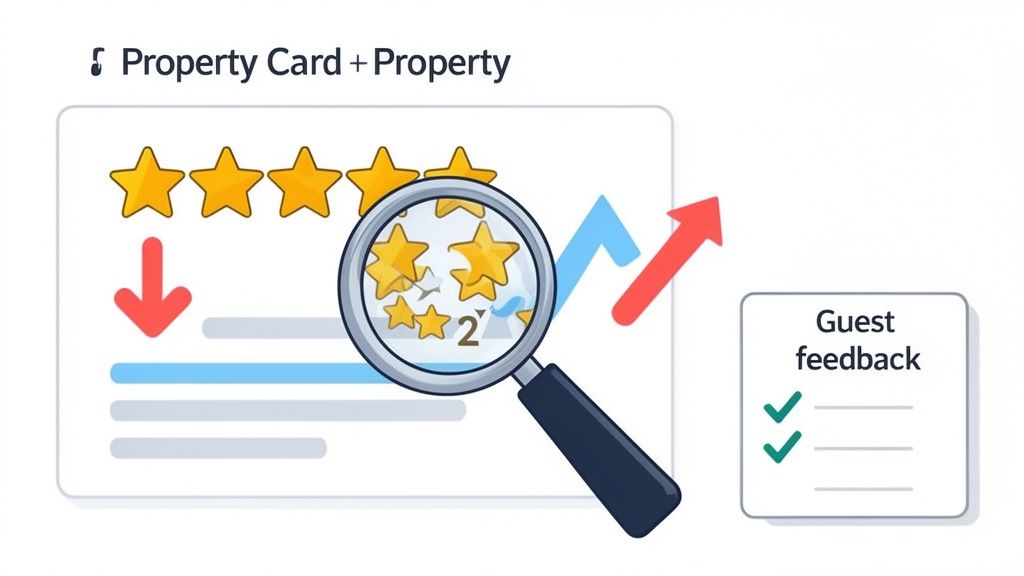
Your Airbnb rating directly impacts the algorithm, determining your placement in search results. A Superhost with a 4.8+ rating can receive significantly more bookings than a host with a 4.5 rating simply due to better visibility. The pressure to maintain near-perfection is immense, as one poor experience can have a disproportionate impact.
For example, a property with a 4.7 average across 95 reviews can drop multiple positions in search after a single 2-star review. This makes your business vulnerable to subjective guest opinions and isolated incidents, creating a constant need to manage expectations proactively.
Key Insight: Treat every guest interaction as an opportunity to prevent a future problem. The best way to manage negative reviews is to create an experience so seamless that they never get written in the first place.
How to Take Control of Your Reputation
To build a resilient hosting business, you need a system for encouraging five-star feedback and mitigating potential issues.
Anticipate Guest Needs: Use a digital guidebook with AI-powered tutorials and clear check-in instructions to prevent common complaints before they arise. A tool like SmoothStay helps guests self-serve, reducing friction and frustration.
Analyze Guest Behavior: Use guest engagement analytics to identify which parts of your guidebook are viewed most. This helps you spot potential pain points and make improvements.
Systematize Feedback: Implement automated post-stay messages to thank guests and request feedback. This consistent communication shows you care and increases the likelihood of receiving positive public reviews. You can learn more about review management software to see how automation helps.
4. Pro vs. Con #4: Property Branding and Guest Experience Customization
A significant drawback of Airbnb is its one-size-fits-all interface, which limits your ability to create a distinct brand identity. While the platform excels at discoverability, it forces your unique property into a generic template, making it harder to stand out and build a direct relationship with guests.
The Challenge of Standing Out in a Sea of Listings
On Airbnb, your property is just another listing, surrounded by competitors using the exact same layout. This makes it challenging to convey the unique character of your space and cultivate the kind of memorable experience that drives repeat bookings and word-of-mouth referrals. You're building Airbnb's brand, not your own.
For example, a luxury rental with a carefully curated aesthetic loses its premium feel when presented in the same format as a budget-friendly spare room. This lack of branding control is a major hurdle in the pros and cons of Airbnb debate for hosts aiming to build a long-term, recognizable business.
Key Insight: Building your own brand is essential for long-term success. A strong brand identity justifies premium pricing, fosters guest loyalty, and reduces your dependency on a single platform.
How to Take Control of Your Guest Experience
To differentiate your property, you need to extend your brand beyond the Airbnb listing page itself.
Create a Branded Digital Guidebook: Use a tool like SmoothStay to build a custom guidebook with your logo, brand colors, and a custom URL. This becomes the central hub for your guest experience, reinforcing your brand from the moment they book.
Use Branded QR Codes: Place QR codes throughout your property that link to specific sections of your SmoothStay guide, such as how to use the coffee machine or TV. This provides a seamless, branded, and helpful touchpoint.
Leverage Your Custom Domain: Include your guidebook’s custom URL in your welcome email and other pre-arrival communications. This simple step trains guests to associate the great experience with your brand, not just with Airbnb.
5. Pro vs. Con #5: Dependency on a Single Platform and Algorithm Changes
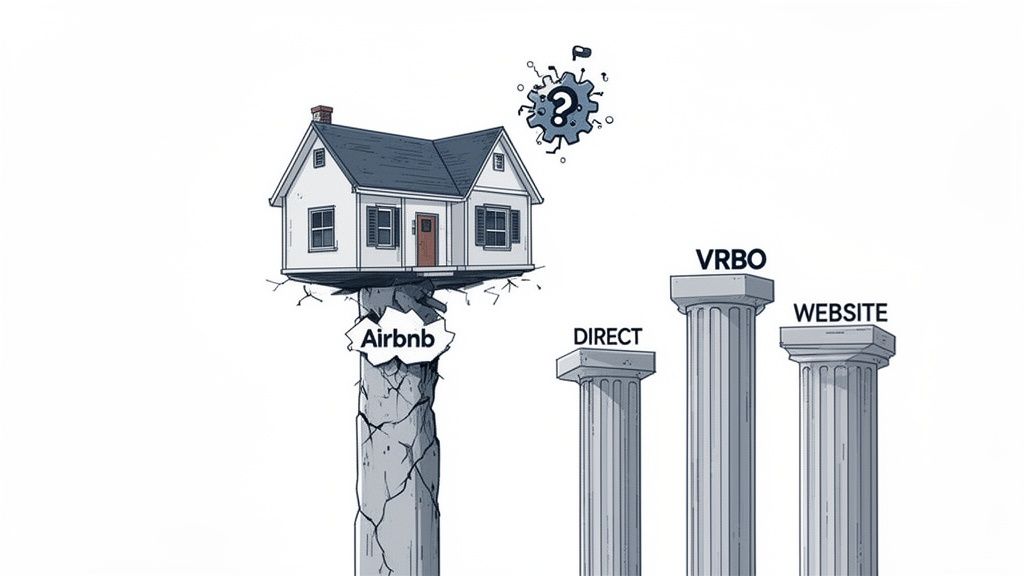
Building your entire rental business on Airbnb is like constructing a house on a single pillar. While the platform offers incredible reach, this total dependency creates significant risk. You are entirely subject to Airbnb’s algorithm changes, policy updates, and fee adjustments, which can happen without warning and dramatically affect your visibility and revenue.
The Hidden Risk of Platform Volatility
Relying solely on Airbnb means your business's fate is tied to their corporate decisions. For instance, a 2022 algorithm update that prioritized Superhosts with cancellation rates below 1% instantly reduced visibility for nearly a third of active hosts. Similarly, a property manager who lost their account over a disputed policy violation saw a 60% revenue drop overnight with no alternative booking channels in place.
These scenarios highlight a crucial downside among the pros and cons of Airbnb. Your hard-earned business can be jeopardized by factors completely outside your control, turning a reliable income stream into an unpredictable variable.
Key Insight: Treat Airbnb as one powerful acquisition channel, not your entire business foundation. True long-term stability comes from diversifying your revenue streams to mitigate platform-specific risks.
How to Build a More Resilient Business
Diversification is your best defense against platform volatility. The goal is to own your guest relationships and create multiple pathways for bookings.
Implement a Multi-Channel Strategy: List your property on other major platforms like VRBO and Booking.com. This immediately expands your reach and reduces your reliance on Airbnb's algorithm.
Drive Direct Bookings: Use a tool like SmoothStay to create a simple, professional direct booking link. You can share this link in your social media bio, email signature, and even subtly within guest communications to encourage repeat guests to book directly, saving both of you on fees.
Unify Your Guest Experience: Integrate your SmoothStay guidebooks across all your listings (Airbnb, VRBO, your direct website). This creates a consistent, high-quality experience for every guest, regardless of how they booked, strengthening your brand and encouraging loyalty.
6. Pro vs. Con #6: Legal Compliance and Regulatory Uncertainty
One of the most complex pros and cons of Airbnb is navigating the patchwork of local laws. While the platform grants you access to a global travel market, it also places the burden of legal compliance squarely on your shoulders. This creates a high-stakes environment where a simple oversight can lead to significant penalties.
The Double-Edged Sword of Evolving Regulations
The short-term rental landscape is constantly changing, and what was permissible last year might be illegal today. Cities are cracking down with strict rules, from zoning laws and licensing requirements to occupancy taxes and safety standards. This regulatory uncertainty makes it challenging to operate with confidence, especially for hosts managing properties in different jurisdictions.
For example, New York City now requires hosts to register with the city, and non-compliance can result in fines up to $7,500. Similarly, San Francisco restricts short-term rentals to primary residences only, which can make investment properties unviable. Keeping up with these changes is a significant, ongoing operational task.
Key Insight: Treat regulatory compliance as a core business function, not an afterthought. Proactively understanding and adhering to local laws is the best way to protect your investment and ensure long-term viability.
How to Take Control of Your Compliance Strategy
To build a resilient hosting business, you must integrate compliance into your daily operations.
Become a Local Expert: Regularly check your city or county’s official government website for the latest short-term rental ordinances. Join local host groups to stay informed about proposed changes.
Communicate Rules Clearly: Use a digital guidebook to clearly outline local regulations for your guests, such as noise ordinances or parking rules. This not only helps with compliance but also improves the guest experience.
Streamline Your Record-Keeping: Keep meticulous records of your bookings, income, and expenses. Tools like SmoothStay can help you track performance analytics, making it easier to document tax-deductible expenses and platform fees for accurate reporting.
7. Pro vs. Con #7: Quality Control and Property Maintenance Standards
One of the biggest pros and cons of Airbnb is the direct link between property quality and your success. High standards lead to stellar reviews and bookings, but even a minor slip-up can quickly tank your rating. Unlike a hotel with standardized rooms, your property's condition is entirely your responsibility, creating both an opportunity to shine and a significant risk.
The Double-Edged Sword of Guest Expectations
Guests arrive expecting a clean, functional, and well-maintained space that matches the listing photos. Meeting these expectations consistently is a pro that builds a strong reputation. However, a single issue like a "dirty bathroom" or a tricky appliance can lead to a damaging review, dropping a 4.9-star rating to 4.6 and potentially slashing your monthly bookings.
For example, a host we know saw their revenue drop nearly 30% in one month after a negative review about cleanliness snowballed. This highlights how a small oversight in maintenance can have an outsized impact on your bottom line.
Key Insight: Proactive communication is your best defense against negative reviews. Clearly setting expectations and providing instructions for your property’s unique features can prevent guest frustration before it begins.
How to Take Control of Your Property's Reputation
To build a resilient hosting business, you need systems that ensure consistent quality.
Create Detailed Guides: Use a tool like SmoothStay to build AI-powered tutorials for appliances and document house rules. A property manager we work with reported a 40% reduction in damage claims after implementing clear, accessible instructions in their digital guidebook.
Implement Pre-Stay Checklists: Before each arrival, ensure your property meets your standards. A pre-stay checklist shared with your cleaning team can guarantee consistency and catch potential issues early.
Analyze Guest Feedback: Use guest communication and review analytics to identify recurring comments about maintenance. This allows you to proactively address small problems before they become reputation-damaging issues.
8. Pro vs. Con #8: Competitive Saturation and Price Pressure
One of the biggest pros and cons of Airbnb is its low barrier to entry. While it's easy to get started, this accessibility has created intense competition in most markets, leading to a constant downward pressure on prices that can seriously compress your profit margins.
Navigating the Crowded Marketplace
The explosion of listings means you're not just competing on quality; you're competing on price. In many urban markets, this has led to a race to the bottom, where profitability suffers. For instance, a new host can expect to lose 30-40% of potential bookings to established competitors who have already amassed hundreds of 4.8+ star reviews.
Even experienced property managers feel the squeeze. We've seen hosts with multiple units need to implement 5-7% price reductions just to maintain their target 75% occupancy rates, directly impacting their bottom line.
Key Insight: Price is a poor long-term differentiator. To escape the pricing war, you must create a memorable, branded guest experience that justifies a premium rate and builds loyalty beyond the platform.
How to Stand Out and Protect Your Pricing
To build a resilient hosting business, you need to compete on value, not just cost.
Differentiate Your Offering: Create a unique guest experience that competitors can't easily replicate. A tool like SmoothStay helps you build a professional, branded digital guidebook with custom recommendations and clear instructions, making your property feel more like a boutique stay.
Target Niche Markets: Focus on specific guest profiles that are underserved in your area. Think pet-friendly, long-stay-ready with an office setup, or eco-conscious tourism. This reduces your direct competition.
Develop a Direct Booking Strategy: By capturing guest information and encouraging direct bookings for future stays, you bypass platform commissions entirely, giving you more pricing flexibility and higher margins.
9. Pro vs. Con #9: Guest Screening and Safety Concerns
One of the most critical pros and cons of Airbnb is guest verification. While the platform offers basic identity checks that provide a layer of security, hosts ultimately bear the risk of property damage, parties, and safety issues from problematic guests. This creates a difficult balance between maintaining security and ensuring a welcoming, non-discriminatory booking process.
The Challenge of Balancing Trust and Security
Airbnb’s screening is often limited to ID verification and a review of past feedback, which may not be enough to prevent issues. A host who enables Instant Book to maximize occupancy might see higher damage claims compared to one who manually vets every request. For example, a host with an open booking policy could find their property damaged by an underage party group, only to have their $8,000 damage claim partially denied by AirCover, approving just $4,200.
This puts hosts in a tough position. Refusing younger guests to prevent parties, for instance, could trigger a discrimination complaint and jeopardize your Superhost status, even if your intentions are purely to protect your property.
Key Insight: Proactive communication is your best screening tool. Clearly stating your rules and expectations before a guest even books can deter those looking for a party venue and attract respectful visitors.
How to Mitigate Risks and Protect Your Property
A robust screening and communication strategy can significantly reduce safety concerns without alienating good guests.
Document Everything: Take time-stamped photos and videos of your property's condition before every single check-in. This creates indisputable evidence if you need to file a damage claim.
Set Clear Booking Requirements: Utilize Airbnb’s settings to require guests to have government-issued IDs, positive reviews from other hosts, and a verified phone number before they can book.
Use Guidebooks as a Screening Tool: A digital guidebook from SmoothStay allows you to detail your house rules, quiet hours, and strict no-party policy upfront. Sending this to guests upon inquiry shows you’re a serious, professional host.
To further refine your process, it helps to learn from established property management practices. Exploring expert tips on tenant screening background checks can offer valuable insights for making more informed decisions.
10. Pro vs. Con #10: Administrative Overhead and Scaling Challenges
A key challenge among the pros and cons of Airbnb is the administrative burden that grows exponentially with your portfolio. While managing one property is feasible, adding a second or third turns hosting from a side hustle into a full-time administrative job, making it a significant con for hosts aiming to scale.
The Exponential Curve of Complexity
Managing reservations, answering repetitive questions, coordinating cleanings, and tracking finances for multiple properties quickly consumes all your time. A host with just three properties can easily spend over 20 hours a week on these tasks alone, often leading them to hire a part-time assistant, which can cost $18,000 to $25,000 annually and erase profits.
For example, a property manager with five units might find themselves spending 25+ hours per week just on guest communication and scheduling. This administrative drag is the primary barrier to scaling from a small portfolio to a professional operation.
Key Insight: True scalability isn't just about adding properties; it's about building systems that reduce the administrative work required for each new unit. Without automation, your operational costs will grow at the same rate as your revenue, killing your margins.
How to Take Control of Your Time
To grow sustainably, you must automate repetitive tasks and centralize your operations.
Centralize Communications: Use a tool with an AI chatbot, like SmoothStay, to handle common inquiries across all your properties from one dashboard, drastically reducing your response time.
Automate Content Creation: Leverage AI copywriting assistants to generate high-quality guidebook content for each new property in minutes, not hours.
Track Performance Systematically: Implement an analytics dashboard to monitor revenue, occupancy, and guest satisfaction across your entire portfolio, allowing you to make data-driven decisions without manual spreadsheet work. To go deeper, learn more about automating repetitive administrative tasks to reclaim your time.
Airbnb Hosting: 10-Point Pros & Cons Comparison
Item | 🔄 Implementation complexity | ⚡ Resource requirements | ⭐ Expected outcomes | 📊 Ideal use cases | 💡 Key advantages / tips |
|---|---|---|---|---|---|
Cost Structure and Pricing Transparency | Low–Moderate: monitor variable fees and set up SaaS billing | Moderate: accounting time, subscription vs commission tracking | More predictable costs and higher net margins when shifting bookings off commission platforms | Hosts/PMs optimizing profitability across multiple properties | Use analytics to compare Airbnb fees + processing vs subscription; offset costs with direct bookings |
Guest Communication and Support Burden | Moderate: deploy automation, create guidebooks and chatbot flows | Moderate: time to author content, chatbot setup, QR/links distribution | Large reduction in repetitive inquiries (~80%) and faster response rates | High-message-volume hosts and multi-property managers | Implement AI guidebooks + QR codes; use templates and escalate only complex queries |
Review Management and Rating Impact | Low–Moderate: integrate feedback collection and response workflows | Low: follow-up time and analytics tools | Improved review scores and search visibility if issues are addressed proactively | Hosts focused on ranking, repeat bookings, and reputation | Solicit feedback pre-checkout, fix issues proactively, use multilingual guidance |
Property Branding and Guest Experience Customization | Low: create branded guidebooks and custom URLs (white-label) | Low–Moderate: design assets and minor setup time | Stronger brand recognition, higher repeat and direct bookings when consistent | Boutique rentals, luxury listings, property managers seeking differentiation | Use custom URLs/QRs and consistent visuals to reinforce brand and justify premium pricing |
Dependency on a Single Platform and Algorithm Changes | Moderate–High: build multi-channel presence and direct-booking flows | Moderate–High: website/booking links, marketing to drive direct traffic | Reduced exposure to algorithm changes and more stable revenue mix | Hosts reliant on Airbnb or in markets with frequent policy shifts | Develop multi-channel strategy, use booking links in guidebooks, track channel performance |
Legal Compliance and Regulatory Uncertainty | High: research local rules, adapt listings and policies per jurisdiction | High: legal counsel, licensing fees, tax compliance time | Lower legal risk when compliant; penalties/costs otherwise | Hosts operating in regulated cities or across multiple jurisdictions | Consult local authorities, document rules in guidebooks, keep records for audits |
Quality Control and Property Maintenance Standards | Moderate: implement checklists, tutorials, and feedback loops | Moderate: cleaners, maintenance budget, inspection processes | Fewer cleanliness/maintenance complaints and improved review resilience | High-turnover properties and premium listings where standards matter | Use pre-stay checklists, appliance tutorials, and feedback analytics to catch issues early |
Competitive Saturation and Price Pressure | Low–Moderate: implement differentiation and targeted pricing | Moderate: marketing, experience investments, branded materials | Ability to earn premium rates if differentiation succeeds; otherwise continued price pressure | Hosts in saturated urban markets or price-sensitive segments | Target niches, emphasize branded experience, and push for direct bookings to avoid commission-driven price cuts |
Guest Screening and Safety Concerns | Moderate: set booking rules, documentation, and verification processes | Moderate: ID checks, deposits, insurance, extra screening time | Reduced incidents but residual liability; screening lowers risk not eliminate it | Hosts of high-value properties or those near neighbors/noise-sensitive areas | Require minimum reviews/verification, document property condition, state rules clearly in guidebooks |
Administrative Overhead and Scaling Challenges | High: centralize systems, automate content and messaging | High: platform subscriptions, integrations, possible staff for ops | Significant time savings and scalable operations when automated | Property managers and hosts expanding portfolios beyond a few units | Centralize on a single dashboard, use AI copywriting and chatbots, standardize templates to scale efficiently |
Finding Your Balance in the Hosting Equation
Navigating the world of short-term rentals often feels like a delicate balancing act. As we've explored, the pros and cons of Airbnb are two sides of the same coin. The platform’s unparalleled access to a global market (a major pro) is counterbalanced by its commission structure and algorithm dependency (significant cons). Similarly, the joy of connecting directly with guests can be overshadowed by the burden of 24/7 communication and the pressure of maintaining a perfect review score.
From our years of hosting, we’ve learned that the most successful operators don't just accept this reality; they strategically manage it. They don't simply enjoy the highs and endure the lows. Instead, they build systems to amplify the advantages while actively neutralizing the disadvantages. This proactive approach is the true differentiator between a hosting hobby and a thriving, resilient hospitality business.
Your Actionable Path Forward
The core takeaway is this: you are in control. Every challenge, from regulatory uncertainty to administrative overhead, has a corresponding strategic solution. Your next steps should be focused on building a framework that protects your business and enhances your operational efficiency.
Mitigate Platform Dependency: Start by securing your own direct booking website. Even if it only generates a small fraction of your revenue initially, it’s a critical asset that you own and control, insulating you from unexpected algorithm shifts or policy changes.
Systematize Your Operations: Map out your entire guest journey, from the initial inquiry to the post-stay review request. Identify repetitive tasks, especially in communication and property management, and find tools to automate them. This is how you reclaim your time and scale effectively.
Double Down on the Guest Experience: In a saturated market, a memorable guest experience is your most powerful competitive advantage. Move beyond just providing a clean space. Focus on creating a branded, seamless, and supportive stay that feels personal and professional. This is what earns five-star reviews, repeat bookings, and valuable word-of-mouth referrals.
Ultimately, mastering the pros and cons of Airbnb is about shifting from a reactive to a proactive mindset. It’s about leveraging technology not to replace your hospitality, but to enhance it, allowing you to focus on what truly matters. By implementing smart automation, clear communication protocols, and a relentless focus on guest satisfaction, you can transform potential pitfalls into pillars of a stronger, more profitable, and far more enjoyable hosting business. The path is challenging, but with a strategic approach, the rewards remain incredibly worthwhile.
Ready to turn those hosting cons into competitive advantages? We built SmoothStay to do just that, giving hosts like us the tools to create professional, customizable guidebooks and use AI-powered features to make every stay a five-star experience. Build your perfect guest journey with SmoothStay today.