A Practical Guide to Airbnb Hosting Success
Our complete guide to Airbnb hosting shares proven strategies for creating standout listings, maximizing revenue, and earning 5-star reviews from day one.
Disclosure: Some links in this article are affiliate links. If you make a purchase, we may earn a commission at no extra cost to you. This helps support our content.
This guide to Airbnb is the result of over a decade of hands-on hosting experience, designed to walk you through everything you need to launch, manage, and grow a successful short-term rental business. We'll cover it all, from setting up your first listing to mastering the details of pricing and guest communication.
Building Your Foundation for Hosting Success
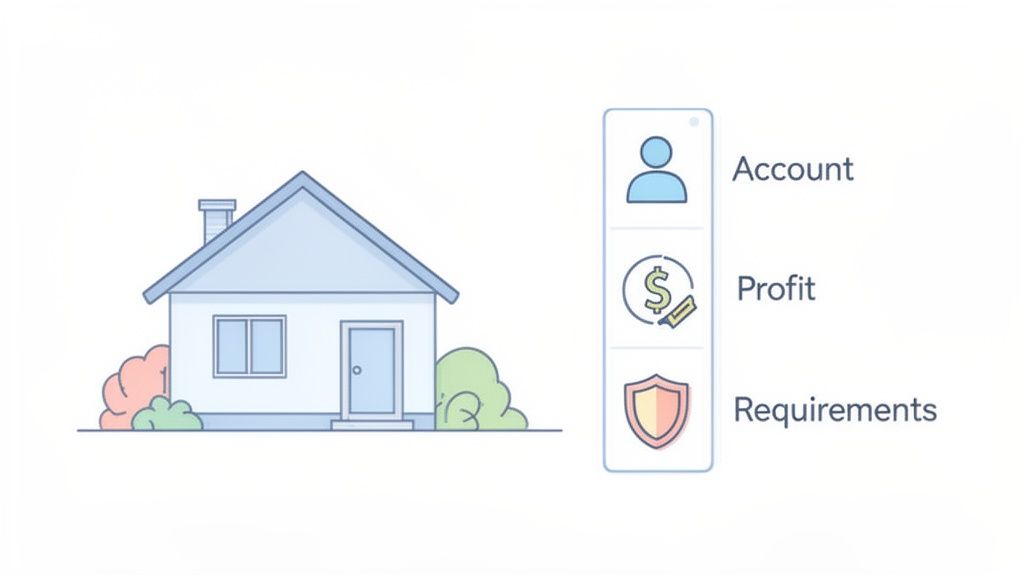
Starting your Airbnb journey can feel like a huge undertaking, but in our experience, success boils down to getting the fundamentals right. Before you start thinking about welcome baskets or clever listing descriptions, you need to build a solid foundation.
Think of it like building a house. You wouldn't put up walls without first pouring the concrete and framing the structure. The same logic applies here. Taking the time to understand the basics is what ensures your business is built to last.
Is Hosting the Right Fit for You?
First, let's be honest. Hosting is more than handing over a key; it’s a hospitality business. Are you genuinely prepared to handle guest inquiries at odd hours, manage cleaning schedules, and deal with the occasional clogged toilet?
The most successful hosts we know are the ones who genuinely enjoy creating positive experiences for other people. This passion for hospitality is what turns a good stay into a great one and earns those crucial five-star reviews.
Over the years, managing properties from our 4-bedroom house in Washington, D.C. to our beach rentals in Mexico, we’ve learned that the best hosts are organized, responsive, and resilient. If that sounds like you, you're already on the right track.
Understanding Your Property's Potential
Next, take an objective look at your space. What makes it a great spot for travelers? A property’s profitability hinges on a few key factors you should consider from the start:
Location: Proximity to attractions, business hubs, or natural beauty is a huge driver of demand.
Amenities: Does your place offer features guests are actively searching for, like a full kitchen, a dedicated workspace, or a private outdoor area?
Regulations: Before you go any further, research your local laws. Many cities have strict rules or require permits for short-term rentals, and you don't want to be caught off guard.
Getting a clear picture of these elements helps you set realistic expectations for your potential income and occupancy rates from day one.
For a deeper dive into these initial steps, check out our detailed article on how to set up an Airbnb from scratch. This is your first official step into hosting, so making sure you get it right is key. It's the first brick in your business's foundation.
Crafting a Listing That Converts Browsers into Bookings
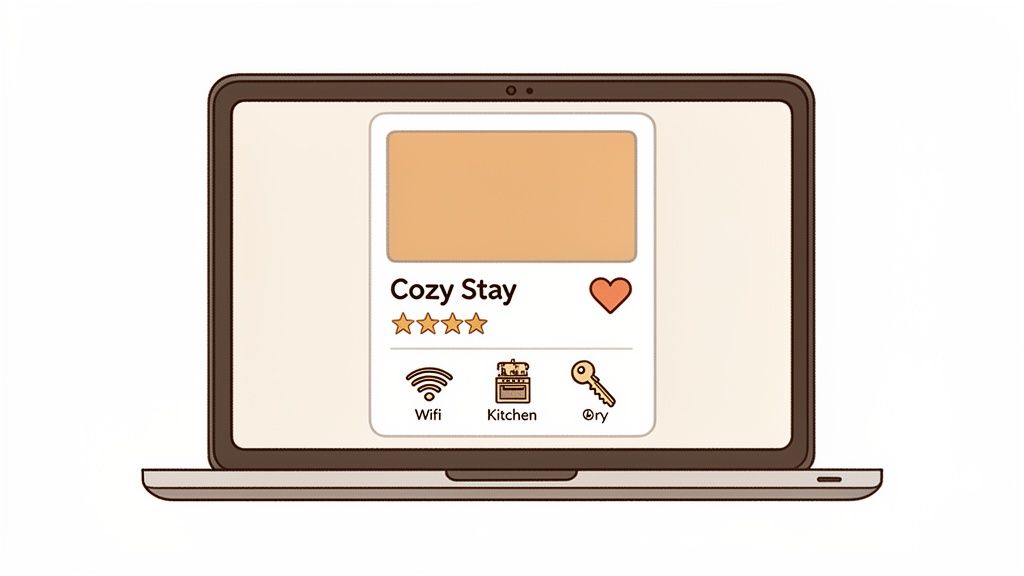
Think of your Airbnb listing as your digital storefront. It’s the first—and often the only—chance you get to convince a potential guest that your space is the perfect home base for their trip.
Getting this right is a mix of art and science. It’s about blending compelling storytelling with the strategic details that answer a guest’s questions before they even ask them. Your title and first photo are the hook; they have just seconds to grab a browser’s attention. The rest of your listing has to deliver on that initial promise, building trust and excitement with every sentence and image.
Writing Titles and Descriptions That Sell the Experience
Your listing title should do more than state the facts, like "2BR Condo with Pool." It needs to sell the experience. A title like "Sunny 2BR Retreat Steps from the Beach & Cafes" immediately paints a picture and highlights what a guest gets to do and feel, not just what the property has.
When it comes to the description, continue that story. Based on what’s worked for us, a simple four-part structure is effective:
Start with the main draw: Lead with a short, punchy paragraph that summarizes the best parts of your property. Is it the stunning view, the custom-built kitchen, or the unbeatable location?
Detail the space: Walk them through the property room by room. Be descriptive but honest. Mention the "cozy" second bedroom or the "compact but efficient" kitchen. Setting accurate expectations prevents disappointment.
Highlight key amenities: Don't just list them—explain why they matter. Instead of "Fast Wi-Fi," try "Blazing-fast fiber Wi-Fi, perfect for remote work or streaming movies after a day of exploring."
Describe the location: Talk about the neighborhood like a local. Mention your favorite coffee shop, the nearby park, or how easy it is to get to the main attractions. This personal touch helps guests envision their stay.
For a deeper dive, our article on how to optimize your Airbnb listing covers everything from keyword research to crafting the perfect host profile.
The Power of Professional Photos
If a picture is worth a thousand words, a great set of listing photos is worth thousands of dollars in bookings. This is not the place to cut corners. Hiring a professional photographer is one of the single best investments you can make in your Airbnb business.
Great photos are bright, sharp, and showcase your space in its best light. They should tell a story, moving logically from the entrance through each room and ending with any outdoor spaces. Don't forget to use captions—they're a great way to add context that a photo can't convey, like "The west-facing balcony is the perfect spot for sunset cocktails."
If you really want to stand out, you can elevate your listings with engaging video content. A short video tour gives guests a much better sense of the layout and feel of your property than photos alone.
Essential vs. Standout Listing Components
To succeed, you need to cover the basics and then go a step further. Here’s a breakdown of what every listing needs versus what truly makes a listing shine.
Component | Essential (The Must-Haves) | Standout (The Difference-Makers) |
|---|---|---|
Title | Includes bed/bath count and property type. | Sells an experience (e.g., "Cozy Cabin with Fire Pit & Stargazing"). |
Photos | Clear, well-lit smartphone photos of every room. | Professional photography, styled spaces, and a video tour. |
Description | Lists features and amenities. | Tells a story, highlights unique benefits, and shares local tips. |
Amenities | Basic checklist (Wi-Fi, kitchen, towels). | Explains why amenities are great (e.g., "Nespresso machine with complimentary pods"). |
House Rules | Basic rules on smoking and parties. | Positively framed rules that explain the "why" and set clear expectations. |
Host Profile | A simple bio and profile picture. | A warm, personal profile that builds trust and connection with guests. |
Getting the "Essential" column right will get you on the board. Nailing the "Standout" column is what turns lookers into bookers and builds a five-star reputation.
Setting Clear and Friendly House Rules
Finally, let's talk about house rules. It can feel awkward to lay down the law, but clear rules are about protecting your property and ensuring a smooth experience for everyone. The key is to be firm but friendly.
Instead of a list of "Don'ts," frame your rules positively. For example, rather than "No parties," try "To ensure a peaceful environment for our neighbors, we ask that you keep noise to a minimum after 10 PM." This communicates the same rule but in a much more cooperative tone.
Make sure your most important rules—like those on smoking, pets, or unregistered guests—are clearly stated and require guests to acknowledge them before booking. This one simple step can prevent countless headaches down the road.
Mastering Your Pricing and Occupancy Strategy
Figuring out your pricing is one of the trickiest puzzles for new hosts. Price too high, and your calendar will be empty. Price too low, and you’re leaving money on the table. Hitting that sweet spot is the key to maximizing your rental's potential.
Your pricing strategy shouldn't be a "set it and forget it" number. It’s a dynamic part of your business that needs to adapt to seasons, local events, and booking lead times. Over the years, we've refined a straightforward approach that has worked for our properties in very different markets.
Setting Your Foundational Base Rate
Your base rate is the anchor for your entire pricing strategy. It's your average nightly price before you layer on discounts, event premiums, or seasonal adjustments. To figure this out, you’ll need to do some research.
Start by looking at similar properties in your area. Don’t just glance at their listed price; click into their calendars and see what they’re actually charging for dates a few months from now. Make sure you’re comparing apples to apples—look at places with a similar size, amenity list, and guest capacity.
Once you have a feel for the market, factor in your own costs. Tally up your mortgage, utilities, cleaning fees, supplies, and insurance. Your base rate must cover these expenses and still leave a healthy profit margin. It’s a balancing act between staying competitive and running a sustainable business.
Dynamic Pricing: Your Key to Maximizing Revenue
A flat, year-round price is a major missed opportunity. Dynamic pricing is about adjusting your rates based on supply and demand. In simple terms, you charge more when demand is high (like during peak season or a local festival) and offer lower rates during slow periods to keep your calendar full.
Here’s a look at what has worked for us:
Weekend Premiums: Friday and Saturday nights are almost always in higher demand. We typically increase our rates by 15-30% for weekends.
Seasonal Adjustments: For our beach properties in Playa del Carmen and Tulum, winter is high season, and prices go up. For our D.C. house, it’s all about spring and fall. You have to know the rhythm of your specific market.
Event-Based Pricing: Is a major conference, concert, or holiday weekend coming to town? Get ahead of it and increase your rates significantly for those dates.
Last-Minute Discounts: If you have unbooked nights just a few days away, offering a 10-20% discount can be the nudge a guest needs to book, turning a vacant night into a profitable one.
The short-term rental world is competitive, and data shows that the most successful hosts are those who adapt. The global Airbnb market now has over 7.7 million active listings, with the U.S. occupancy rate hovering around 56.2% according to recent industry data. This points to a stable market where smart, flexible pricing separates the pros from the amateurs. You can discover more insights about the 2025 Airbnb market.
Choosing Your Pricing Tools
When you're ready to put your strategy into action, you have a few options. Others may do things differently, but here's what we've found works.
Airbnb Smart Pricing: This is the platform’s built-in tool that automatically adjusts your prices. For new hosts, it’s a decent starting point because it’s simple. The catch? We’ve found it sometimes prices our places lower than we’d like, since its main goal is to secure a booking for Airbnb, not necessarily the highest revenue for the host.
Manual Pricing: This puts you in the driver's seat. You set every single price for every single night. It’s time-consuming, but it gives you complete strategic control.
Third-Party Tools: Services like PriceLabs or Wheelhouse are a great middle ground. They analyze market data to give you pricing recommendations, offering far more control than Smart Pricing while automating much of the research. This is often the best path for hosts with multiple properties.
Ultimately, mastering your pricing is a marathon, not a sprint. Start with a solid base rate, layer on dynamic adjustments, and don’t be afraid to test different strategies to see what works best for your property. For a more detailed guide, you might want to check out the key factors to consider when setting up your Airbnb pricing strategy.
Delivering a Five-Star Guest Experience
Exceptional hospitality doesn’t start when guests arrive; it begins the moment they book. This is where truly great hosts separate themselves from the crowd. It’s all about creating a seamless, stress-free experience built on clear, proactive communication.
Think of it like being a good party host. You don't just unlock the door and hope for the best. You greet your guests, show them where everything is, and make sure they feel welcome. In the Airbnb world, your communication is that warm welcome.
Automating Hospitality Without Losing the Human Touch
When we first started, we manually typed out every message. It was personal, but as we added more properties, it became unmanageable. The solution isn't to become a robot, but to build a system that delivers the right message at the right time, every time.
Airbnb’s Scheduled Messages feature is your best friend here. It allows you to create message templates that automatically send based on triggers like a new booking, check-in, or check-out. This ensures every guest gets the critical information they need, freeing you up to handle unique questions.
Our goal with communication is simple: answer a guest's question before they even think to ask it. This approach dramatically reduces back-and-forth messages and makes guests feel like you've thought of everything.
Key Communication Touchpoints
Over the years, we’ve refined our messaging down to a few essential touchpoints that cover the entire guest journey. Here’s what has worked for us:
Booking Confirmation (Sends Immediately): A warm thank-you message that confirms their reservation and lets them know you're excited to host them. It sets a positive, welcoming tone right from the start.
Pre-Arrival Message (Sends 3-5 Days Before Check-in): This message builds anticipation. We share a link to our digital guidebook and remind them of key details like the address and check-in window.
Check-In Instructions (Sends Morning of Arrival): This is the most critical message. It includes the exact details for getting into the property—door codes, lockbox instructions, and parking information. Make it crystal clear.
First-Day Check-In (Sends a Few Hours After Arrival): A simple message asking if they got in okay and if everything is to their liking. This small gesture shows you care and helps catch any potential issues early.
Check-Out Reminder (Sends Evening Before Departure): A friendly reminder of the check-out time and any simple departure tasks, like taking out the trash or starting the dishwasher.
This flowchart shows how a structured approach, similar to our communication strategy, can be applied to pricing.
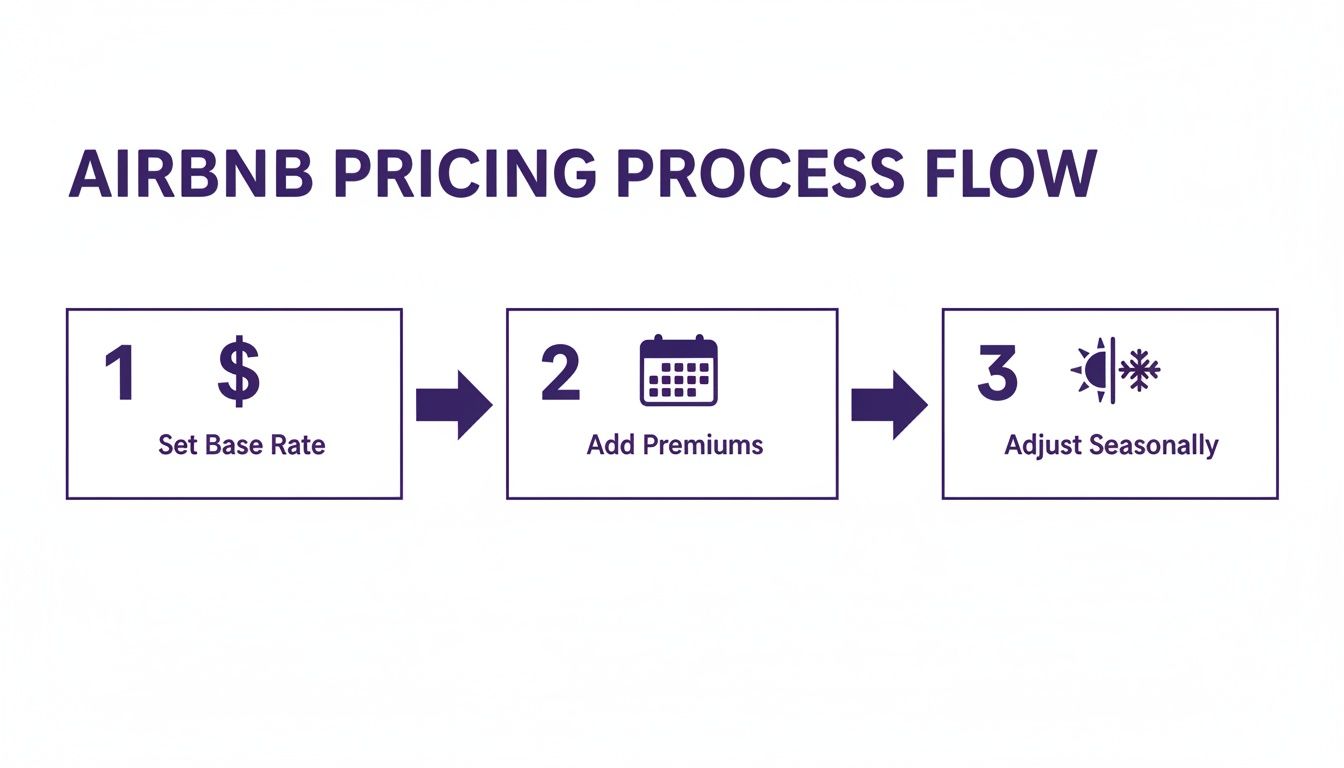
Just as this process shows pricing building from a base rate to seasonal adjustments, your communication should build logically from a warm welcome to a fond farewell.
The Digital Guidebook: Your 24/7 Co-Host
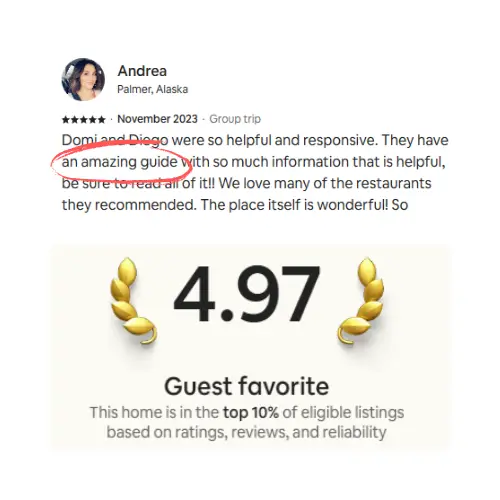
The single most powerful tool for elevating the guest experience is a professional digital guidebook. Think of it as an interactive, always-on concierge for your property. It’s where you can house everything a guest could need, from the Wi-Fi password to your favorite local taco spot.
For seamless 24/7 communication, some hosts explore professional services such as a programmatic real estate answering service to ensure timely responses.
A great guidebook does more than just answer questions; it empowers guests. They can find appliance instructions, learn about neighborhood gems, and solve minor issues on their own, giving them a sense of independence and control.
This is exactly why we built SmoothStay. We needed a tool that was customizable, professional, and simple for guests to use—no app downloads required. With features like our AI-powered guest assistant, we've been able to reduce repetitive questions significantly. It gives our guests instant answers while saving us time. By the end of their stay, guests feel informed, cared for, and more likely to leave that glowing five-star review.
Making Sense of Reviews and Platform Policies
In the world of Airbnb, reviews are your currency. They are the social proof that tells potential guests what to expect, and they directly impact your search ranking and booking frequency. Learning to manage them—along with the platform’s rules—is a must for long-term success.
This is about more than chasing five-star ratings; it's about building a reputation people trust. We learned early on that being proactive with the review process, from encouraging feedback to navigating disputes, is the best way to protect your business.
The Art of Encouraging and Writing Reviews
The surest way to get a great review is to earn it by providing a fantastic experience. But the work doesn't stop at check-out. It’s vital to leave a review for every guest, and to do it quickly. This triggers a notification from Airbnb, nudging the guest to leave a review for you in return.
We use a simple template that we customize for each guest:
Start with a personal touch: Mention something specific about their stay. "It was a pleasure hosting John and his family..."
Comment on their conduct: Note that they were clean, communicative, and respectful. "They left our D.C. home in wonderful condition and were excellent communicators."
End with a clear recommendation: Wrap it up with a positive statement. "We would happily welcome them back and highly recommend them to other hosts."
This simple process not only boosts your chances of getting a review back but also helps other hosts make better decisions. Think of it as paying it forward in the hosting community.
Handling Negative Reviews and Disputes
No matter how great your property is, a negative review is bound to happen. When it does, your response is everything. The key is to stay calm and professional. A thoughtful, non-defensive public reply shows future guests that you're a reasonable host who takes feedback seriously.
Our Golden Rule for Bad Reviews: Acknowledge, Apologize (if appropriate), and Address. Thank the guest for their feedback, express regret that their stay wasn't perfect, and briefly explain what you've done to fix the issue.
For problems that go beyond a bad review, like property damage, use Airbnb’s Resolution Center. Always communicate calmly and factually through the platform, backing up your claims with clear photos or video. This creates an official paper trail that Airbnb support can review if you need to escalate the situation.
Understanding Host Protections Like AirCover
AirCover for Hosts is Airbnb’s built-in protection program, offering coverage for things like damage protection and liability insurance. It’s a great safety net, but you need to understand its limits and how the process works before you need it.
It’s also important to recognize that Airbnb's platform is built to reward hosts who provide top-tier experiences. When the company launched its official Airbnb Services and reimagined Experiences, those offerings received an average rating of 4.93 out of five stars, a detail highlighted in a recent company report. This shows the platform's deep commitment to quality, a standard that AirCover is designed to uphold. You can even see this trend reflected in Airbnb's Q3 2025 financial results.
If you ever need to make a claim, follow these steps:
Document everything: Take clear photos and videos of the damage immediately.
File your request: Submit an AirCover for Hosts request through the Resolution Center within 14 days of the guest's check-out.
Be patient but persistent: The claims process can take time, so follow up as needed while always remaining professional.
Getting a handle on these policies is a core part of running a professional operation. It’s the behind-the-scenes work that protects your investment and ensures you can keep hosting for years to come.
Scaling Your Hosting Business From One to Many
Once you get the hang of hosting your first property, it’s natural to think bigger. But making the jump from a side hustle to a full-on business isn’t just about adding properties; it requires a new mindset and robust systems to keep everything running smoothly.
This leap is about shifting from being a host to being an operator. We learned this firsthand when we grew from managing our own house in D.C. to running properties in the Riviera Maya. The secret to success at scale is creating repeatable, efficient processes.
Building Your Operational Foundation
Before you look at a second property, your first job is to systemize your current operation. Can your cleaning and maintenance routine handle twice the work without you being there for every turnover?
The goal is to build a business that runs for you, not because of you. This means documenting every process—from your cleaning checklist to your guest messaging scripts—so you can eventually hand it off to your team.
Think about the core pillars you'll need in place:
Cleaning and Maintenance: Find and train a reliable cleaning team you can count on. You’ll also want a go-to list of contractors (plumbers, electricians, HVAC pros) who understand that a short-term rental issue is an emergency.
Legal Structure: Chat with an accountant and a lawyer about setting up the right business structure, like an LLC. This is crucial for protecting your personal assets as your business grows.
Guest Communication: One person can juggle inquiries for a single property, but a portfolio needs a system. This is where automation and clear processes become essential.
The Right Technology for Growth
Trying to scale manually is a recipe for burnout. The right technology stack automates repetitive tasks, freeing you up to focus on growing the business instead of getting buried in day-to-day operations.
For any host managing multiple properties, a few tools are non-negotiable.
Channel Manager: This tool syncs your calendars and listings across different platforms like Airbnb, Vrbo, and Booking.com to prevent double bookings.
Dynamic Pricing Software: As we covered earlier, tools like PriceLabs or Wheelhouse become even more critical as you scale, helping you optimize rates across your entire portfolio automatically.
Guest Experience Platform: A digital guidebook solution like SmoothStay becomes the central hub for all your guest information. Instead of managing individual documents for each property, you can manage professional, customizable guidebooks from one dashboard. This ensures every guest gets a consistent, high-quality experience.
Tapping into a Growing Market
The demand for short-term rentals continues to climb, which means there are opportunities for hosts who are ready to expand. For example, recent industry analysis shows Airbnb's share of the business travel market has grown from 28% in 2019 to 44% in 2024.
And it’s not just for work trips. Since early 2022, demand for short-term rentals has consistently grown faster than for traditional hotels, showing a clear shift in traveler preferences. This trend is a huge opening for hosts who can cater to longer stays and offer business-friendly amenities. You can learn more about these hospitality trends and see the data for yourself.
Scaling is a journey that requires a new way of thinking, a commitment to building systems, and a smart investment in technology. By putting in that groundwork now, you can build a thriving business that delivers an amazing experience for guests, one property at a time.
Your Top Airbnb Hosting Questions, Answered
Once you’ve got the basics down, the real questions start popping up. We get it. After years of hosting, we’ve heard just about everything. Here are answers to the most common questions we see from hosts ready to get serious.
How Much Does It Really Cost to Start an Airbnb?
This is a big one, and the honest answer is: it depends. The initial investment can vary widely based on your property’s condition and location. You’re not just buying a bed; you're creating an experience.
The main expenses are furniture, professional photos (don't skip this!), and stocking up on initial supplies like quality linens, towels, and toiletries. Then there are potential repairs or cosmetic touch-ups needed to make the space shine.
For a standard one-bedroom apartment, a realistic starting budget can be anywhere from $3,000 to $10,000, and that’s before you factor in the property itself. Remember to also set aside a fund for recurring costs—utilities, specialized insurance, cleaning fees, and a "rainy day" fund for unexpected repairs.
What Are the Most Important Legal and Tax Considerations?
Getting this right from day one is non-negotiable. First, you must dig into your local regulations. Check with your city, county, and even your HOA about their rules for short-term rentals. Many areas require special permits or licenses, and some have outright bans. Don’t assume it’s okay.
Next is insurance. Your standard homeowner's policy almost certainly won't cover commercial hosting. You need a policy specifically designed for short-term rentals to be protected. Finally, get familiar with your tax obligations. You'll need to understand how to handle rental income at both the federal and local levels.
We can't stress this enough: consult with a local lawyer and an accountant who specialize in real estate. It's an upfront cost that will save you from massive headaches down the line.
Based on our experience, getting professional advice on legal and tax matters from the beginning is one of the smartest investments you can make. It protects you from costly fines and legal headaches later on.
How Do I Handle a Difficult Guest or a Bad Review?
Sooner or later, it’s going to happen. The key is to keep your cool and stay professional.
If you have a difficult guest during their stay, keep all communication on the Airbnb platform. This creates an official paper trail. If they're breaking your house rules, document everything with photos or screenshots, and don't hesitate to contact Airbnb support for help.
When a bad review comes in, take a deep breath before you respond. Post a public, polite, and professional reply. Acknowledge their feedback without getting defensive. If there's another side to the story, state it briefly and factually. Then, mention any steps you've taken to fix the issue. A thoughtful response shows future guests that you're a responsible host, which can often cancel out the negative impact of the review itself.
At SmoothStay, we're here to help you turn these challenges into opportunities. Our customizable, professional guidebooks empower you to set clear expectations and provide instant answers, reducing issues before they start. Built by hosts for hosts, our platform with its AI-powered features is designed to help you deliver a guest-first experience that earns more five-star reviews.
Ready to provide a seamless stay? Start your free 14-day trial of SmoothStay today.