Build a Direct Booking Website That Converts
Learn to create a direct booking website that boosts revenue and builds your brand. Get practical, host-tested advice on tech, design, and marketing.
Disclosure: Some links in this article are affiliate links. If you make a purchase, we may earn a commission at no extra cost to you. This helps support our content.
A direct booking website is your own little corner of the internet, an online storefront where guests can book their stays directly with you. Think of it as cutting out the middleman—no more relying solely on giants like Airbnb or Vrbo. This is your chance to take the reins of your hosting business, set your own rules, and keep a whole lot more of your hard-earned revenue.
Why You Need to Take Back Control
If you're anything like us, you've probably winced at those hefty OTA commissions and felt boxed in by their rigid rules. After years of hosting our own properties—from our 4-bedroom house in Washington, DC to beach getaways in the Riviera Maya—it became crystal clear: relying only on the big platforms meant we were leaving a massive chunk of our income and, just as importantly, our guest relationships on the table.
Launching your own direct booking site isn't just a tech project; it's a strategic move. It’s the decision that transforms you from just another listing into a genuine hospitality brand.
The Financial Argument for Going Direct
The most compelling reason to go direct is the money. It's that simple. While the big platforms are fantastic for getting eyeballs on your property, their fees can be brutal.
The numbers don't lie. OTAs typically skim 15-25% in commissions off every single reservation. With direct bookings? That commission is zero. Every dollar a guest spends goes straight into your pocket, which dramatically boosts your bottom line. Data from 2023 shows that the average booking value on direct hotel sites is $195, topping both Booking.com ($175) and Expedia ($168).
By cutting out the middleman, you can often offer guests a slightly better rate while still increasing your profit margin. It’s a win-win that builds serious loyalty. This is a core idea we dive into in our guide on how to make money on Airbnb, where squeezing the most out of every booking is the name of the game.
Owning the Guest Relationship
Beyond the financials, a direct booking site puts you in charge of the entire guest experience. You're no longer just a profile on a crowded platform; you're building a brand people remember. This direct line of communication is powerful. It lets you:
Gather valuable guest data for personalized marketing down the road.
Set your own house rules and cancellation policies without platform constraints.
Curate a unique experience from the very first click on your website.
Build a loyal following by offering exclusive deals to past guests.
For us, this was the real game-changer. We could finally build a community around our properties, turning one-time visitors into regulars who book with us year after year.
To get the full picture of how this works on an operational level and pick the right tools, it’s worth checking out a comprehensive guide to booking systems for small businesses. It’s a great starting point for understanding the tech that can make this happen smoothly.
Choosing Your Tech Stack Without The Headache
Getting the technology right is the foundation of your direct booking site, but it doesn't have to be a nightmare. When we first started, the options felt completely overwhelming. After a lot of trial and error, we learned that the perfect setup really just boils down to three core components: a website builder, a booking engine, and a channel manager.
Think of these as the engine, chassis, and dashboard of your direct booking car. The website builder is the chassis—it gives your site its structure and look. The booking engine is the powerful engine that handles reservations and payments. And finally, the channel manager is your dashboard, keeping everything in sync so you don't crash and burn with a double booking.
This is all about taking back control, boosting your profits, and building a real brand that guests remember.
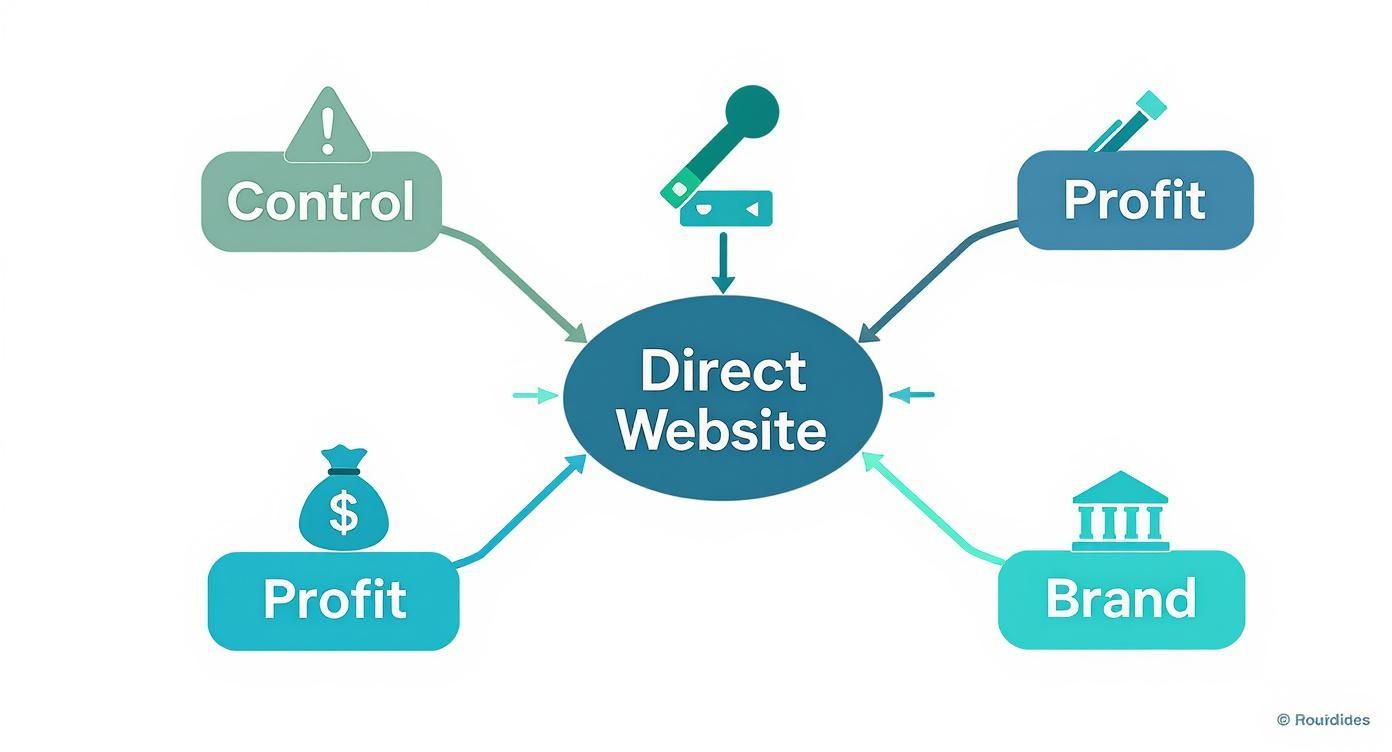
As you can see, each piece feeds into the others, creating a much stronger, more resilient business that isn't completely at the mercy of the big booking platforms.
Website Builder and Booking Engine
Your first big decision is choosing how to actually build the site. You have two main paths: all-in-one platforms or a custom stack. All-in-ones handle everything for you but can feel a bit restrictive. In our experience, a custom approach, pairing WordPress with a dedicated booking engine plugin, offered the most control.
This gave us total creative freedom over our brand without sacrificing the powerful features we needed. When you're picking a booking engine, make sure it offers these must-haves:
Real-time availability: The calendar must be live and 100% accurate. No exceptions.
Dynamic pricing integration: It needs to let you adjust rates based on demand, season, or length of stay.
Secure payment gateway: Integration with trusted processors like Stripe or PayPal is non-negotiable for building guest confidence.
Automated guest messaging: Pre-arrival emails and check-in instructions save a staggering amount of time.
Comparing Direct Booking Technology Approaches
Deciding whether an all-in-one platform or a custom stack is the right fit for your business goals, budget, and technical comfort level is a key first step. This table breaks down the major differences to help you choose your path.
Factor | All-in-One Platforms (e.g., Lodgify, OwnerRez) | Custom Stack (e.g., WordPress + Booking Engine) |
|---|---|---|
Ease of Use | User-friendly, designed for non-tech users. Quick setup. | Steeper learning curve. Requires more technical know-how. |
Customization | Limited to platform templates and pre-set features. | Nearly unlimited design and functionality control. |
Cost | Monthly subscription model, often tiered by # of properties. | Higher upfront cost for development, lower ongoing costs. |
Integration | Built-in features (booking, payments, channel manager). | Requires selecting and integrating separate plugins/tools. |
Best For | Hosts who want simplicity and an out-of-the-box solution. | Hosts who want a unique brand and full control over their site. |
Ultimately, there's no single "best" answer—it's about what works for your business. An all-in-one is great for getting started quickly, while a custom stack offers more long-term flexibility and brand ownership.
Getting this part right is crucial, as the right property management system can streamline your entire operation. For a deeper look, you can explore our breakdown of the best property management systems for hosts to see which might fit your specific needs.
The Non-Negotiable Channel Manager
Here’s a piece of advice we can’t stress enough: a channel manager with flawless, two-way sync is absolutely essential. A channel manager is the software that connects your direct booking website calendar to your calendars on Airbnb, Vrbo, Booking.com, and any other channels you use.
When a guest books a week on your website, the channel manager instantly blocks those dates on every other platform. When a booking comes through Airbnb, it blocks them on your direct site. This is how you prevent the dreaded double booking—a total nightmare for both you and your guests.
For us, this was the missing piece of the puzzle. We eventually landed on a tool called Hospitable to manage our listings, and it works great. It became the central hub for our calendars, guest communication, and even coordinating with our cleaning teams.
The reliability of your channel manager is what allows you to confidently promote your direct booking website without constantly worrying about calendar conflicts. It provides the operational peace of mind needed to scale your business and manage multiple properties across different platforms seamlessly. Without it, you're just creating more work and a ton of unnecessary risk.
Designing a Website That Converts Lookers Into Bookers
A beautiful direct booking website is a great start, but let's be real—what you actually need is a website that turns casual browsers into confirmed guests. After you've got the basic site set up, this is where the real work begins. It all comes down to creating a great guest experience and building the kind of trust that makes someone feel confident booking with you directly instead of on a big OTA.
Through years of tweaking our own sites for properties in DC and the Riviera Maya, we’ve boiled it down to a few non-negotiable essentials. You don't need a fancy design agency; you just need to focus on what guests actually care about.
Nail the Visual First Impression
Your photos are your single most important asset. Period. Before a guest reads a single word, they’re scrolling through your image gallery. Grainy, poorly lit phone pictures just scream "amateur" and instantly kill any trust you were trying to build.
Investing in professional photography isn't a luxury; it's a foundational cost of doing business. A good photographer knows how to capture the light, stage the space, and highlight the unique features that make your property special. These images sell the dream and justify your nightly rate. Don't skip this.
Tell a Story, Don't Just List Amenities
Your property description is your sales pitch. While OTAs often force you into a rigid, boring format, your own site is where you can finally let your property's personality shine. Don’t just list "3 beds, 2 baths." Tell a story.
Who is your ideal guest? Write for them. Is it a family looking for a relaxing beach getaway? A couple seeking a romantic urban escape? Use language that speaks directly to their desires.
What makes your place special? Talk about the morning sun on the balcony, the cozy fireplace perfect for chilly evenings, or the short walk to the best tacos in town. Paint a picture of the experience.
Use descriptive headlines and short paragraphs. Make it easy for people to scan and absorb the key details without getting lost in a wall of text.
Crafting compelling descriptions is a real skill, and we’ve put together some of our best advice in our guide on how to write a killer Airbnb description, which applies just as well here.
When we first started, our descriptions were very functional. The moment we shifted to telling a story—describing the experience of staying with us—our booking inquiries shot up. It made a huge difference.
Build Trust Through Transparency
Guests booking on an independent website are taking a small leap of faith. Your job is to make that leap as small and easy as possible by building trust on every single page. This is where you can really outshine the impersonal nature of the big platforms.
Show Your Face
An "About Us" page was a game-changer for us. Sharing a bit about who we are, why we love hosting, and what guests can expect from us humanized our brand instantly. It shows there are real, caring people behind the website, not some faceless corporation.
Leverage Social Proof
Display guest reviews prominently. You can use widgets to pull in reviews directly from your Airbnb or Vrbo listings, or simply copy and paste your favorites (with permission, of course). Seeing positive feedback from past guests is one of the strongest trust signals you can possibly provide.
Answer Questions Before They're Asked
A detailed FAQ page is your secret weapon for reducing back-and-forth emails. Think of every single question you've ever been asked—from "Do you have a coffee maker?" to "What's your cancellation policy?"—and answer it clearly and concisely.
Make Booking Effortless on Any Device
Finally, the booking process itself must be dead simple. A clunky, confusing, or multi-step checkout is the fastest way to lose a sale. If you can, keep it all on one page with crystal-clear pricing, no surprise fees, and a big, obvious "Book Now" button.
This seamless experience is especially critical on mobile. While many travelers still finalize their booking on a desktop, that gap is closing fast. According to recent industry data, online bookings are on track to make up 69% of all travel transactions by 2029, with mobile driving a huge part of that shift.
A mobile-friendly design isn't optional anymore; it's essential for capturing bookings from guests who are researching and booking on the go. After all, a user-friendly site is the first step toward building a successful business, and there are plenty of proven tips to improve website conversion rates you can explore to optimize your sales funnel even further.
Driving Traffic Without a Huge Marketing Budget
So, you’ve built your shiny new direct booking website. Now what? Building it is one thing; getting guests to actually find and use it is a whole different ballgame. The good news? You don't need a massive marketing budget, just a smart, focused strategy. For us, this meant getting back to basics and thinking like a guest.
You already have an audience—your past and future guests from the OTAs. The trick is to gently guide them over to your new site without breaking any platform rules. It's all about building a sustainable marketing engine that works for you 24/7.
Mastering the Art of Search Engine Optimization (SEO)
Search Engine Optimization (SEO) sounds way more intimidating than it is. Really, it’s just about making it easy for search engines like Google to understand what your website is about. When a traveler searches for a place to stay, a site with good SEO has a much better shot at landing on that coveted first page of results.
Think about what potential guests are actually typing into Google. They’re not just searching for "vacation rental." They're getting specific:
"beachfront condo Tulum with private pool"
"family-friendly 4 bedroom house Washington DC"
"pet-friendly cabin near hiking trails"
These longer, more detailed phrases are called long-tail keywords. They might get fewer searches, but the people using them are much closer to making a booking. We’ve found that sprinkling these naturally throughout our property descriptions, page titles, and even image descriptions makes a huge difference.
For a deeper dive, our guide to creating a strong vacation rental marketing strategy covers SEO and other key tactics in a lot more detail.
Create Content That Attracts Guests
One of the most effective ways we’ve driven traffic is through simple content marketing. A blog on your direct booking site is a powerful tool for catching guests early in their travel planning. You're the local expert, so share that knowledge!
Write articles about topics your ideal guests would actually care about. If you have a beach house in Playa del Carmen, create a guide to the "Top 5 Cenotes for Families" or "A Foodie's Guide to 5th Avenue." This kind of helpful content doesn't just attract visitors; it establishes you as a trustworthy authority.
Your goal isn't just to sell a stay; it's to sell the entire experience. By providing real value upfront, you build a connection with potential guests long before they're ready to click "book."
Gently Nudging Guests From OTAs
Your existing OTA listings are a goldmine of potential direct bookers. Now, you can't just plaster your website URL all over your Airbnb profile—that's a fast track to getting penalized. But you can be subtle and strategic.
Once a guest has completed their stay, the relationship is yours to nurture. We always send a follow-up email thanking them for staying with us. In that same email, we mention that they can get the best rates for future trips by booking directly through our website. Easy.
We also leave a small, branded card in the property with a QR code that links to our site. It's a simple, non-intrusive way to let happy guests know there's a better way to book next time.
Build a Community on Social Media and Email
Social media isn't just for posting pretty pictures of your property (though you should definitely do that!). It's for building a community. We use Instagram and Facebook to share local tips, highlight upcoming events, and run occasional promotions exclusive to our followers. This keeps our properties top-of-mind for past guests and attracts new ones.
Finally, never underestimate the power of email marketing. Every direct booking you get is an opportunity to add a guest to your email list. A simple monthly newsletter with updates, local news, and a special offer for repeat bookers can turn one-time visitors into loyal fans who book directly with you for years to come.
Building the Trust That Wins Direct Bookings
Let's be honest: this is the biggest hurdle you'll face. You're asking a potential guest to pull out their credit card and book on your website instead of a massive platform they already know and trust. You aren't just competing on photos or price; you're competing on credibility.
We've learned over the years that building this trust isn’t about one big, flashy thing. It’s about a dozen small, professional signals that all add up to a feeling of safety and reliability for your guests.
When you're up against giants like Booking Holdings, which pulled in nearly 519 million website visits in a single month in early 2024, you start to see the scale of the challenge. Their brand recognition is immense. Overcoming that requires a deliberate strategy to show guests you’re a serious, trustworthy operator. You can get a better sense of this from recent online travel booking statistics.
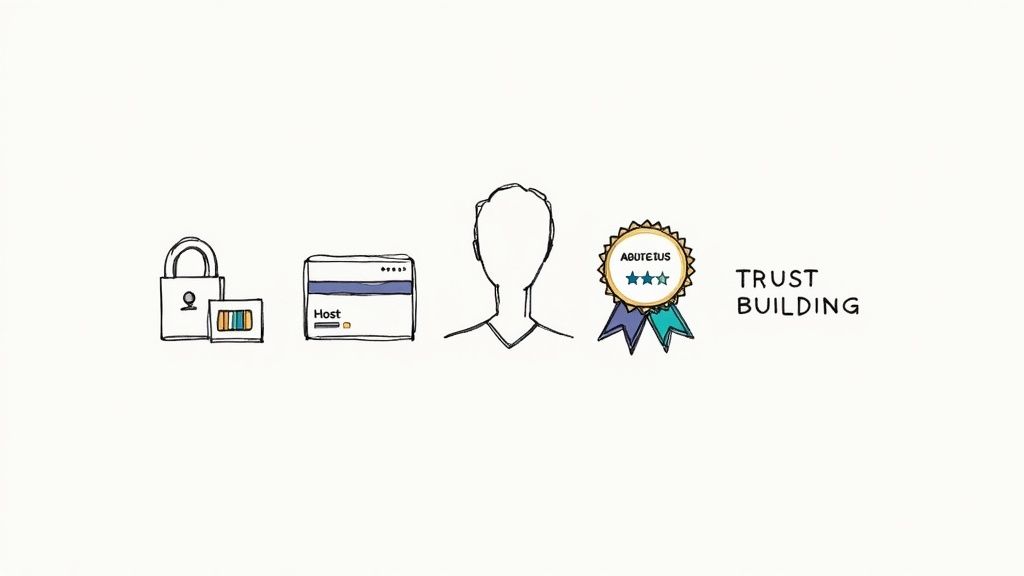
Display Every Trust Signal You Can
Think of your website as a digital storefront. What makes a physical shop feel legitimate? It’s clean, has clear pricing, professional signage, and a secure way to pay. The exact same principles apply online.
Your mission is to remove every ounce of friction and doubt from the guest’s mind. That means making your commitment to their security and overall experience obvious at every single turn.
Secure Payments: First and foremost, use a recognizable, PCI-compliant payment processor like Stripe or PayPal. Never, ever handle credit card information yourself. Displaying their logos in your website footer and at checkout is a powerful visual cue that tells guests their data is safe.
Clear Policies: Don’t bury your cancellation policy or house rules in the fine print. Give them their own dedicated, easy-to-find page. Being transparent shows you respect the guest and have thought through all the professional details.
Professional Branding: From your logo and color scheme to your tone of voice, consistency is everything. A polished, cohesive brand sends a clear message: you take your business seriously. It doesn’t have to be fancy—just clean and professional.
Humanize Your Brand and Showcase Your Expertise
Here's your secret weapon against the faceless OTAs. People love supporting small businesses and connecting with the real humans behind them. On our own sites, sharing our personal story and philosophy as hosts was a huge turning point in building that initial connection.
We realized guests weren't just booking a house; they were trusting us to deliver a great experience. Sharing a photo and a brief bio on our 'About Us' page instantly made our operation feel more personal and less transactional.
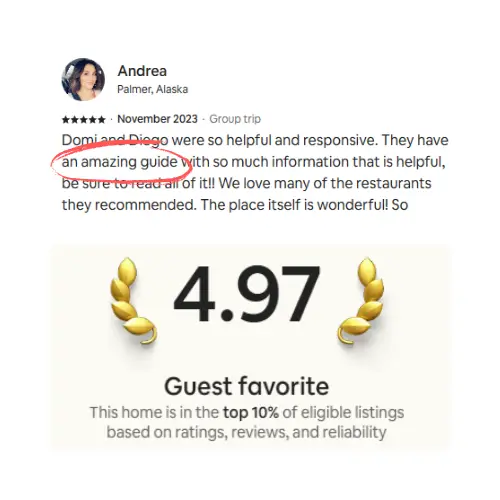
Another powerful way to signal a higher level of care is with a polished, professional digital guidebook. It shows you’ve anticipated guest needs far beyond just handing over the keys. This level of detail reassures them they're booking with an operator who is genuinely committed to their entire trip, from booking to checkout.
Tools like SmoothStay are built for exactly this. You can create a beautiful, AI-powered guidebook that rivals anything an OTA offers, packed with features designed for the guest. This isn't just about providing information; it's about demonstrating your professionalism before they even book. Presenting this kind of detail upfront can be the final nudge a hesitant guest needs. Find out more about the 7 ways digital guidebooks boost guest satisfaction in our dedicated article.
Your Top Questions About Going Direct, Answered
Jumping into the world of direct bookings always kicks up a lot of questions. It's a big move, and you absolutely should have all the facts before you dive in. After building our own direct booking business and talking with countless hosts over the years, we've boiled down the most common questions to some straightforward, no-fluff answers.
What’s the Real Cost to Run a Direct Booking Site?
This is the big one, right? The honest answer is that it varies, but you can get started without breaking the bank.
If you’re comfortable with a bit of DIY, a site on a platform like Squarespace or Wix paired with a separate booking engine might set you back $30-$60 a month. On the other hand, all-in-one platforms built specifically for hosts, like Lodgify, usually land in the $40-$100+ range, depending on how many properties you have.
When we first started, we went with a simple template-based system. It let us prove the concept and see a return before we decided to invest more. And don't forget the small annual costs, like your domain name—that's typically around $15 per year.
How Do I Handle Payments Without Getting Hacked?
Payment security is all about trust. The golden rule here is simple and non-negotiable: never handle credit card data yourself.
Let the pros handle it. Use a well-known, PCI-compliant payment processor like Stripe or PayPal. Modern booking engines are built to integrate directly with these services, so the entire secure transaction happens on their ultra-secure servers, not yours. You'll also need an SSL certificate for your site, which is what gives you the secure "https" in your URL and that little padlock icon guests look for.
We noticed a real jump in guest confidence just by adding the logos for Visa, Mastercard, and Stripe to our checkout page. It’s a tiny visual cue that instantly says, "Your information is safe here."
Will My Own Site Hurt My Airbnb or Vrbo Rankings?
This is a totally valid fear, but the short answer is no—as long as you’re smart about it. The secret weapon here is perfect, instant calendar synchronization. OTAs reward reliable hosts with accurate calendars, and the fastest way to prove you’re a pro is to eliminate any chance of a double booking.
This is where a high-quality channel manager becomes your best friend. We've used Hospitable for years, and it's been rock-solid. The second a booking hits—whether from your direct site, Airbnb, or Vrbo—it instantly blocks those dates everywhere else. A clean, accurate calendar signals to the OTAs that you're a serious operator, and that can only help your standing.
What's the Best Way to Get My First Direct Booking?
Look no further than your past guests. These are your biggest fans and your most enthusiastic ambassadors. Once someone has had a fantastic stay, that relationship is yours to nurture. They are, by far, the lowest-hanging fruit for landing that first direct booking.
We've seen great results from a few simple tactics:
The Follow-Up Email: A few days after checkout, we send a quick "thank you" email. In it, we mention our new direct booking site and offer a small discount or a little perk for their next stay if they book with us directly.
The In-Property Nudge: A nicely designed, branded card or magnet on the fridge with your website URL and a QR code works wonders. It’s a subtle reminder for happy guests to skip the middleman next time.
A Direct-Only Perk: To attract brand-new guests, offer a small, exclusive incentive that makes them feel special. Think complimentary late check-out, a bottle of local wine, or free use of your beach gear—things that don't cost much but add a ton of value for the guest.
Ultimately, launching a direct booking website is about taking back control. It’s about building a more resilient, profitable business for the long haul. It takes some front-end effort, but the payoff of owning your guest relationships and keeping more of your revenue makes it all worthwhile.
At SmoothStay, we're hosts just like you, building tools to solve the challenges we've faced ourselves. Our AI-powered digital guidebooks are designed to help you create a guest-first experience that builds trust, earns 5-star reviews, and encourages those all-important repeat bookings. Create a customizable, professional guidebook today and show your guests the next level of hospitality. https://www.smoothstay.io