Mastering Airbnb Reviews for Hosts: A Practical Guide
Unlock more 5-star Airbnb reviews for hosts with our expert guide. Learn how to get positive feedback, handle negative reviews, and impress guests.
Disclosure: Some links in this article are affiliate links. If you make a purchase, we may earn a commission at no extra cost to you. This helps support our content.
Your Airbnb reviews are much more than just feedback—they're the engine that drives your hosting business. A high review score directly fuels your search ranking, booking rate, and your eligibility for Superhost status.
Put simply, it all translates into more revenue. A stellar review profile builds instant trust with potential guests, which is what allows you to command higher nightly rates and keep your calendar full.
Why Your Airbnb Reviews Matter More Than Ever
As hosts ourselves for over a decade—running everything from our family home in Washington, D.C. to a few beach properties in the Riviera Maya—we’ve learned one simple truth: your review score is your reputation. It’s often the first thing a potential guest looks at and the last thing they consider before hitting "Book."
A strong collection of positive Airbnb reviews for hosts isn't just a nice-to-have; it's a core business asset. It acts as powerful social proof, telling future guests that your property is a safe bet. This trust is what separates top-performing listings from the ones that struggle to get bookings.
The New Standard Is a 5-Star Rating
Back in the early days of Airbnb, a 4-star review felt pretty good. Not anymore. Guest expectations have soared, and a 5-star rating has become the unofficial standard for a successful stay.
Anything less can signal to potential guests that something was off, even if it was minor.
The data backs this up. According to a recent AirDNA analysis, the average rating across all Airbnb listings globally is an impressive 4.7 stars. This shows just how critical it is to aim for excellence with every single guest to stay competitive.
From our experience, we treat our review strategy as a fundamental part of our operations, not an afterthought. Every decision, from the quality of our linens to the clarity of our check-in instructions, is made with the goal of earning that 5-star feedback.
Direct Impacts on Your Hosting Business
To see just how much your reviews can move the needle, here’s a quick breakdown of their direct impact on your business.
How Your Airbnb Reviews Impact Your Business
Area of Impact | How Reviews Influence It |
|---|---|
Search Ranking | Airbnb’s algorithm favors high ratings. Better reviews mean your listing shows up higher in search results. |
Booking Rate | Guests overwhelmingly choose properties with a proven track record. More positive reviews lead directly to more bookings. |
Superhost Status | A high average rating is a non-negotiable requirement for becoming a Superhost and getting all the perks that come with it. |
Pricing Power | A strong 5-star reputation builds trust, giving you the leverage to charge higher nightly rates than your competition. |
Repeat Guests | A fantastic, 5-star experience is the best way to encourage repeat business and build a loyal guest base. |
As you can see, a consistently high score doesn't just feel good; it delivers tangible results that grow your bottom line. It's about building a sustainable business.
Here's how those pieces fit together:
Higher Search Ranking: Airbnb’s algorithm is designed to reward hosts who deliver great experiences. Higher ratings push you up the search results page, putting you in front of more potential guests.
Increased Booking Rate: Social proof is incredibly powerful. Guests are far more likely to book a property with a long history of excellent reviews. It just feels safer.
Superhost Status: Maintaining a high average rating is a key pillar for achieving Superhost status, which brings added visibility, trust, and even booking priority. You can learn more in our deep dive on how to meet Superhost requirements on Airbnb.
Repeat Bookings: A fantastic experience is what turns a one-time guest into a repeat customer. Understanding the importance of customer loyalty is key to building a rental business that thrives long-term.
Creating a 5-Star Experience Before Checkout
A 5-star review isn't a surprise gift your guest leaves you at checkout. It's the natural result of a seamless, thoughtful experience you build from the moment they book. We've learned from hosting hundreds of stays that the best Airbnb reviews for hosts are earned long before the guest even packs their bags to leave.
The whole process comes down to proactive hospitality. It’s about anticipating needs, solving problems before they happen, and making your guests feel genuinely looked after. This doesn't require a huge budget, just a smart, repeatable system.
Set Crystal-Clear Expectations from the Start
The root of most negative reviews isn't a terrible property; it's a mismatch between what guests expect and what they actually get. Your Airbnb listing is your first and most important tool for setting the right tone. Honesty and accuracy are completely non-negotiable here.
Is your beautiful beach condo in Tulum a 15-minute walk from the sand? Say so. Does our charming DC row house have steep, narrow stairs? We mention it and show a picture.
Being upfront builds immediate trust. More importantly, it helps you attract the right guests for your space and filters out those who might be disappointed. Trying to hide a small imperfection almost always backfires.
Pay close attention to these areas:
Location Specifics: Use precise language. "Steps away" means something very different from a "short drive." Be specific about distances to key attractions, beaches, or public transport.
Property Quirks: Every home has them. Whether it’s spotty cell service in a mountain cabin or street noise in a city apartment, being transparent prevents guests from feeling misled.
Amenities: Be exact. If you list a "fully equipped kitchen," make sure it includes more than just a single pot and a coffee maker. Show photos of the drawers and cupboards so guests know what to expect.
House Rules: Keep them simple, clear, and focused on respect for the property and neighbors. Overly restrictive rules can make guests feel unwelcome before they even arrive.
Master Your Guest Communication Timeline
Consistent, timely communication makes guests feel secure and supported. It shows you’re an engaged and professional host. Over the years, we've dialed in a communication timeline that hits all the right notes without ever feeling spammy.
Here’s the messaging flow that has worked wonders for us:
Booking Confirmation (Immediately): A warm, automated "thank you" message confirms their reservation and lets them know you've received it. This is your first chance to make a great impression.
Pre-Arrival Check-In (3 Days Before): This message has all the critical arrival details—the full address, check-in instructions, door codes, and a link to your digital guidebook. Sending it a few days in advance gives them time to plan.
First Morning Check-In (Day After Arrival): A simple, friendly message asking if they settled in okay and if they need anything. This proactive step can stop small issues (like trouble with the Wi-Fi) from turning into bigger frustrations.
Pre-Checkout Reminder (Evening Before Departure): A gentle reminder of the checkout time and any simple departure instructions, like where to leave the keys or take out the trash.
Post-Checkout Thank You (A Few Hours After Departure): This is a final thank you for their stay. It’s also a great, low-pressure moment to mention that you've valued their visit and will be leaving them a positive review, which subtly encourages them to do the same.
We found that this structured communication timeline dramatically reduced repetitive questions. Guests feel like we're one step ahead, which makes their entire stay feel smoother and more professional.
The Power of a Flawless Digital Guidebook
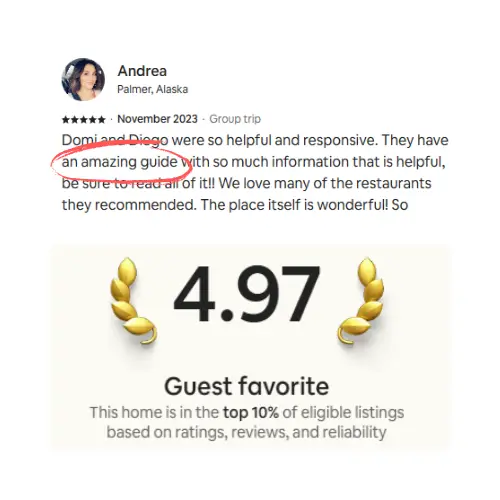
If there's one tool that has had the single biggest impact on our guest experience and reviews, it’s the digital guidebook. It’s the ultimate problem-solver, putting every piece of information a guest could possibly need right at their fingertips.
Think about it: no more late-night texts asking for the Wi-Fi password or questions about how to use the coffee machine. It’s all there, accessible 24/7 on their phone. This one shift can reduce guest friction by an incredible amount.
A great digital guidebook, like the ones you can create with SmoothStay, should be more than just a list of rules. It should be a curated welcome package that genuinely enhances their trip.
We organize our guidebooks into these key sections:
Arrival & Access: Step-by-step check-in instructions with photos, parking details, and key codes.
House Info: Wi-Fi network and password, instructions for appliances (TV, coffee maker, thermostat), and safety information.
Local Recommendations: Our personal favorite restaurants, coffee shops, activities, and grocery stores. This insider knowledge is something guests truly value.
Checkout Instructions: A clear, simple checklist for departure.
By centralizing all this information, you empower guests to be self-sufficient. They feel more in control of their stay, and you get fewer interruptions. It’s a classic win-win that consistently leads to glowing Airbnb reviews for hosts, where guests rave about how organized and thoughtful you are.
How to Ask for Guest Reviews Without Being Pushy
Just crossing your fingers and hoping for a great review isn't much of a strategy. If you want to build a strong profile of Airbnb reviews for hosts, you need a gentle, professional process for asking. It’s a delicate balance—you want to encourage guests to share their thoughts without making them feel pressured or annoyed.
After years of hosting, we've learned that the key is to make it feel like a natural, final step in their trip. You’re not just asking for a favor; you’re inviting them to share their experience to help future travelers. That simple shift in perspective makes all the difference.
The Best Time to Send Your Review Request
Timing is everything. Ask too early, and you can come across as desperate. Ask too late, and the guest has already mentally checked out of their vacation, making them far less likely to bother.
We've tested different timings across our properties and have definitely found a sweet spot that works. We send our review request message about 24 hours after checkout.
This gives guests a full day to travel home and get settled, but the great memories of their stay are still fresh. It’s the perfect little window to catch them before the daily grind completely takes over.
Write Your Review of the Guest First
Before you even think about sending that request, make it a habit to write a review for your guest. This is probably the single most effective thing you can do to get one in return. When a guest sees that Airbnb notification pop up—"Your host has reviewed you"—their curiosity is immediately piqued, and it often prompts them to complete the cycle.
It doesn't have to be a novel. A couple of personalized, positive sentences is all it takes.
Focus on the positive: Mention how great they were with communication, how respectfully they treated your home, or simply that they were a pleasure to host.
Be specific if you can: "We loved having you and your family! It was great to hear you enjoyed the local coffee shop we recommended. You're welcome back anytime."
Keep it professional: Even if they were dream guests, stick to a friendly but professional tone.
This simple act shows you respect the two-way review system and sets a positive, collaborative tone for your last interaction.
By consistently leaving our review first, we've seen a noticeable jump in the percentage of guests who leave one for us. It’s a small step that sends a big signal of professionalism and encourages them to close the loop.
A Gentle and Effective Review Request Template
Okay, once you've submitted your review for the guest, it’s time to send your request. The language you use here is critical. You’re aiming for warm, personal, and low-pressure. Ditch any generic, demanding phrases and focus instead on gratitude.
Here’s a template we've tweaked and refined over hundreds of stays. It feels authentic and gets great results for us.
Example Request Template
"Hi [Guest Name],
Thanks again for choosing to stay with us at [Property Name]! It was a pleasure hosting you, and we hope you had a fantastic trip.
I've just left you a positive review and would be so grateful if you could take a moment to share your feedback about your stay. Your review is incredibly helpful, not only for us to improve but also for future travelers who rely on honest feedback to plan their trips.
Wishing you all the best, and we hope to welcome you back again someday!
Warmly, [Your Name]"
This message just works. It hits several key psychological notes:
It starts with gratitude: Leading with "thank you" immediately makes the request feel less like a transaction.
It mentions you've already left a review: This is a powerful little nudge based on the principle of reciprocity.
It frames the "why": By explaining that their feedback helps other travelers, you give them a purpose beyond just helping you out. This is far more compelling.
It's friendly and concise: The message is short, scannable, and closes with a warm sign-off.
We’ve found that using automated messaging tools makes this process completely seamless. You can set it up to send automatically 24 hours post-checkout, ensuring you never miss that perfect window. If you're looking to implement this, our guide on setting up automated Airbnb messages is a great place to start.
Ultimately, asking for reviews is a skill. By mastering the timing, leading by example, and using thoughtful language, you can significantly boost your review count and build the kind of social proof that keeps your calendar booked solid.
Navigating Negative Reviews with Professional Grace
Sooner or later, it happens to every host. No matter how perfect your property or how dialed-in your process is, a negative review will eventually land on your listing. It's a gut-punch, for sure.
When it happens, your first instinct might be to get defensive or frustrated, but the most important thing you can do is just… pause.
How you handle that piece of feedback is what truly matters to your future guests. They get it—things can go wrong. What they're really looking for is a host who is responsive, professional, and committed to making things right. A thoughtfully handled negative review can actually build more trust than a page full of flawless five-star ratings.
First Step: Don't Panic, Just Assess
The moment you see that 1, 2, or 3-star rating pop up, take a deep breath and step away from the keyboard. Firing off an emotional, knee-jerk response is the fastest way to pour fuel on a fire.
Give yourself some time to read the feedback objectively. Is there a kernel of truth in what the guest is saying? Could a miscommunication on your part have led to their frustration? Be honest with yourself. This is your chance to turn a complaint into a valuable piece of operational feedback.
How to Craft a Public Response
Your public reply isn't really for the guest who left the review; it’s for every potential guest who will read it from this day forward. Your goal is to come across as reasonable, empathetic, and professional.
Here's a simple framework we stick to for our responses:
Acknowledge and Thank: Kick things off by thanking the guest for their feedback, even if it stings. It shows you’re open to hearing about their experience, good or bad.
Empathize (Don't Argue): Express genuine regret that their stay didn't live up to expectations. A simple line like, "We're so sorry to hear your experience wasn't what you'd hoped for," goes a long way.
Address the Issue (Briefly): If their complaint is legit, briefly state the action you've taken. For example: "We've since replaced the coffee maker you mentioned." If the feedback feels a bit unfair or inaccurate, you can gently correct the record without getting combative. A good example: "We do note in our listing that our beach condo is a 10-minute walk from the shore to ensure guests have clear expectations."
End on a Positive Note: Wrap it up by reiterating your commitment to providing a great guest experience.
Responding publicly shows you're an engaged host who takes feedback seriously. A calm, professional reply can completely neutralize the impact of a negative comment and demonstrate your high standards to future bookers.
The flowchart below gives you a bird's-eye view of the entire review management process, from the moment a guest checks out to when you send that final request.
As the visual shows, taking a proactive approach—like writing your guest review first—is a key step in encouraging a positive outcome.
Knowing When to Dispute a Review
While you can't get a review removed just because you don't like it, there are specific situations where Airbnb will absolutely step in. According to Airbnb's Review Policy, you can and should dispute a review if it contains:
Discriminatory or threatening language.
Private or confidential information.
Content related to an Airbnb investigation.
Evidence of extortion (e.g., a guest threatening a bad review unless you give them a refund).
If a review falls into one of these categories, report it to Airbnb immediately. Provide any evidence you have, like screenshots of messages. Don't engage with the guest; let the platform handle it.
The stakes are high. Industry analysis from AirDNA shows that listings averaging below a 4.35-star rating face a significant risk of being removed from the platform. While Airbnb hasn't publicly confirmed exact numbers recently, they have previously removed tens of thousands of listings in a single year for not meeting guest expectations, showing just how much every single star matters.
Using Technology to Elevate Your Guest Experience
In today’s competitive rental market, a great property isn't always enough to lock in those consistent 5-star Airbnb reviews for hosts. The real magic often happens when you use technology to create a smoother, more professional guest experience. The right tools can automate the boring stuff, solve problems instantly, and make your guests feel incredibly well-cared for.
It’s not about being flashy; it’s about being efficient. We’ve found that smart tech investments free us up to focus on the personal touches that truly matter. It’s about building a system that works for you, whether you're managing one property or ten.
Digital Guidebooks That Guests Actually Use
One of the biggest game-changers for our hosting business was adopting a high-quality digital guidebook. Forget about those dusty binders or long, unread emails. A modern digital guidebook, like those from SmoothStay, puts everything a guest needs right on their phone.
Think about the little frustrations that chip away at a perfect review. A guest fumbling with the smart TV, struggling to figure out the espresso machine, or searching for the Wi-Fi password at 11 PM. These minor irritations can add up and color their entire perception of the stay.
A great guidebook solves these issues before they even become problems. We load ours up with:
Visual Instructions: Short videos or step-by-step photos showing how to use key appliances.
Hyper-Local Tips: Maps to our favorite hidden gems, not just the usual tourist traps.
Essential Info: Wi-Fi details, emergency contacts, and trash schedules are all in one easy-to-find place.
When you empower guests with information, you cut down on friction and repetitive questions. They feel more independent and in control, and you look like an exceptionally organized host.
AI-Powered Communication for Instant Support
Guests expect quick answers. But as a host, you can't be on call 24/7. This is where AI-powered tools can be a lifesaver, providing instant support without pulling you away from your life.
An AI chatbot built into a guidebook can handle the vast majority of common questions. When a guest asks, "What's the Wi-Fi password?" or "What time is checkout?", they get an immediate, accurate answer. That level of responsiveness is exactly what earns glowing comments in reviews.
Our experience shows that when guests get instant answers to simple questions, their satisfaction skyrockets. It makes the entire stay feel effortless, which is the ultimate goal for any host.
This also frees you up to handle more complex or personal requests, allowing you to deliver exceptional service where it counts most. For a deeper look at the tools available, explore our breakdown of the best review management software for hosts.
Connecting Tech to 5-Star Outcomes
Every piece of tech you implement should have a clear purpose tied directly to the guest experience. It’s not about adding complexity; it’s about removing obstacles.
Smart locks eliminate key handoff stress and late-night lockouts.
Automated messages ensure timely communication without you lifting a finger.
Digital guidebooks prevent confusion and make guests feel like savvy locals.
The global hosting community is growing more professional every day. As of late 2023, the number of active listings on Airbnb grew 18% year-over-year, and the host community now includes over 5 million hosts worldwide. As standards rise, using technology to deliver a polished, seamless experience is no longer a luxury—it’s a key differentiator that protects your review score and helps your business thrive. You can discover more about Airbnb's latest growth and financial results.
Ultimately, these tools work together to create an environment where things just work. And when a guest's stay is that smooth, a 5-star review often feels like the most natural way for them to say thank you.
Common Questions About Airbnb Reviews
Even after years of hosting, some questions about Airbnb reviews for hosts seem to pop up in every hosting community. The review system has its own set of quirks, and getting the details right can save you a ton of stress down the road. Here are some straightforward answers to the most frequent questions we see, based on both official policy and our own hands-on experience.
How Long Do Guests Have to Leave a Review?
Both guests and hosts have a strict 14-day window after checkout to write a review. That deadline is firm.
If you and your guest both submit a review within that time, they’re published as soon as the second one is in. But if only one of you writes a review, it won't go live until the 14-day period is over. This is exactly why we make it a habit to review guests quickly—it's a friendly nudge that often gets them to return the favor before time runs out.
Can I Edit My Response to a Guest Review?
No, you can't. Once your public response to a guest review is live, it’s set in stone. This is a big reason why handling responses, especially to negative feedback, requires so much care. A rushed, emotional reply can cause more damage than the review itself and will be attached to your listing forever.
You do have the option to delete your response entirely. Just know that you won’t get a second chance to post a new one.
Our rule of thumb? Always draft your response in a separate document. Let it sit for a few hours (or even a full day), then come back to it with a clear head before hitting "post." This simple pause is the best way to avoid an emotional reaction and ensure your reply is professional and helpful.
This little habit has saved us from posting something we'd later regret more times than we can count.
Does Responding to Every Review Improve My Ranking?
While Airbnb keeps its search algorithm details private, consistent engagement is always a good practice. Responding to reviews shows both Airbnb and future guests that you're an active, professional host who cares about feedback.
It is absolutely crucial to respond to every single negative or mixed review. For those glowing 5-star reviews, a simple "Thank you so much for staying with us!" is perfect. It shows you appreciate them. While it might not give you a direct ranking boost like a 5-star rating does, it builds immense trust with potential guests scrolling through your listing. That trust is what turns lookers into bookers.
To get a broader feel for guest expectations and what they’re looking for, it’s worth checking out these essential questions for vacation rentals.
What if a Guest Threatens a Bad Review for a Refund?
This is a crystal-clear violation of Airbnb's Extortion Policy, and you need to treat it seriously. If a guest even hints that they’ll leave a bad review unless you give them a refund or discount they aren't entitled to, here’s exactly what to do.
Stop engaging with the guest about the refund. Don't argue or negotiate.
Contact Airbnb support immediately through your host account.
Provide screenshots of the conversation. This is your evidence.
Airbnb's support team is trained for these situations, and in our experience, they are very supportive of hosts. If they confirm a policy violation, they will typically step in and can remove any retaliatory review the guest leaves. This protects your hard-earned reputation from being unfairly dragged through the mud.
Managing your reputation is one of the most important jobs you have as a host. By using smart tools and a thoughtful strategy, you can create experiences that consistently earn 5-star feedback. At SmoothStay, we build tools designed for hosts like us, helping you deliver a guest-first experience with professional, customizable guidebooks and AI-powered features.
Ready to reduce repetitive questions and elevate your guest experience? Discover how SmoothStay can help you earn more 5-star reviews.