A Host's Guide to Vacation Rental Property Management
Master vacation rental property management with our ultimate guide. Learn key strategies for pricing, guest communication, and scaling your business.
Disclosure: Some links in this article are affiliate links. If you make a purchase, we may earn a commission at no extra cost to you. This helps support our content.
Vacation rental property management is all about overseeing a short-term rental property for an owner. It’s the whole shebang—from marketing and talking to guests all the way to cleaning and maintenance. The goal is simple: run a profitable business that delivers an unforgettable guest experience.
What Vacation rental property management Really Means

Think of it as the central operating system for your investment. It’s not just about collecting rent or handing over keys; it’s the engine that powers everything—driving bookings, delighting guests, and protecting your property. When we first started hosting at our home in Washington, DC, we learned fast that management was the difference between a stressful side project and a thriving small business.
Good management is a delicate dance between hospitality and smart operations. It's the art of making guests feel completely at home while running a tight ship behind the scenes. This involves a whole range of tasks that keep the business humming along.
The Core Responsibilities
At its heart, vacation rental property management stands on a few key pillars. These are the absolute must-dos that form the foundation of any successful rental, whether you're managing a single condo or a portfolio of beach houses.
Marketing and Listing Optimization: This means creating listings that pop, with professional photos and descriptions that sell the dream. It’s about making sure your property shows up on major platforms like Airbnb and Vrbo.
Guest Services and Communication: From the first inquiry to the final review, this is all about being responsive, friendly, and genuinely helpful to every single guest.
Day-to-Day Operations: This is the logistical hustle. It covers turnovers, professional cleaning, restocking toilet paper and coffee, and coordinating maintenance so your place is always 100% guest-ready.
Financial Administration: This involves smart pricing, managing your booking calendar, processing payments, dealing with taxes, and keeping a close eye on your revenue and expenses.
Why It Matters More Than Ever
The vacation rental market has absolutely exploded. According to Fortune Business Insights, the global market is projected to grow to over $299 billion by 2032. This isn't a small trend; it’s a massive shift in how people travel. More and more, travelers are craving the unique, personal experiences that rentals offer over a generic hotel room. You can dig into the numbers in this vacation rental industry growth report.
In a market this crowded, standout management is your single biggest competitive advantage. It’s what turns one-time visitors into repeat guests and generates the five-star reviews that fuel future bookings.
Ultimately, mastering these elements creates a seamless, professional operation. It’s what maximizes your income and builds a rock-solid reputation for quality that people trust.
Choosing Your Path: Self-Management vs. Hiring a Pro
Every vacation rental owner eventually hits a fork in the road: should you manage the property yourself, or is it time to bring in a professional? There’s no single right answer here. From our own experience managing properties from DC to the Riviera Maya, we've learned it’s a strategic choice that hinges on your time, your goals, and just how hands-on you want to get.
Making this decision means weighing the appeal of total control against the freedom that comes with outsourcing the daily grind. Let's walk through both paths to help you figure out which one really fits your vision for your investment.
The Case for Self-Management
Managing your own vacation rental puts you squarely in the driver's seat. You have the final say on everything, from the nightly rate to the brand of coffee you stock in the kitchen. This direct oversight means you can pour your personal touch into every corner of the guest experience, making sure it lines up perfectly with your standards.
The biggest draw, of course, is financial. By handling the operations yourself, you skip the management fees, which usually run between 15% to 30% of your booking revenue. That’s a much bigger slice of the profit pie going straight into your pocket. If you have the time, live nearby, and genuinely enjoy the hustle of hospitality, self-management can be an incredibly rewarding way to go. You can learn more by exploring our breakdown of property management costs and fees.
When to Hire a Professional Property Manager
On the flip side, what you gain in profit from self-management, you often pay for with your time—and then some. A professional property manager takes the entire operational headache off your plate. They’re the ones handling the 2 AM guest calls, scheduling cleaners after a last-minute booking, marketing your listing, and staying on top of local regulations.
This becomes a game-changer if you live far from your rental, have a demanding day job, or simply want your investment to be more passive. A good manager brings serious industry expertise to the table, using dynamic pricing tools and broad marketing reach to maximize your occupancy and revenue. They are specialists in the business of vacation rental property management, and their experience can often make a big difference.
As the market gets more crowded, that professional edge can be a huge differentiator. According to a recent industry analysis, the vacation rental market is projected to grow significantly, with a clear performance gap already emerging between pros and self-managers. You can find more details in this in-depth vacation rental market analysis.
Your time has value. The core question is whether you want to spend it being a business operator or an investor. A professional manager allows you to focus on the latter.
To make the choice even clearer, let's put these two approaches head-to-head.
Self-Management vs. Professional Management: A Head-to-Head Comparison
Deciding between going it alone or hiring help is one of the biggest decisions you'll make as a property owner. This table breaks down the key differences to help you see which path aligns best with your resources and goals.
Aspect | Self-Management | Professional Management |
|---|---|---|
Control | You have 100% control over all decisions, from pricing to guest communication and property styling. | You delegate most operational decisions, though you still set the overall strategy and guidelines. |
Profit Margin | You keep all the rental income after expenses, leading to potentially higher net profits. | You pay a management fee, typically 15-30% of gross rental revenue, which reduces your profit margin. |
Time Commitment | High. You are responsible for all guest inquiries, emergencies, cleaning schedules, and maintenance. | Low. The manager handles all day-to-day operations, freeing up your time completely. |
Expertise | You rely on your own knowledge and research for marketing, pricing, and legal compliance. | You benefit from the manager's experience, tools, and local market knowledge to optimize revenue. |
Best For | Owners who live nearby, enjoy hands-on work, and want to maximize their direct profit. | Owners who live remotely, value their time, or prefer a passive investment strategy. |
Ultimately, the right choice comes down to a personal calculation of time versus money. If you're energized by the idea of building a hospitality business from the ground up, self-management is a fantastic route. But if your goal is to build wealth without adding another job to your plate, a professional manager is likely the smarter investment.
Building the Operational Heartbeat of Your Business
So, you’ve decided whether to manage your property yourself or hire some help. Now for the fun part: building the systems that will actually run the business day in and day out. This is what we call the operational heartbeat—the daily rhythm that keeps everything running smoothly and turns potential chaos into a predictable, profitable flow.
From our first rental in DC to our beach properties in Mexico, we’ve learned that success isn’t about some grand, complicated strategy. It’s about nailing the small, crucial details, over and over again. It all boils down to three core pillars: creating a standout listing, smart pricing, and a flawless booking and check-in process. Getting these right isn’t just important; it’s non-negotiable if you want to attract guests and earn their trust from the get-go.
This flowchart shows the decision every host faces when starting out.
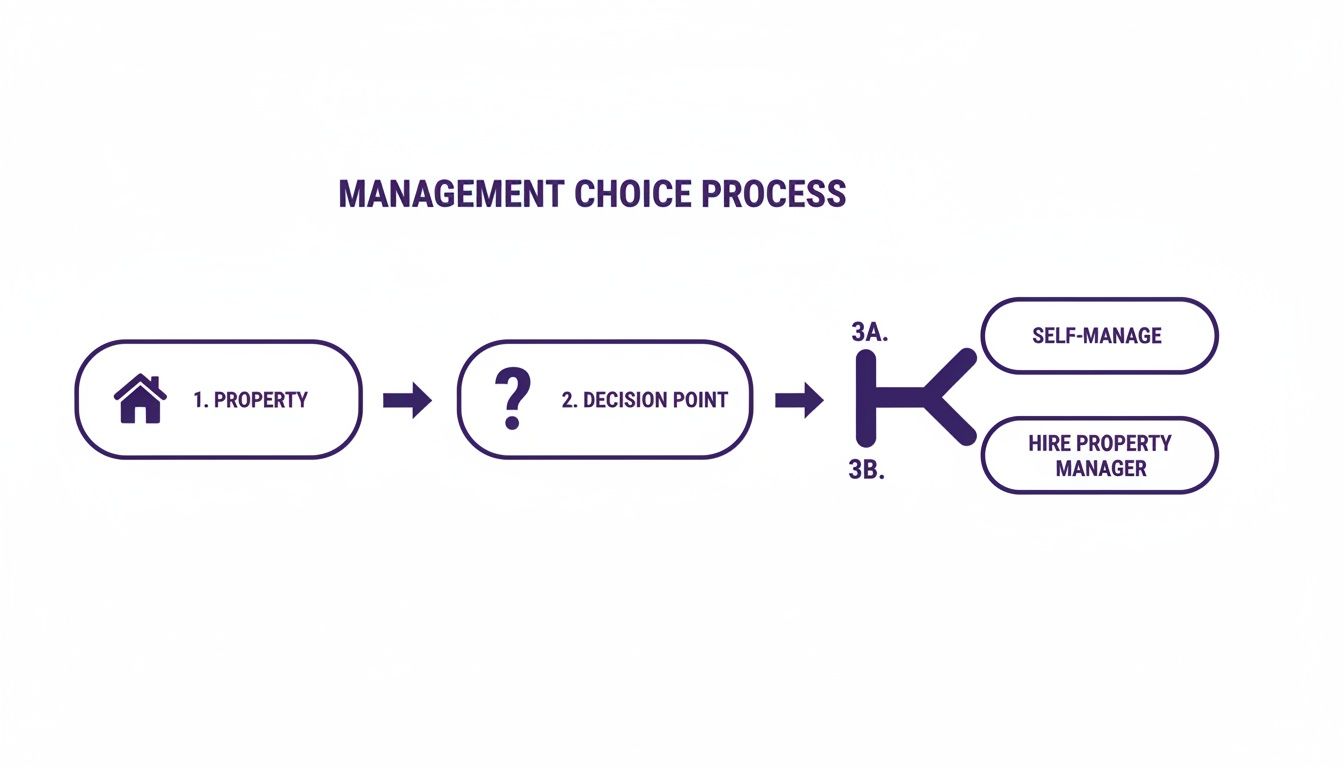
As you can see, every owner starts in the same place. But the path you choose—going it alone or bringing in a pro—will define exactly what operational tasks land on your plate.
Crafting a Listing That Converts
Think of your online listing as your digital storefront. It’s the very first impression you make, and it has to do all the heavy lifting to convince a traveler scrolling through hundreds of options that your place is the one. A compelling listing isn’t just a dry description; it's a story that sells an experience.
Start with incredible photos. Seriously, if you skimp on one thing, don't let it be this. Professional, high-quality photos are the single most important part of your listing. Natural light is your best friend. Show every single room, highlight unique features like a cozy fireplace or a private hot tub, and capture the little details that give your property its soul.
Next up is the text. Write a headline that actually grabs someone’s attention and a description that paints a picture. Instead of a boring "2-bed condo," try something like, “Sun-Drenched Condo with Balcony, Steps from the Beach.” Use clear, simple language to spell out exactly what guests can expect, and be upfront about any quirks.
A great listing answers a guest's questions before they even think to ask them. It builds confidence and sets the stage for a positive booking experience.
Finally, don’t let your listing get stale. Keep it fresh by updating photos with the seasons and tweaking your description to mention local events or new upgrades you've made to the property.
Setting Prices That Win Bookings
Pricing is one part art, one part science. Price too high, and your calendar will be depressingly empty. Price too low, and you're just leaving money on the table. The sweet spot is what we call dynamic pricing—constantly adjusting your rates based on what’s happening in the market right now.
Kick things off by doing a little snooping on your competition. See what similar properties in your area are charging for weekdays, weekends, and holidays. That gives you a solid baseline. Then, you need to layer in these factors:
Seasonality: Your peak season in a beach town like Tulum is the polar opposite of a ski destination's busy period. Know your local rhythm.
Local Events: Is there a big concert, festival, or conference coming to town? Those events create huge spikes in demand you can capitalize on.
Day of the Week: Weekend rates are almost always going to be higher than what you can charge on a Tuesday night.
Lead Time: You might want to offer a last-minute discount to fill an empty night or a small incentive for guests who book months in advance.
Plenty of hosts use automated pricing tools for this, but even if you’re just manually adjusting your rates based on a calendar of local events, you'll see a massive difference. The key is to be proactive, not reactive.
Nailing the Booking and Check-In Process
A buttery-smooth transition from the moment a guest clicks "book" to the moment they walk through your door is critical for kicking off a five-star stay. This is where clear communication and a bit of smart automation become your best friends. As soon as a guest confirms their reservation, they should get an automated message from you that expresses excitement for their trip and clearly lays out what happens next.
Automate your pre-arrival messages. A week before check-in, send a friendly reminder with key details. Then, about 24-48 hours before they arrive, send the essentials: the full address, the key code for entry, and the Wi-Fi password. This simple sequence slashes guest anxiety and dramatically cuts down on those last-minute, repetitive questions.
This is exactly where a tool like a digital guidebook becomes a game-changer. Instead of blasting your guests with a long, clunky email, you can send them a single, elegant link. They’ll open a beautifully organized, mobile-friendly guide with everything they could possibly need. It's a polished, professional touch that elevates the entire experience and makes your operations both efficient and remarkably guest-friendly.
Crafting 5-Star Stays and Flawless Guest Communication

A great listing gets you the booking, but the actual stay is where you earn those five-star reviews. This is where the real magic of vacation rental property management happens—turning a simple stay into a memorable experience that keeps guests coming back for more.
We’ve learned from our own journey that exceptional hospitality is built on proactive communication, quick problem-solving, and those thoughtful little touches that make guests feel genuinely looked after. It’s all about anticipating their needs and giving them answers before they even think to ask.
Developing a World-Class Communication Strategy
Clear, timely communication is the single most powerful tool you have. It builds trust from the get-go, sets the right expectations, and stops tiny hiccups from turning into big problems. A great strategy is all about timing, tone, and delivering the right information at just the right moment.
We found that a simple, automated messaging sequence works wonders. It guarantees every guest gets the same high-quality service without adding a ton of work to your plate. Here’s a blueprint that has consistently worked for us:
Booking Confirmation: Send an immediate, warm thank-you. Confirm their dates and let them know you’re excited to host them.
Pre-Arrival Message (7 Days Out): A friendly check-in to build anticipation. This is the perfect time to share a link to your digital guidebook and offer a gentle reminder of any key house rules.
Check-In Instructions (24 Hours Out): This is the critical one. Send the address, keyless entry code, and Wi-Fi password. Keep it super clear and easy to find.
First-Day Check-In: A few hours after they've arrived, send a short message: "Hope you settled in well! Is everything to your satisfaction?" This one step alone can head off most potential complaints.
Mid-Stay Check-Up (For Longer Stays): Halfway through a week-long stay, a quick note to ask if they need anything—like fresh towels or a good local dinner spot—goes a long way.
Check-Out Instructions (Evening Before): A final, friendly reminder of the check-out time and any simple tasks you ask of them, like taking out the trash.
Professionally Managing Reviews—Good and Bad
Reviews are the lifeblood of your rental business. Good ones are social proof that drives bookings. But negative reviews, if you handle them right, can actually show off your professionalism and commitment to your guests.
The key is to respond to every single review. For the glowing ones, a simple, personalized thank-you is perfect. When you get negative feedback, take a deep breath and use this framework:
Acknowledge and Apologize: Always start by thanking them for their feedback and apologizing that their stay wasn't perfect.
State the Facts (Gently): If there's a misunderstanding, clarify it without getting defensive. For example, "We're sorry the pool heater wasn't working; our listing does note it's operational from May to September."
Outline Your Solution: Explain what you’ve done to fix the problem for future guests. This shows you’re a responsive and responsible host who takes feedback seriously.
Handling Maintenance With Speed and Grace
Things break. It’s inevitable. A pipe will leak, the Wi-Fi will go down, or an appliance will give up. How you handle these moments is what truly defines you as a host. The key is to be fast, communicative, and empathetic. Keep a list of trusted local plumbers, electricians, and handymen on speed dial.
When an issue comes up, message the guest immediately. Let them know you're on it and give them a clear timeline for the fix. A little understanding can turn a frustrating moment into an opportunity for your excellent service to shine.
A guest's problem is your opportunity to demonstrate five-star service. A swift, professional response can often turn a negative experience into a positive review.
Today’s travelers expect seamless, tech-forward experiences. This is where a professional digital guidebook, like SmoothStay, becomes your secret weapon. It puts all your property info—from Wi-Fi codes to appliance instructions and local tips—right at your guests' fingertips. This not only cuts down on repetitive questions but also empowers your guests, making them feel in control and cared for from the moment they book. You can dive deeper into the 7 ways digital guidebooks boost guest satisfaction.
Assembling Your Modern Property Management Tech Stack
Trying to run a successful vacation rental today without the right technology is like trying to build furniture with a butter knife. Sure, you might get it done eventually, but it's going to be messy, frustrating, and way harder than it needs to be. Building a smart "tech stack"—basically, a handpicked collection of software that works together—is your key to automating the grunt work, clawing back your time, and giving guests an experience that feels polished and professional.
When we first started, our "tech stack" was a glorified spreadsheet and our personal cell phones. That worked okay for our first property in DC. But when we added our places in Playa del Carmen and Tulum, we were drowning in manual tasks almost immediately. A good set of tools isn't a luxury; it's a fundamental part of modern vacation rental property management.
The point isn't to overcomplicate things. It's to find elegant solutions that let technology handle the robotic, repetitive stuff, freeing you up to focus on what actually matters: the human side of hospitality.
Your Essential Vacation Rental Tech Stack
You don't need to sign up for a dozen different subscriptions right out of the gate. A truly effective tech stack is built on a few core pillars that tackle the most time-consuming parts of the job. For a more detailed look, check out our guide on the best vacation rental software to see which specific tools might be a perfect fit for you.
Here’s a quick look at the essential software categories that form the foundation of a modern hosting operation.
Tool Category | Core Function | Example Tools |
|---|---|---|
Property Management System (PMS) | The command center for your business. It syncs calendars, manages bookings, and automates messaging from a single dashboard. | |
Dynamic Pricing Tool | Automatically adjusts your nightly rates based on real-time market data, local events, and competitor pricing to maximize revenue. | |
Smart Home Tech | Boosts security and convenience. Smart locks automate check-in, while sensors can monitor for noise or water leaks. | |
Digital Guidebook & Guest Experience | Your 24/7 digital concierge. Centralizes all property info and local tips, drastically reducing repetitive guest questions. | SmoothStay, Touch Stay, Hostfully |
Ultimately, these tools work in concert to create a seamless experience for both you and your guests, allowing you to run a more profitable and less stressful business.
The Guest Experience Platform
While most of those tools focus on your backend operations, there's one piece of tech that's aimed squarely at your guest: the digital guidebook. This is where you can really set your property apart and deliver five-star service without having to be on call 24/7. Think of it as the ultimate digital concierge for your rental.
A great digital guidebook isn't just a PDF version of a dusty binder. It's a living, breathing resource that anticipates your guests' needs and gives them instant answers, day or night.
Instead of answering the same texts over and over again—"What's the Wi-Fi password?" "How does the coffee maker work?"—you can point everyone to a single, beautiful, and ridiculously easy-to-use link. This is where a platform like SmoothStay becomes the cornerstone of your guest communication. Our customizable, AI-powered guidebooks help you make them look and feel like an extension of your property's brand. They give guests everything from check-in instructions to your favorite local taco spot, all right on their phone.
By putting all that information in one place and making it dead simple to access, you slash the number of repetitive questions. But more importantly, you empower guests to get the absolute most out of their stay, and that's the real secret to getting those glowing reviews. This blend of backend automation and guest-centric technology is exactly what lets you scale your business without ever sacrificing quality.
Navigating Legal Compliance and Insurance
Let’s talk about the not-so-glamorous side of running a vacation rental: legal paperwork and insurance. It can feel like a minefield, but getting this right is the bedrock of your entire business. Think of it as the foundation of a house—if it's not solid, everything you build on top is at risk. Nail this from day one, and you’ll operate with a whole lot more confidence.
From our own experience, the rules can be wildly different from one city to the next. The hoops we jump through for our D.C. property are a world away from what’s required in the Riviera Maya. Your first job is to become an expert on your local landscape.
Understanding Local Regulations
Before you even think about writing a listing description, you need to dig into the specific rules for your area. Many cities have specific rules for short-term rentals, and pleading ignorance won’t save you from hefty fines or a shutdown order.
Your best starting point is usually your city or county's official government website. Look for departments that handle planning, zoning, or business licensing.
Here’s a quick checklist of what you should be looking for:
Permits and Licenses: Do you need a special short-term rental permit or a general business license to operate legally?
Zoning Restrictions: Some neighborhoods or even specific buildings have outright bans or strict limitations on short-term rentals.
Safety Requirements: You’ll almost certainly need to meet specific safety standards. This means things like smoke detectors, carbon monoxide alarms, and fire extinguishers are non-negotiable. In many places, keeping up-to-date landlord EICR certificates is also a mandatory part of ensuring electrical safety.
Tax Obligations: Get familiar with any occupancy or tourist taxes you’re required to collect from guests. You’ll be responsible for remitting these to your local tax authority.
Securing the Right Insurance
This is a big one, so listen up: your standard homeowner's insurance policy almost never covers commercial activities. That includes running a vacation rental. Relying on it is a massive gamble that could leave you completely exposed if something goes wrong.
A guest slipping and falling or accidental property damage can quickly turn into a massive liability. Specialized short-term rental insurance is designed to cover these specific risks, protecting both you and your asset.
You’ll want a policy that provides robust liability coverage (to protect you if a guest gets injured) and comprehensive property damage protection. Some policies even offer loss of income coverage, which can be a real lifesaver if a fire or flood makes your property uninhabitable for a while.
Take the time to shop around and talk to insurance agents who actually specialize in the vacation rental industry. Getting this right isn’t just about ticking a box; it’s about safeguarding the future of your investment.
Your Vacation Rental Management Questions Answered
Stepping into the world of vacation rental property management can feel like learning a new language. After years in this business, we've heard just about every question from fellow hosts. Here are a few of the big ones we get all the time, with answers drawn straight from our own experience.
Does Professional Management Actually Increase Profits?
This is the million-dollar question, and the short answer is: a good one absolutely can. It feels a little backward to pay someone a slice of your income to make more money, but a great manager more than earns their keep. They aren't just listing your place; they're using sophisticated dynamic pricing tools to squeeze every last dollar out of your nightly rate and have marketing reach across dozens of platforms you might not even know exist.
This combo often leads to higher occupancy and a better return. Think of it this way: a company charging a 25% fee that keeps your calendar booked solid will likely earn you far more than one charging 15% that leaves you with long, costly vacancies. They can turn your property into a finely tuned revenue engine.
Can I Deduct Property Management Expenses on My Taxes?
Yes, in many cases you can. This is one of the key financial perks. The fees you pay to a management company are a business expense and are generally tax-deductible, which helps offset the cost and improves your net return.
Other common deductions include:
Cleaning and maintenance costs between guest stays.
Marketing expenses, like professional photography.
Utilities consumed during rental periods.
Supplies you purchase for the property, from coffee to linens.
Important Takeaway: Always, always chat with a qualified tax professional. Tax laws are tricky and can change, so getting expert advice tailored to your specific situation is the only way to maximize your benefits and stay compliant.
How Should I Choose the Right Property Manager?
Finding the right partner to manage your property is a massive decision. You’re not just hiring a service; you’re handing over the keys to a valuable asset. Based on what’s worked for us, here’s what to look for.
First, go for local expertise. A manager who lives and breathes your specific market—its seasons, events, and quirky regulations—is invaluable. Next, demand transparent pricing. If a company is vague about their fees or hits you with surprise add-on charges later, that's a red flag. Finally, dig into their guest reviews on properties they already manage. Happy guests are the clearest sign of a manager who delivers incredible service and keeps their properties in top-notch shape.
Ready to deliver a five-star guest experience without all the late-night texts? SmoothStay is built by hosts, for hosts. Our customizable, AI-powered digital guidebooks answer guest questions before they’re even asked. Save time, reduce repetitive questions, and empower your guests with everything they need in one simple link. Start your free trial today and see how easy it is to elevate your hosting game.