Standard Operating Procedures PDF: A Practical Guide for Vacation Rentals
Create a standard operating procedures pdf to streamline vacation rentals with proven templates, checklists, and tips for smoother operations and happier guests.
Disclosure: Some links in this article are affiliate links. If you make a purchase, we may earn a commission at no extra cost to you. This helps support our content.
Creating a standard operating procedures pdf isn't just about adding more paperwork; it's the foundation for turning your hosting side-hustle into a real, scalable business. Think of these documents as a clear, step-by-step playbook for every important task, ensuring consistency and quality no matter who's handling the work.
Why Your Rental Needs a Set of Standard Operating Procedures
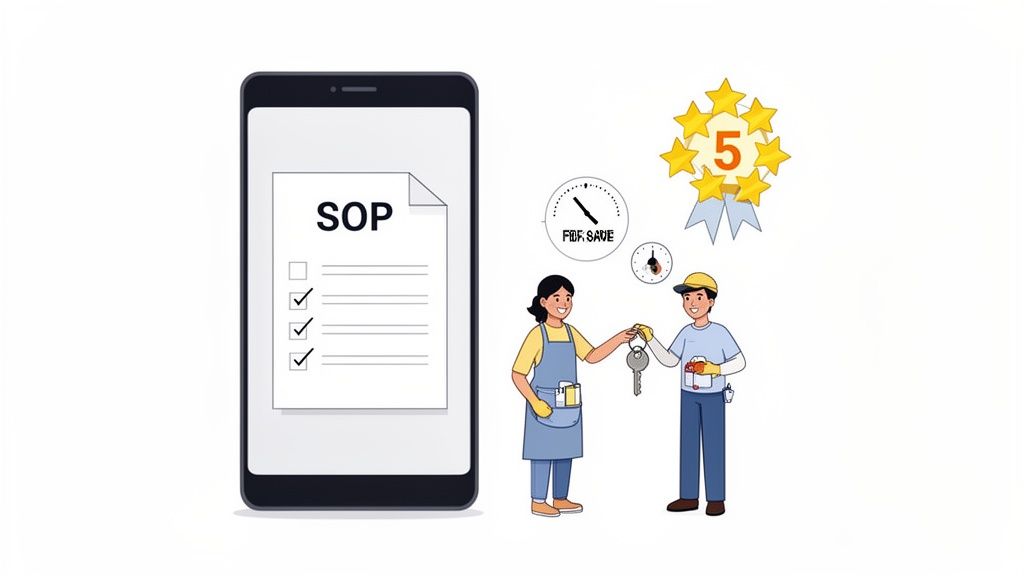
When we first started managing properties beyond our own home in Washington, D.C., we learned a tough lesson quickly: you can't be everywhere at once. The constant texts with our cleaner in Playa del Carmen or the late-night calls about a tricky lockbox became a huge time drain. This is where standard operating procedures (SOPs) became our secret weapon for scaling our business without burning out.
At their core, SOPs are the backbone of a stellar guest experience. They ensure every single turnover is handled the same way, every time, creating the kind of reliability that brings in those coveted 5-star reviews.
From Reactive Management to a Streamlined Business
Without clear processes, you're constantly putting out fires. A well-documented procedure shifts your operation from a reactive job into a proactive, well-oiled business that runs smoothly, even when you’re not physically there.
A while back, a plumbing issue popped up at one of our Riviera Maya properties. Instead of a frantic, middle-of-the-night phone call, our local handyman just pulled up the maintenance SOP. It had the plumber's contact info, a picture showing the main water shut-off valve, and a simple communication protocol. The problem was handled in minutes, stopping a guest complaint—and a potential bad review—in its tracks.
This is the real-world power of having a system. It’s about empowering your team and protecting your investment. The benefits we’ve seen are clear and almost immediate:
Fewer Repetitive Questions: Your team has a go-to resource, which means they stop relying on you for every little thing.
Guaranteed Consistency: Every guest gets the same great experience, from the way the towels are folded to the welcome snacks on the counter.
Simplified Training: Bringing on a new cleaner or co-host becomes incredibly simple. You just hand them the playbook.
We've found that SOPs aren't about creating rigid rules; they're about creating freedom. Freedom from constant interruptions, freedom from guest complaints, and the freedom to grow your business with confidence.
The Data Backs It Up
And it's not just our experience. Formalizing your processes has a real, measurable impact. A recent hospitality industry study found that implementing standardized SOPs led to a 10% improvement in time management and a 12% reduction in operational errors in hotels.
For us vacation rental hosts, that translates directly into smoother operations and fewer costly mistakes. When you build out these processes, you're not just getting organized; you're taking a key step in the digital transformation for small businesses.
The Anatomy of an SOP That Actually Gets Used
An SOP is only useful if it’s designed for the real world—think of a busy cleaner rushing through a turnover, not a manager with time to read a novel. The most effective standard operating procedures pdf isn't a long, dense document; it's a practical tool that helps your team get the job done right, every time.
Over the years, we've learned that simplicity and clarity are everything.
Forget those stuffy corporate templates. A great SOP for a vacation rental is built on a simple, scannable structure that anyone can pull up on their phone. It’s less about enforcing rules and more about providing a clear roadmap to a 5-star result.
Core Building Blocks of a Great SOP
Every procedure, whether it’s for cleaning or handling a late-night maintenance call, should have a few key components. We’ve found this structure works wonders for our teams, from our row house in DC to our condos in Tulum. Think of these as the must-haves for any document you actually want people to use.
For an SOP to be truly effective, each part needs to have a clear purpose. Here’s a quick breakdown of what we include in every document.
Essential Components of an Effective SOP
Component | Purpose | Example |
|---|---|---|
Clear Title | Immediately identifies the SOP's subject and property. | "Ocean View Condo Cleaning SOP" |
Purpose Statement | A single sentence explaining the end goal. | "To ensure a consistent, 5-star clean for every guest arrival." |
Roles | Specifies who the SOP is for. | "For Lead Cleaner and Backup Cleaning Team" |
Tools & Supplies | Lists everything needed to complete the task. | "Microfiber cloths (3), Brand X All-Purpose Cleaner, 2 sets of towels..." |
Step-by-Step Guide | Actionable instructions, often as a checklist. | "1. Strip all beds. 2. Start first laundry load (whites only)." |
Visual Aids | Photos or short videos to clarify complex steps. | A photo showing the correct placement of welcome basket items. |
Emergency Contacts | Key phone numbers for urgent issues. | "Plumber: [Name], [Phone Number]" |
By making sure each SOP has these elements, you create a resource that’s not just informative but genuinely helpful in the moment.
From Instructions to Action
The heart of your SOP is the step-by-step guide. This is where many hosts go wrong, writing long paragraphs that are impossible to follow when you're in the middle of a task. The goal is to make your instructions digestible and quick to reference.
The purpose of an SOP isn't to be read once and memorized. It’s a living reference tool—something your team can pull up on a phone to confirm a specific step, find a contact number, or double-check a standard.
We structure all our procedures with checklists and lots of visuals. For instance, instead of just writing "clean the bathroom," we break it down into a scannable checklist with photos showing the final result.
Spray shower walls with Brand X Cleaner and let sit for 5 minutes.
Clean and disinfect the toilet, inside and out.
Wipe down mirrors with glass cleaner, checking for streaks.
Scrub the shower and rinse thoroughly.
Finally, always include a section for emergency contacts. Make sure to list the property manager, a trusted plumber, and an electrician with their phone numbers right there in the document. This simple addition can turn a potential disaster into a minor hiccup.
By focusing on real-world usability, you create a standard operating procedures document that truly empowers your team and protects your business.
Essential SOP Templates for Every Host
You don't need to stare at a blank page, wondering where to begin. After more than a decade of hosting, we’ve learned that a handful of core procedures cover about 90% of what you need to run a smooth operation.
These aren't just generic lists. They are battle-tested blueprints we've refined through hundreds of turnovers and countless guest stays. Others might do things differently, but this is what has worked for us.
Think of these templates as your foundation. You can grab them, tweak them for your specific property, and build a powerful standard operating procedures PDF that empowers your entire team. Let's walk through the three most critical areas: cleaning, guest procedures, and maintenance.
Guest Turnover and Cleaning SOP
Let's be honest: this is the most important SOP in your entire toolkit. A consistent, high-quality clean is one of the biggest factors in securing those 5-star reviews and keeping your calendar booked.
A simple checklist just doesn't cut it anymore. Your cleaning SOP needs to be a detailed guide to perfection.
Our process is built around a "top-down, back-to-front" method. This is a systematic approach that ensures cleaners aren't re-contaminating surfaces they’ve already wiped. It starts with dusting high surfaces like ceiling fans and ends with mopping the floor on the way out the door. It just works.
Beyond the cleaning sequence, our template also includes:
Amenity Restock Checklist: A visual guide showing exactly how many coffee pods, toilet paper rolls, and mini soap bottles to leave. This eliminates guesswork and keeps the guest experience consistent.
Photo Verification Points: Key areas where your cleaner must snap a quick photo upon completion—think perfectly folded towels on the bed or a sparkling clean sink—to confirm the job is done to your standards.
Laundry Protocol: Specific instructions on washer and dryer settings for different types of linens. This simple step helps prevent damage and extends the life of your expensive sheets and towels.
Check-In and Check-Out Procedures
A seamless arrival sets the tone for a guest's entire stay. Your check-in and check-out SOP is primarily for your internal team—your co-host, property manager, or even yourself—to guarantee nothing gets missed between guests. If you want to get really thorough, using a comprehensive tenant move-in checklist template as a starting point can be a huge help.
This procedure should detail every step needed to prep the property right before a guest walks in.
Pre-Arrival Setup: This is a final walkthrough checklist for the 30 minutes before check-in. It includes small but impactful tasks like turning on specific lights for a welcoming glow, setting the thermostat to a comfortable 72°F, and double-checking that the smart lock code works.
Departure Inspection: A clear, step-by-step process for inspecting the property immediately after check-out. This should guide your team on what to look for—from new dings on the wall to items left behind by guests—and how to document everything with photos.
Maintenance and Emergency Protocols
Things will inevitably break. It's just part of the business. How you and your team respond is what separates amateur hosts from professional operators who guests trust and rebook with.
Your emergency SOP isn't for if something goes wrong, but for when it does. Its purpose is to turn panic into a calm, systematic response.
This SOP shouldn't be a single, dense document. We find it’s better to have a small collection of clear, one-page guides for common issues. This makes it easy for someone to find the exact instructions they need in a stressful moment without having to scroll through pages of irrelevant info.
Examples of our one-page protocols:
Power Outage: Simple steps to check the breaker box, a link to the local utility outage map, and a note on where emergency flashlights are stored.
Water Leak: A large, clear photo showing the location of the main water shut-off valve, followed immediately by the contact number for your go-to emergency plumber.
Wi-Fi Is Down: A simple troubleshooting flowchart: 1. Unplug the router. 2. Wait 30 seconds. 3. Plug it back in. 4. If the issue persists, call the internet provider (with all contact info included).
By starting with these templates, you can quickly build out the core documents you need to run your rental like a well-oiled machine.
How to Create and Format Your SOP as a PDF
Okay, you’ve got the building blocks for your procedures. Now it’s time to turn that raw information into a polished, professional document your team can actually use.
Creating a standard operating procedures pdf doesn't mean you need a graphic design degree or expensive software. In fact, you probably already have the best tools for the job.
We build all of our SOPs using simple, everyday platforms like Google Docs or Canva. They’re free, easy to use, and make it simple to create clean documents that look great on any device.
Designing for Real-World Use
Here's something to keep in mind: your cleaner or handyman is almost certainly going to look at this on their smartphone, probably while juggling another task. That context is key. Your design choices matter, and the goal is to make the information as easy to digest as possible.
We’ve learned that a few simple formatting tweaks make a huge difference in usability:
Go Big and Clear with Your Font: Stick to something clean and readable like Arial or Helvetica. We keep our font size at 12 points or larger to avoid any squinting.
Embrace White Space: Walls of text are intimidating. Don't cram everything together. Use short paragraphs and leave plenty of space between sections to make the document feel more approachable.
Add Your Branding: You don't need to go crazy, but adding your property’s logo and a consistent color scheme instantly makes your SOPs look more professional and reinforces that you're running a serious business.
The most effective SOP is designed for a quick glance, not a deep read. Think scannable checklists and bold headings over dense blocks of text. The easier your team can find what they need, the more likely they are to follow it.
If you’d rather not start from a blank page, you can grab a standard operating procedure template for Microsoft Word here. It's a great starting point that you can adapt and export.
Keeping Your Documents Organized
As your business grows, your collection of SOPs will, too. Without a system, you'll quickly find yourself drowning in files named "Cleaning_Final_v2_new.pdf." We learned this the hard way after a few mix-ups between our properties.
Now, we stick to a simple file naming convention that keeps everything tidy. It’s a lifesaver for version control, especially when you're tweaking procedures on the fly.
Our Go-To Naming System:Property-Name_Procedure-Type_vX.pdf
For example, a file might be named:
Playa-Beach-House_Cleaning-SOP_v3.pdfDC-Row-House_Maintenance-Contacts_v1.pdf
This straightforward system ensures anyone can find the exact document they need in seconds and, crucially, knows they're looking at the most current version. It's a small organizational habit that helps build a truly efficient operation.
Getting Your SOPs into the Right Hands
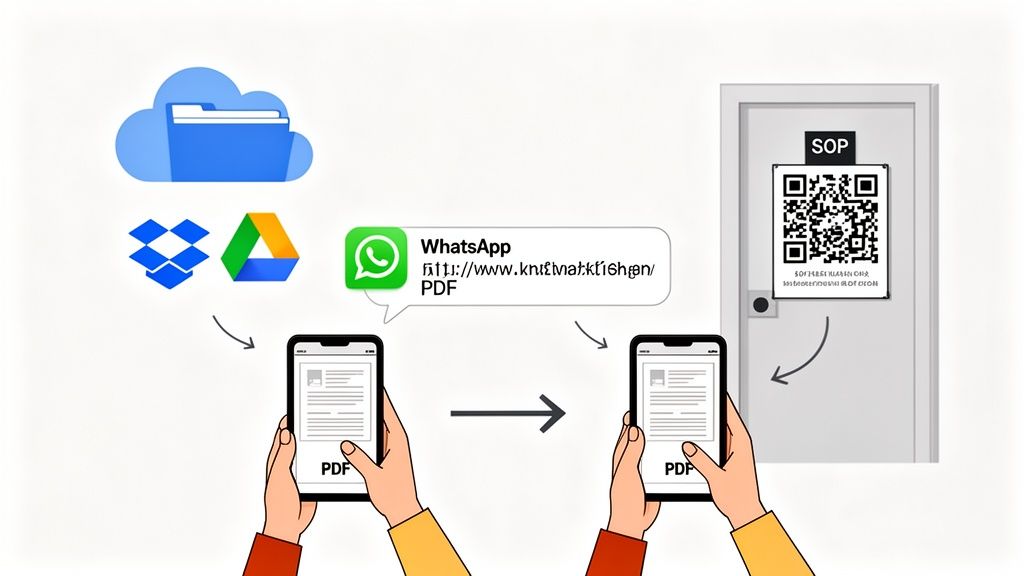
A perfectly written SOP is useless if it’s buried in an old email thread no one can find. The real magic happens when your procedures are instantly accessible the moment your team needs them. This is all about smart distribution—getting your standard operating procedures PDF into the right hands and, just as importantly, into the right tools.
For our team, we’ve learned that the simplest platforms are always the most effective. There’s no point in investing in complicated software that requires a login they’ll immediately forget.
We just stick to the tools they already use every day.
Making SOPs Accessible to Your Team
The whole point is to remove any friction between a team member having a question and finding the answer. Your SOPs should never be more than a few taps away on their phone.
Here are the distribution methods that have worked best for us over the years:
Shared Cloud Drive (Google Drive or Dropbox): We set up a dedicated, shared folder for each property. Inside, we organize all the SOPs using the clear naming system we talked about earlier. Our cleaners, handymen, and co-hosts all have access, giving them a central library to pull from anytime.
A Dedicated WhatsApp Group: For our teams in the Riviera Maya, WhatsApp is everything. We created a dedicated group chat where we pin the most critical SOPs—like the cleaning checklist and emergency contacts—right to the top for instant access.
Laminated Hard Copies: Sometimes, old-school just works better. We keep a laminated copy of the Wi-Fi troubleshooting guide and emergency contact list right next to the router. It's a foolproof backup for when technology inevitably fails.
The best delivery method is the one your team will actually use. Don't overcomplicate it. Meet them where they are, whether that’s a cloud folder, a group chat, or a printed page.
Integrating SOPs into Your Guest Experience
Beyond just your internal team, you can also weave mini-SOPs directly into your guest-facing tools. This is a game-changer because it empowers guests to solve small problems on their own, which drastically cuts down on those late-night texts.
This is where your digital guidebook becomes an incredibly powerful tool. We embed key instructions and how-to guides directly into our SmoothStay guidebooks for each property.
For example, we created a simple, one-page PDF that explains how to use the smart TV. We then linked this PDF to a QR code that we placed on the entertainment center. When a guest has a question, they just scan the code with their phone and get an instant, visual guide. This little trick has been a lifesaver, turning potential interruptions into seamless, self-sufficient guest experiences. It's a core part of our strategy for property management workflow automation and keeping things running smoothly.
Keeping Your Standard Operating Procedures Relevant
Your vacation rental business isn’t static, so your procedures shouldn't be either. A standard operating procedures pdf you wrote last year might miss the new smart TV or an updated check-in code. To stay useful, SOPs must be treated as living documents.
This doesn't mean you need to constantly overhaul them. It’s all about creating a simple rhythm for review and improvement. The real goal is to keep your documents in sync with the reality of your operations.
Establish a Simple Review Schedule
We’ve found that a straightforward review schedule is the best way to prevent procedures from becoming outdated. A recurring calendar reminder is usually enough to keep things on track.
Based on our own experience, here’s a simple schedule that works well:
Quarterly Review (Every 3 Months): This is ideal for our high-turnover beach rentals. Frequent guest changes and seasonal shifts mean there are always small things to tweak.
Biannual Review (Every 6 Months): For properties with longer stays like our D.C. house, a twice-a-year check-in is usually plenty to catch any needed updates.
An outdated SOP is often worse than no SOP at all. It creates confusion and can lead to mistakes that impact the guest experience. A quick, regular review is one of the easiest ways to protect your operational quality.
Gather Feedback to Drive Improvement
The best insights for improving your procedures often come directly from the people using them every day—your team and your guests. Actively seeking out their feedback is the key to continuous refinement.
After one guest mentioned being confused by the espresso machine, we didn't just apologize. We immediately updated the appliance guide with clearer photos and simplified instructions. This small change, prompted by real-world feedback, has eliminated that question for all future guests.
To keep everything organized and current, it helps to follow some best practices for document management. This cycle of feedback and refinement is what turns good operations into truly great ones.
Your Vacation Rental SOP Questions Answered
We get a lot of questions from other hosts about the nitty-gritty of creating and using standard operating procedures. It’s a common hurdle when you're trying to scale your business, so we’ve pulled together a few of the most common ones.
These are the exact same questions we had when we first started systemizing our own properties.
How Detailed Should My SOPs Be?
Your standard operating procedures PDF needs to hit a sweet spot: it should be detailed enough that someone can nail the task without needing to call you. The goal is clarity, not a 100-page manual.
A good rule of thumb is to assume zero prior knowledge of your specific property. Write in simple, direct language. Lean heavily on checklists for tasks like cleaning, and use photos for anything that could be misinterpreted—like exactly how you want the decorative pillows arranged.
If your team still has to text you to get a job done, the SOP isn't detailed enough. Your goal is to empower them to act independently and confidently.
What Is the Best Format for an SOP PDF?
Keep it clean, simple, and mobile-friendly. Most of your team will be looking at these documents on their smartphone, so readability is everything.
Go with large, clear fonts and break up the text with bold headings so it's easy to scan.
Use bullet points and checklists instead of dense paragraphs. No one wants to read a wall of text on their phone.
Make it interactive. Add clickable links for things like emergency contacts or your go-to appliance repair person’s website. This turns the PDF from a static document into a truly useful tool.
How Often Should I Update My SOPs?
We give ours a thorough review at least twice a year. But honestly, you should treat them as living documents. The minute you make a significant change at your property—install a new smart thermostat, switch cleaning products, change the Wi-Fi password—update the SOP immediately. When your SOPs are always accurate, your team learns to trust them completely, which is exactly what you want.
We built SmoothStay to help fellow hosts create better guest experiences, and we know that starts with solid operations. With features like our customizable, professional guidebooks and AI-powered tools, we make it easier to streamline your work so you can focus on what matters. We hope these tips help you build a stronger, more efficient business.