Your Real-World Guide to a Winning Property Management Business Plan
Build a property management business plan that works. Learn from our experience to define your niche, set pricing, build your tech stack, and land clients.
Disclosure: Some links in this article are affiliate links. If you make a purchase, we may earn a commission at no extra cost to you. This helps support our content.
A solid property management business plan isn't just a stuffy document for a loan officer. Think of it as your strategic roadmap—the blueprint that turns your passion for hosting into a real, scalable business. It forces you to get honest about the details, from the exact clients you want to serve to the numbers that will actually drive your profitability.
This plan is your guide for making smart, proactive decisions from day one.
Why Your Business Plan Is Your Most Important Tool
Forget the idea of a formal, corporate document. Your business plan is the actual blueprint for your success. When we expanded from managing our own Washington, DC rowhouse to taking on properties for other owners in places like the Riviera Maya, our business plan was the one thing that kept us grounded. It's the tool that helps you graduate from being a reactive host to a proactive business owner.
Here's a little secret: writing the plan isn't just about the final product. The real value is in the process itself. Research shows that entrepreneurs who take the time to create a business plan are far more likely to get their ventures off the ground.
The Real-World Benefits of a Solid Plan
Building this plan forces you to answer the tough questions before they become expensive, real-world problems. It's your opportunity to get crystal clear on every part of your future company.
It Defines Your Vision: A plan translates your big ideas into a clear, actionable mission. Who are you serving? What makes your service genuinely different?
It Secures Funding: If you're looking for a small business loan or trying to bring on a partner, a well-researched plan is non-negotiable. It shows you've done your homework.
It Guides Your Decisions: When a new opportunity pops up, you can ask, "Does this fit the plan?" It’s the filter that keeps you focused on your core goals.
It Uncovers Your Weaknesses: The process is great at revealing potential roadblocks—like underestimating your startup costs or misjudging a competitor—while they're still just hypotheticals.
In our own journey, the business plan became our north star. It was the document we revisited every quarter to check our progress, adjust our goals, and make sure the daily grind was still aligned with our long-term vision.
At the end of the day, a property management business plan gives you confidence. It proves to yourself (and anyone else who needs to see it) that you’ve done the research and have a realistic strategy for building a profitable company.
Throughout this guide, we’ll walk you through building each section, starting with the most critical first impression: your executive summary.
Finding Your Niche in a Crowded Market
Trying to be a jack-of-all-trades in property management is a fast track to burnout. You can’t be everything to everyone. The real path to success is becoming the undeniable expert for a specific type of owner and property. This is how you stop just managing rentals and start building a real brand.
So, where do you fit in? Are you drawn to the high-touch service needed for luxury city condos with busy professional owners? Or does your style lean more toward laid-back, family-friendly beach houses owned by out-of-state investors? Picking a lane lets you sharpen your services, marketing, and expertise until you’re the obvious choice for your ideal client.
Digging Into Your Local Market Data
Before you can carve out your niche, you have to know the lay of the land. Think of this less like boring data analysis and more like being a local detective. You need to understand the story behind the properties in your target area.
We learned this firsthand when we expanded into the Riviera Maya. We didn't just see a "beach town." We saw totally different markets—Tulum drew a younger, vibe-focused crowd, while Playa del Carmen attracted more families and long-term remote workers. That single insight changed our entire approach.
Here’s what we suggest looking for:
Tourism Trends: Who is visiting? Are they families, solo travelers, or business professionals? Local tourism board reports are often an untapped goldmine for this info.
Average Daily Rates (ADR) and Occupancy: Tools like AirDNA or Mashvisor are essential here. They show you what properties are actually earning and how often they're booked, which helps you spot the most profitable segments.
Property Types: Is the area dominated by high-rise condos, sprawling single-family homes, or quirky cabins? The most common property type isn't always the best opportunity; sometimes, the underserved property type is where you'll find your opening.
The point of market research isn't just to collect stats; it's to find the opportunity hidden in the numbers. A high ADR for two-bedroom condos is great, but if their occupancy is low, it could signal a market that’s either saturated or poorly managed. That’s your opening.
Defining Your Ideal Client Profile
Once you have a feel for the market, it’s time to get specific about who you want to work with. This goes beyond the property itself—it's about the owner behind it. An investor juggling a ten-property portfolio has completely different needs than a couple nervously renting out their second home for the first time.
Think about these owner types:
The Busy Professional: Owns a slick downtown apartment but has zero time to deal with guest messages. They’re looking for a completely hands-off service and will happily pay a premium for it.
The Out-of-State Investor: Has multiple properties but can’t be there to handle a leaky faucet at 2 a.m. They need a trusted partner on the ground who provides detailed reports and, most importantly, peace of mind.
The First-Time Host: Is overwhelmed by the world of short-term rentals. They need more than a manager; they need a guide who can help with everything from optimizing their listing to setting the right price.
Knowing exactly who you're talking to lets you craft a marketing message that speaks directly to their biggest pain points.
Finding the Gaps in the Competition
Last, you need to size up the competition. Don't just see them as rivals; think of them as free market research. Dive into their websites, read their reviews (especially the bad ones), and figure out precisely what they’re offering—and what they’re not.
You’ll start to see the gaps pretty quickly. Maybe every other manager in town is chasing luxury listings, leaving the mid-range, family-friendly market wide open. Or perhaps they all offer the same basic package, but no one is providing a modern, tech-forward experience with things like digital guidebooks and smart home features. This is what worked for us—using technology to create a smoother guest experience immediately made us stand out.
The opportunity here is massive. The global property management market hit USD 26.49 billion in 2024 and is projected to climb to USD 50.87 billion by 2032, with a steady 8.50% CAGR. That growth proves there’s more than enough room for new players who can find a unique angle. For a deeper look, you can read the full property management market report.
By combining solid market data, a clear client profile, and a sharp analysis of your competitors, you can carve out a defensible niche that will become the rock-solid foundation of your property management business plan.
Structuring Your Services and Pricing
Alright, let's get into the fun part—deciding what you'll actually do for property owners and, more importantly, how you'll get paid. This is where your business idea becomes a reality. Nailing down your services and pricing is a cornerstone of your business plan, directly shaping both your profitability and your day-to-day work.
There are a few ways to approach this, and the model that worked for us in our early days might be the perfect starting point for you.
Choosing Your Pricing Model
The most common route is taking a percentage of booking revenue. This usually falls somewhere between 8% to 12%, but it can climb higher depending on your market and how much you’re taking off an owner’s plate. We like this model because your income grows as the owner’s does—it aligns your incentives to maximize bookings and nightly rates.
Another popular option is offering tiered packages. This can be a smart way to appeal to different types of owners. For example, you could have a basic "Listing Only" tier that just covers professional photos and listing optimization. At the other end, an "All-Inclusive" package might handle everything from guest communication to 2 AM emergency maintenance calls for a higher commission.
We’ve found that a hybrid approach often works best. Start with a standard commission for your core services, then offer high-value add-ons. This gives owners flexibility while opening up extra revenue streams for you.
Think about the services owners genuinely value but would rather not handle themselves. Offering to coordinate mid-stay cleans, stock personalized welcome baskets, or arrange grocery delivery can be fantastic, profitable upsells.
To help you visualize the options, here’s a quick breakdown of the most common pricing strategies.
Comparing Property Management Pricing Models
This table compares the most common pricing strategies to help you decide which model best fits your business goals and market.
Pricing Model | How It Works | Best For | Potential Downside |
|---|---|---|---|
Percentage of Booking Revenue | You earn a commission (e.g., 8-12%) on every booking's gross revenue. | Businesses focused on maximizing occupancy and revenue for high-performing properties. Aligns your success with the owner's. | Income can fluctuate seasonally, and lower-performing properties might not generate enough revenue to be worthwhile. |
Flat-Fee Management | You charge a fixed monthly rate regardless of booking activity or revenue. | Owners who want predictable monthly expenses and managers who prefer stable, guaranteed income. | You don't earn more when the property performs exceptionally well, potentially leaving money on the table during peak season. |
Tiered Packages (Hybrid) | You offer multiple service levels (e.g., Basic, Premium) with different commission rates or fees for each. | Attracting a wide range of owners with different needs and budgets, from hands-off investors to DIY-inclined hosts. | Can become complex to manage and requires very clear communication about what's included in each tier. |
A La Carte Services | You offer a menu of individual services (e.g., listing creation, cleaning coordination) for one-time fees. | New managers testing the waters or owners who only need help with specific tasks. | Less predictable revenue stream and requires more administrative work to track and bill for individual services. |
Ultimately, the best model depends on your market and target clients. Don't be afraid to start with one and adapt as you learn what works for your business.
Defining Your Core Services
Your pricing is only half the equation. The other half is being crystal clear about what an owner gets for that fee. Transparency here is non-negotiable. Owners need to see the value you bring to the table, turning your fee into a smart investment rather than just a cost.
Here are the essential services that should form the foundation of your offering:
Listing Management & Optimization: This isn’t just about putting up a few photos. It’s professional photography, writing compelling descriptions, and managing the listing across multiple platforms like Airbnb and Vrbo.
Dynamic Pricing: You'll use real-time market data to adjust rates daily, maximizing revenue during peak seasons and securing bookings during slow periods.
Guest Communication: From the first inquiry to the post-stay review, you’ll be the friendly, professional, and responsive point of contact for every guest.
Cleaning & Maintenance Coordination: You'll build and manage a team of trusted cleaners and handymen to ensure the property is always spotless, guest-ready, and well-maintained.
These core services are the engine of your business. For a deeper dive into the numbers, check out our guide on understanding the true property management cost per month, which breaks down how these services factor into your pricing strategy.
Your goal is to build a service package so valuable that owners feel completely confident handing you the keys. Your clarity on services and pricing demonstrates professionalism and sets the foundation for a trusting partnership.
Designing Your Operations and Tech Stack
A successful property management business is built on efficient systems, not just hard work. Seriously, think of your operations as the engine of your company. Without smooth, repeatable processes, you’ll spend all your time putting out fires instead of growing your business. This section is your operational blueprint.
It all starts with mapping out your essential workflows. We find it helpful to look at the entire journey from two perspectives: the guest and the owner.
For guests, this covers everything from their initial booking and pre-arrival messages to check-in, their in-stay experience, checkout, and that all-important post-stay review request. For owners, it’s about creating a seamless process for onboarding, delivering clear monthly reports, and maintaining transparent communication.
Building Your Core Tech Stack
Let's be honest, modern property management runs on technology. The right tools don't just save you a few minutes; they automate tedious tasks and create a far better experience for everyone. Investing in a solid tech stack is a non-negotiable part of a modern property management business plan.
Your foundational tools will likely include:
Property Management System (PMS): This is your central command center. A good PMS helps you manage bookings across all your properties, sync calendars, and handle owner payouts, all in one place.
Channel Manager: If you’re listing on multiple sites like Airbnb and Vrbo—which you should be—a channel manager is crucial. It syncs your calendars in real-time to prevent the dreaded double-booking.
Dynamic Pricing Tool: You can't just "set it and forget it." Software like PriceLabs or Wheelhouse uses real-time market data to automatically adjust your nightly rates, helping you maximize revenue without spending hours tweaking prices.
As you map out your procedures, think about how tech can streamline things. For example, integrating a specialized high-converting online rental application form can make a critical part of your workflow much smoother.
We learned a valuable lesson early on: trying to piece together a dozen different free tools is often way more work than just investing in one or two solid platforms that talk to each other. A seamless tech stack is the foundation for scaling.
The growth in this space is undeniable. Technology is reshaping the industry, with the global property management software market projected to jump from USD 24.18 billion in 2024 to USD 52.21 billion by 2032. North America currently holds a 35.53% market share, underscoring the massive potential for tech-focused management companies.
Elevating the Guest Experience with Technology
While a PMS and channel manager are essential for your back-end operations, the real magic happens when you use technology to directly improve the guest experience. This is where you can truly stand out.
Before we get into guest tech, think about how operational decisions, like your pricing strategy, fit into this bigger picture. A clear process helps.
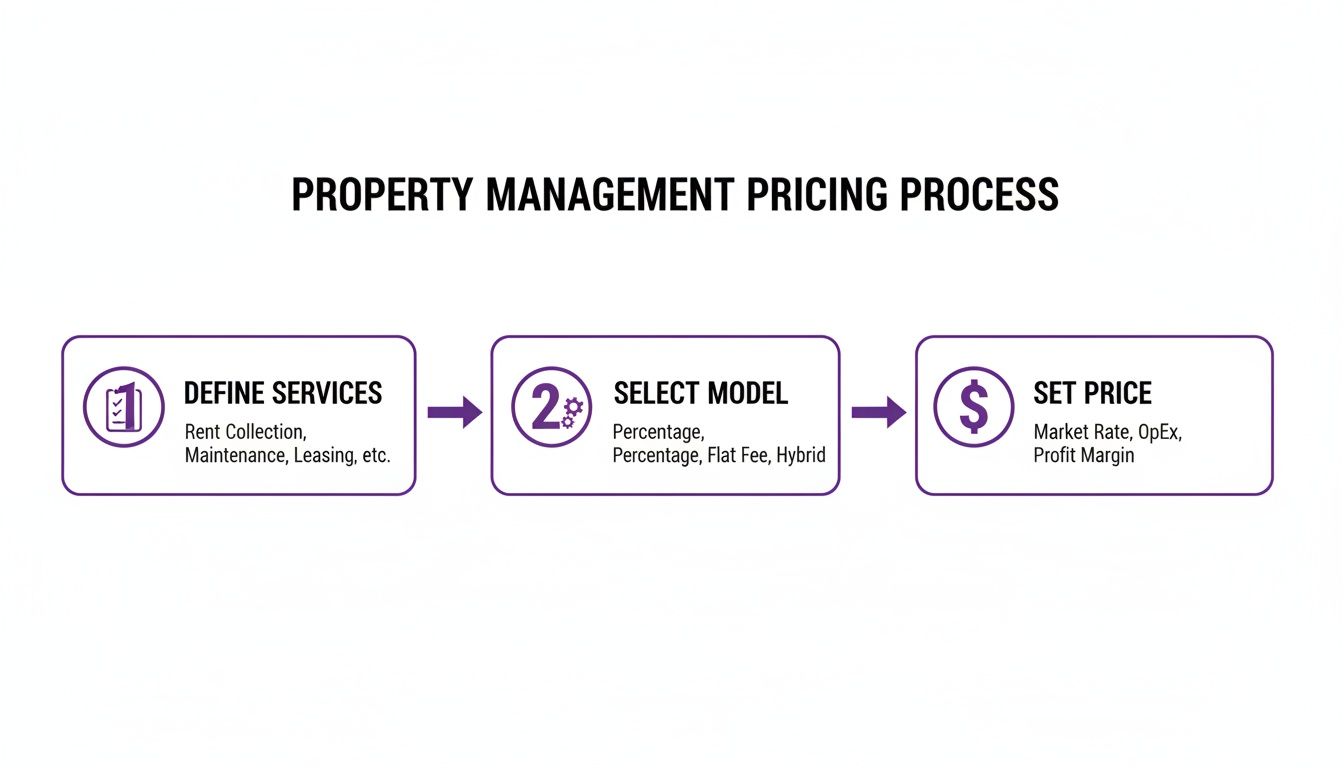
As you can see, you first need to define what you're offering, then pick a model that fits, and only then can you set your final price.
This is the layer of your tech stack where a tool like SmoothStay becomes a game-changer. When we started managing properties in the Riviera Maya, we were constantly answering the same questions: "What's the WiFi password?" "How does the coffee maker work?" "Where's the best place for tacos?"
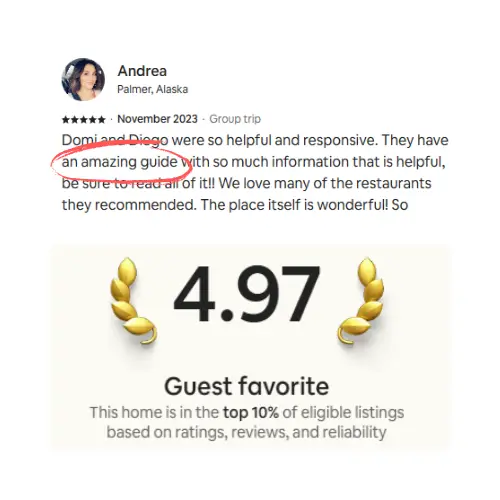
Our solution was a customizable, professional digital guidebook. It let us put all that critical information in one place, accessible with a simple QR scan. But the real breakthrough came with our AI-powered features.
Our AI chatbot gives guests instant, 24/7 answers by pulling directly from the guidebook content we already created. This simple addition dramatically cut down on repetitive messages, freeing up our time to focus on more important issues and giving guests the immediate help they wanted. This isn't just about efficiency; it’s about crafting the 5-star experiences that lead to glowing reviews.
For a closer look at what this kind of technology can do, check out our deep dive into the https://www.smoothstay.io/articles/best-vacation-rental-software.
Forecasting Your Financials Realistically
Alright, this is where your plan gets real. Crunching the numbers can feel like the most daunting part of any business plan, but getting honest about your financials is the single most important step in proving your business idea can actually work.
Whether you're starting with your own savings or seeking a loan, this section is your proof that you’ve done the homework. Think of it less like an accounting exercise and more like telling the financial story of your business. Let's walk through the exact components that helped us get clear on our own path to profitability.
Breaking Down Your Startup Costs
Before you can make your first dollar, you have to spend a few. Startup costs are all those one-time expenses you’ll face just to get the doors open. It's surprisingly easy to forget the little things here, so our advice is to get granular. When we first launched, we opened a simple spreadsheet and brain-dumped every single thing we could think of.
Your list will probably look something like this:
Legal & Licensing: Think business registration fees, a real estate broker's license (if your state requires it), and any local permits.
Insurance: General liability and Errors & Omissions (E&O) insurance are non-negotiable. Get this sorted from day one to protect yourself.
Your Initial Tech Stack: This includes your first subscriptions for a Property Management System (PMS), dynamic pricing tools, and guest experience platforms like SmoothStay.
Branding & Marketing: Don't forget the basics like a simple website, a professional email address, business cards, and maybe a small budget for your first online ads.
Getting this number right is crucial. Our advice? Once you have your total, add a 15-20% contingency fund on top. Unexpected costs always pop up, and having that buffer is a lifesaver.
Projecting Your Revenue and Expenses
With your startup costs mapped out, it’s time to forecast your ongoing income and expenses. A solid grasp of the double entry bookkeeping system will be your best friend here, as it’s the foundation for keeping clean records. For the business plan itself, a straightforward profit and loss (P&L) forecast for your first three years is exactly what you need.
Revenue Projections:
This comes down to a few key variables. The trick is to start conservatively—it's always better to under-promise and over-deliver.
Number of Properties: How many properties can you realistically sign in Year 1, Year 2, and Year 3?
Average Booking Revenue: Based on your market research, what's a realistic average annual revenue per property?
Your Commission: What percentage will you be charging owners?
A simple formula looks like this: 10 properties x $50,000 avg. annual revenue x 10% commission = $50,000 in projected annual revenue.
Operating Expenses:
These are the costs that will hit your bank account every month just to keep the business running. This includes your software subscriptions, marketing budget, phone bill, and—most importantly—your own salary. Don’t forget to pay yourself!
The scale of this industry puts these numbers into perspective. The U.S. property management sector is a massive economic driver, contributing 13.9% to the U.S. GDP in Q2 2025 across more than 102,000 private establishments. With projected revenues expected to hit $136.9 billion by the end of 2025, there's a huge opportunity here. You can discover more insights about the property management industry to help frame your own projections.
Calculating Your Break-Even Point
Finally, the break-even analysis. This simple calculation shows you the exact point where your revenue covers all your costs. It answers the most critical question: "How many properties do I need to manage just to cover my expenses?"
To figure this out, you’ll divide your total fixed costs (like software, insurance, and your salary) by your average revenue per property. Knowing this number gives you a clear, tangible first goal to aim for. It turns your financial forecast from a page of numbers into an actionable target—marking your first major milestone on the path to a profitable business.
Creating Your Marketing and Client Acquisition Plan
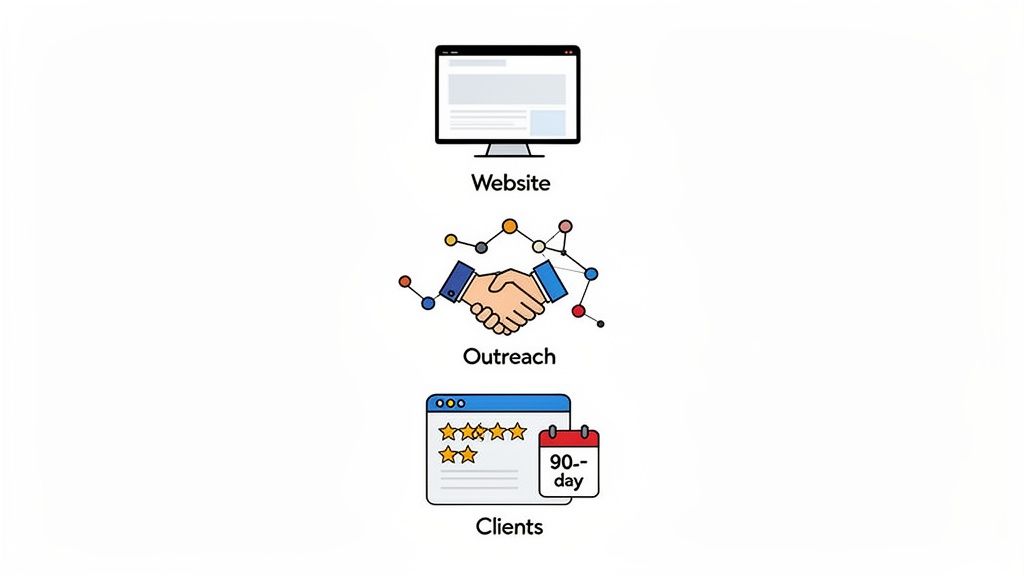
You can offer the most incredible service in the world, but it won't matter if property owners don’t know you exist. This section of your property management business plan is where we get down to brass tacks: how you'll attract and sign your first clients. Forget generic advice—let's focus on practical strategies that actually work.
Your marketing doesn't need to be complex or expensive, but it absolutely must be strategic. It's all about building credibility and making it simple for your ideal clients to find you and immediately grasp the value you bring.
Building Your Foundational Marketing Tools
Before you start your outreach, you need a professional foundation. This is your digital storefront, and it’s the first impression a potential client will have of your business. It has to look sharp and get straight to the point.
Here are the non-negotiables:
A Simple, Professional Website: This is your number one sales tool. It should clearly spell out your services, highlight your niche (e.g., "Luxury Condo Management in Miami"), and showcase testimonials as you collect them.
A Compelling Pitch Deck: Think of this as a short, 5-7 slide presentation that you can send to interested owners. It needs to cover your unique value proposition, core services, pricing, and a little about you.
When we first started managing properties for others, our own success as Superhosts was our best sales tool. We used the stellar reviews from our personal properties in DC and the Riviera Maya as social proof. That track record instantly showed potential clients we could deliver, which made the conversation much easier.
Your own properties—or your very first client's property—are your most powerful marketing assets. Focus on delivering an incredible experience there, and use the resulting 5-star reviews as a case study to win over your next client.
Your First 90-Day Action Plan
Alright, time to get moving. Your business plan needs to detail your marketing activities for the first 90 days. This creates focus and holds you accountable, ensuring you’re consistently working to bring in new business.
A simple yet effective plan could look like this:
Networking with Local Real Estate Agents: Agents are a goldmine for referrals. They’re constantly working with investors and second-home buyers who will need management. Make a list of the top 10 agents in your area and take them out for coffee.
Joining Local Investor Groups: Find local real estate investor meetups or online forums. Position yourself as the go-to expert for short-term rental management in your market.
Leveraging Your Personal Network: Don't underestimate the power of your existing contacts. Let friends, family, and colleagues know what you’re doing. You never know who might know someone looking for a property manager.
Defining Your Sales Process
Once leads start coming in, you need a clear process to turn them into clients. This isn't about being a pushy salesperson. It’s about professionally guiding an owner through their decision-making process.
Your sales process should be mapped out, from the first contact to the moment they sign your management agreement. For a deeper look into a multi-faceted approach, our article on marketing your vacation rental offers more strategies you can adapt.
Finally, define the key metrics you'll track to measure success. Start with the basics like lead conversion rate (the percentage of leads that become clients) and client acquisition cost (how much you spend to sign one new property). Tracking these numbers from day one will tell you what’s working so you can double down on your most effective strategies.
Have Questions About Your Business Plan? We’ve Got Answers.
As you start piecing together your property management business plan, you're bound to hit a few roadblocks. That's totally normal. We've pulled together some of the most common questions we've heard from other hosts and answered them based on our own journey from managing one property to running a multi-property business.
How Long Should My Business Plan Be?
Honestly, there's no magic number. A study found that entrepreneurs who write a business plan are 2.5 times more likely to launch their business, but that doesn't mean it needs to be a 100-page novel. When we started, ours was a lean, focused document—maybe 15-20 pages, financials included.
The goal is substance, not length. A tight, clear plan that nails down your market, services, operations, and financials is far more powerful than a long one filled with fluff. Just cover the core sections we’ve discussed, and you'll be in great shape.
Do I Need to Hire a Professional to Write It?
Absolutely not, especially when you're just getting started. In fact, we believe you should write it yourself. The real value of a business plan isn't the final PDF—it's the process of thinking through every detail of your future company.
Writing it forces you to do the research, get real with your numbers, and lock in your vision. You know your local market and your "why" better than anyone else. That's not something you can outsource.
The act of writing the plan is the education. It’s your self-guided masterclass in your own business, forcing you to answer the tough questions before they become expensive real-world problems.
How Often Should I Update My Business Plan?
Your business plan should never be a "set it and forget it" document. Think of it as a living guide for your business. In our first year, we revisited ours every quarter to check how we were tracking against our financial forecasts and client acquisition goals.
These days, we do a deep dive once a year. This rhythm helps us adapt to market shifts, set new goals, and make sure our daily work still aligns with our long-term vision.
Here’s a good schedule to start with:
Quarterly Check-ins (Year 1): A quick review to track progress against your initial goals.
Annual Review (Ongoing): A more thorough update to set the strategy for the year ahead.
Treat your plan like a dynamic tool that grows with you. If you do, it will remain one of your most valuable assets.
Ready to deliver 5-star guest experiences and streamline your operations? SmoothStay offers customizable, professional guidebooks with AI-powered features to help you save time and reduce repetitive guest questions. Built by hosts, for hosts, our platform makes it easy to provide instant answers and professional support, just like a big hotel—but with your personal touch.