Master Hotel Messaging to Create a 5-Star Guest Experience
Discover how a smart hotel messaging strategy can automate communication, improve the guest experience, and increase your revenue and positive reviews.
Disclosure: Some links in this article are affiliate links. If you make a purchase, we may earn a commission at no extra cost to you. This helps support our content.
Effective hotel messaging isn't just a nice-to-have anymore; it's the heart of a modern hospitality business. Think of it as the ongoing conversation you have with your guests through channels like SMS, email, and in-app platforms. It’s how you deliver timely info, answer questions on the fly, and genuinely make their stay better. Today’s travelers don't just prefer this—they expect it.
Why Hotel Messaging Is Your New Front Desk
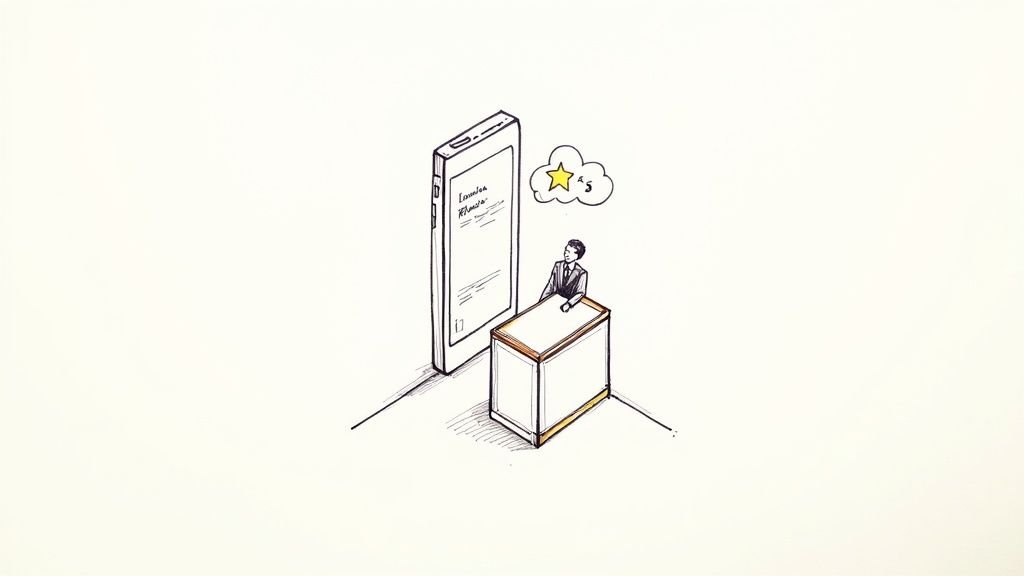
We've all been there—staring at our phones, second-guessing if we’ve given our guests everything they need for a smooth arrival. What we've learned over a decade of hosting, from our own house in DC to our beach properties in Mexico, is that great communication is less about ticking a box and more about building a relationship from the moment someone books. It essentially becomes your digital front desk, always on and ready to help.
The numbers back this up. According to one recent study, a staggering 91% of consumers actually want to get text messages from brands, a preference that's completely reshaping hospitality. Guests want answers without having to trek down to reception or make a phone call. They want the freedom to ask for extra towels while they're out exploring the city.
A Small Message Makes a Big Impact
We saw this play out perfectly at one of our properties in the Riviera Maya. A local sea turtle nesting event was happening nearby—something you wouldn't find in any of the standard tourist guides. We sent a simple, proactive message to our guests letting them know.
The response was incredible. One family later told us it was the highlight of their trip, and they specifically mentioned our "thoughtful communication" in their glowing 5-star review.
That one message did more than just secure a great review; it created a core memory. That's the real power of shifting your communication from reactive to proactive. As you build out this digital front desk, you might also consider integrating the best chatbots for customer service to handle common questions and provide instant, 24/7 support.
More Than Just Answering Questions
A smart messaging strategy ripples through your entire operation. When you start anticipating needs and sending information before guests even think to ask, you'll see a few things happen:
You'll answer fewer repetitive questions. Less time spent on "What's the Wi-Fi password?" means more time for you to handle what really matters.
Guest satisfaction will climb. Proactive, helpful communication makes guests feel genuinely cared for and supported throughout their stay.
Your bottom line will improve. It's a simple formula: happy guests leave better reviews, and better reviews lead to more bookings.
This mindset reframes messaging as your most valuable tool for creating a seamless guest journey. It's a fundamental part of how a modern guest app can boost both your efficiency and your guests' happiness at the same time.
Picking the Right Messaging Channels for Your Property
Figuring out the best way to talk to your guests can feel like a puzzle. Should you text them? Send an email? Or maybe rely on your in-app messenger? The truth is, there’s no single "best" channel. The real secret is using a smart mix of them, playing to each one's strengths.
When you start weaving different channels together, you're not just sending messages—you're building a single, ongoing conversation. The goal is a seamless experience for your guest. For a great deep dive on this, Formbricks has an excellent guide on mastering the omnichannel customer experience that really helps frame the strategy.
For us, it's always been about matching the message to the medium. At our DC house, a quick SMS with the check-in details is perfect because it’s immediate and essential. But when we want to share our favorite local taco spots in Playa del Carmen, our digital guidebook is the right tool for the job.
A Practical Comparison of Guest Messaging Channels
Here’s a breakdown of the most common hotel messaging channels, their best use cases, pros, and cons to help you select the right mix for your property.
Channel | Best Use Case | Key Advantages | Potential Downsides |
|---|---|---|---|
SMS Text Message | Urgent, time-sensitive alerts and day-of-arrival info. | 98% open rate; almost instant delivery. Personal and direct. | Not great for long-form content. Can feel intrusive if overused. |
Detailed, non-urgent information like welcome guides and booking confirmations. | Perfect for longer content; guests can save and refer back to it. | Lower open rates than SMS; can get lost in a crowded inbox. | |
In-App/Guidebook | Centralized Q&A and property information. | Keeps all communication in one place. Ideal for AI chatbots. | Requires guests to use a specific app or link. |
AI Chatbot | Answering common, repetitive questions instantly. | 24/7 availability; frees up your time. | Less effective for complex or emotional issues. |
Ultimately, the best approach is a balanced one. Use each channel for what it does best to create a communication strategy that feels helpful and natural, not fragmented.
SMS Text Messaging: The Power of Immediacy
Text messaging is your go-to for urgent, time-sensitive stuff. Just think about it: with an open rate of 98%, texts are almost guaranteed to be seen, and usually within minutes. This makes SMS absolutely unbeatable for a few key moments in the guest journey.
Use SMS for:
Day-of-Arrival Reminders: A quick text with the lock code a few hours before check-in can erase a huge amount of guest anxiety.
Urgent Alerts: Is there an unexpected road closure or a temporary power outage? SMS is the fastest way to get the word out.
Mid-Stay Check-Ins: A simple, "Hey, just checking in to see if everything is going well!" feels personal and lands perfectly via text.
Just remember, SMS isn't the place for your life story. Keep it short, direct, and actionable. Nobody wants to read your entire house manual in a text message.
Email: Your Hub for Detailed Information
Email is where you can stretch out and share more detailed, less urgent information that guests can easily refer back to. It’s the digital version of a welcome binder, but way more convenient and always accessible. We use it to set the stage for a great stay long before they even pack their bags.
Think of email as the foundation of your communication. It’s where you send the comprehensive welcome guide, booking confirmations, and post-stay thank-you notes. It’s less intrusive than a text and perfect for information that isn't needed in the next five minutes.
For example, a week before arrival, we always send an email with a link to their digital guidebook. This gives guests time to explore our recommendations, learn about the property’s amenities, and get excited about their trip on their own terms.
In-App and Guidebook Messaging: Centralized and Contextual
Platforms like SmoothStay bring a third, powerful option to the table: in-app or digital guidebook messaging. This approach keeps all communication neatly organized in one spot, right alongside all your property info. It’s perfect for answering questions that pop up while guests are exploring your guide.
This is also where a property-trained AI can really shine. Instead of texting you, guests can ask a chatbot directly within the guidebook, "What's the Wi-Fi password?" or "How do you use the coffee maker?" and get an instant answer. This frees you from answering the same questions over and over again. You can learn more about how a vacation rental chatbot can handle these routine inquiries for you.
At the end of the day, a smart hotel messaging strategy uses each channel for its unique strengths. This multi-channel approach ensures your communication always feels helpful and timely, never overwhelming or disjointed.
Building Your Automated Messaging Workflow
Setting up a solid automated messaging workflow is like drawing a map for your guests. It guides them smoothly from the moment they book until long after they’ve checked out, ensuring they always have the right information at the right time. This isn’t about spamming them with messages; it’s about anticipating their needs and answering questions before they even think to ask.
A well-planned workflow cuts down on guest anxiety, frees up your time, and solves problems before they even start. The goal is to make your communication feel effortless and personal, even when it’s automated. Let's walk through the exact blueprint we've honed over a decade in the business.
This flow shows how different channels like SMS, email, and in-app notifications can work together to create a seamless guest journey.
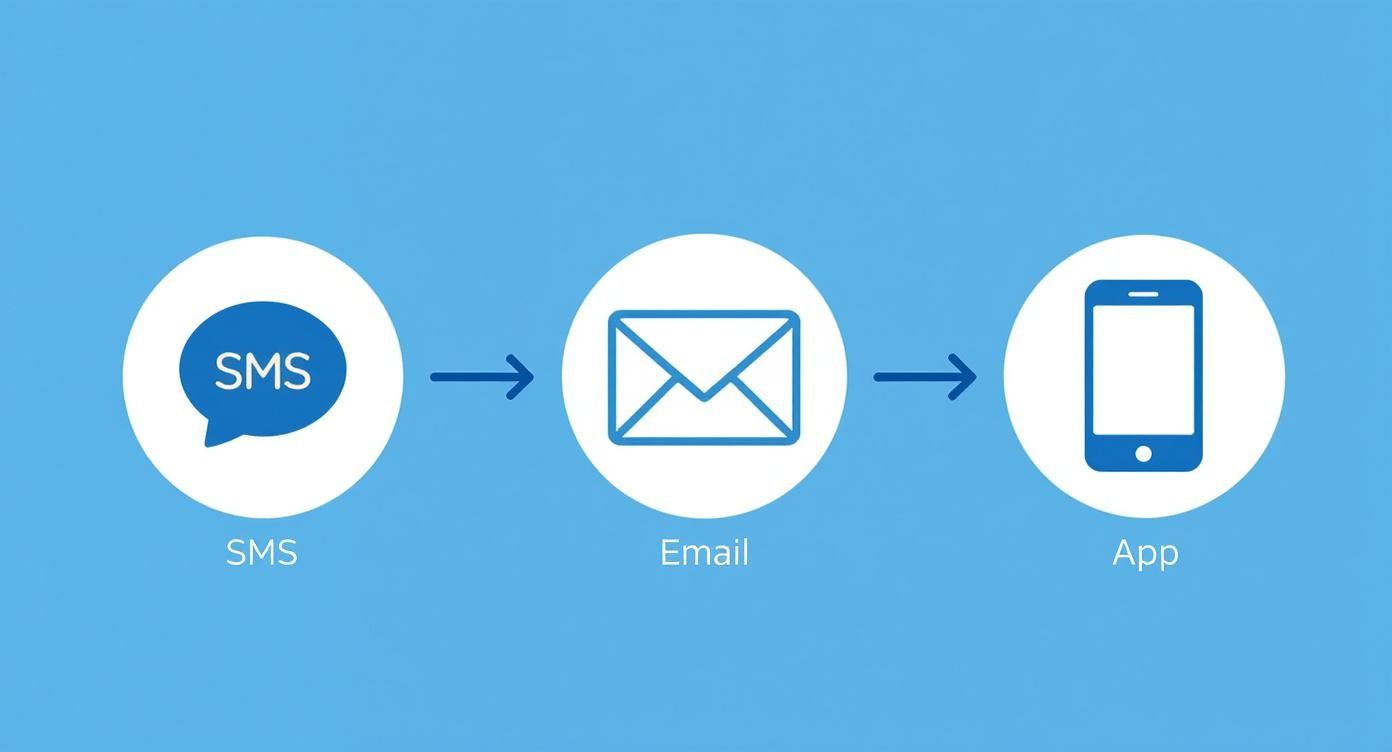
The key takeaway here is that a multi-channel approach lets you match the message to the right platform. Urgent updates get seen instantly via text, while detailed info is always just a click away in an email or app.
The Five Key Touchpoints of Guest Communication
After years of trial and error with our own properties, we've found that the entire guest journey boils down to five critical communication moments. Each one has a specific job to do, and nailing the timing and tone is what separates good communication from truly great hospitality. This is what has worked for us.
The Instant Booking Confirmation (Email)
The Pre-Arrival Deep Dive (Email)
The Day-of-Arrival Welcome (SMS)
The Mid-Stay Check-In (SMS)
The Post-Stay Farewell & Review Request (Email or SMS)
Let's break down each one.
1. The Instant Booking Confirmation
The second a guest books is your first—and best—chance to make a great impression. An automated email should fire off immediately, doing more than just confirming dates.
What to Say: "Hi [Guest Name], thanks for booking your stay with us! We're so excited to host you at [Property Name] from [Check-in Date] to [Check-out Date]. We'll be in touch with more details as your trip gets closer. For now, feel free to browse our digital guidebook here: [Guidebook Link]."
Why It Works: This gives them instant peace of mind that their booking went through. Linking to your guidebook also gives them something to get excited about, turning that initial booking confirmation into the start of their trip experience.
2. The Pre-Arrival Deep Dive
About a week before check-in is the sweet spot for sending all the detailed info. This one email is your chance to answer every common question upfront, which dramatically cuts down on those last-minute, frantic calls and texts.
What to Say: "Hi [Guest Name], your trip to [City] is just around the corner! Here’s everything you need for a smooth arrival at [Property Name]:\n\n- Address: [Full Address]\n- Check-in Instructions: [Link to Guidebook Section]\n- Wi-Fi Details: [Network & Password]\n\nWe also put together a list of our favorite local spots to help you live like a local. You can find it all in your guidebook."
Why It Works: You’re arming your guests with all the essential information in one easy-to-find place. It shows you’re organized and have thought of everything, which builds a ton of trust before they even walk through the door.
3. The Day-of-Arrival Welcome
On arrival day, you need to switch from email to SMS for speed and visibility. A text sent a few hours before their scheduled check-in is the perfect way to deliver that final, critical piece of information they need.
This single message is your most powerful tool for preventing arrival-day stress. It ensures the guest has the door code right at their fingertips, exactly when they need it. No more frantic searching through old emails.
What to Say: "Hi [Guest Name]! Hope you had a smooth trip. The [Property Name] is ready for you. The door code is [Door Code]. Let us know if you need anything at all!"
Why It Works: It’s timely, direct, and incredibly helpful. The friendly, casual tone makes guests feel welcomed and opens the door for them to reach out if they hit any snags. If you want to dive deeper into streamlining these kinds of messages, check out our guide on how to automate repetitive tasks.
4. The Mid-Stay Check-In
This is our secret weapon. Seriously. A simple, automated text sent the morning after their first night can uncover minor issues before they fester into major complaints and bad reviews.
At one of our own properties, this one message helped us catch a slow Wi-Fi connection for a guest who was working remotely. We were able to get it fixed within an hour, turning a potential 3-star review into a 5-star rave about our incredible service.
What to Say: "Morning, [Guest Name]! Just checking in to make sure you settled in okay and everything is perfect. Hope you're having a great time!"
Why It Works: It's proactive and shows you genuinely care about their experience. Most guests won't bother you with small things, but this message gives them an easy, low-pressure opening to do so.
5. The Post-Stay Farewell and Review Request
Your final message should be just as thoughtful as your first. Send a message the day after checkout to thank them and gently ask for a review. The timing here is key—you want to catch them while the great experience is still fresh in their minds.
What to Say: "Hi [Guest Name], thank you so much for staying with us. We truly hope you had a wonderful time. If you have a moment, we’d be so grateful if you could share your experience in a review. It helps future travelers and means the world to us!"
Why It Works: It’s personal, polite, and explains why their review matters. This approach feels so much more genuine than a generic, system-generated request from the booking platform.
This workflow is your foundation for meeting—and exceeding—modern guest expectations. It’s about building a system that delivers five-star service every single time, giving you more freedom and your guests a better stay.
Using AI and Automation to Enhance Hospitality
Bringing automation and AI into your guest messaging might seem like a huge, complicated leap. But really, it’s about giving yourself a superpower—the ability to be everywhere at once.
Think of this technology not as a cold replacement for your hospitality, but as a tireless assistant. It handles the predictable, repetitive tasks, freeing you up to focus on what you do best: creating genuinely memorable moments for your guests.
Our philosophy has always been to use technology to reclaim our time for what truly matters—connecting with guests. It’s about being smarter and more responsive, not less personal.
Automation: The Foundation of Proactive Service
Automation is the perfect starting point. It’s simply about setting up messages that send automatically based on specific schedules or guest actions. This ensures every guest gets the right information at precisely the right time, every single time, without you having to lift a finger.
You can create automated workflows for almost any part of the guest journey.
Scheduled Messages: These are your time-based communications. A classic example is the check-out reminder that goes out at 9 AM on the morning of departure. It’s a gentle nudge that helps guests plan their morning and gives your cleaning crew a heads-up.
Triggered Responses: These messages react to something a guest does. Imagine a guest arrives and connects to your Wi-Fi. A triggered message could instantly pop up on their phone: "Welcome! Glad you made it. Let us know if you need anything at all." It’s a small touch that feels incredibly attentive.
Automation builds a baseline of consistency and reliability. It guarantees that no guest is ever forgotten and no critical piece of information ever gets missed, whether you're managing one property or twenty.
Once this foundation of automated messages is handling the predictable stuff, you can add another layer of intelligence to tackle the unpredictable questions.
AI Chatbots: Your 24/7 Front Desk Agent
This is where things get really exciting. An AI chatbot, especially one trained on your specific property details, acts like a front desk agent who knows everything and never needs a coffee break. It’s built to answer the vast majority of common guest questions in a heartbeat.
We aren't talking about those clunky, frustrating bots that just say, "I don't understand." Modern tools, like the AI chatbot we’ve built into SmoothStay, are trained on the content of your digital guidebook. That means they already know the answers to questions like:
"What's the Wi-Fi password?"
"Where’s the closest pharmacy?"
"How do I work the smart TV?"
"What time does the pool close?"
Our own data shows that a well-trained AI can successfully resolve up to 80% of routine guest inquiries on its own. This is a complete game-changer. It means fewer late-night texts for you and instant satisfaction for your guests. For a deeper dive into how this all works, check out our guide on AI in the hospitality industry.
The real beauty here is that the AI filters out the noise. When the chatbot handles all the simple, factual questions, the messages that do come through to you are the ones that actually require your attention—the complex, personal requests where your human touch is most valuable.
This technology doesn't replace you. It empowers you to be an even better host by freeing you up to focus on genuine hospitality.
How to Measure Your Messaging Success
So, you’ve got your automated messages up and running. The big question is: how do you know if any of this is actually working? It’s easy to get caught up in basic metrics like open rates, but those numbers don’t really tell you the whole story.
Real success isn't about how many people opened a message. It's about the tangible impact on your business and, most importantly, on your guests' happiness. We learned pretty quickly to focus on the key performance indicators (KPIs) that actually matter—the ones that show up in your reviews, lighten your workload, and boost your revenue.
Moving Beyond Basic Metrics
A high open rate is nice, but it doesn't mean a message actually solved a problem or made a guest's day. Instead, we zero in on outcomes that directly affect our operations. The best part? You don't need a fancy analytics suite to track them.
Positive Mentions of Communication in Reviews: This is our gold standard. We regularly scan new reviews for phrases like "great communication," "so proactive," or "always responsive." When we see that language, we know our messaging is landing just right.
Reduced Repetitive Questions: Are you getting fewer texts asking for the Wi-Fi password or check-in time? That's a huge win. It means your proactive messages are doing their job, giving guests the info they need before they even think to ask.
Increased Ancillary Revenue: This is where you see a direct financial return on your efforts. Keeping tabs on the upsells generated from your messages is one of the most powerful ways to measure success.
Tracking success doesn't have to be complicated. We started with a simple spreadsheet to see how many guests booked a late checkout or a mid-stay cleaning after receiving an automated SMS offer. That simple approach quickly showed us exactly which messages were making us real money.
Practical Ways to Track Your Success
You can start tracking these meaningful KPIs today without any special software. The trick is to be consistent and to connect the dots between your messaging and the results you're seeing.
How We Track Our KPIs:
Review Analysis: Once a month, we copy and paste all new reviews into a single document. Then, we use the search function to find and highlight any mention of our communication—good or bad. This helps us spot trends and see what really resonates with our guests.
Upsell Spreadsheet: We keep a basic spreadsheet with columns for the guest's name, the specific upsell offered (like late checkout), and whether they bought it. This gives us a crystal-clear conversion rate for each of our automated offers.
Question Log: For one week each quarter, we make a note of every single question a guest asks us manually. By comparing this log over time, we can see if our automated workflows are successfully knocking out the common queries.
This isn't about drowning in data. It's about using simple, practical methods to understand what’s truly working so you can make smart, informed improvements. This approach helps you fine-tune your hotel messaging for a healthier bottom line and happier guests. To learn more about which metrics to focus on, check out our guide on short-term rental analytics.
How to Build Your Hotel Messaging Strategy
Rolling out a great guest messaging plan doesn't have to be some massive, complex overhaul. After years of running our own places, from our home in DC to our rentals in the Riviera Maya, we learned that the secret is to start small and build from there.
The real goal isn't just to fire off messages. It's about crafting a smooth, welcoming stay that makes guests feel genuinely cared for. Think of it like mapping out their ideal journey and then using a few simple messages to guide them along. Your first step can be as straightforward as setting up a single, automated welcome text for arrival day.
Start Small, Then Build Momentum
Resist the urge to automate everything all at once. Instead, pick the one message that will save you the most time or solve the most common guest headache.
First, automate your welcome message. This one simple action guarantees every guest gets a warm, timely greeting packed with the most critical arrival info.
Next, layer in a mid-stay check-in. A quick, friendly "How is everything?" can catch small issues before they snowball into bad reviews.
Then, add a post-stay review request. A personal-sounding note makes a huge difference in getting guests to actually leave that five-star feedback.
This step-by-step approach lets you see what's working and fine-tune your messaging without getting buried in the process.
The heart of great hospitality will always be that human connection. Technology’s job is just to handle the repetitive stuff, freeing you up to focus on making those connections stronger and creating experiences your guests won't forget.
This is the whole reason we built SmoothStay. As hosts ourselves, we were desperate for tools that actually worked this way. With guest-first features like our customizable guidebooks and an AI chatbot trained specifically on your property details, it’s all designed to make world-class communication feel simple. The tech should always serve the hospitality—never the other way around—and the right tools will just make you an even better host.
Hotel Messaging FAQs
As hosts, we get tons of questions from peers just starting to map out their messaging strategy. Here are some of the most common ones we hear, along with the straightforward advice that has worked for us over the years.
I’m Not Tech-Savvy. Where Do I Even Start?
Start with just one thing. Seriously. Don't feel pressured to build out some complex, automated system overnight. The easiest first step is to simply create templates for the messages you send all the time—like check-in instructions or Wi-Fi details—and save them in the notes app on your phone.
From there, you can look into user-friendly tools that offer simple scheduling. Lots of platforms are designed for hosts, not engineers. The goal here is progress, not perfection. Try automating your pre-arrival message first. Once that's running smoothly, maybe add a mid-stay check-in. It’s all about taking small, manageable steps.
Won’t Automated Messages Sound Robotic?
Only if you let them. The secret to great automation is smart personalization. The key is to use tools that can automatically pull in the guest's name, their check-in date, or other specific details to make the message feel like it was written just for them.
The point of automation isn't to replace you; it's to handle the repetitive, predictable communication so you have more time for genuine, high-value interactions. An automated message asking, "Hi [Guest Name], just checking in to see if you need anything?" feels thoughtful and opens the door for a real conversation.
What's the Single Most Important Message to Automate?
If you can only automate one message, make it the mid-stay check-in. Yes, the pre-arrival message with check-in details is crucial for a smooth start, but the mid-stay check-in is your absolute best chance to turn a potential problem into a five-star experience.
A simple, "How is everything going so far?" can uncover a minor issue you'd otherwise never know about, like a dripping faucet or a need for extra towels. This lets you solve the problem proactively, turning you into a hero in your guest's eyes. It’s the best way to keep a small annoyance from souring their stay and ending up in a public review.
How Can Messaging Actually Lead to More Positive Reviews?
Great reviews start with a great experience, and proactive communication is a huge part of that foundation. Your messaging sets a helpful, supportive tone from the moment they book. When guests feel genuinely cared for, they're already primed to leave a glowing review.
The final piece of the puzzle is the review request itself. Timing and tone are everything here. We've found the sweet spot is sending a brief, personal message about 24 hours after checkout.
Thank them personally: "Hope you enjoyed your stay and had a smooth trip home!"
Explain the why: Politely ask them to share their experience, explaining that it helps future travelers find you.
This friendly, human approach is so much more effective than a generic, automated blast from the booking platform. It frames the request as a small favor between two people, not a corporate demand.
Ready to put these strategies into action with a tool built by hosts, for hosts? SmoothStay offers customizable, professional guidebooks and an AI chatbot trained on your property's details to help you deliver an exceptional guest experience effortlessly. Get started with our free trial and see how simple great hotel messaging can be.