Airbnb House Rules That Protect Your Property and Boost Reviews
Discover how to write clear Airbnb house rules that protect your investment, improve guest experiences, and earn you better reviews. Real advice from hosts.
Disclosure: Some links in this article are affiliate links. If you make a purchase, we may earn a commission at no extra cost to you. This helps support our content.
Great Airbnb house rules are your roadmap to a successful stay. They clearly define expectations for guests and, most importantly, protect your property.
Think of them not as a list of restrictions, but as a vital communication tool that helps attract the right visitors, prevent misunderstandings, and ensure a smooth experience for everyone.
Why Great House Rules Are Your Best Hosting Asset
Let’s be honest, the term "house rules" sounds a bit strict, doesn't it? When we first started hosting over a decade ago, we thought the same thing. Our main focus was on creating a welcoming vibe in our DC home, and we worried a long list of rules would feel cold and intimidating.
That all changed after one particular stay.
We had guests who, with the best intentions, decided to rearrange our entire living room to better suit their movie night. It wasn't malicious, but it created an hour of extra work for us scrambling to get the place ready before the next check-in. A simple, friendly rule about leaving the space as they found it could have prevented the entire issue.
That small incident taught us a powerful lesson: clear expectations aren’t restrictive; they’re respectful. Well-crafted airbnb house rules act as a silent partner, working 24/7 to protect your investment and your peace of mind.
Setting the Stage for a 5-Star Stay
Your rules are really the foundation of the guest experience. They do more than just prevent problems—they actively filter for the kind of guests you actually want to host. When a guest takes the time to read and agree to your thoughtful rules, they're already signaling that they're conscientious and respectful.
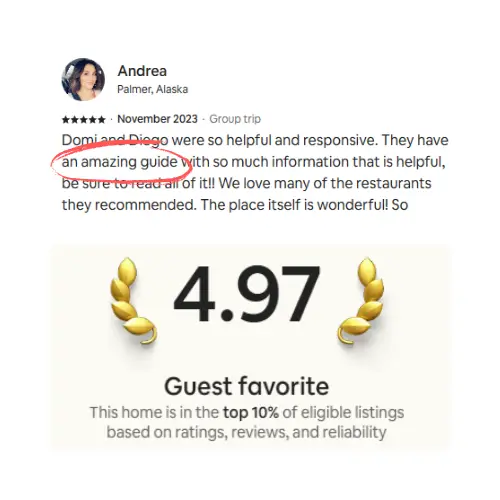
This isn't just our gut feeling; some industry observations suggest that hosts with comprehensive, clearly written house rules can significantly reduce property damage claims. In competitive markets where every single booking counts, that level of protection is a game-changer. You can find more practical advice in this great article on hosting tips from industry experts at Global Vacation Rentals.
The goal isn't to create a list of "don'ts." It's to create a guide that helps guests have a fantastic, stress-free stay while treating your home with care. This simple shift in perspective can transform your entire hosting approach.
Ultimately, great rules lead to:
Fewer Misunderstandings: Guests know exactly what's expected, from trash disposal to quiet hours.
Better Guests: Clear boundaries attract travelers who appreciate and respect your property.
Less Stress for You: You spend less time worrying about potential issues and more time providing great hospitality.
From our beach properties in the Riviera Maya to our family home back in the States, we’ve seen firsthand how a solid set of rules creates a win-win. It paves the way for glowing reviews and a smoother, more profitable hosting business.
Crafting Your Essential House Rules From Scratch
Staring at a blank page for your Airbnb house rules can be intimidating. It's so tempting to just grab a generic template and call it a day, but we've learned the hard way that the best rules are born from the unique personality of your property. The rules for our four-bedroom house in a quiet Washington, DC, neighborhood are completely different from those for our beach condo in Tulum, and that’s exactly how it should be.
Think of your rules as your first line of defense and your best tool for setting clear expectations. This isn't about being restrictive; it's about being proactive so you can build a smoother, less stressful hosting business.
The Non-Negotiable Core Rules
No matter where your property is or how big it is, there are a few high-risk areas you need to address right out of the gate. These are the absolute cornerstones of your house rules—the policies that protect your property from damage and keep your relationship with your neighbors on solid ground.
Based on our experience, we’ve learned to be incredibly direct on these four points:
Parties and Events: This is almost always a hard "no." We explicitly state, "No parties, events, or large gatherings are permitted." This one rule has saved us from countless headaches.
Undeclared Guests: The number of guests you approve is tied to wear and tear, utility costs, and safety. A simple rule like, "Only guests included in the reservation are allowed on the property," prevents a quiet stay from turning into a surprise crowd.
Smoking Policy: Be specific, whether you allow it or not. We have a strict "No smoking of any kind (including vaping) inside the property" rule. For places with a patio, we clearly define a designated outdoor smoking area to contain the impact.
Pet Policy: This is a big one. You need to decide if you'll welcome furry friends. A good starting point is to look at common pet-friendly rental policies to help you shape guidelines that work for your space, whether you decide to allow them or keep your property pet-free.
These core rules establish a baseline of respect and security, tackling the most common sources of conflict before a guest even clicks "book."
We once had a guest at our Playa del Carmen house ask if their two friends could "just stop by for an hour." Because our rule on undeclared guests was so clear, we could politely say no without any awkwardness, preventing a small get-together from potentially snowballing into a party.
Tailoring Rules to Your Unique Property
Once you have the basics covered, it's time to get specific to your home and its environment. This is where you graduate from a generic template to a truly customized guide that helps guests enjoy your space responsibly.
For instance, our DC home is in a dense residential area where the city enforces strict quiet hours. Our rules reflect that: "Quiet hours from 10 PM to 7 AM, as enforced by the city." This isn't just our preference; it's a local regulation that protects us and informs our guests.
On the other hand, our Riviera Maya properties are in resort-style communities with shared pools and lounges. The rules for our Tulum condo have to include specific guidelines like "No glass containers in the pool area" and "Rooftop lounge closes at 11 PM." A guest wouldn't know these things otherwise, and stating them upfront prevents any friction with the building's management.
This graphic really illustrates how clear house rules connect the dots between your expectations as a host, your guest's behavior, and the final outcome of the stay.
As you can see, good rules create a positive feedback loop. They lead to better guest behavior, which in turn leads to stronger reviews for you.
Essential House Rules Checklist
To help you get started, here's a look at how you might approach rules for different types of properties. Notice how the location and property type directly influence what's most important.
Rule Category | Urban Apartment (e.g., Washington, DC) | Beach House (e.g., Riviera Maya) | Key Consideration |
|---|---|---|---|
Noise Levels | Strict quiet hours (e.g., 10 PM - 7 AM) due to close neighbors and city ordinances. | More relaxed, but specify no loud music after a certain hour to respect neighbors. | Proximity to neighbors is the biggest factor. |
Parking | Detailed instructions for street parking permits or designated garage spots. | Clear directions for driveway/designated parking; rules against parking on sand or grass. | Parking availability and local restrictions. |
Amenities | Rules for shared building facilities like a gym or rooftop deck. | Specifics on pool/hot tub use (e.g., no glass), outdoor shower, and sand removal. | Shared vs. private amenities and potential for misuse. |
Trash & Recycling | Complex instructions for city-specific sorting and collection days. | Simple instructions for outdoor bins and mention of local wildlife concerns. | Local waste management complexity. |
Security | Emphasize locking doors/windows and proper use of building entry codes. | Instructions for locking up, especially sliding doors, and securing beach gear. | Urban density vs. resort community security. |
This checklist isn't exhaustive, but it should give you a solid framework for thinking through the specific needs of your own listing.
The Impact on Your Listing and Bookings
Here's something many hosts overlook: crafting detailed rules isn't just about protecting your asset. It's a critical factor in how your listing performs on the platform.
Airbnb’s algorithm heavily favors listings with clear expectations and a history of 5-star reviews. When you provide thorough rules, you're not just setting up a better guest experience; you're also signaling to the platform that you're a professional, responsible host.
This can directly boost your visibility in search results. Think of your Airbnb house rules as a powerful SEO tool in their own right—they help you attract the kind of guests you want while satisfying the platform's criteria for a top-tier listing.
Writing Rules That Sound Welcoming, Not Warning
The way you write your Airbnb house rules can completely change how a guest feels about their stay before they even walk through the door. It's the difference between coming across as a caring, professional host and a strict, intimidating landlord. We've refined this art of communication over hundreds of stays, and we can tell you, getting it right is a game-changer.
The real goal here is to foster cooperation through mutual respect, not through a list of harsh commands. That simple shift sets a positive, welcoming tone from the get-go.
From Negative Demands to Positive Guidance
It’s surprisingly easy to slip into writing a long list of "don'ts." While that might feel direct, it can also come off as confrontational and immediately put your guests on the defensive. The secret is to reframe your rules as positive, helpful instructions.
Instead of hammering on what guests can't do, gently guide them on what they should do. This subtle tweak in language feels less like a warning and more like a gentle nudge. It shows you trust them to be great guests right from the start.
Here are a few before-and-after examples that really show this principle in action:
Before: Don't leave a mess in the kitchen.
After: Please leave the kitchen tidy for the next guest to enjoy, just as you found it.
Before: Don't play loud music after 10 PM.
After: To help us be great neighbors, we kindly ask that you observe quiet hours between 10 PM and 8 AM.
Before: No unregistered guests allowed.
After: For the safety and comfort of everyone, only guests included in the reservation are permitted on the property.
This approach just feels more collaborative. You're treating your guests like partners in maintaining a wonderful space, which is far more effective than treating them like potential troublemakers.
We found that when we switched our language from demanding to guiding, guest compliance went up noticeably. People are simply more receptive to requests that are framed with kindness and respect.
The Power of Explaining the "Why"
One of the most effective communication tactics we've learned is to briefly explain the reasoning behind a rule. When guests understand the "why," they're far more likely to get on board. It transforms what could feel like an arbitrary rule into a logical and considerate guideline.
Providing that little bit of context shows you're not just making up rules for fun; you have valid reasons rooted in safety, respect for the community, or simply maintaining the property. This transparency builds a ton of trust and encourages guests to see themselves as part of the solution.
Here’s how explaining the "why" can make your rules so much stronger:
The Rule: Please take your shoes off inside.
The "Why": To help keep the light-colored carpets and floors clean for your stay, we kindly ask that you leave shoes by the entrance. This explains the practical benefit.
The Rule: Please don't flush anything other than toilet paper.
The "Why": Our property in Tulum runs on a sensitive septic system. To avoid any plumbing issues during your vacation, please only flush toilet paper. This highlights how the rule protects their own comfort.
The Rule: Please keep the balcony door closed when the A/C is running.
The "Why": Our A/C unit works hard to keep the space cool! Keeping the balcony door shut prevents the unit from overworking and helps us conserve energy. This frames the request around efficiency and sustainability.
This technique is incredibly simple but so powerful. It turns a command into a shared responsibility, making guests feel like they are contributing to the well-being of the home. When you treat them with intelligence and respect, you’ll find they are much more likely to return the favor.
Making Sure Your Guests Actually Read Your Rules
Let’s be honest. Crafting the perfect set of welcoming, effective Airbnb house rules is only half the battle. The other half—and the part that trips up most hosts—is getting your guests to actually read them. After more than a decade of hosting, we've learned you can't just post them once and hope for the best.
The secret is strategic repetition. You have to put your rules right in the guest’s path at key moments, from the second they book to the moment they walk in the door. This multi-touchpoint approach is the only way to make sure the information is seen, absorbed, and easy to find right when they need it.
Weave Rules into Your Listing Page
Your listing page is your first line of defense and your first opportunity to set expectations. This is where guests decide if your property is the right fit, so it’s a critical touchpoint. Airbnb has a dedicated section for rules, and guests are required to agree to them before they can even book.
Use this space wisely. Keep it clear, concise, and focused on your absolute non-negotiables. Bullet points are your friend here—they make the rules easy to scan. Think of this section as a filter; it helps attract the kind of respectful guests you want while gently steering away those who might not be a good match for your home.
Reinforce with Pre-Arrival Messages
Once a guest books, the conversation has just started. We use automated messages to gently remind guests of key information before they arrive. This is a perfect, low-pressure moment to reinforce one or two of your most important rules.
You don't need to send the whole rulebook again. Just pick a couple of crucial points.
Example Message (2-3 days before check-in):
"Hi [Guest Name]! We’re so excited to host you in a few days. Just a friendly reminder that our community observes quiet hours from 10 PM to 8 AM. We can't wait for you to enjoy the peace and quiet of the neighborhood! Your full check-in details will be sent on the morning of your arrival."
This quick, friendly nudge keeps the rules top-of-mind without feeling overbearing. It’s a simple touch that shows you’re a proactive and organized host.
Make Rules Impossible to Miss Inside the Property
When guests finally walk through your door, they're usually tired from travel and just want to kick off their vacation. They aren't going to hunt for a binder stuffed with rules. That’s why on-site visibility is so important.
Here are a few methods that have worked wonders for us:
A Framed Welcome Note: We place a short, nicely designed note on the entryway table. It welcomes them and highlights 2-3 key things, like the Wi-Fi password and our "no shoes inside" policy.
Small, Laminated Signs: For appliance-specific rules (like how to use the espresso machine or a reminder not to flush wipes), a small, discreet sign right where it’s needed can prevent a lot of headaches and potential damage.
The Laminated "Check-Out" Sheet: We leave a single, laminated sheet on the back of the front door with simple check-out instructions. It’s the last thing guests see, making it a great spot for a final reminder about locking up or trash disposal.
The goal is to provide the right information, in the right place, at the right time.
The Game-Changer: A Digital Guidebook with a QR Code
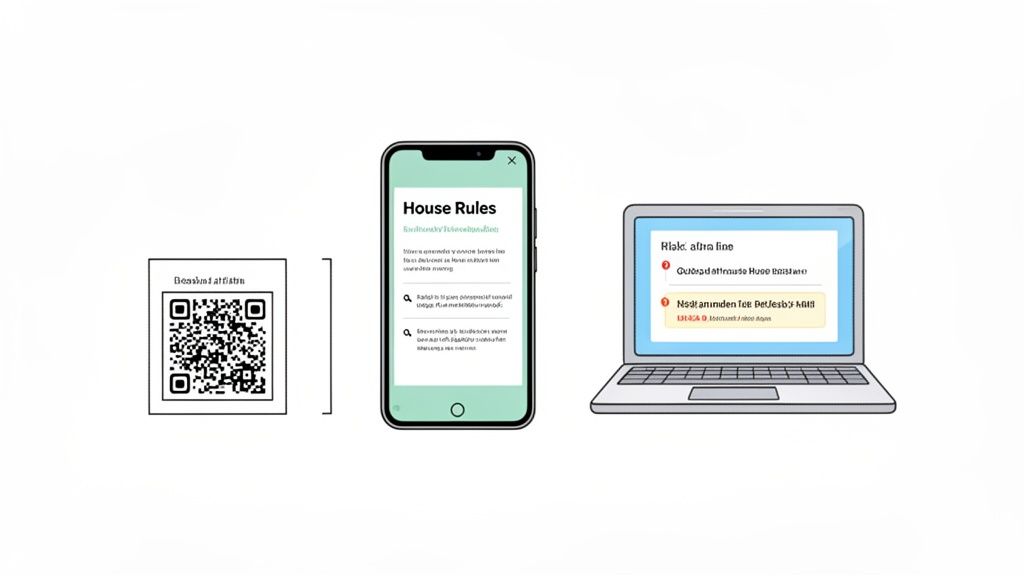
Of all the strategies we've tried, this one has had the biggest impact on guest compliance while slashing our workload. We consolidated all our house rules, appliance instructions, local recommendations, and check-out procedures into a single, mobile-friendly digital guidebook.
Instead of a clunky binder, we now have a simple QR code prominently displayed—on the fridge, on the welcome note, and even in our pre-arrival messages. Guests just scan it with their phone and instantly have all the information they need in the palm of their hand.
This has been a complete game-changer at our Riviera Maya properties. Guests can pull up the pool rules while they’re sitting poolside or find the A/C instructions in the middle of the night without messaging us. It empowers them and saves us from answering the same questions over and over.
A digital Airbnb welcome book serves as the single source of truth for your property. It’s effortless for guests to access and incredibly simple for you to update. When you need to add a new rule or change the Wi-Fi password, you just do it once online, and it’s instantly live for all future guests. This simple piece of tech makes enforcing your Airbnb house rules feel less like a chore and more like a seamless part of your hospitality.
How to Handle Rule Violations Professionally
Sooner or later, it’s going to happen. No matter how clear your rules are or how perfectly you screen your guests, someone will eventually break a rule. We've certainly had our share over the years, and we've learned one thing for sure: the key isn't preventing every single infraction—it's having a calm, professional plan for when one occurs.
How you respond can be the difference between a minor hiccup and a full-blown hosting nightmare. Flying off the handle is the fastest way to escalate a situation and tank a review. Instead, we’ve developed a framework that helps us make sound business decisions, even when we’re frustrated. It’s all about protecting our property and our peace of mind.
First, Stay Calm and Document Everything
The moment you discover a violation—whether it's an unauthorized pet, the smell of smoke, or a few extra guests who weren't on the booking—your first instinct might be to fire off an angry message. Our advice? Pause. Take a breath.
Before you do anything else, document the situation thoroughly. Your smartphone is your best friend here.
Take clear photos or a short, steady video of the evidence.
Make sure timestamps are enabled if possible.
Note the exact date and time you discovered the issue.
This documentation is non-negotiable if you need to involve Airbnb Support or file a claim. It immediately shifts the conversation from your word against theirs to a matter of objective fact. And remember, keep all communication inside the Airbnb messaging app. It creates an official paper trail that support can easily review.
Assess the Severity Before You Act
Not all rule violations are created equal. A guest leaving a few unwashed dishes in the sink is a world away from them throwing an unauthorized party that trashes your living room. Before you reach out, take a minute to categorize the infraction.
Is this a minor, easily correctable mistake? Or is it a serious breach that compromises the safety and integrity of your property?
We once had a guest at our DC house who brought an undeclared overnight visitor. Instead of sending an accusatory message, we sent a calm note referencing the rule and the standard extra guest fee. They apologized profusely, paid the fee immediately, and the rest of the stay was perfect. A calm, business-like approach de-escalated things instantly.
Your assessment will dictate your next move. A gentle reminder might be all that's needed for a small issue. A more serious violation, however, requires a more formal response. For these more complex situations, having a solid rental agreement provides an extra layer of protection. You can learn more about how to create one in our guide on vacation rental agreements.
Communicate Clearly and Professionally
Once you’ve gathered your evidence and assessed the situation, it’s time to reach out to the guest. As always, use the Airbnb app for this conversation.
Here’s how we structure our messages:
Be polite and non-accusatory. Always start with a friendly, professional tone. Assume good intentions until proven otherwise.
State the facts calmly. Stick to what you observed, not what you assume. For example, "Hi [Guest Name], during a routine check today, we noticed evidence of smoking in the living room."
Reference the specific rule. Gently remind them of the house rule they agreed to when they booked.
Propose a clear solution. State the next step, whether it's a request to fix the issue ("Please ensure there is no further smoking inside") or a notification of a fee ("As per the house rules, a $XXX cleaning fee will be applied").
This approach keeps the conversation professional and focused on resolving the problem, not assigning blame.
Know When to Escalate to Airbnb Support
Sometimes, direct communication just doesn't cut it. Don't hesitate to contact Airbnb Support immediately if:
The guest becomes hostile or is completely unresponsive.
You feel unsafe for any reason.
A major violation is in progress, like an out-of-control party or significant property damage.
Airbnb's team is there to mediate and enforce their policies. That support system is invaluable, so use it when a situation gets beyond what you can handle alone. On a related note, investing in preventative tech like the best smart door locks can also help enforce rules around access and security, often stopping unauthorized entry before it becomes a bigger issue.
Your Blueprint for Smoother Hosting
At the end of the day, thoughtful Airbnb house rules are the foundation of a less stressful, more profitable hosting business. They aren't just a list of restrictions; they're a simple act of professional hospitality that creates a better, clearer experience for everyone involved. From our experience, this is one of the most effective ways to protect your property and your peace of mind.
By setting clear expectations from the moment someone books, you pave the way for the 5-star reviews you deserve. This proactive approach minimizes friction and lets you focus on what you do best—creating wonderful stays for your guests. It’s about building a system that works for you, not against you.
This philosophy is at the heart of why we built SmoothStay. Our tools are designed to help fellow hosts implement these strategies seamlessly, saving time while elevating the guest experience.
For hosts looking to streamline their operations even further, it’s worth exploring ways to automate repetitive guest communication. This simple step can free up hours each week, allowing you to focus on the bigger picture of your hosting business. You can learn more in our detailed guide on how to automate repetitive tasks.
Your House Rules Questions, Answered
Over the years, we've heard just about every question there is when it comes to Airbnb house rules. Let’s tackle some of the big ones we see from hosts all the time.
What Is the Most Important House Rule for an Airbnb?
While every property has its quirks, the rules that matter most almost always come down to parties, extra guests, and smoking. These are the big three that carry the highest risk of property damage and angry neighbors.
From our experience, having a crystal-clear “No Parties or Events” policy is the single most important rule you can have. It’s the one that best protects your investment and keeps you in good standing with your community.
Can I Charge a Guest for Breaking a House Rule?
Yes, you absolutely can, but you have to play by Airbnb’s rules. If a guest violates a rule that ends up costing you money—think extra cleaning for smoking or damage from a party—you need to file a claim through the Resolution Center.
Make sure you have solid proof, like photos or messages. It’s also a smart move to mention potential fees for specific violations (like a $250 deep cleaning fee for smoking) right in your house rules. This way, guests know the consequences upfront.
How Do I Ensure Guests Actually Read My House Rules?
Getting guests to read the rules is all about repetition and making them impossible to miss.
First, keep the rules on your listing page short and scannable. Then, put them everywhere: in your listing description, in your automated check-in message, and inside your property in a digital or physical guidebook. We have a QR code on the fridge that links straight to our digital guidebook. It makes the rules instantly available the moment a guest walks in and wonders, "What's the Wi-Fi password?"
Ready to stop answering the same questions and give your guests a seamless, professional experience? With SmoothStay, you can create a beautiful, AI-powered digital guidebook in minutes. Our customizable templates, easy QR code access, and guest-first features help you share your house rules and local tips effortlessly, leading to happier guests and more 5-star reviews.