
10 Pieces of Actionable Airbnb Host Advice for Better Bookings
Boost your bookings and guest reviews with our top 10 pieces of Airbnb host advice. Learn practical tips for pricing, communication, and more.
Disclosure: Some links in this article are affiliate links. If you make a purchase, we may earn a commission at no extra cost to you. This helps support our content.
Becoming a successful Airbnb host isn’t about a single magic trick; it’s about consistently doing a dozen small things exceptionally well. After more than a decade of managing our own properties—from our 4-bedroom house in Washington, D.C., to a few beach properties in the Riviera Maya—we've learned what truly moves the needle. In our experience, it’s not the expensive overhauls that make the biggest difference. It’s the thoughtful details, streamlined communication, and genuine care that turn a good stay into a five-star review and a seamless operation.
This isn't just theory. This is practical, actionable airbnb host advice drawn directly from our experience building a rental business from the ground up. We've navigated the challenges and refined our processes to focus on what matters most to our guests and our bottom line.
In this guide, we’ll share the strategies that have worked for us. We'll cover everything from creating a digital welcome guide that answers questions before they’re asked to mastering dynamic pricing and automating guest communication. These are the 10 core practices we believe make the biggest impact, helping you delight your guests and build a more profitable, sustainable rental business. Let's dive in.
1. Create a Comprehensive Digital Welcome Guide with QR Codes
Traditional welcome binders are often outdated, ignored, and a hassle to keep current. A digital welcome guide, accessible via a simple QR code scan, is a game-changer for modern hosts. This single access point consolidates everything a guest needs into a mobile-friendly format, eliminating cluttered printouts and repetitive pre-arrival questions about Wi-Fi or check-in. This is one piece of Airbnb host advice that immediately elevates your professionalism and streamlines operations.
This approach not only simplifies the guest experience but also significantly reduces your workload. From our experience, implementing a digital guide cut down on those "how do I...?" messages by a significant margin. Before diving in, it's helpful to understand what a QR code is and how it works.
How to Implement a Digital Guide
Creating an effective digital guide is straightforward. Tools like SmoothStay's digital guidebook feature allow you to build and customize one without any technical skills.
Strategically Place QR Codes: Print and place the QR code in highly visible areas. Good spots include the back of the front door, on a welcome sign on the entryway table, and maybe a small sticker on the nightstand.
Keep Navigation Simple: Organize information with clear, intuitive headers like "Check-In," "Wi-Fi," "House Rules," and "Local Favorites." The goal is for guests to find answers in two clicks or less.
Use Visuals: Include short video tutorials for complex appliances like a smart TV or espresso machine. This small effort can prevent guest frustration.
Add a Feedback Loop: Include a simple section where guests can leave private suggestions. This gives you invaluable insights for continuous improvement without impacting your public reviews.
2. Optimize Your Listing Title and Description with Keywords and Unique Value Propositions
Your listing title is the first impression a potential guest has of your property. A generic title like "Cozy Apartment" gets lost in a sea of similar listings. Strategic optimization means treating your title and description as valuable marketing real estate to improve search visibility and convert views into stays. This is essential Airbnb host advice for standing out.
From our experience, tweaking a title from "Beach House" to "Oceanfront Villa with Private Pool & Sunset Views" can really improve the click-through rate. The key is to blend descriptive keywords that match what guests are searching for with a unique value proposition that answers the question: "Why should I book this specific property?"
How to Optimize Your Listing Content
Implementing this is a straightforward process of research and testing. You need to think like your ideal guest and use the language they use when searching.
Lead with Your Most Compelling Feature: Start your title with what makes your property special. Examples include "Mountain-View Cabin," "Walkable Downtown Loft," or "Beachfront Bungalow."
Incorporate High-Demand Keywords: Use terms that guests actively filter for. If you have a dedicated office, use "Work-From-Home Ready." For a rural property, try "Stargazing Friendly" or "Near Hiking Trails."
Highlight Unique Amenities: Don't just list amenities; sell their benefit. Instead of just "fast Wi-Fi," specify "500 Mbps Fiber Internet." Instead of "pet-friendly," try "Pet Paradise with Fenced Yard."
Test and Measure: Your title isn't set in stone. We suggest testing different versions for a couple of weeks at a time and tracking changes in your view and inquiry rates to see what resonates most with travelers in your market.
3. Implement Instant AI-Powered Guest Communication and FAQ Chatbot
Guests often ask the same questions about Wi-Fi, check-in, or parking, usually at inconvenient times. An AI-powered chatbot instantly handles these 24/7, providing accurate answers without your direct involvement. This approach transforms your guest communication from a reactive, manual task into an automated, efficient system, directly impacting guest satisfaction and your own work-life balance. This piece of Airbnb host advice is crucial for scaling your business.
Implementing a chatbot reduces response times from minutes or hours to mere seconds, a metric that Airbnb's algorithm rewards. In our experience, automating the top 20-30 most common inquiries cut our messaging workload substantially, freeing us to focus on higher-impact tasks. For those new to the concept, you can learn more about how a vacation rental chatbot can streamline operations.
How to Implement a Guest Communication Chatbot
Setting up an effective AI assistant is easier than you might think, with tools designed specifically for hosts.
Start with Common Questions: Begin by programming answers to your most frequently asked questions. Think Wi-Fi password, trash day, check-out instructions, and local coffee shop recommendations.
Define an Escalation Path: Ensure there is a clear process for when the chatbot cannot answer a question. A simple message like, "I can't answer that, but I've notified the host who will reply soon," sets clear expectations.
Test and Refine: Before going live, thoroughly test the chatbot's responses for accuracy and tone. Check the conversation logs monthly to identify gaps and refine its knowledge base.
Monitor Guest Interaction Data: Use the chatbot's data to spot recurring issues. If multiple guests ask about the smart lock, it might be a signal to create a video tutorial in your digital guide.
4. Build Trust with Guest Reviews, Testimonials, and Feedback-Driven Improvements
Your guest reviews are more than just a rating; they are the bedrock of your listing’s reputation and a direct line to improving your business. Systematically collecting, analyzing, and acting on feedback demonstrates professionalism, builds trust with potential guests, and allows you to make impactful, data-driven upgrades. This is a piece of Airbnb host advice that pays dividends, as properties with higher ratings and recent, positive reviews consistently achieve higher occupancy.
From our experience, simply addressing a recurring issue mentioned in private feedback, like a "lumpy mattress," can boost a property's overall rating noticeably within a few months. This proactive approach turns criticism into a roadmap for tangible improvements that guests genuinely appreciate.
How to Implement a Feedback-Driven Strategy
Creating a robust feedback loop is about being proactive, responsive, and transparent. It shows future guests you are a host who listens and cares.
Prompt for Reviews Promptly: Send a personalized review request message a day or two after checkout. Mention a specific positive detail from their stay, like, "I hope you enjoyed the sunset views from the deck," to jog their memory.
Respond to Every Review: Make it a policy to publicly respond to all reviews within 48 hours. Thank guests for their praise and, for negative feedback, take accountability, outline the corrective actions you’ve taken, and maintain a professional tone.
Analyze Feedback for Trends: Once a month, review all feedback from direct messages, reviews, and private comments. Look for recurring themes like slow Wi-Fi or noise to identify systemic issues before they impact your rating.
Communicate Your Improvements: After making an upgrade based on feedback, mention it in your listing description. A simple update like, "We heard you! We've just upgraded to a new premium mattress for an even better night's sleep," shows that you are an attentive and responsive host.
5. Master a Dynamic Pricing Strategy Based on Demand, Seasonality, and Market Conditions
Setting a single price and forgetting it is one of the biggest missed opportunities for hosts. Static pricing leaves money on the table during high-demand weekends and makes your listing uncompetitive during slow periods. Dynamic pricing is the practice of adjusting your rates based on real-time factors like local events, seasonality, and competitor availability. Adopting this strategy is crucial Airbnb host advice for maximizing revenue.
From our experience managing properties in diverse markets, implementing a dynamic pricing strategy has consistently boosted revenue by 20-35% annually. For example, our beach properties might charge much more for a summer holiday weekend but offer a significant discount for a mid-week stay in the fall. This flexibility ensures you're always priced competitively for the current market conditions.
How to Implement a Dynamic Pricing Strategy
You can start manually or use automated tools, but the key is to be proactive and data-driven. A combination of automation and local insight often yields the best results.
Analyze Your Calendar: Look at the next 3-6 months. Identify holidays, local festivals, or major conferences that will drive up demand and adjust your prices accordingly.
Study the Competition: Once a week, spend 15 minutes checking the rates of comparable listings in your area for key future dates. If they are all booked, it's a clear sign you can raise your prices.
Adjust Minimum Stays: Pair your pricing strategy with variable minimum stay requirements. For a high-demand holiday weekend, require a 3-night minimum to maximize the booking value. In the slow season, allow 1-night stays to attract last-minute travelers.
Offer Strategic Discounts: Use weekly and monthly discounts (e.g., 15% off for 7+ nights) to attract longer-term guests, which is especially effective for filling gaps during slower months and reducing turnover costs.
6. Provide Exceptional Local Recommendations and Curated Content Experiences
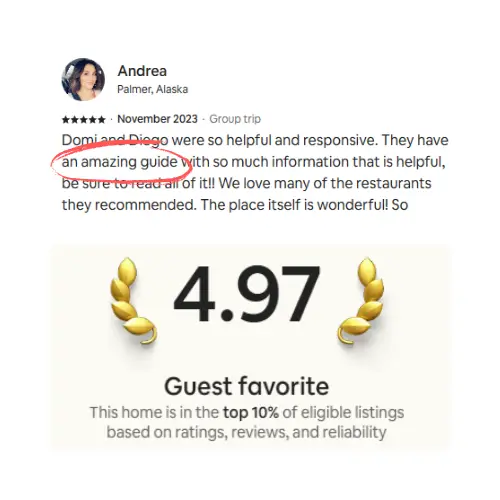
Generic "things to do" brochures are forgettable. To truly stand out, hosts can become trusted local experts, offering curated recommendations that transform a simple stay into a memorable experience. This Airbnb host advice is about going beyond the obvious and sharing the hidden gems and insider tips that guests can't find on a top-ten list. This level of personalization is what generates glowing reviews.
When guests feel like they’ve been let in on a secret, their entire trip is elevated. We've seen this time and again at our properties; guests who used our curated guides often mentioned specific restaurants or activities in their 5-star reviews. They felt like they had an authentic experience, not a cookie-cutter vacation. This is your chance to showcase what makes your neighborhood special.
How to Implement Curated Recommendations
Building a list of top-tier local spots is an investment in your guest experience. The best way to organize and share this is within your digital guide.
Organize by Guest Persona: Don't just list places. Create categories like "Family-Friendly Fun," "Romantic Dinners," "Adventurer's Day Out," or "Rainy Day Activities."
Add Personal, Insider Details: Go beyond the address. Include tips like, "Book online a week ahead for weekend tables," "My absolute favorite dish here is the French toast," or "Take the #5 bus for a quick 8-minute ride."
Keep It Fresh and Visual: Your neighborhood is always changing. Update your list every few months to remove closed businesses and add new ones. Include photo-worthy spots, which encourages guests to tag your property in their posts.
Focus on Authenticity: Only recommend places you have personally visited and genuinely love. Guests can spot a generic, uninspired list. Your personal endorsement builds trust.
7. Streamline Check-In and Check-Out Processes with Clear, Visual Instructions
A confusing check-in is one of the fastest ways to frustrate a guest. Ambiguous directions, tricky smart locks, or unclear parking rules can lead to late-night calls and a negative review. The best Airbnb host advice for a seamless arrival is to eliminate all guesswork with clear, step-by-step visual instructions.
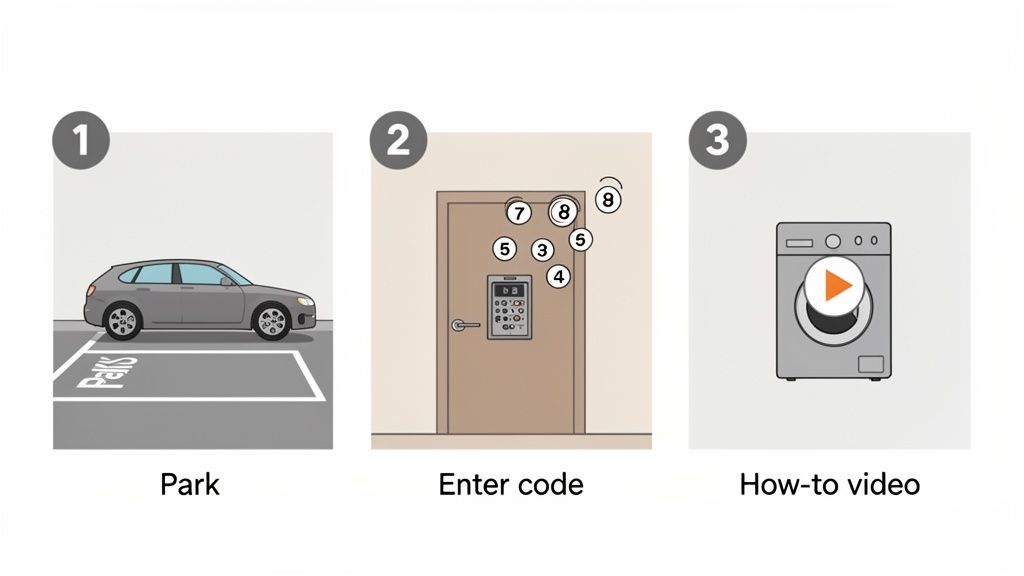
From our own experience, we found that providing a short video walkthrough of the arrival process—from the street to the front door—cut down on check-in related calls significantly. This proactive approach sets a professional tone and empowers guests to self-serve. By creating a visual guide, you’re not just providing information; you’re designing a smooth, welcoming experience.
How to Implement Visual Instructions
You can easily integrate visual aids into a digital guidebook. This keeps everything organized in one place, accessible from your guest's phone the moment they need it.
Create Visual Checklists: Use large, clear photos for each step: where to park, the location of the lockbox, and how to operate the door lock. Numbering the steps adds another layer of clarity.
Film Short Video Tutorials: You don't need professional equipment. A 30-second smartphone video is perfect for explaining complex items like a smart TV remote or a high-end coffee machine.
* **Include Troubleshooting Tips:** Add simple "if-then" instructions. For example, "If the smart lock doesn't respond, wait 10 seconds and re-enter the code. If that fails, a backup key is located..." This gives guests a sense of security.
* **Clarify Check-Out Steps:** Provide a simple, visual checklist for check-out. Include tasks like setting the thermostat to a specific temperature, closing all windows, and locking the door.
8. Maintain Impeccable Cleanliness Standards with Detailed Checklists and Professional Service
Cleanliness is non-negotiable in the short-term rental world; it’s often the single factor that separates a glowing five-star review from a disappointing three-star complaint. Professional hosts understand that exceeding guest expectations for cleanliness isn't a bonus, it's a baseline requirement. This means going beyond a surface-level tidy-up and implementing a system that guarantees a spotless space for every arrival. This piece of Airbnb host advice directly correlates to higher ratings and justifies premium pricing.
Investing in professional cleaning services pays for itself through better reviews, higher occupancy, and reduced host stress. To ensure every guest enjoys a spotless stay, a detailed rental property cleaning checklist is indispensable for maintaining high standards. It removes guesswork and holds your team accountable.
How to Implement Professional Cleaning Standards
Achieving consistently high cleanliness ratings requires a systematic approach. Start by formalizing your process and setting clear expectations.
Hire Professionals: Self-cleaning between guests is a recipe for burnout and missed details. Vet and hire a reliable, professional cleaning service with experience in vacation rentals. Have a backup cleaner ready for emergencies.
Create a Detailed Checklist: Your checklist should cover every room, surface, and appliance. Include tasks often overlooked, like cleaning baseboards, wiping inside drawers, and checking under beds.
Require Photo Documentation: Ask your cleaners to send photos of key areas (kitchen, bathrooms, beds) after each turnover. This simple step confirms the job is done to your standards before the next guest checks in.
Schedule Quarterly Deep Cleans: Supplement regular turnarounds with deep cleans to tackle window tracks, vents, and the inside of appliances. Also, plan to replace linens and towels every 12 to 18 months to keep them fresh.
9. Leverage Professional Photography and Listing Visuals to Maximize Bookings
In the fast-scrolling world of Airbnb, your photos are your most powerful marketing tool. First impressions are made in seconds, and professional photography is one of the best ways to stand out. High-quality images that accurately capture your space's layout, natural light, and unique features are non-negotiable. This is one piece of Airbnb host advice that directly translates into more revenue.
Poor photos—dark, cluttered, or taken on a smartphone—cause potential guests to scroll right past your listing. From our own experience, upgrading from well-shot iPhone photos to a professional shoot for one of our properties led to a noticeable jump in bookings the following season. A professional photographer understands composition, lighting, and staging to make your property look its absolute best.
How to Implement a Professional Photography Strategy
Investing in a professional photoshoot, which can cost between $300 and $800, is one of the highest-return investments you can make. The key is to prepare properly and hire the right person.
Hire a Specialist: Find a photographer with specific experience in real estate or vacation rentals. They know which shots sell a property, from wide-angle room views to detailed amenity close-ups.
Stage Every Shot: Before the photographer arrives, deep clean and declutter the entire property. Add small, inviting touches like fresh flowers, a bowl of fruit on the counter, or neatly folded throw blankets. The goal is to help guests imagine themselves relaxing in the space.
Capture a Variety of Images: Ensure your shot list includes wide shots of every room, detailed photos of key amenities (like a coffee machine or smart TV), and inviting pictures of all outdoor spaces.
Update Photos Seasonally: Keep your listing fresh by updating photos at least once a year. Adding seasonal touches, like holiday decor in winter or a vibrant garden in summer, can attract guests looking for a timely getaway.
10. Establish Clear House Rules and Guest Expectations with Transparent Communication
Ambiguity is the enemy of a five-star stay. Unclear or nonexistent house rules often lead to preventable issues like noise complaints, property damage, and negative reviews. Establishing and clearly communicating your expectations upfront is a cornerstone of professional hosting and one of the most effective pieces of Airbnb host advice for preventing conflict.
Transparent rules protect your property, respect your neighbors, and ensure guests have a clear understanding of how to be great visitors. This isn't about being restrictive; it's about creating a respectful and predictable environment for everyone. In our experience, properties that clearly state policies like "Quiet hours from 10 PM to 8 AM" see a dramatic reduction in neighbor complaints.
How to Implement Clear House Rules
The key is to be direct, concise, and consistent in your communication. Don't hide your rules in a long paragraph; make them easy to find and digest. You can start by crafting a solid foundation with these house rules templates and examples.
Prioritize and Be Specific: Don't overwhelm guests with a laundry list. Highlight your top 3-5 most important rules. Instead of a vague "be respectful," use a specific directive like "Maximum of 4 guests on the property at all times."
Explain the "Why": Briefly explain the reasoning behind a rule to encourage compliance. For example, "Please observe quiet hours after 10 PM to maintain our great relationship with our wonderful neighbors."
Communicate in Multiple Places: Ensure guests see the rules more than once. Include them in your Airbnb listing, your pre-arrival automated message, and your digital welcome guide. A small, friendly sign near the entryway can also be a helpful reminder.
Outline Consequences Clearly: State the consequences for violations, such as "Undisclosed parties or smoking inside will result in immediate cancellation of the reservation without a refund." This sets a firm but fair boundary.
Airbnb Host Advice: 10-Point Comparison
Item | 🔄 Implementation Complexity | ⚡ Resource Requirements | 📊 Expected Outcomes | 💡 Ideal Use Cases | ⭐ Key Advantages |
|---|---|---|---|---|---|
Create a Comprehensive Digital Welcome Guide with QR Codes | Medium — content creation + design, initial setup | Low–Medium — time to build, QR tooling, occasional updates | Up to ~80% fewer arrival/check‑in questions; better guest access metrics | Contactless check‑in, multi‑unit/property portfolios, boutique hotels | Branded, instantly updateable, analytics-enabled |
Optimize Your Listing Title and Description with Keywords & UVPs | Low–Medium — research and iterative testing | Low — time for market research and copy edits | Higher visibility, improved CTR and booking conversion | Hosts targeting better search ranking and guest fit | Increases qualified inquiries; improves conversions |
Implement Instant AI‑Powered Guest Communication and FAQ Chatbot | Medium — training and integration; escalation flows | Medium — setup time, ongoing tuning, multilingual support | Faster responses (seconds), ~80%+ communication reduction | High‑volume properties, multi-unit managers, off‑hour support | 24/7 automated support; scalable across properties |
Build Trust with Guest Reviews, Testimonials, and Feedback‑Driven Improvements | Medium — processes, automation, analysis | Medium — tools for review requests and analysis; time for responses | Higher star ratings, improved bookings; identifies improvement areas | Hosts focused on long‑term reputation and ROI from upgrades | Drives bookings via social proof; targets high-impact upgrades |
Master Dynamic Pricing Strategy Based on Demand & Seasonality | Medium — data analysis and rules setup | Medium — pricing tools or manual monitoring | 20–35% revenue uplift typical with correct strategy | Markets with variable demand, event-driven areas, seasonal markets | Maximizes revenue and occupancy through data-driven pricing |
Provide Exceptional Local Recommendations & Curated Content Experiences | Medium — deep local research and curation | Low–Medium — time to create and update content | Increased guest satisfaction and positive reviews; longer stays | Properties in distinctive neighborhoods or tourist areas | Differentiates listing; positions host as local expert |
Streamline Check‑In/Check‑Out with Clear, Visual Instructions | Medium — create photos/videos and concise steps | Low–Medium — media production, occasional updates | Fewer lockouts/support calls; smoother arrivals; fewer damages | Properties with complex access, smart locks, or foreign guests | Reduces confusion; works across language barriers with visuals |
Maintain Impeccable Cleanliness Standards with Checklists & Pros | Medium — establish protocols, hire/inspect cleaners | Medium–High — ongoing cleaning costs (15–25% revenue) | Higher ratings (0.3–0.5 pts), fewer complaints, justifies premium rates | Luxury/Boutique listings, high‑expectation guests, managed portfolios | Directly improves ratings and repeat bookings |
Leverage Professional Photography and Listing Visuals | Low–Medium — scheduling and staging for shoots | Medium — one‑time cost $300–$800+ | ↑ CTR 40–50%, ↑ conversions 25–35%; faster booking ROI | All listings but critical for competitive or premium markets | Strong first impression; justifies premium pricing |
Establish Clear House Rules and Guest Expectations | Low — define and publish rules consistently | Low — time to write and communicate | Fewer violations, reduced neighbor complaints, clearer disputes | Urban/rental properties sensitive to noise or capacity | Prevents misunderstandings; provides dispute documentation |
Your Next Step Towards Effortless Hosting
We've covered a lot of ground, from mastering dynamic pricing to streamlining your check-in with visual instructions. Each piece of Airbnb host advice shared here isn't just a suggestion; it's a proven component of a larger system designed to create five-star experiences that feel effortless for both you and your guests. The journey from being a good host to a great one is paved with intentional, consistent actions.
Mastering this craft isn't about a single secret trick. It's about building a robust, guest-centric business founded on core principles: impeccable cleanliness, proactive communication, and genuine hospitality. The most successful hosts we know understand that their most valuable asset is time. By systematizing their operations, they free themselves from repetitive tasks to focus on creating memorable stays.
Key Takeaways for Immediate Impact
Reflecting on these strategies, a few themes consistently emerge as game-changers:
Proactive Information Delivery: Don't wait for guests to ask. By providing a comprehensive digital guidebook and clear check-in instructions, you anticipate their needs, reduce friction, and demonstrate professional care from the moment they book.
Systematized Operations: Excellence shouldn't be accidental. Detailed cleaning checklists, automated messaging for common questions, and a structured approach to review management ensure that every guest receives the same high standard of service.
Authentic Guest Connection: Beyond the logistics, memorable hosting is about creating a connection to your space and your location. Thoughtful local recommendations and a welcoming tone in your communications transform a transactional stay into a cherished travel experience.
Your Actionable Next Steps
The best Airbnb host advice is the advice you actually implement. To avoid feeling overwhelmed, choose just one or two areas to focus on this week.
Start with Communication: Review your current guest messaging. Can you create templates for your most common inquiries? Better yet, can you centralize that information into a digital welcome guide? This is often the highest-impact, lowest-effort change you can make.
Audit Your Listing: Look at your property through a potential guest's eyes. Are your photos telling a compelling story? Is your title optimized with a unique value proposition? A few tweaks here can directly influence your booking rate.
Refine Your Process: Map out your cleaning and turnover process. Creating a detailed checklist for your cleaners (or yourself) ensures nothing is ever missed and maintains the standard of cleanliness that guests consistently reward with positive reviews.
Ultimately, building a thriving short-term rental business is a marathon, not a sprint. Each improvement you make, no matter how small, compounds over time, leading to better reviews, more bookings, and a more sustainable, enjoyable hosting journey. Happy hosting!
Ready to implement the best Airbnb host advice without the hassle? SmoothStay is built by hosts, designed for guests. We help you create beautiful, customizable digital guidebooks that answer guest questions before they're asked. Elevate your guest experience and reclaim your time by visiting SmoothStay to see how our AI-powered features and fair, scalable pricing can transform your hosting.