7 Great Airbnb Guidebook Examples to Inspire Your Hosting
Discover 7 essential Airbnb guidebook examples to elevate your guest experience. Our guide offers actionable tips & templates for 5-star reviews.
Disclosure: Some links in this article are affiliate links. If you make a purchase, we may earn a commission at no extra cost to you. This helps support our content.
Every host wants that glowing 5-star review, but getting there often comes down to the small details that make a guest feel truly cared for. After more than a decade of hosting ourselves—from our family home in Washington, DC to beach properties in the Riviera Maya—we've learned that a great guidebook is one of the most powerful tools in a host's toolkit. It’s not just about listing rules; it’s your first real conversation with your guest, a way to anticipate their needs, and a chance to share what you love about your space and neighborhood.
Think of it as your 24/7 on-site assistant, quietly answering questions and offering tips so you don't have to. It's the key to reducing repetitive guest messages, streamlining the check-in and checkout process, and proactively addressing potential issues before they arise. A well-crafted guidebook sets the stage for a seamless, stress-free stay, which is the foundation of five-star hospitality.
In this article, we’ll break down some of the most effective Airbnb guidebook examples and templates that have consistently worked for us and other hosts. We'll show you how to structure your content to help you reduce endless questions and create consistently great stays. Let's look at what makes a guidebook go from good to indispensable.
1. Welcome & House Rules Template
The Welcome & House Rules template is the foundational first impression of your Airbnb guidebook. It’s more than just a list of dos and don'ts; it’s your first opportunity to connect with guests, set a warm and welcoming tone, and clearly establish expectations for a smooth, five-star stay. This initial section prevents misunderstandings by addressing critical information upfront, from Wi-Fi access to quiet hours, ensuring guests feel secure and informed from the moment they arrive.
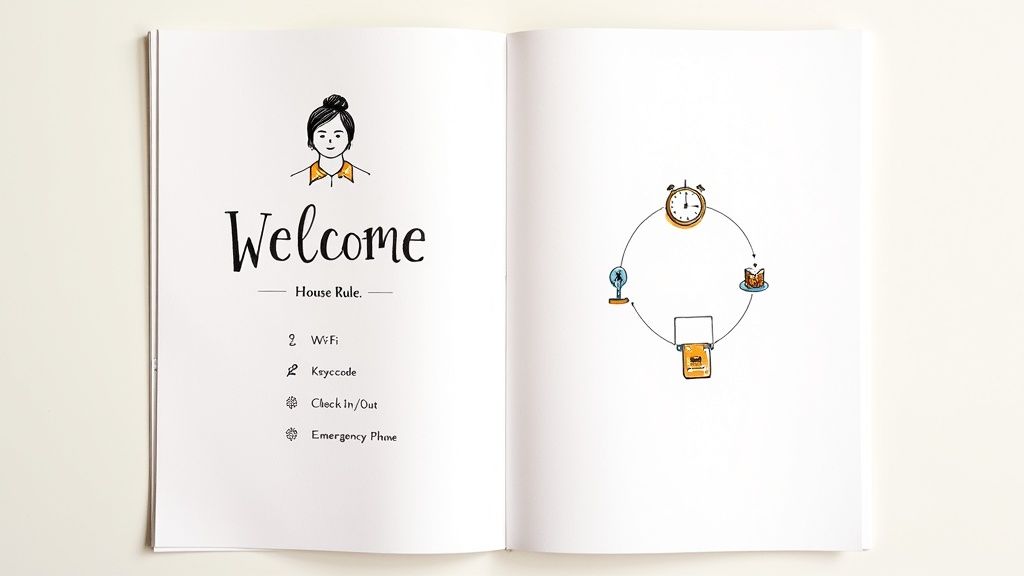
This format is one of the most essential airbnb guidebook examples because it directly addresses the most common guest questions and host concerns in one organized place. By blending hospitality with clarity, you protect your property and empower your guests to be responsible visitors.
Strategic Analysis & Breakdown
A successful Welcome & House Rules section balances a friendly tone with firm, clear guidelines. The goal is to make guests feel like trusted visitors, not potential liabilities.
Luxury NYC Apartment: An effective example we've seen uses this template to emphasize security. The welcome message is warm, but the rules section clearly outlines building access protocols, package delivery rules, and a strict no-parties policy, framed as a way to ensure everyone's safety and privacy in a high-density building.
Beachfront Property: For our own beach properties in Mexico, we prioritize rules related to the local environment. This includes specific guidelines on sand management (e.g., "Please use the outdoor shower to rinse off sand before entering"), local parking ordinances to avoid tickets, and policies regarding wet towels to protect furniture. This proactive approach prevents common beach-house issues.
What worked for us: The most effective "Welcome & Rules" sections are tailored to the property’s unique context. A generic list of rules feels impersonal; specific guidelines show you care about the guest experience and the property itself.
Actionable Takeaways
To implement this effectively, focus on both presentation and content.
Prioritize the Essentials: Place the most critical information—like the Wi-Fi password, emergency contacts, and the top 2-3 house rules—right at the top. Guests often skim, so don't bury important details.
Humanize Your Introduction: Start with a brief, genuine welcome message. Mentioning your hosting journey or including a photo of yourself can build trust and make the rules feel more like a personal request than a corporate mandate.
Use Clear Formatting: Employ bold headers, bullet points, and short sentences. This makes the information scannable and easy to digest, especially for guests who have just finished a long journey.
For hosts looking to refine their approach, we have created a comprehensive guide. You can explore our detailed advice and find a ready-to-use Welcome & House Rules Template to get started.
2. Local Experience & Neighborhood Guide Template
A Local Experience & Neighborhood Guide template elevates your role from host to local concierge. This section of your guidebook goes beyond basic amenities to offer curated recommendations for dining, activities, and hidden gems in your area. It’s your chance to share what makes your neighborhood special, helping guests live like locals and create unforgettable memories. This personal touch not only enhances their stay but also demonstrates a level of care that often leads to glowing reviews.

This format is one of the most impactful airbnb guidebook examples because it helps guests connect authentically with the location. By providing insider tips, you transform a simple lodging transaction into a rich, immersive travel experience, setting your property apart from generic hotel stays.
Strategic Analysis & Breakdown
A great neighborhood guide is both practical and personal. It should feel like getting recommendations from a trusted friend who knows the area inside and out.
Parisian Apartment in Le Marais: An excellent guide we’ve seen for a Paris rental focuses on hyper-local experiences. Instead of just listing the Louvre, it recommends a specific "fromagerie" for the best cheese, a tiny hidden courtyard for a quiet coffee, and the best time of day to visit the Place des Vosges to avoid crowds. This specificity adds immense value.
Tokyo Urban Stay: For a property in a dense Tokyo neighborhood, a host effectively used this template to demystify local culture. Their guide included a short, respectful primer on pachinko parlor etiquette, directions to the best local "ramen-ya" with a picture of the ticket machine, and a map of nearby convenience stores, all of which are invaluable for first-time visitors.
What worked for us: The best local guides focus on the "why" behind each recommendation. Don't just list a restaurant; briefly explain why you love it— "the best sunset view," "family-owned for 30 years," or "the quietest spot for morning coffee." This personal endorsement builds trust.
Actionable Takeaways
To create a compelling guide, blend useful information with your unique perspective.
Organize by Category & Proximity: Group recommendations logically (e.g., Coffee & Breakfast, Dinner, Activities, Shopping). For each entry, include the address, a short description, and walking distance or travel time from your property.
Add a Personal Touch: Include a few of your absolute favorites and share a brief personal anecdote. Saying, "This is our go-to spot for Taco Tuesday," feels more genuine than a generic list copied from a travel blog.
Keep it Current: Neighborhoods change. Make a habit of reviewing and updating your recommendations quarterly to remove closed businesses and add exciting new spots. Ask recent guests if they discovered anything great to keep your guide fresh.
For hosts wanting to build a guide that truly wows their guests, we offer more in-depth strategies. You can find inspiration and structure in our collection of Local Experience & Neighborhood Guide Templates to start crafting your own.
3. Amenities & How-To Guide Template
The Amenities & How-To Guide is your property's operational manual. It eliminates guest guesswork and late-night texts by providing clear, step-by-step instructions for everything from the smart TV and coffee maker to the pool heater and complex security systems. This section proactively addresses potential points of friction, transforming what could be a frustrating experience into a seamless and enjoyable stay for your guests.
This is one of the most practical airbnb guidebook examples because it empowers guests to confidently use your home’s best features. By demystifying your property's amenities, you reduce your own support burden and increase guest satisfaction, leading to better reviews.
Strategic Analysis & Breakdown
A great How-To Guide anticipates questions before they are asked, making guests feel capable and self-sufficient. The goal is to be comprehensive without being overwhelming, providing just enough detail to ensure smooth operation of all your amenities.
Smart Home Property: An effective guide for a tech-heavy urban loft uses this template to detail its IoT devices. It includes QR codes linking to short video tutorials for the smart lighting, Sonos sound system, and keyless entry, preventing tech-related frustration for less savvy guests.
Beach House with Pool: For our own properties in the Riviera Maya, this section is crucial for the pool and hot tub. We provide simple, numbered instructions for operating the jets and temperature controls and include a clear "Troubleshooting" section for common issues like a tripped breaker, which saves us and the guest a call.
What worked for us: The best Amenities & How-To Guides are visual and action-oriented. Instead of just describing an appliance, they show guests exactly how to use it through diagrams, photos, or short video clips, making the information far more effective.
Actionable Takeaways
To build a guide that truly helps, focus on clarity and accessibility.
Use Visuals and Simple Steps: Break down complex operations into numbered lists with clear action words (e.g., "1. Press the 'On' button. 2. Turn the dial to 'Espresso'"). Embed short video clips for anything that requires more than a few steps.
Label Everything Physically: A digital guide is great, but physical labels in your home are a game-changer. A simple label on the correct light switch or thermostat can prevent endless confusion and makes your digital guide even easier to follow.
Include a Troubleshooting Section: Think about the 2-3 most common questions you get about your amenities. Create a "Quick Fixes" or "Common Questions" section to address these head-on, saving you and your guests time.
For hosts wanting to create a thorough and user-friendly manual, we’ve broken down the process further. You can find detailed tips and a pre-built Amenities & How-To Guide Template to streamline your setup.
4. Health, Safety & Emergency Protocol Template
The Health, Safety & Emergency Protocol template is a non-negotiable component of a modern Airbnb guidebook. It serves as a clear, centralized resource for all safety-related information, demonstrating your commitment to guest well-being. This section goes beyond basic house rules to cover critical procedures for emergencies, health standards, and property-specific hazards, offering peace of mind to guests and mitigating liability for hosts.
This format is one of the most crucial airbnb guidebook examples because it directly addresses guest safety, a top priority that significantly influences trust and booking decisions. By proactively outlining protocols for fire, medical emergencies, or natural disasters, you empower guests to respond confidently and responsibly.
Strategic Analysis & Breakdown
A well-executed safety protocol section is clear, concise, and immediately accessible. The goal is to inform without alarming, providing essential instructions that are easy to follow under pressure.
Mountain Cabin Property: An effective template we’ve seen for a mountain rental includes seasonal-specific warnings. In winter, it details avalanche risks, provides contact information for local ski patrol, and shows the exact location of the emergency shovel and blankets. In summer, the focus shifts to wildlife awareness (e.g., "Do not leave food outdoors to avoid attracting bears") and local wildfire evacuation routes.
Urban High-Rise Apartment: For city properties, the emphasis is on building-specific procedures. A great example includes a simple, visual map of the fire escape route, clear instructions for using the building’s intercom in an emergency, and contact details for the 24/7 building security desk. It also specifies the location of the first-aid kit and fire extinguisher within the unit itself.
What worked for us: The best safety sections are tailored to the unique risks of the property’s location and features. Generic safety advice is easily ignored, but specific, actionable guidance shows professional-level care and foresight.
Actionable Takeaways
To build an effective safety protocol, prioritize clarity and accessibility.
Use Visuals and Simple Language: Include photos of safety equipment like fire extinguishers, first-aid kits, and emergency exits. Use universally understood icons and avoid technical jargon.
Structure for Urgency: Organize information with bold, clear headers like "In Case of Fire" or "Medical Emergency." Place emergency contact numbers (local police, fire, hospital) at the very top for immediate visibility. Beyond general tips, including vital information about regulations is key; for example, understanding smoke alarm compliance is crucial for both guest safety and host responsibility.
Include Digital and Physical Copies: While it’s essential in your digital guidebook, also print a one-page summary of emergency protocols and post it in a high-traffic area, like on the back of the front door or on the refrigerator.
For hosts looking to ensure they are adequately protected, it’s also important to have the right coverage. You can explore our guide to the best insurance for Airbnb hosts to learn more.
5. Checkout & Special Instructions Template
The Checkout & Special Instructions template is the final touchpoint in your guest's journey, ensuring a smooth and clear departure. It goes beyond a simple checkout time; it’s a strategic tool to protect your property, streamline your turnover process, and secure positive reviews. By providing a simple, clear list of departure tasks, you eliminate confusion and reduce the risk of common issues like forgotten keys, unsecured doors, or last-minute damage.
This format is one of the most practical airbnb guidebook examples because it clarifies expectations at a critical moment. A well-designed checkout process leaves guests feeling confident and respected, making them more likely to leave a glowing review while helping your cleaning crew operate with maximum efficiency.
Strategic Analysis & Breakdown
A successful Checkout & Special Instructions section is concise, logical, and easy to follow. The goal is to make the departure process effortless for the guest while ensuring all essential tasks are completed for the host.
Urban Apartment with Strict Key Procedures: A host we know in a high-security city building uses this template to detail a multi-step key return process. It includes photos showing exactly where to place the key fob and manual key to avoid a hefty building fine, framing it as a mutual benefit to avoid charges for everyone.
Pet-Friendly Rental: In our own properties that welcome pets, the checkout section includes a specific, gentle reminder about pet cleanup. We provide a checklist item like, "Please use the provided vacuum to quickly clean any pet hair on furniture," which helps manage cleaning expectations without sounding accusatory.
Property with Keyless Entry: For our Tulum condo with a smart lock, the instructions clearly guide guests on how to properly secure the door and log out of any associated apps. This prevents security gaps and ensures the next guest has a seamless check-in.
What worked for us: The best checkout instructions are presented as a simple "helpful checklist" rather than a list of demands. This framing encourages cooperation and makes guests feel like they are actively helping you prepare for the next visitor.
Actionable Takeaways
To implement this effectively, focus on clarity, timing, and tone.
Keep it Short and Numbered: Create a numbered list with no more than 5-7 simple steps. Guests are in a hurry to leave; long, complicated instructions will be ignored. Start with the most important task, such as securing the property.
Use Visuals: Include a photo or a simple diagram for any complex steps, like how to operate a specific lockbox or position a key. This removes all ambiguity and reduces the chance of errors.
Send a Timely Reminder: Send a message with a link to the checkout section of your guidebook the evening before departure. This proactive communication is helpful and shows you’re an organized, considerate host.
For hosts looking to perfect their departure process, we offer a guide with a customizable template. You can find more advice and a ready-to-use Checkout & Special Instructions Template to get started.
6. Activities & Seasonal Experiences Template
An Activities & Seasonal Experiences template transforms your guidebook from a simple manual into a personalized concierge service. This dynamic section goes beyond generic recommendations, highlighting seasonal events, unique local adventures, and day trips relevant to the guest's specific travel dates. By curating experiences based on the time of year, you help guests discover the best your area has to offer, making their trip truly memorable.
This format is one of the most impactful airbnb guidebook examples because it shows you're an attentive, in-the-know host. It moves beyond basic hosting duties to provide genuine, localized value that generic hotel chains can’t match, directly contributing to five-star reviews and repeat bookings.
Strategic Analysis & Breakdown
A great seasonal guide anticipates what guests want before they even think to ask. It tailors suggestions to the unique character of your location and its changing rhythms throughout the year.
Mountain Cabin Property: An excellent example we’ve seen is a host who creates two distinct guides: "Summer Adventures" and "Winter Wonderland." The summer guide details hiking trail difficulties, links to mountain bike rentals, and lists the best spots for lake swimming. The winter version focuses on ski resort lift ticket deals, snowshoeing paths, and cozy après-ski restaurants.
Coastal Hawaiian Rental: For a property on the Big Island, a host could curate seasonal activities like whale watching (December-April) or suggest the best time for calm ocean conditions. To make it even more helpful, they could include a link to an ultimate guide to Captain Cook snorkel tours so guests can research and book a popular excursion directly.
What worked for us: The power of a seasonal template lies in its relevance. By updating content quarterly, you provide timely, valuable information that demonstrates a high level of care and local expertise, making guests feel like they have an inside connection.
Actionable Takeaways
To build an effective seasonal guide, think like a local tour guide.
Create Four Seasonal Versions: Draft a unique set of recommendations for Spring, Summer, Fall, and Winter. This ensures your advice is always fresh and relevant, whether suggesting apple picking in October or the best tulip festival in April.
Include Practical Details: Go beyond just listing an activity. Add helpful information like typical price ranges, whether reservations are needed, and a "Family-Friendly" or "Romantic Getaway" rating to help guests choose the right experience.
Mix Popular and Hidden Gems: Recommend the must-see tourist spots but also include a few lesser-known local favorites. This insider knowledge is what truly elevates the guest experience and makes them feel special.
7. Quick Reference & Troubleshooting Guide Template
The Quick Reference & Troubleshooting Guide is a high-impact, condensed tool designed to solve the most common guest issues instantly. Unlike a comprehensive guidebook, its purpose is speed and efficiency, providing immediate answers to frequent questions like "How does the coffee maker work?" or "What do I do if the power trips?" This proactive approach significantly reduces repetitive guest messages and empowers them to solve minor problems on their own.
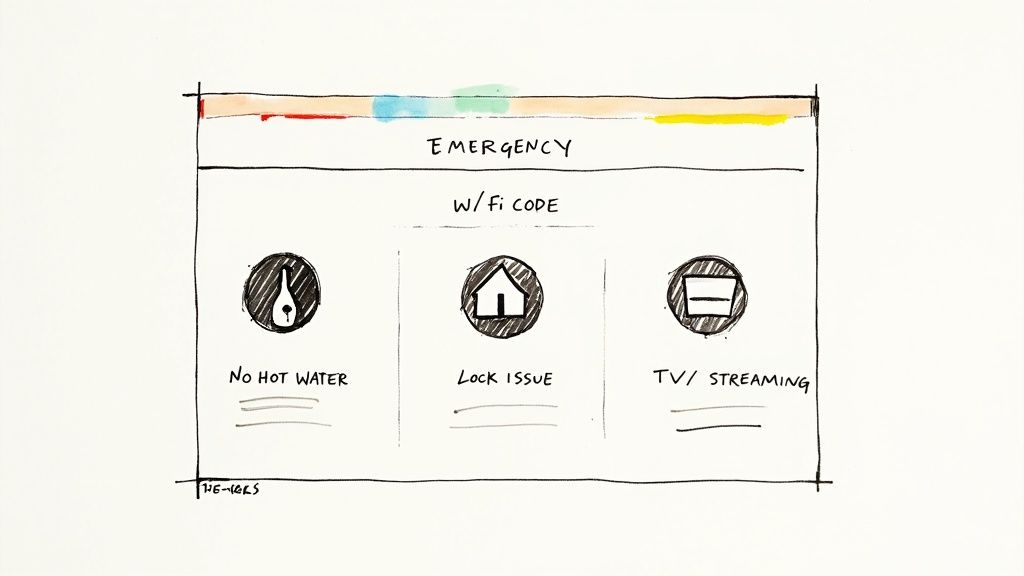
This format is one of the most practical airbnb guidebook examples for high-volume properties or hosts focused on operational efficiency. By placing solutions right where guests will look for them—often as a laminated card on the fridge or a one-page PDF in their welcome message—you demonstrate thoughtful preparation and respect for their time.
Strategic Analysis & Breakdown
A great troubleshooting guide anticipates needs and presents solutions in a visually scannable format. The key is to eliminate friction and prevent small frustrations from escalating into negative reviews.
Urban Apartment: A host in a downtown high-rise might create a wallet-sized card focusing on building-specific issues. This could include instructions for the smart lock, a diagram for the complex TV remote setup, and the direct line to the front desk or concierge. This is effective because it addresses the unique complexities of a modern, tech-heavy unit.
Riviera Maya Condo: In our Tulum property, we provide a laminated, bilingual (English/Spanish) quick guide. It includes a simple graphic showing how to operate the mini-split AC units (a frequent source of confusion), the Wi-Fi password, and the contact for our local property manager. This has drastically cut down on late-night calls about basic amenities.
What worked for us: The best troubleshooting guides are born from data. Analyze your past guest messages and support requests to identify the top 3-5 recurring questions, and make those the centerpiece of your guide.
Actionable Takeaways
To create a reference guide that genuinely helps, focus on clarity and accessibility.
Prioritize and Limit: Less is more. Restrict the guide to one page or one side of a card. Order the content by urgency and frequency, placing the most common issues like Wi-Fi and thermostat instructions at the very top.
Use Visuals Over Words: Incorporate icons, simple diagrams, or QR codes that link to short instructional videos. Visual cues are processed faster than text, which is perfect for a guest in a hurry or one who speaks a different language.
Make it Durable and Visible: For physical guides, laminate them and place them in a highly visible, central location like on the refrigerator or next to the main TV. For digital versions, send it as a standalone, clearly-labeled PDF so it doesn't get lost in a longer welcome message.
7-Point Airbnb Guidebook Template Comparison
Template | Implementation Complexity 🔄 | Resource Requirements ⚡ | Expected Outcomes 📊 | Ideal Use Cases 💡 | Key Advantages ⭐ |
|---|---|---|---|---|---|
Welcome & House Rules Template | Low 🔄 — simple writing and formatting; occasional updates | Minimal ⚡ — host time, basic photos | Reduces disputes and repetitive questions; sets tone | All listings; essential for first impressions | High ⭐ — clarifies expectations and builds rapport |
Local Experience & Neighborhood Guide Template | Medium 🔄 — research, organization, periodic updates | Moderate ⚡ — local knowledge, maps, photos | Increases guest satisfaction and repeat bookings | Tourist neighborhoods; boutique or experience-focused stays | High ⭐ — adds local value and differentiates listing |
Amenities & How-To Guide Template | High 🔄 — detailed instructions, media, ongoing maintenance | High ⚡ — photos/videos, tech know-how, labeling | Fewer support tickets; prevents appliance misuse and damage | Smart homes, luxury rentals, properties with complex systems | Very High ⭐ — reduces host workload and protects property |
Health, Safety & Emergency Protocol Template | Medium–High 🔄 — compliance checks and clear procedures | Moderate ⚡ — legal review, signage, printed copies | Improves safety, reduces liability, builds trust | Multi-guest properties, pools/hot tubs, regulated listings | Critical ⭐ — protects guests and meets regulations |
Checkout & Special Instructions Template | Low–Medium 🔄 — concise checklists and step sequences | Low ⚡ — messaging templates, printed checklists | Streamlines turnover; reduces damage disputes and delays | High-turnover rentals; listings needing strict procedures | High ⭐ — improves security and cleaning efficiency |
Activities & Seasonal Experiences Template | Medium 🔄 — seasonal curation and frequent updates | Moderate ⚡ — research, partner links, calendar upkeep | Enhances stays, can justify higher rates and memorable reviews | Seasonal destinations, tourism-heavy areas | High ⭐ — differentiates property and drives bookings |
Quick Reference & Troubleshooting Guide Template | Low 🔄 — condensed layout, careful editing | Low ⚡ — design time, print/laminate or PDF | Fast issue resolution; reduces host messages (~30–40%) 📊 | High-volume, self-service, or budget-conscious listings | High ⭐ — immediate utility and efficiency |
Putting It All Together: Your Guidebook, Your Brand
Throughout this article, we've explored a variety of powerful Airbnb guidebook examples, moving far beyond simple lists of rules. We’ve seen how strategic design, thoughtful content, and clear organization can transform a basic document into an essential tool for creating five-star guest experiences. From the warm, welcoming introduction to the practical troubleshooting guide, each template serves a distinct purpose, yet they all work together to achieve a common goal: empowering guests and saving you time.
The most effective guidebooks are not just informational; they are an extension of your brand and your unique hosting identity. They anticipate guest needs, answer questions before they are asked, and showcase the very best of what your property and neighborhood have to offer. This proactive approach significantly reduces repetitive guest inquiries, streamlines your operations, and fosters a sense of independence and confidence in your visitors.
Key Takeaways for Building Your Guidebook
Let’s distill the core strategies we've uncovered from the best Airbnb guidebook examples into a few actionable principles:
Structure is Everything: A well-organized guidebook is a usable guidebook. Start with a clear table of contents and use logical sections like we've outlined, such as welcome, house rules, amenities, local guides, and checkout. This prevents overwhelm and helps guests find information instantly.
Balance Information with Inspiration: While rules and instructions are necessary, your guidebook should also inspire. The local experience and seasonal activities sections are your opportunity to sell the destination, not just the rental. This is where you can truly differentiate your property and create memorable stays.
Embrace a "Guest-First" Mindset: When writing, constantly ask yourself: "What does my guest need to know at this moment?" Frame your instructions and recommendations from their perspective. A simple how-to guide for the smart TV or a clear diagram for the thermostat can prevent a late-night text message and a frustrated guest.
Refine and Evolve: Your guidebook is a living document. After a guest checks out, take note of any questions they asked that weren't covered. Use that feedback to continuously improve your content. This iterative process is what elevates a good guidebook to a great one.
Your Actionable Next Steps
Feeling inspired? The journey from seeing great examples to creating your own is shorter than you think. Start by outlining the essential sections we’ve covered: Welcome, House Rules, Amenities, Checkout, and Emergency Info. Don’t strive for perfection on the first draft; just get the core information down.
Once you have a solid foundation, you can layer in the details that reflect your unique personality as a host. This is the fun part. Add your favorite coffee shop, the best hiking trail, or that hidden gem of a restaurant only locals know about. Over the years, we've found that these personal touches are what guests remember and mention most in their reviews. Mastering your guidebook is a direct investment in your business, leading to happier guests, better reviews, and a more streamlined, profitable operation.
Remember, a great guidebook doesn’t just help your guests—it helps you, the host, run a smoother and more successful business. You’ve got this!
Ready to move beyond static PDFs and create a professional, interactive digital guidebook your guests will love? SmoothStay was built by hosts, for hosts, to solve this exact challenge. Our platform makes it simple to build a beautiful, customizable guidebook with guest-first features and AI-powered tools to help you write content, saving you hours while elevating your guest experience. Explore our fair, scalable pricing and see how you can create a seamless stay for your guests by visiting us at SmoothStay.