How We Streamline Property Management Software for Our Rentals
A host-to-host guide on how to streamline property management software to save time, reduce manual work, and elevate your guest experience. Learn our system.
Disclosure: Some links in this article are affiliate links. If you make a purchase, we may earn a commission at no extra cost to you. This helps support our content.
If you’re juggling bookings, guest messages, and maintenance requests with a patchwork of spreadsheets and sticky notes, you know the feeling. It’s a constant scramble, and honestly, it’s exhausting.
When we started out with our first few properties—from our home in D.C. to our beach spots in the Riviera Maya—that was our reality. The big shift for us didn't start with shopping for software. It started with an honest look at where our time was actually going.
Moving from Spreadsheets to a Smarter System
This kind of self-audit is the most important first step. It’s all about pinpointing the exact operational bottlenecks that drain your energy and create friction for your guests. For us, the biggest headaches were the endless, repetitive questions and the last-minute coordination with our cleaners.
Pinpointing Your Biggest Time Drains
Before you can fix a problem, you have to get specific about what it is. We literally sat down and made a list of every recurring task that felt clunky and inefficient. I’d really recommend you do the same.
Start by asking yourself a few key questions:
Guest Communication: How many hours a week do you spend answering the same questions? Think Wi-Fi passwords, check-in instructions, or local recommendations.
Operational Coordination: Are you constantly texting your cleaners to confirm schedules? Manually updating calendars on different booking sites? Chasing down handymen for a small repair?
Booking Management: How much manual effort goes into confirming every reservation, processing payments, and sending out pre-arrival information?
Maintenance & Issues: What’s your actual process for tracking and resolving a leaky faucet or a broken AC unit? Is it just a string of text messages and a prayer?
By identifying these specific pain points, you transform a vague desire for "being more efficient" into a clear set of problems that the right software can actually solve. This isn't just about buying a new tool; it's about reclaiming your time.
Getting a handle on these operational hurdles also gives you a much-needed financial perspective. Before you commit to any system, it’s helpful to have a clear picture of the costs involved. A great starting point is understanding residential property management costs to help frame your budget.
Once you have that clarity, you can start looking for a solution that’s built to solve your actual needs. To give you a head start, we put together a detailed guide on the best property management systems we’ve found for hosts like us.
Choosing the Right Tools Without Overcomplicating Things
The market for property management software is packed. It’s incredibly easy to get lost in a sea of endless feature lists and slick marketing promises. We’ve been there.
Our biggest lesson learned? More features don't automatically lead to better results or happier guests. In fact, overcomplicating your tech stack can create more work, not less.
The real goal is to find a solution that fits your specific needs right now, whether you have one rental or a growing portfolio. You shouldn't be paying for complex tools you’ll never touch. You're not just buying software; you're investing in a system that solves the specific problems you identified earlier.
Focusing On The Essentials That Actually Matter
From our experience managing properties from DC to Tulum, we found that a handful of core features deliver the biggest impact. These are the tools that genuinely give you back your time and elevate the guest experience.
Here’s a breakdown of what we believe are the non-negotiables.
We put together this quick table to show you exactly what to focus on when you're evaluating different platforms. It cuts through the noise and zeroes in on the features that have the most direct impact on your day-to-day operations and guest satisfaction.
Core Software Features for Vacation Rental Hosts
Feature | How It Helps You | What We Look For |
|---|---|---|
Unified Inbox | This is a must-have. It puts all guest messages from every platform (Airbnb, Vrbo, etc.) in one central spot. No more frantic app-switching or missed messages. | A clean interface that’s easy to navigate on both desktop and mobile. The ability to see the entire conversation history with a guest at a glance is key. |
Automated Messaging | Save countless hours by setting up messages for booking confirmations, pre-arrival details, and checkout reminders. It ensures every guest gets the right info at the right time. | Look for robust scheduling options (e.g., "send 3 days before check-in at 10 AM") and the ability to use custom fields like |
Digital Guidebooks | This becomes your 24/7 virtual co-host. A great guidebook preemptively answers common questions about Wi-Fi, using the smart TV, or where to find the best local coffee. | We prioritize tools with easy-to-use templates, multi-language support for international guests, and real-time editing so you can update info instantly. |
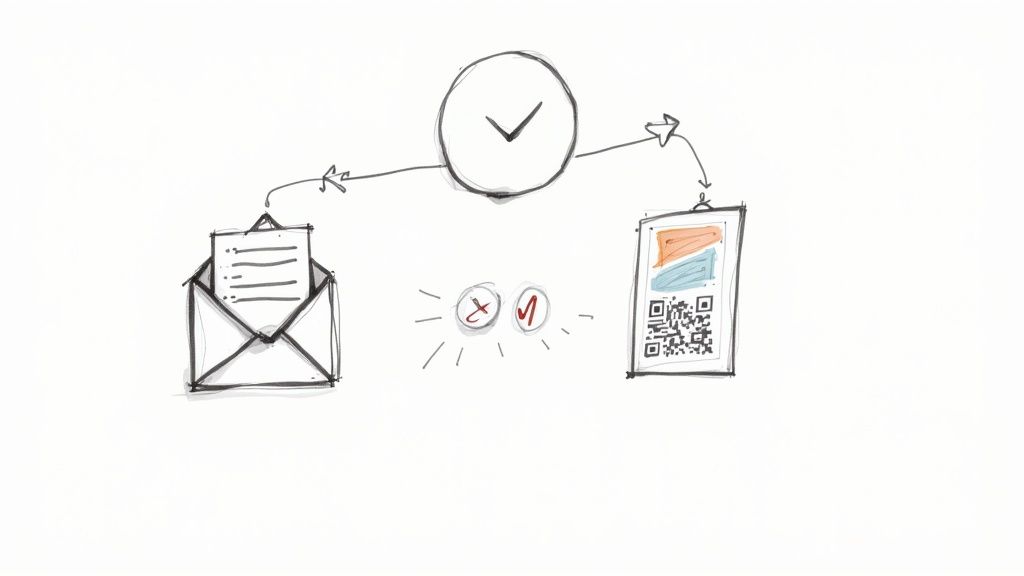
QR Code Integration | Placing QR codes in your property that link directly to your guidebook or specific instructions is a game-changer for guest independence and a modern touch. | The best systems generate these codes for you and link them directly to your guidebook content. Dynamic QR codes are a huge plus—you can change the link's destination without reprinting the code. |
At the end of the day, a platform that does these four things brilliantly will have a much bigger impact on your daily operations than one with a hundred features you’ll rarely use.
Our advice: Prioritize software that absolutely nails these fundamentals. Get the core of your guest communication and information delivery locked down first. Everything else is secondary.
Finding a Partner in Growth
This shift toward tech-enabled management isn't just a fleeting trend; it's a fundamental change in how our industry operates. Recent surveys show that over 80% of real estate companies plan to increase their tech investments, which tells you everything about where things are headed.
When you're looking for a tool to integrate into your business, think of it less like a purchase and more like finding a partner. Does it have fair, scalable pricing that grows with you? Is it built by fellow hosts who actually understand your challenges? The right tool should feel like an extension of your hospitality, not a technical burden you have to wrestle with.
We've done a lot of the legwork and compared several of the top options in our guide to the best vacation rental management software to help you find that perfect fit.
Building Your System for Maximum Automation
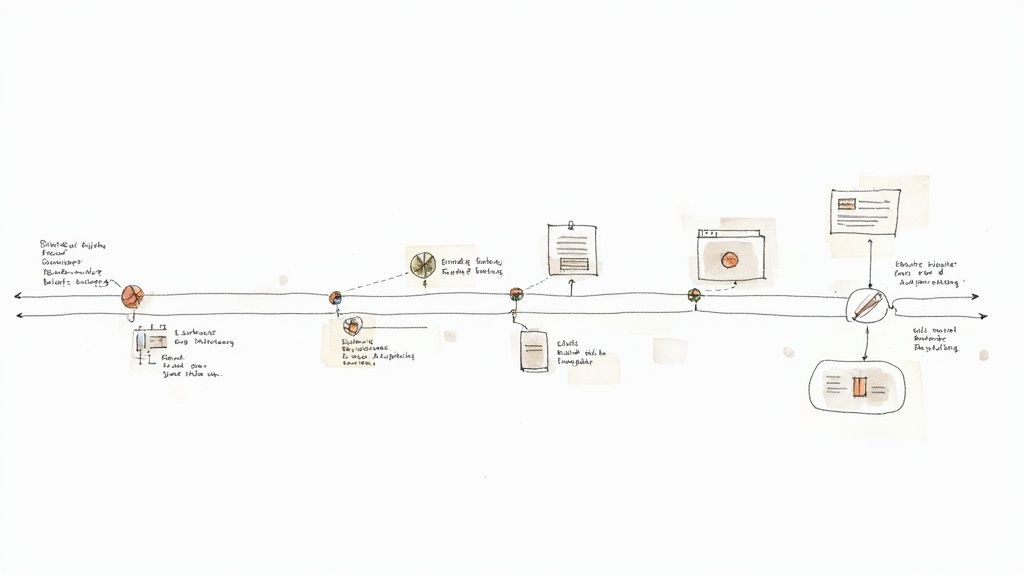
Alright, you've picked your software. Now the fun begins. This is where you actually build the automated system that buys back your time and makes your business run like a well-oiled machine.
Our philosophy is simple: create a communication flow that anticipates what a guest needs before they even have to ask.
This means sitting down and creating thoughtful, personal-sounding message templates for the entire guest journey. Think about everything, from the moment they book to the day they check out and you ask for that five-star review. Every message should feel genuinely helpful, not robotic.
The good news is that modern tools make this incredibly easy. The entire industry is shifting to mobile-first communication and AI-powered solutions to keep up with guest expectations. According to one 2023 industry report, 80% of renters now want to pay online and 72% prefer digital communication. Having a solid software system isn't a "nice-to-have" anymore; it's essential. You can see more stats on this over at resimpli.com's breakdown of property management trends.
Crafting Messages That Connect
The secret to automation that doesn't feel cold and corporate is injecting your own personality into the templates. We often use AI-powered features to get a decent first draft, but then we always go in and tweak the language so it sounds like something we'd actually say.
Map out the critical touchpoints in a guest's stay:
Booking Confirmation: This needs to be instant and reassuring. Confirm their dates, thank them for booking, and give them a heads-up on when to expect more details.
Pre-Arrival Instructions: Send this out 3-5 days before check-in. This is where you include the address, access codes, parking info, and a link to your digital guidebook.
Morning of Arrival: A quick, friendly message saying, "We're excited to host you today!" goes a long way in setting a warm, welcoming tone.
Mid-Stay Check-In: An automated text on their first full day asking, "Is everything meeting your expectations?" can stop a small issue from snowballing into a bad review.
Checkout Reminder: Send this the evening before they leave. A quick reminder of the checkout time and any simple tasks (like taking out the trash) is all you need.
We get into the nitty-gritty of this in our full guide on how to automate repetitive tasks without sacrificing that personal connection.
Our Pro Tip: Keep your automated messages short and easy to scan. Guests are usually on their phones, often juggling luggage or travel plans. Use bullet points for critical info like Wi-Fi passwords or door codes so they can find it at a glance.
Your 24/7 Virtual Co-Host
If there's one tool that will slash the number of repetitive questions you get, it's a comprehensive digital guidebook. This becomes your guests' go-to resource, giving them the power to find answers themselves, day or night, without ever needing to message you.
When we built out the guidebooks for our places in Playa del Carmen and DC, we structured them to be as intuitive as possible. We’ve learned that a simple, clear layout is what works best. It has drastically cut down on those late-night texts asking how to work the coffee maker. A great guidebook is a cornerstone to truly streamline property management software and operations.
Integrating Your Tools and Training Your Team
Even the most powerful software is useless if it’s disconnected from the other tools you rely on. A truly efficient operation is one where everything talks to each other, creating a single, seamless workflow.
Think of it as building a central nervous system for your hosting business. Your property management software is the brain, and integrations are the nerves connecting it to everything else—your booking channels, smart locks, and even your team's communication tools.
This connectivity is what finally kills off the manual work that leads to mistakes and eats up your time. When everything is synced, you can stop worrying about double bookings because your calendars update automatically. You no longer have to manually create and send unique door codes for every guest; your smart lock integration handles it. It’s a complete game-changer.
Getting Your Team On Board
If you work with a co-host, cleaners, or any kind of small team, getting them to adopt a new system can be a challenge. We’ve found the secret is to frame it not as another chore, but as a tool that genuinely makes their jobs easier.
Instead of just announcing a switch, we walk our team through the direct benefits for them. For our cleaners in the Riviera Maya, this meant showing them how the new app gives them a clear, real-time schedule on their phones—no more confusing text chains. For my co-host, it was the relief of having one unified inbox to manage all guest messages.
The goal is simple: get buy-in by focusing on the "what's in it for me" for each person. When your team sees how the software solves their specific headaches, they’ll be much more eager to learn and use it.
To make sure everyone feels comfortable, we create a simple training checklist. This isn’t some massive manual. It's a one-page guide with login details and the top three tasks they’ll actually need to do. It makes the transition feel manageable, not overwhelming.
A Simple Training Checklist
Clear, simple instructions are everything. The best way to start is by building out a standard operating procedure (SOP) that anyone can pull up when they have a question. We actually cover this in detail in our guide on how to create an SOP for your team.
Here's a basic framework you can adapt for your own checklist:
Access & Login: Provide dead-simple instructions for getting into the software on both desktop and mobile. Include links.
Core Task 1: The Calendar: Show them how to view the booking calendar to see upcoming arrivals, departures, and any blocked-off dates.
Core Task 2: Task Management: Point them to where they can find and update their specific tasks, like cleaning assignments or maintenance requests.
Core Task 3: Communication: Define the process for leaving internal notes or communicating within the platform to keep everyone in the loop.
This straightforward approach builds consistency and helps everyone feel confident using the new tools from the get-go.
Measuring Success and Refining Your Process
So, you’ve put in the work to get your property management software humming. How do you know if it's paying off? It's about more than just feeling less stressed—it's about seeing real, measurable results.
For us, success isn't just a revenue number. We’ve learned to track the metrics that truly reflect efficiency and, most importantly, guest happiness. This is where your software’s analytics become your best friend.
Key Metrics We Always Track
Instead of getting lost in a sea of data, we focus on a few key performance indicators (KPIs) that tell a clear story about our operations and guest experience.
Average Guest Response Time: This one is huge. A lightning-fast response time means your automated messages are handling the common stuff, freeing you up to quickly tackle the unique questions that pop up.
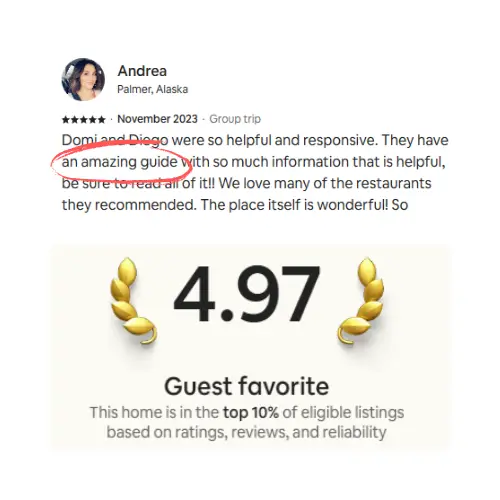
Five-Star Review Percentage: Are you seeing an uptick in glowing reviews? We dig into the comments, specifically looking for mentions of "easy communication" or how helpful the digital guidebook was. That’s gold.
Direct Feedback Patterns: What questions are you still getting? If three guests in a row ask where the extra towels are—even though it’s in the guidebook—that’s a clear signal to make that info impossible to miss.
By focusing on these metrics, you shift from guessing to knowing. The data tells you exactly where your system is excelling and where it needs a little nudge. It’s a constant cycle of listening, learning, and refining.
This data-driven approach is quickly becoming the new normal. The global property management software market is projected to grow significantly by 2030, a boom fueled by the industry’s pivot to cloud-based solutions. This signals that hosts everywhere recognize the power of data in dialing in their operations.
Using Analytics to Fine-Tune Your System
The real magic of your software’s analytics is its knack for revealing hidden patterns. We regularly dive into our dashboard to see which sections of our digital guidebook get the most clicks. This tells us exactly what information guests find most valuable.
For example, at our Playa del Carmen house, we noticed the "Local Taco Spots" page had off-the-charts engagement. So, we beefed it up with more photos, personal favorites, and even a "best for breakfast" tip. It’s a small tweak, but it shows guests we’re paying attention to what they actually care about.
Think of your analytics dashboard as your roadmap for continuous improvement. By making these small, data-informed adjustments, you can steadily elevate your guest experience, which leads to better reviews and more bookings. To get a full picture of what you should be tracking, check out our complete guide on short-term rental analytics.
Making these small, consistent refinements is what transforms a good guest experience into a great one. It’s a process that never really ends, but it’s easily the most rewarding part of hosting.
Questions We Hear All the Time from Fellow Hosts
Making the jump to a new system always kicks up a few questions. We've been there. Over the years, we've chatted with countless hosts who were standing right where you are now, wondering if this kind of change is really worth the effort.
Here are some of the most common questions we get, with our honest answers based on our own experience.
When Is It Actually Time for Property Management Software?
There’s no magic number of properties that tells you it's time to switch. For us, the tipping point hit with our third rental. The admin work suddenly felt like a tidal wave, and we realized we were spending way more time coordinating logistics than actually hosting.
A better signal is when you feel like you’re stuck on a hamster wheel. Are you manually updating calendars across different sites? Answering the same five questions every single day? Glued to your phone, terrified you'll miss a message? If that sounds familiar, it’s probably time. Honestly, even with just one property, the right software helps you build professional, seamless habits from day one.
Won't Automated Messages Make Me Sound Like a Robot?
This is probably the biggest concern we hear, and it's a valid one. Nobody wants their hospitality to feel cold or impersonal. The key is to think of automation as your support system, not a replacement for your personality.
We let our automated system handle the purely functional stuff—check-in instructions, Wi-Fi passwords, checkout reminders. This guarantees every guest gets that crucial info instantly and reliably, which they appreciate. It also frees up our mental space to jump in with genuine, personal touches. When a guest mentions they love Mexican food, we have the time to send a personal recommendation for the best taco spot in Tulum.
It's all about being efficient, not distant.
The goal of automation is to handle the predictable so you have more time for the personal. It elevates your service by guaranteeing consistency while saving your best energy for genuine human connection.
How Much Time Can I Really Expect to Save?
The time savings are real, and for us, they kicked in almost immediately. Once we got our message templates and digital guidebook set up, we saw a huge drop in repetitive guest questions—somewhere around 60-70%.
Coordinating with our cleaning team went from a chaotic group text to a simple task in the platform. All in all, we figure a good system saves us between 8 to 10 hours per week across our properties. That's an entire workday we get back to focus on improving the guest experience, scouting for our next property, or just taking a well-deserved break.
Is It a Nightmare to Switch Software If I Pick the Wrong One?
It can be a headache, which is why taking full advantage of free trials is so important. But it’s not impossible to switch. The most critical thing is to keep your core data—like guest info, booking history, and all those message templates you perfected—organized and easy to export.
Most modern platforms are designed to make this easier with simple import and export features. Our advice is to look for a provider with fair, scalable pricing and no long-term contracts. This gives you the flexibility to pivot if your business needs change, ensuring your software always works for you, not the other way around.
Ready to build a system that saves you time and wows your guests? SmoothStay offers AI-powered digital guidebooks designed by hosts, for hosts. With customizable templates, guest-first features, and fair, scalable pricing, you can deliver a five-star experience from day one. Start your free 14-day trial today and see the difference.